
Part of Culture in Motion — examining who defines culture, how it moves, and what it reveals about the moment.
Earlier this week SSC corrected a story about African banks expanding into Dubai — clarifying that those banks are serving continental African corporate clients and Gulf-based African expatriates, not Black Americans, and that the narrative of a unified global Black economic geography was doing emotional work rather than analytical work. The identity tourism story developing across West Africa is where the actual diaspora reconnection is happening — not in banking corridors, but in bodies, in travel, in the deeply personal act of going somewhere to understand where you come from.
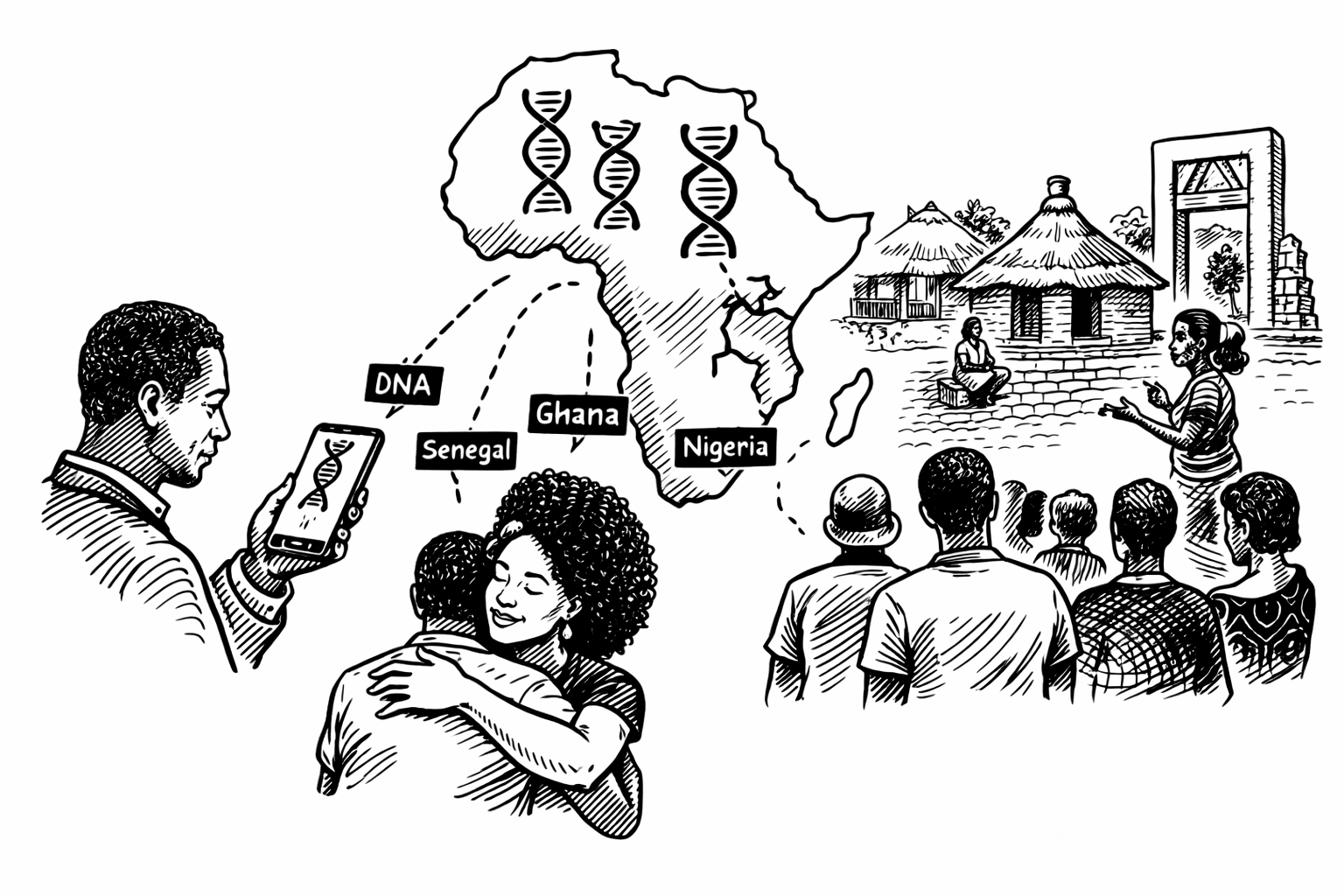
Senegal has joined Ghana, Nigeria, Benin, Sierra Leone, and The Gambia in launching DNA-powered ancestral tourism programs under what is being called “Identity Tourism 2.0” — offering members of the African diaspora personalized tours designed around genetic testing results, connecting travelers to the specific regions from which their ancestors originated. Ghana’s program, the most established of the group, has granted citizenship to more than 1,000 diaspora members since 2016, including Stevie Wonder, and has been built deliberately on the cultural and political framework of Kwame Nkrumah’s Pan-African vision, renewed through initiatives like the Year of Return and its successor program Beyond the Return. The World Travel and Tourism Council projects that youth-led heritage tourism across Nigeria, Ghana, and South Africa will contribute an additional $12 billion to their combined GDPs by the end of 2026.
What makes this movement analytically interesting for SSC’s purposes is what it reveals about the difference between financial connection and experiential connection, and about whose version of diaspora engagement is actually gaining traction. The African bank offices in Dubai are serving high-net-worth corporate clients managing trade corridors between the Middle East and the continent. The identity tourism programs are serving people who want to walk through a village, hear a language that their DNA says is ancestrally theirs, and understand themselves differently as a result. These are not competing projects, but they are not the same project either — and the conflation of corporate African expansion with diaspora cultural reconnection has historically done more to serve institutional narratives than to accurately describe what the diaspora is actually doing and feeling.
The program also surfaces a tension that SSC’s FLO/UK ethnogenesis piece and the japa coverage have been circling: the question of what belonging means across generational and geographic distance, and whether institutional pathways — citizenship grants, DNA tourism packages, diplomatic initiatives — can produce the kind of belonging that the diaspora is actually seeking. Ghana’s citizenship program has processed more than 1,000 applications in a decade. The African diaspora in the United States alone numbers in the tens of millions. The gap between those two numbers is not a program design problem. It is a question about the nature of connection itself — whether it can be bureaucratized, what it requires beyond paperwork and airfare, and what the continent and the diaspora owe each other across the centuries that separate them.