
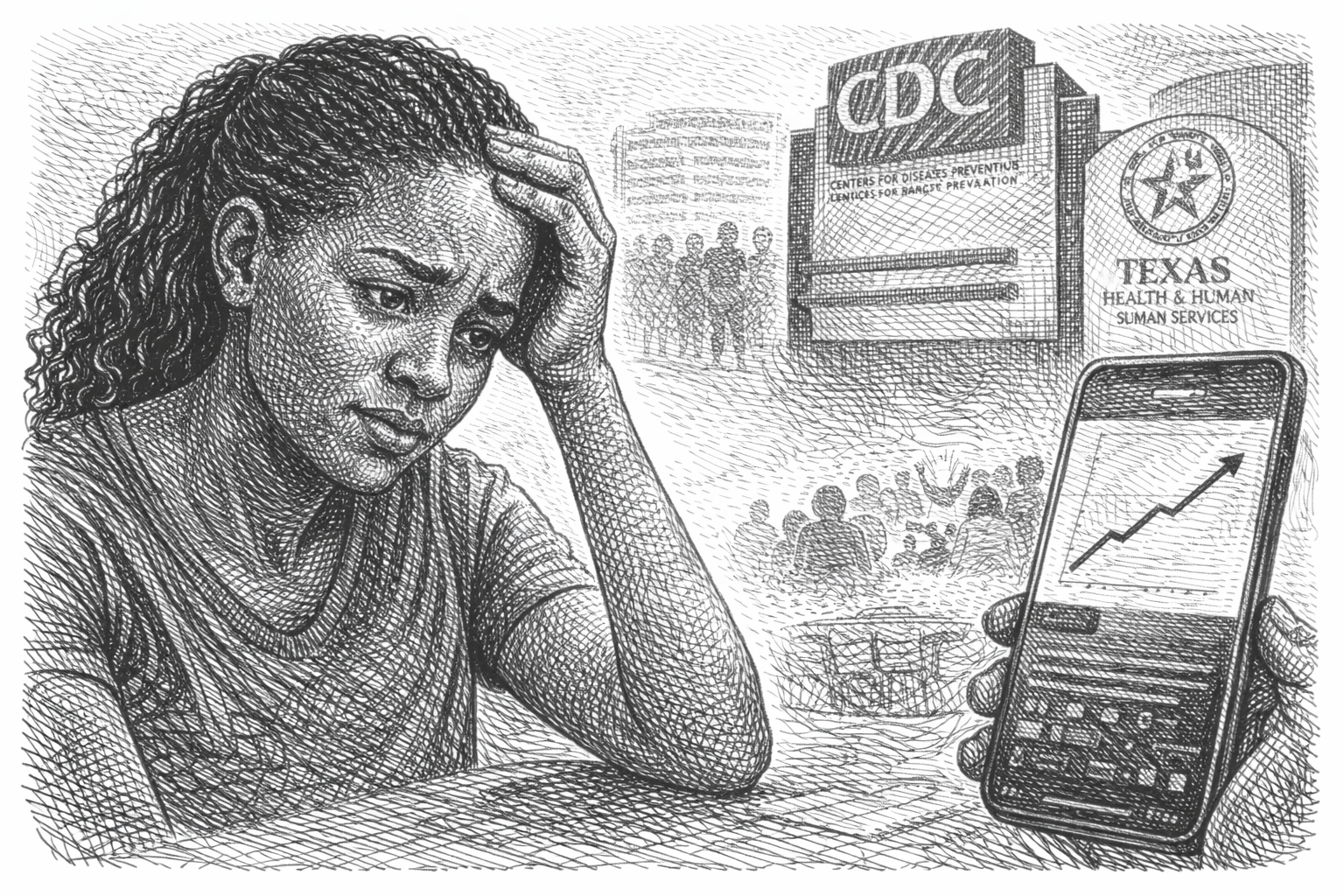
A viral TikTok video claims that 42,000 people in Houston contracted sexually transmitted diseases during spring break, framing the moment as evidence of a “nationwide STD epidemic.” The video is spreading. The claim is not true.
There are no reports from the CDC or the Texas Department of State Health Services indicating an outbreak anywhere near that scale. A spike of that magnitude would trigger formal public health alerts, hospital reporting surges, and widespread media coverage. None of those indicators exist. The figure appears fabricated or significantly exaggerated — a pattern that has become familiar in viral health content: real public health concerns used as scaffolding for claims that have no verified foundation.
What the video gets partially right is the underlying trend. STIs have been rising across the United States for more than a decade, with the CDC documenting significant increases in syphilis, gonorrhea, and congenital infections year over year. These are long-term structural trends — not event-based outbreaks tied to a single city or a single week. That distinction matters more than it might seem. When chronic public health failures get repackaged as sudden, localized crises, the result isn’t awareness. It’s noise that makes the actual problem harder to address.
Spring break gatherings do carry elevated transmission risk in high-density social environments. Risk is real. But risk is not evidence of a mass outbreak, and public health officials track transmission through data collected over time — not through viral anecdotes. Houston, like many major American cities, is navigating real and ongoing STI trends. None of that data supports the narrative currently moving across social media.
Why This Matters
Misinformation around public health doesn’t just distort reality — it reshapes behavior in two directions at once. Exaggerated claims create panic in some communities while eroding trust in legitimate warnings over time. The audience most harmed is the one left trying to sort signal from noise without reliable tools for doing so. As we explored in AI War Imagery Is Spreading Fast. The Facts Aren’t, the speed at which unverified content now travels has made verification itself a form of public service. In a landscape where attention moves faster than evidence, naming what’s false is as important as reporting what’s true.