
Verizon is cutting several hundred jobs nationwide, marking another significant round of workforce reductions as the telecom giant continues restructuring its operations. The layoffs come less than six months after the company eliminated more than 13,000 positions in what became the largest workforce reduction in Verizon’s history. According to Reuters, the company said the latest cuts are part of an ongoing operational overhaul designed to “revamp” portions of the business while shifting hiring toward growth areas.
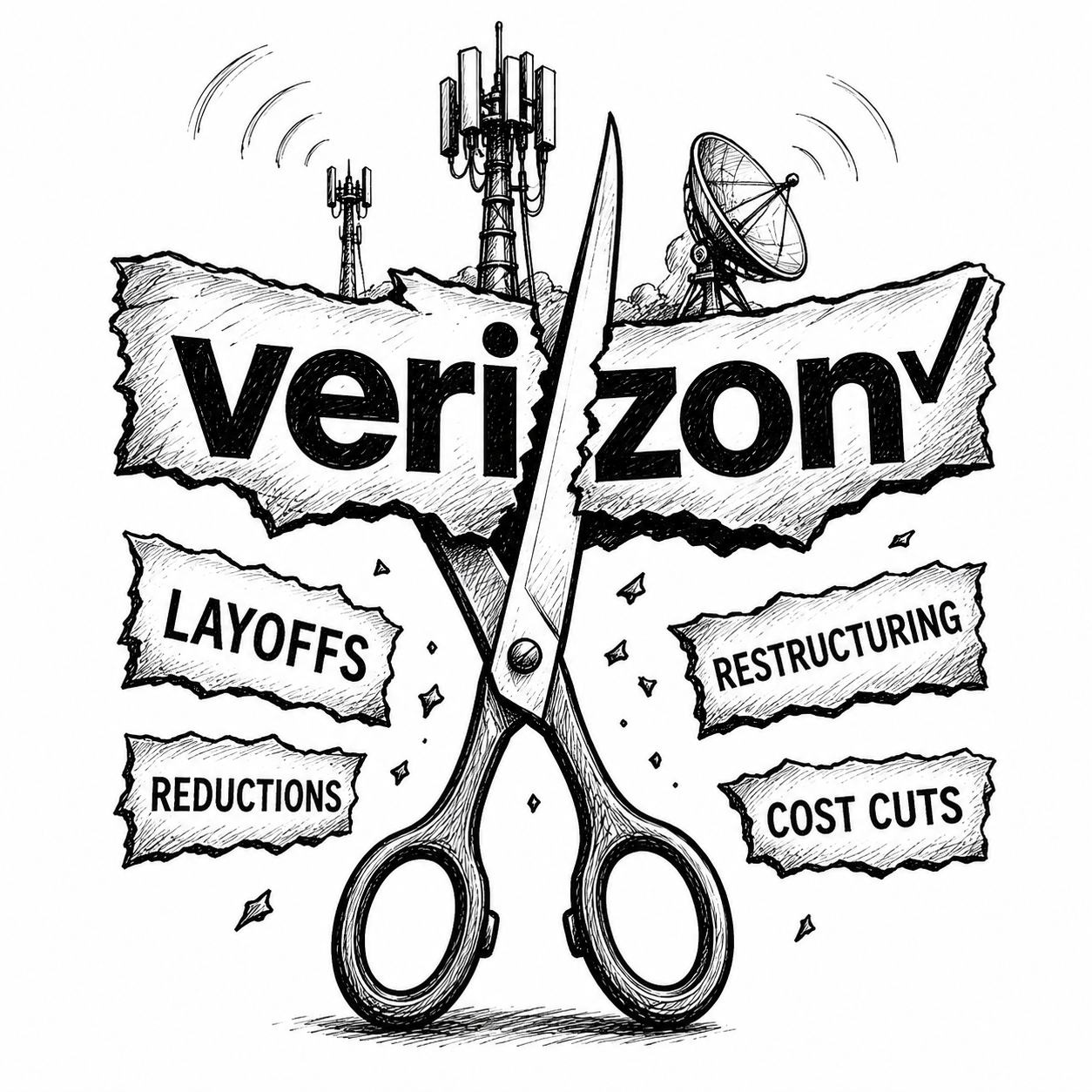
The scale of the cuts matters because Verizon is not a struggling company facing immediate collapse. Just last week, the carrier raised its annual profit forecast after posting an unexpected increase in wireless subscribers during the first quarter of 2026. Verizon reported adding 55,000 monthly bill-paying wireless subscribers, beating analyst expectations and marking its first March-quarter subscriber growth in more than a decade. The company also reported quarterly revenue of $34.4 billion and increased its full-year profit guidance.

That contrast reveals something larger happening across corporate America. Layoffs are increasingly being driven less by financial emergency and more by structural repositioning. Verizon executives have openly discussed operating “leaner” while pursuing additional cost reductions beyond 2026. At the same time, the company says artificial intelligence is already helping reduce vendor support costs by as much as 70% while improving software development efficiency by roughly 40%.
The broader telecom industry is facing mounting pressure from multiple directions simultaneously. Subscriber growth across the wireless market has slowed as smartphone adoption reaches saturation and switching carriers becomes easier for consumers. Cable providers continue expanding into mobile service, pricing competition has intensified, and consumers facing broader affordability concerns are becoming more willing to abandon long-term loyalty for lower monthly bills. Verizon’s premium pricing model historically relied on the perception that its network superiority justified higher costs. But as coverage differences between major carriers narrow, that value proposition is becoming harder to sustain at scale.
Competitors are also restructuring. AT&T and T-Mobile have both implemented workforce reductions this year, including dozens of layoffs tied to New Jersey operations, according to filings referenced by Business Insider. The convergence is significant because the major wireless carriers historically differentiated themselves through distinct identities — Verizon as the premium reliability brand, AT&T as the infrastructure giant, and T-Mobile as the disruptive “anti-carrier.” Increasingly, however, all three are moving toward the same operational model centered on efficiency, automation, and cost discipline.
Artificial intelligence is accelerating that transition. Across industries, companies including Amazon, Meta, Coinbase, Cloudflare, UPS, and Citi have all announced significant layoffs or restructuring plans this year while simultaneously increasing investments in AI infrastructure and automation systems. Reuters and Business Insider both report that 2026 is becoming defined by widespread corporate efficiency pushes tied to changing labor economics and operational streamlining.
What Verizon’s latest layoffs ultimately signal is that the wireless industry is entering a different era than the one that defined the last two decades. Telecom companies once expanded through aggressive subscriber growth, massive retail footprints, and relentless infrastructure competition. But today’s market is increasingly defined by saturation, pricing pressure, and shrinking differentiation between carriers. In that environment, operational efficiency is beginning to matter more than expansion itself — and workers are increasingly absorbing the consequences of that shift.