
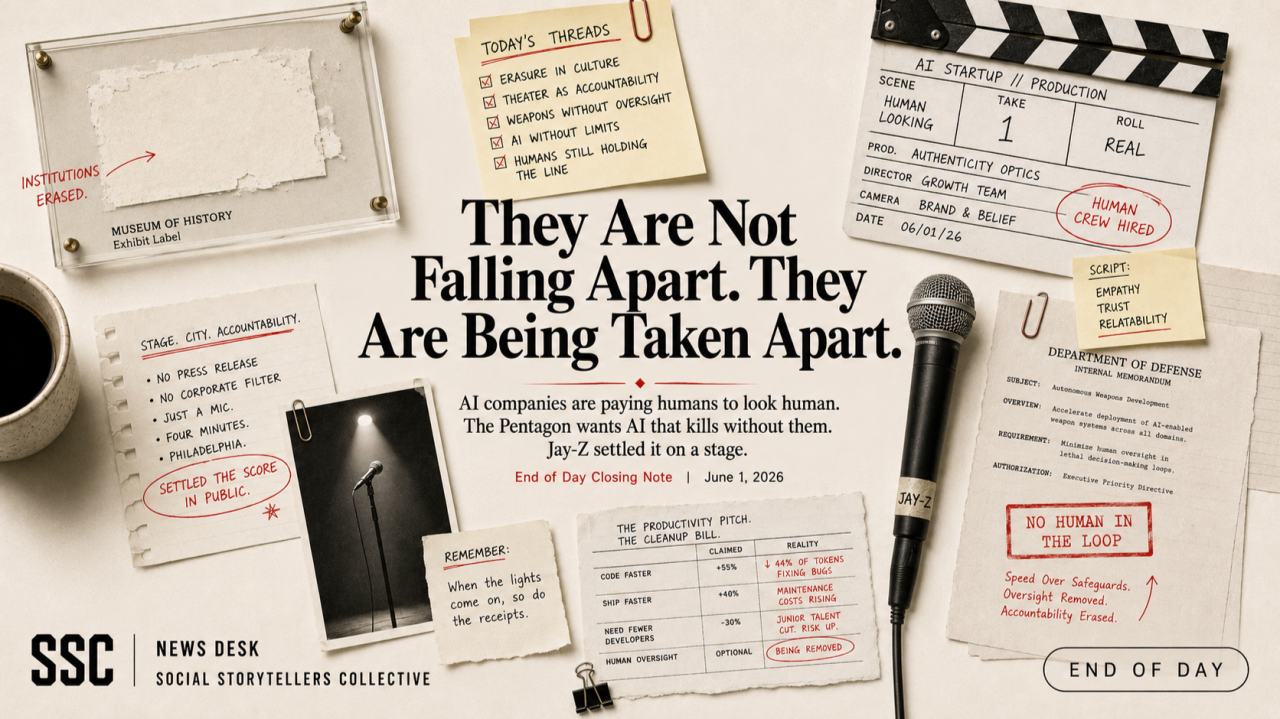
They Are Not Falling Apart. They Are Being Taken Apart.
AI companies are paying humans to look human. The Pentagon wants AI that kills without them. Jay-Z settled it on a stage.
End of Day Closing Note | June 1, 2026
June arrives with a particular kind of clarity. The summer being sold on your screen and the summer most people are actually going to have are two different places — and today’s edition lives in the distance between them. The stories SSC tracked today are not isolated events. They are the same argument wearing different clothes: about who controls the record, who absorbs the cost when the record changes, and what happens to the people who were never supposed to be in the room when those decisions got made. That argument runs through the economy, through culture, through the institutions responsible for holding memory — and it starts, as it always does, with the credential.
SSC Featured Series | The Degree Economy
A 5-Part Series examining what happens when the credentialing system that previous generations used to build economic stability is stress-tested from every direction at once.
The MBA is on sale. The jobs it was supposed to unlock are disappearing. And the workers who most need the upgrade are the least positioned to use the discount. SSC has been tracking this story across five installments. Part I documented the deflation of the four-year degree. Part II — The HBCU Ascent — traced the institutions building momentum inside that deflation and the employer gap that hasn’t caught up.
Part III begins today.
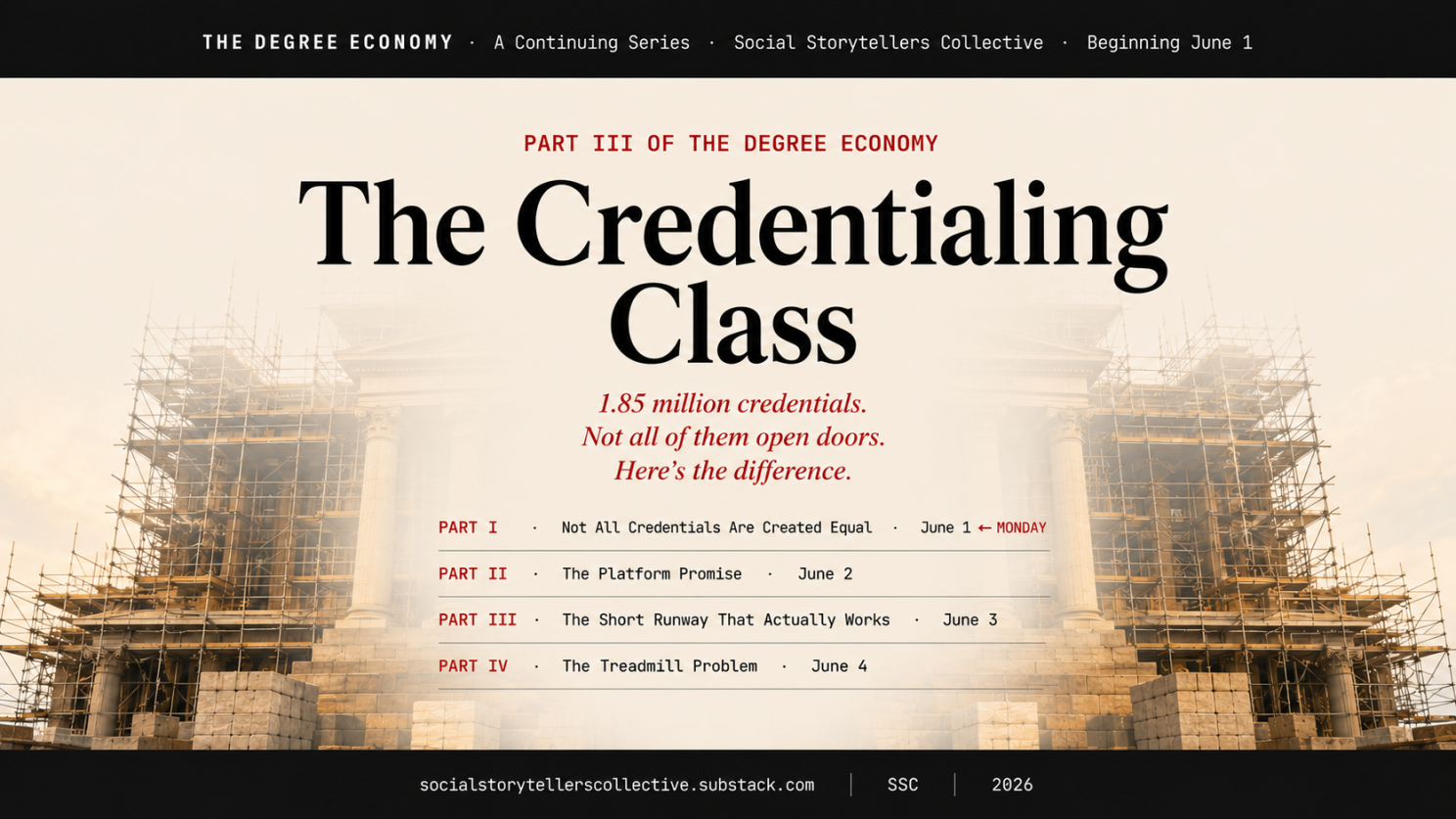
The Credentialing Class examines the micro-credential economy — a $3.5 billion market with 1.85 million options and a fundamental question nobody is asking loudly enough: not whether credentials work, but which ones, for whom, and at what cost. Four parts. Four days. One argument.
Part I · Not All Credentials Are Created Equal · June 1 Part II · The Platform Promise · June 2 Part III · The Short Runway That Actually Works · June 3 Part IV · The Treadmill Problem · June 4
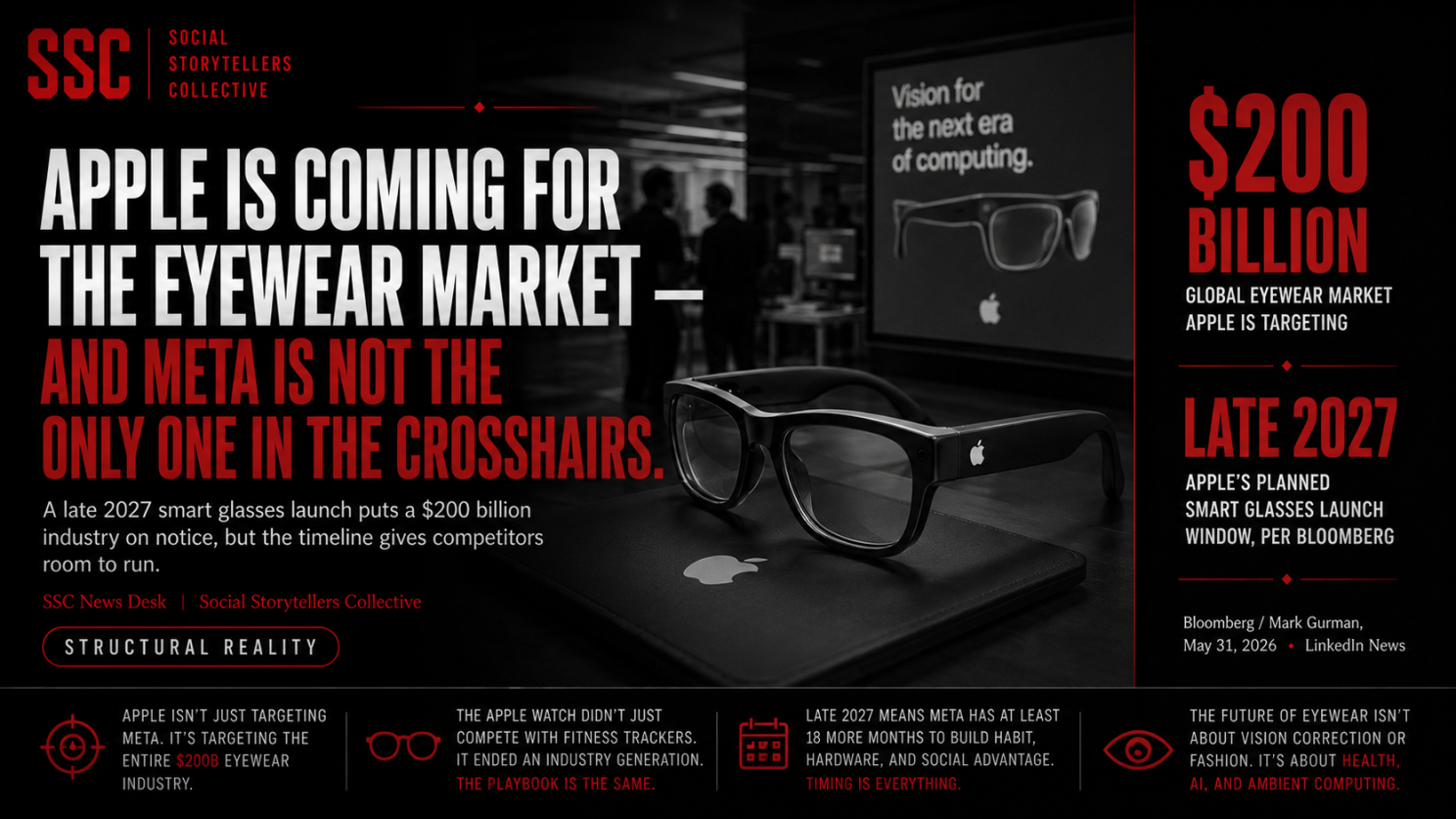
According to Bloomberg ‘s Mark Gurman , Apple is planning to launch smart glasses by late 2027 — with incoming CEO John Ternus identified as the driving force behind the initiative. And the company is not simply coming after Meta. It is coming after a $200 billion eyewear industry the same way the Apple Watch came after mechanical watches: with brand infrastructure, health data capability, and the kind of design credibility that rewrites what a category is supposed to be. The risk is the window. Meta has been iterating aggressively and has at least 18 more months to deepen consumer habits before Apple arrives. Leena Alridge breaks down what the timeline means, who is actually under pressure, and why the incumbents without a technology strategy are already watching from the outside. Read Apple Is Coming for the Eyewear Market — and Meta Is Not the Only One in the Crosshairs at Social Storytellers Collective .
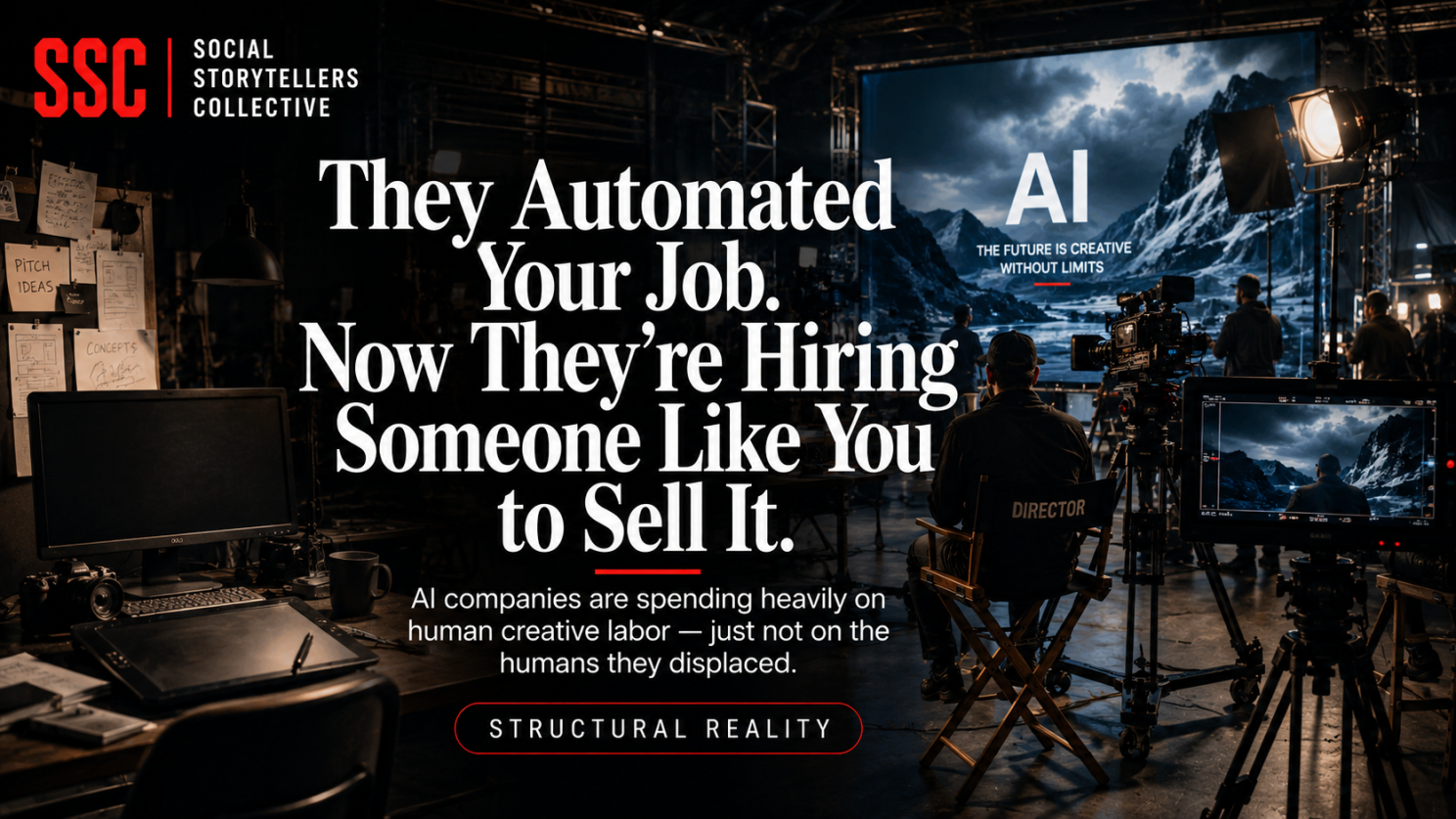
They Automated Your Job. Now They’re Hiring Someone Like You to Sell It. is the story the tech press keeps not telling. The same companies that disrupted creative labor markets are spending heavily on film crews, lighting directors, and production teams to make their promotional videos — because their own technology cannot make them look credible enough to recruit the engineers they need to keep building it. The displacement and the premium are running simultaneously. The workers who absorbed the first wave are not the ones collecting the second.
And the technology being deployed to replace them is not performing the way the pitch said it would. AI Writes the Code. Humans Clean It Up. draws on new reporting from TechCrunch and independent research to document what is actually happening inside the companies that went all in: 44% of AI coding tokens spent fixing AI-generated bugs, Amazonshutting down its internal productivity leaderboard after employees gamed it, Uber blowing through its entire 2026 AI budget in four months with nothing measurable to show for it. The efficiency gain and the cleanup bill are running simultaneously — and the junior developers cut to make room for these tools are the same workers who would have caught the problems.
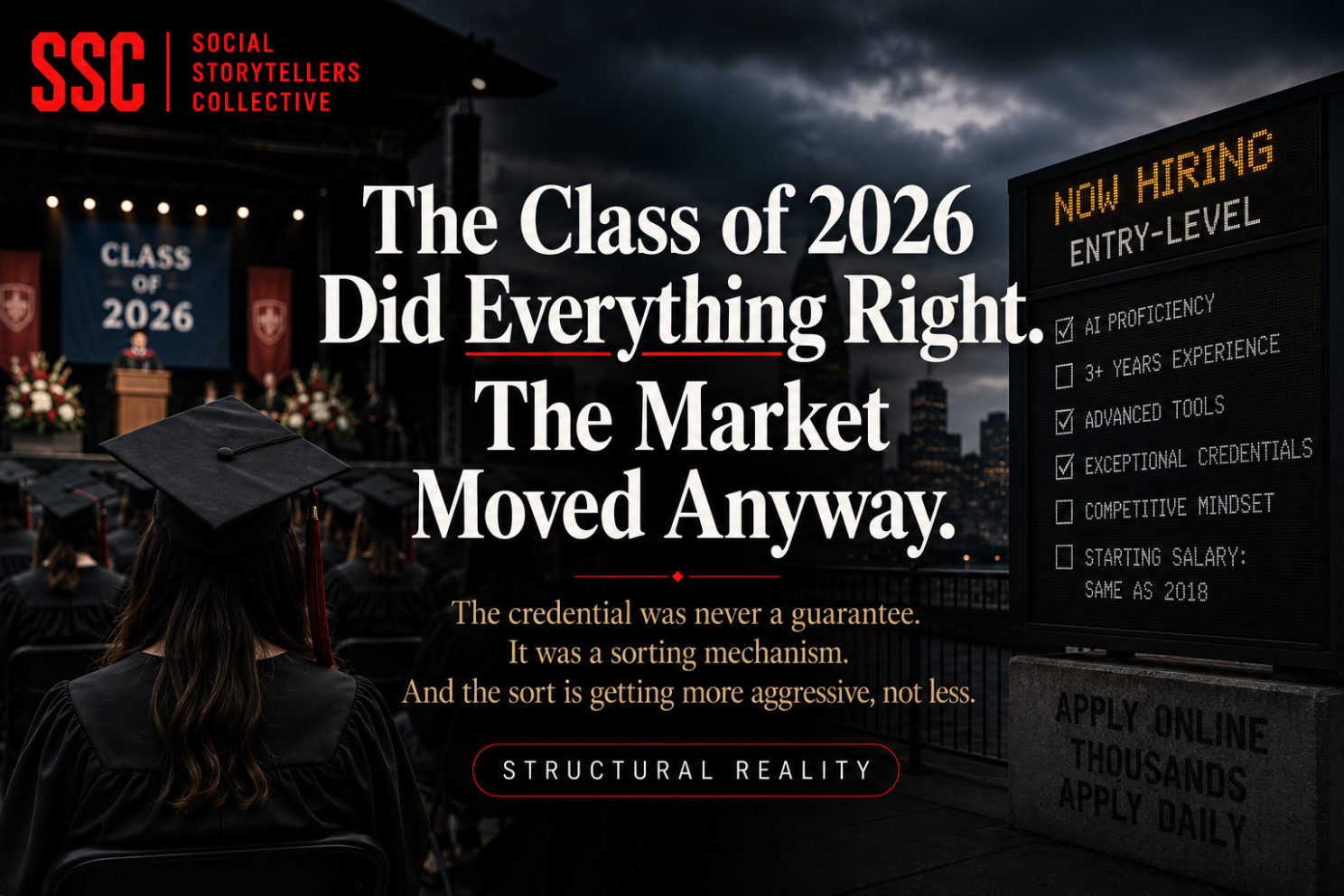
The credential those workers were told to get is not delivering what was promised either. The Class of 2026 Did Everything Right. The Market Moved Anyway. documents the graduating class entering the highest unemployment rate for recent college graduates in four years, with junior-level job postings down 7% even as the number of graduates creating job profiles nearly doubled. The credential was always a sorting mechanism. The sort is getting more aggressive, not less. And as SSC reported in The AI Resume Screen Won’t See You Coming, the algorithm doing the sorting favors white-associated names 85% of the time before a human ever sees an application.
The same logic that sorts workers sorts weapons. Who Gets to Say No to a Weapon? covers the story breaking this morning from the Washington Post: military leaders inside the Pentagon urging caution as the Trump administration pushes to deploy AI on the battlefield without the safeguards that got Anthropic designated a national security threat for insisting on them. The company that held the line got blacklisted. The companies that removed their safeguards are now inside the classified network. The precedent has been set. Every AI company watching knows the price of a defense contract.

That precedent connects directly to what is happening to the institutions responsible for holding the public record. In Ghana this week, parliament passed legislation criminalizing LGBTQ advocacy with prison terms of up to 10 years, using the language of cultural sovereignty to defend a law written by British colonial administrators. The gate keeping who gets to exist openly — and who gets criminalized for saying so — is not contained to one country or one institution. The mechanism differs. The direction is the same.
Two pieces today live at the intersection of culture and accountability. Alexandra Eala Is No. 29 in the World. Tennis didn’t build a door for the Philippines’ highest-ranked player in history. She moved through a system designed for someone else and kept winning anyway. At 20 years old, she is only getting started — and what she represents for access, visibility, and who gets to compete at the highest levels of a gatekept sport is the argument worth making. And Two Rappers. Two Kinds of Accountability. — Jay-Z ended six years of solo concert silence with four minutes of freestyle at Belmont Plateau in Philadelphia the same weekend Kanye West performed for 118,000 people in Istanbul on the back of a Wall Street Journal apology tour. One man managed his image. The other settled the score in public, in real time, in front of the people. The difference between those two choices is the whole story.
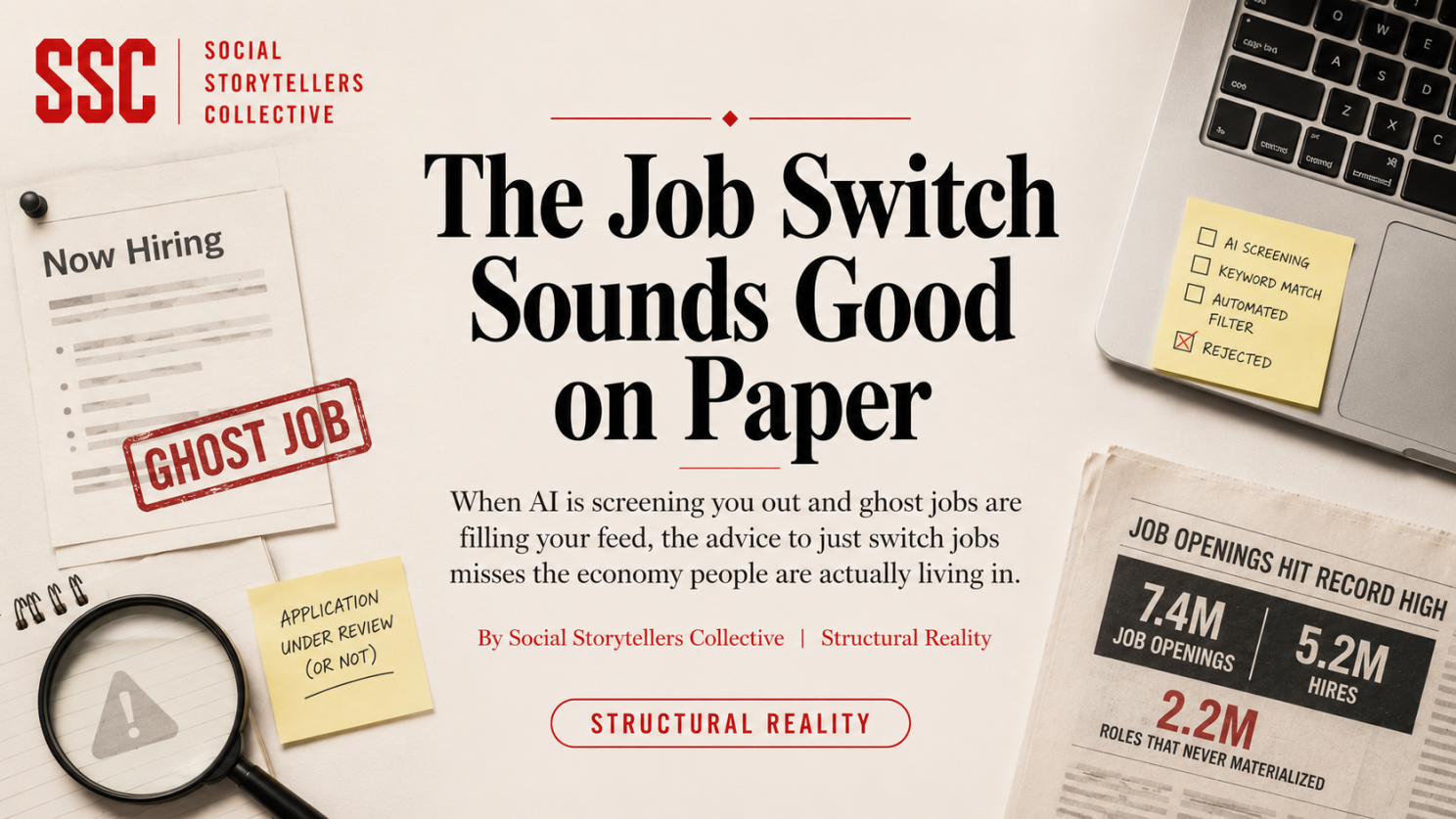
The economy underneath all of it is documented in two pieces that carry the K-shaped argument SSC has been building since March. The Job Switch Sounds Good on Paper — Bank of America says switch jobs and make more money. The data doesn’t account for the 28 to 32% of posted openings that were never real, or the algorithm screening your name before a human sees it, or the fact that loyalty pays nearly 10% at the top while everyone else is told to keep moving. And The Credit Card Is the Budget Now — $1.25 trillion in debt, 13% of balances 90 days overdue, the personal savings rate at 4% and falling. The credit card is not evidence of recklessness. It is the infrastructure holding the household together when the paycheck doesn’t cover what things cost.
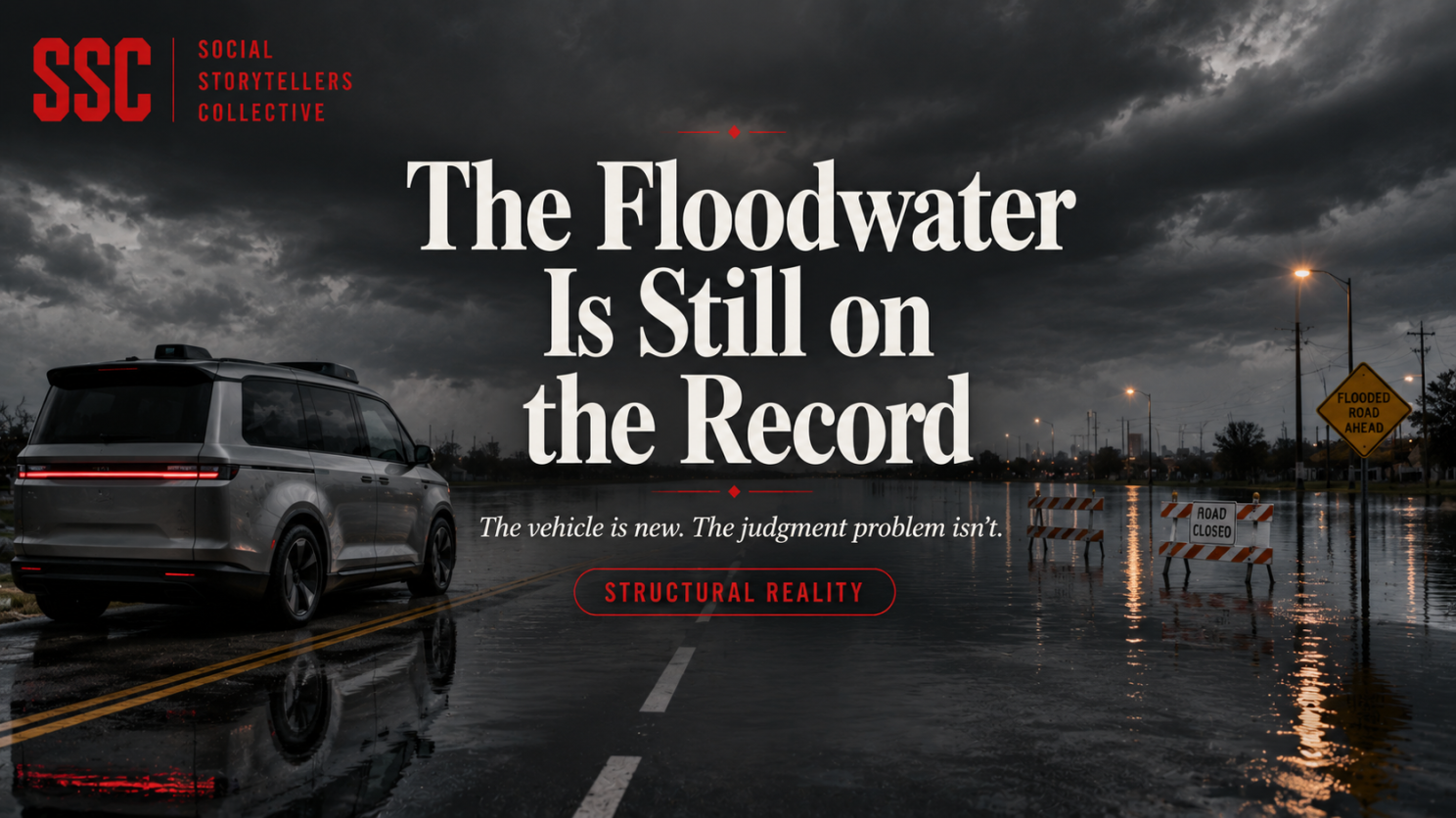
Waymo is offering free rides in a new minivan in Los Angeles, San Francisco, and Phoenix. The floodwater problem is still on the record. The Ojai is a new container. The unresolved question is what is running inside it.
Daily Visual Signal
A visual interpretation of the deeper systems, tensions, and structural shifts shaping the current moment — designed to translate complex societal changes into a single frame.
Empty Walls. Full Cases. Labels Gone.
The institution is still standing. The objects are still there. But someone removed the context — the names, the histories, the explanations of what any of it means. The argument was never about the artifacts. It was always about who gets to say what they are.
Featured Story
The Most Endangered Historic Places in America Are Being Erased on Purpose

The National Trust for Historic Preservation released its 2026 list this week — and the theme is the principle that all people are created equal. The framing is pointed. Because at least three of the eleven sites on the list are not endangered by neglect or time. They are being actively dismantled by the current federal government. The Stonewall National Monument scrubbed. The President’s House Site in Philadelphia stripped of its exhibits on enslaved people. A century-old church in Texas facing a border wall. What is endangered is not just the buildings. It is the record itself. Read the full piece.
Today’s edition is unified by a single thread: the people and institutions deciding what gets built, what gets preserved, what gets deployed, and who gets to be seen are making those decisions without the communities that will live inside them. The record is not neutral. Neither is who gets to write it. We will be watching.
We will be back tomorrow. — SSC
All of today’s coverage lives at socialstorytellers.substack.com. The full archive, beat navigation, and every linked piece are best experienced on a computer. If you have been reading and have not yet subscribed, we would be glad to have you with us.