
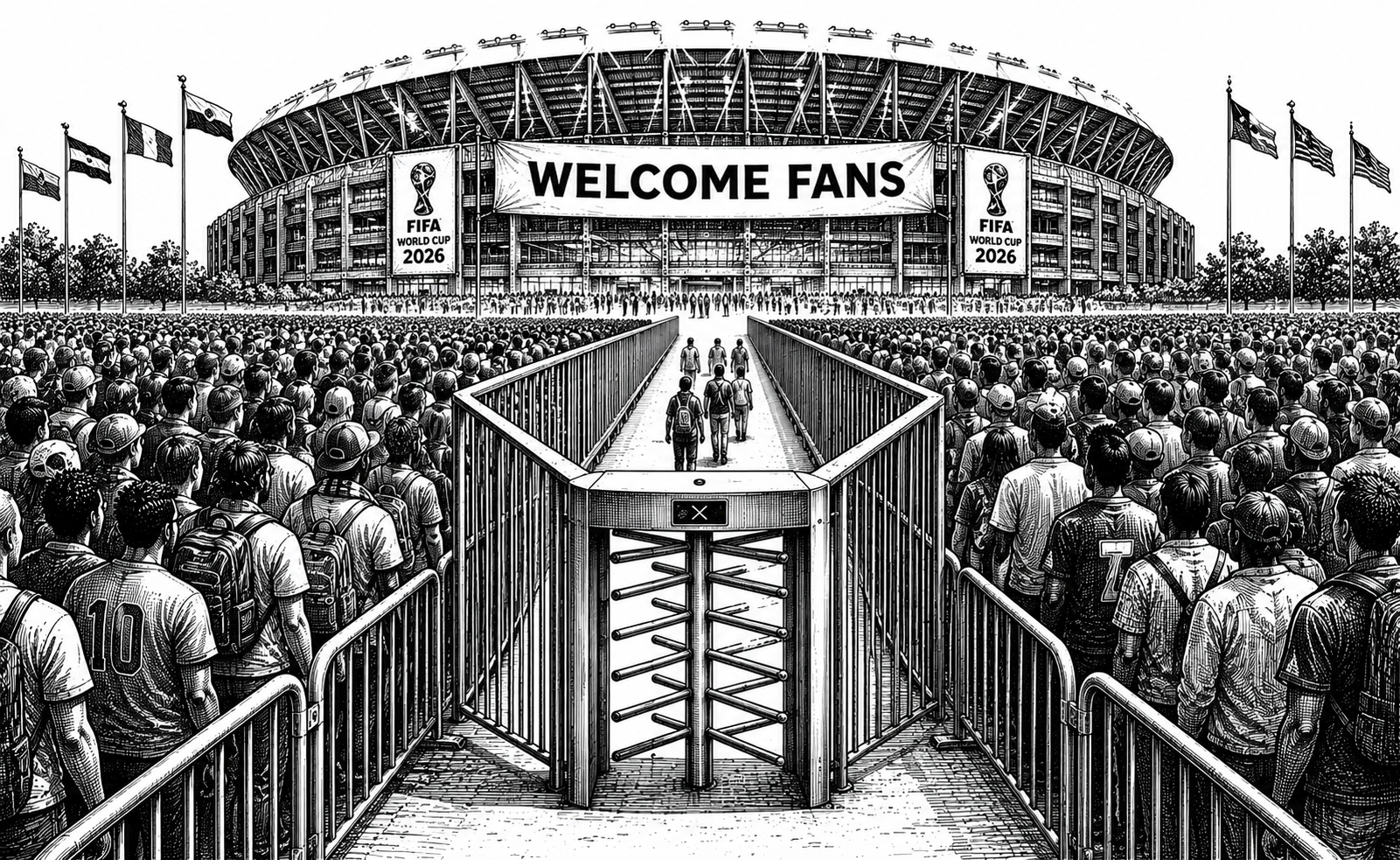
Early hotel bookings across U.S. FIFA World Cup host cities are falling below expectations despite historic ticket demand and global enthusiasm for the tournament, according to industry analysis reported by Travel and Tour World in June 2026. Miami, Atlanta, Houston, Philadelphia, Boston, and Seattle are all among the cities reporting shortfalls. Industry analysts identify three primary drivers: delayed travel planning, high accommodation costs, and international visa uncertainties. The third factor is receiving the least coverage and doing the most damage.
The 2026 World Cup is the largest sporting event in history by participating nations — 48 teams across the United States, Canada, and Mexico, with the majority of matches played on U.S. soil. The tournament’s expanded format was designed in part to broaden global participation and extend the economic reach of the event across more host communities. International fans traveling to U.S. matches are navigating a visa and immigration enforcement environment that has signaled unwelcome regardless of legal status. Consular appointment backlogs, unpredictable processing times, and an enforcement posture that has made border crossing feel risky for travelers from Latin America, Africa, and South Asia are producing the same outcome as an explicit travel restriction — without requiring one.
The populations most likely to travel internationally for a World Cup are the ones most exposed to that signal. Soccer’s global fan base skews heavily toward the regions that the current U.S. immigration enforcement environment has most directly targeted. A Brazilian family that has followed the sport for generations, a Nigerian supporter group that saved for two years to attend a match, a South Asian fan traveling to see their national team compete on the world stage — all of them are calculating a risk that fans from Western Europe are not being asked to calculate in the same way. That asymmetry is not incidental to the booking shortfall. It is the booking shortfall.
The economic consequence is landing on the workers and businesses that restructured their operations around the expected volume. Cities including Philadelphia and Kansas City changed alcohol sale laws and extended operating hours specifically to capture World Cup spending, as SSC documented in The World Cup Is Rewriting City Rules. Those policy changes required workers to staff longer shifts, cover expanded hours, and absorb significant operational pressure — under the assumption that the revenue would justify the cost. Hospitality workers in host cities — disproportionately immigrants and workers of color — extended their availability to serve visitors who are not arriving at the projected volume. The policy costs are fixed. The revenue is not.
The visa friction underneath the booking slump is the access story the economic coverage keeps missing. A global sporting event designed to generate broad public participation is being filtered through an immigration enforcement apparatus that narrows the guest list along lines that are geographic, racial, and economic simultaneously. The promise of the World Cup as a shared public experience is real. The system determining who gets to show up for it is not neutral — and the cities, workers, and local economies absorbing the shortfall had no role in designing that system.