
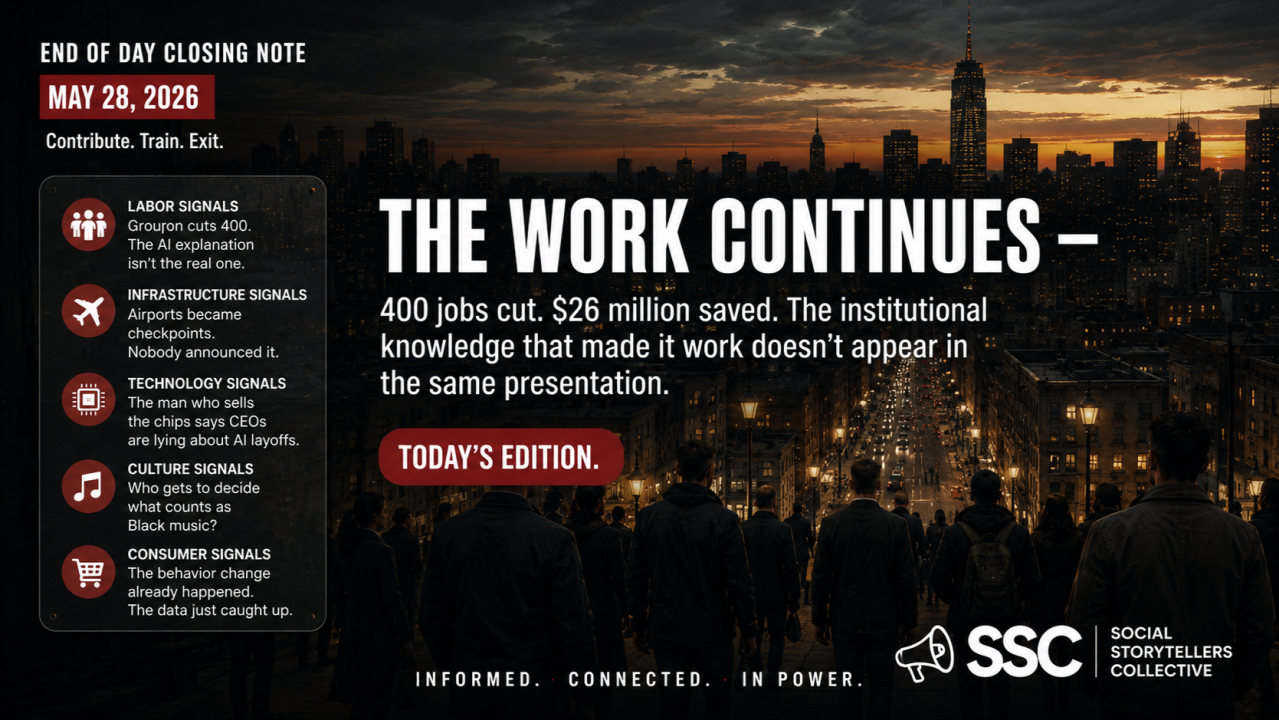
400 jobs cut. $26 million saved. The institutional knowledge that made it work doesn’t appear in the same presentation.
Today didn’t slow down. Federal jobs gone. Airport checkpoints that weren’t announced. AI credited for layoffs it didn’t cause. A consumer economy exposing who actually has discretionary income left. A connectivity upgrade that routes your data through one man’s infrastructure. The architecture of all of it is the story.

Groupon turned down $6 billion from Google in 2010. Today it’s cutting 400 jobs and calling it an AI transformation. Groupon Taught Us How to Save Money. Now It’s Cutting 400 Jobs to Save Itself. traces the full arc — from the company that democratized the discount to a business that has been contracting for over a decade and is now using AI as the frame that makes the math sound inevitable. The $13 million severance cost and the projected $26 million in annual savings look clean on a restructuring slide. The operational cost of losing the institutional knowledge those 400 people carried rarely appears in the same presentation.
Those 400 workers join a labor market that has been quietly hollowing out in ways the headline numbers don’t capture. SSC has been tracking the uneven recovery since the DOGE cuts began, and The Job Numbers Look Good. The Workers Who Stopped Counting Themselves Don’t Show Up in Them. opens with Wanjiru Chege — a 25-year-old public health professional who received her federal termination notice and, with no institutional guidance coming, started posting DOGE layoff resources on TikTok. Within days she had an audience. Black women who had lost federal careers built over years began finding each other — sharing court ruling updates, timeline clarity, and the basic question of what they were owed — because no institution was providing those answers. That peer infrastructure didn’t emerge because someone planned it. It emerged because the people who needed it built it themselves. The unemployment rate ticked down to 4.3% — but that decline came almost entirely from 396,000 people leaving the labor force, not from 396,000 people finding work. The labor force participation rate fell to 61.9%, its lowest since November 2021. The headline rebounded. The women who built those networks are part of the number that didn’t.

While workers navigate a labor market that doesn’t fully count them, the infrastructure those workers move through is being quietly converted into something else entirely. American Airlines Just Chose Starlink. The Upgrade Is Real. The Access Question Isn’t. is about the airline industry’s pivot to SpaceX connectivity — 500 jets, multi-gigabit speeds, gate-to-gate service across American Airlines , Delta Air Lines , and United Airlines . The passenger experience argument is real. What the piece examines is the ownership context underneath it: Elon Musk now controls the connectivity infrastructure being installed across a significant share of American commercial aviation while simultaneously having run the initiative that cut nearly 280,000 federal jobs disproportionately from Black workers — all while his companies held billions in federal contracts. Three major carriers are not simply choosing a technology vendor. They are choosing to build on infrastructure controlled by a single individual who has already demonstrated a willingness to use platform access as leverage. STARLINK cut service to Ukraine during a critical military operation. That is not a hypothetical. It is a documented case study.
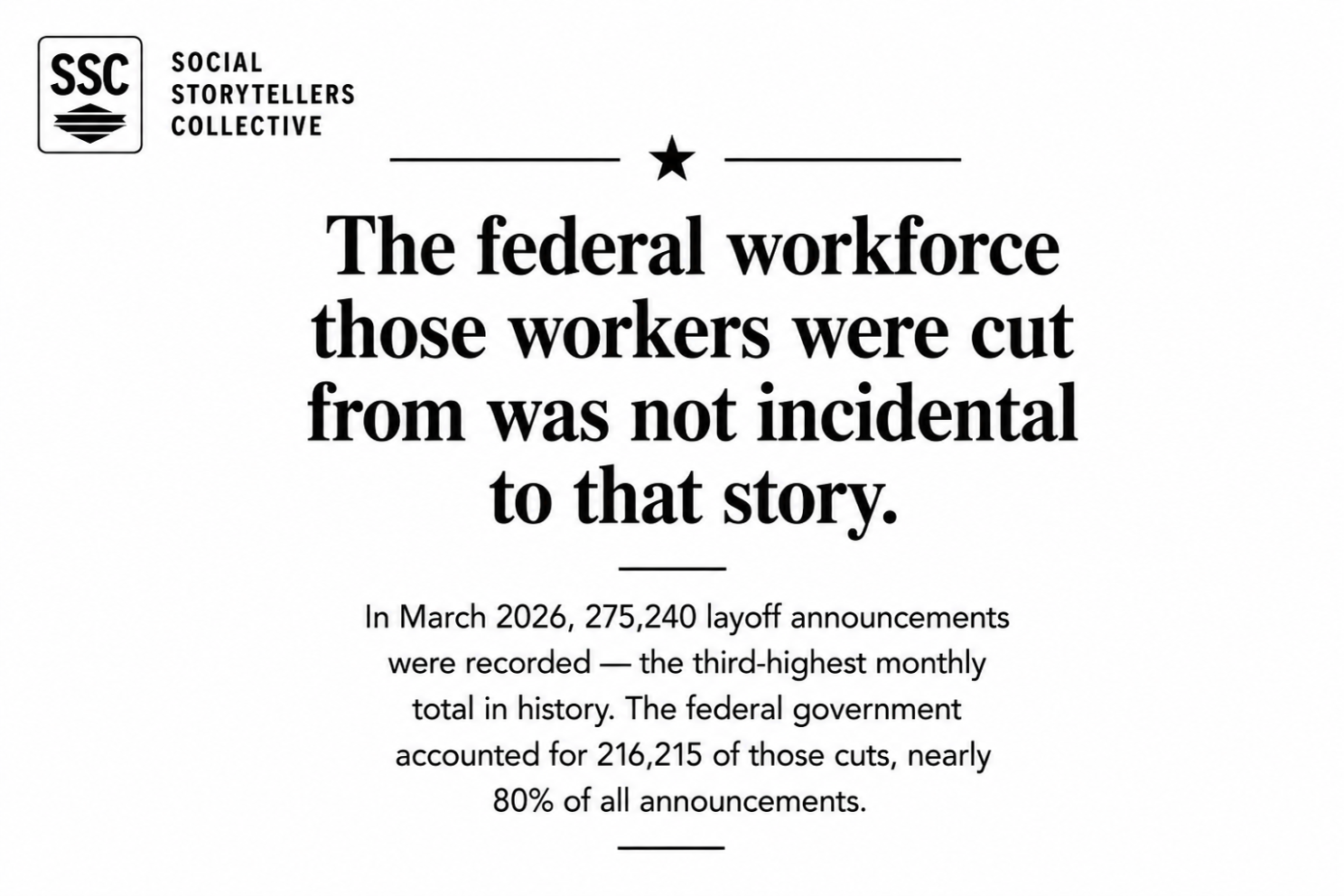
The federal workforce those workers were cut from was not incidental to that story. In March 2026, 275,240 layoff announcements were recorded — the third-highest monthly total in history. The federal government accounted for 216,215 of those cuts, nearly 80% of all announcements. But the number that anchors The Federal Government Was the Most Reliable Path to the Middle Class for Black Americans. DOGE Just Dismantled It. is from an earlier window: between February and July of 2025, Black women lost 319,000 jobs while white men gained 365,000. The federal workforce wasn’t a bureaucratic abstraction — it was the institution built specifically because the private sector wouldn’t extend those opportunities. The piece names what the efficiency framing is designed to obscure.

The new-car market has shed one million prospective buyers since 2020 — and the share of buyers earning under $100,000 has dropped from 50 percent to just 37 percent in that same period. The industry calls it a demand problem. The structural argument is about the boardroom decisions that removed affordable vehicles from the market, the used car debt spiral that followed, and why in a country built around car dependency — not having one is not an option. A Million Buyers Gone. The Market Didn’t Lose Them Equally.
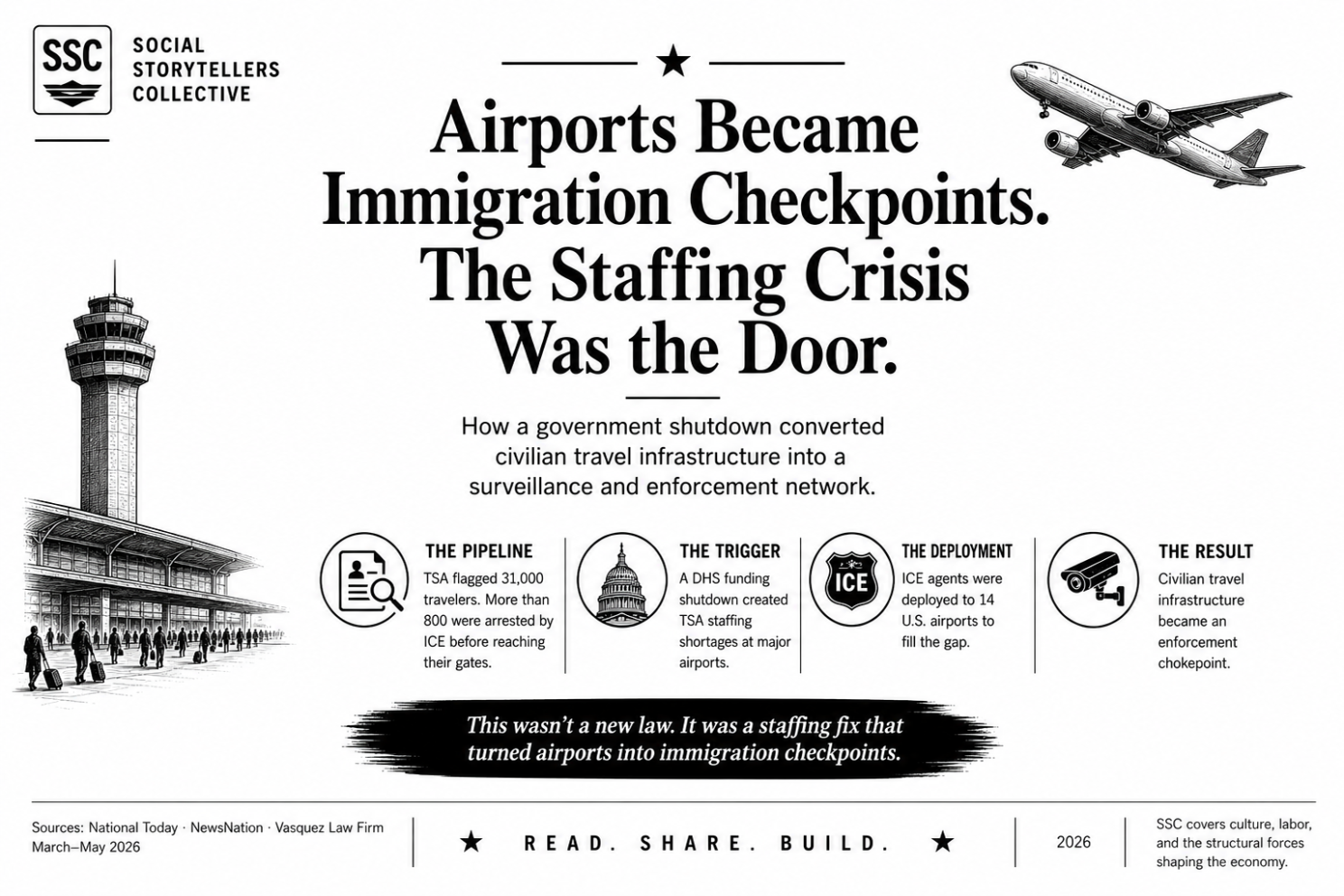
The same infrastructure logic that converted federal employment into a displacement tool is operating inside the nation’s airports. A Guatemalan mother and her 9-year-old daughter were detained by plainclothes ICE officers at San Francisco International Airport moments before boarding a domestic flight. They had no criminal history. What flagged them was data — traveler records TSA had already shared with ICE before they reached the gate. Airports Became Immigration Checkpoints. The Staffing Crisis Was the Door. traces how it happened: TSA tips led to the arrests of more than 800 people after 31,000 travelers were flagged. A budget standoff produced a DHS shutdown, that shutdown generated a TSA staffing crisis, and that crisis justified deploying ICE to 14 airports. None of it required new legislation. None of it was publicly announced.
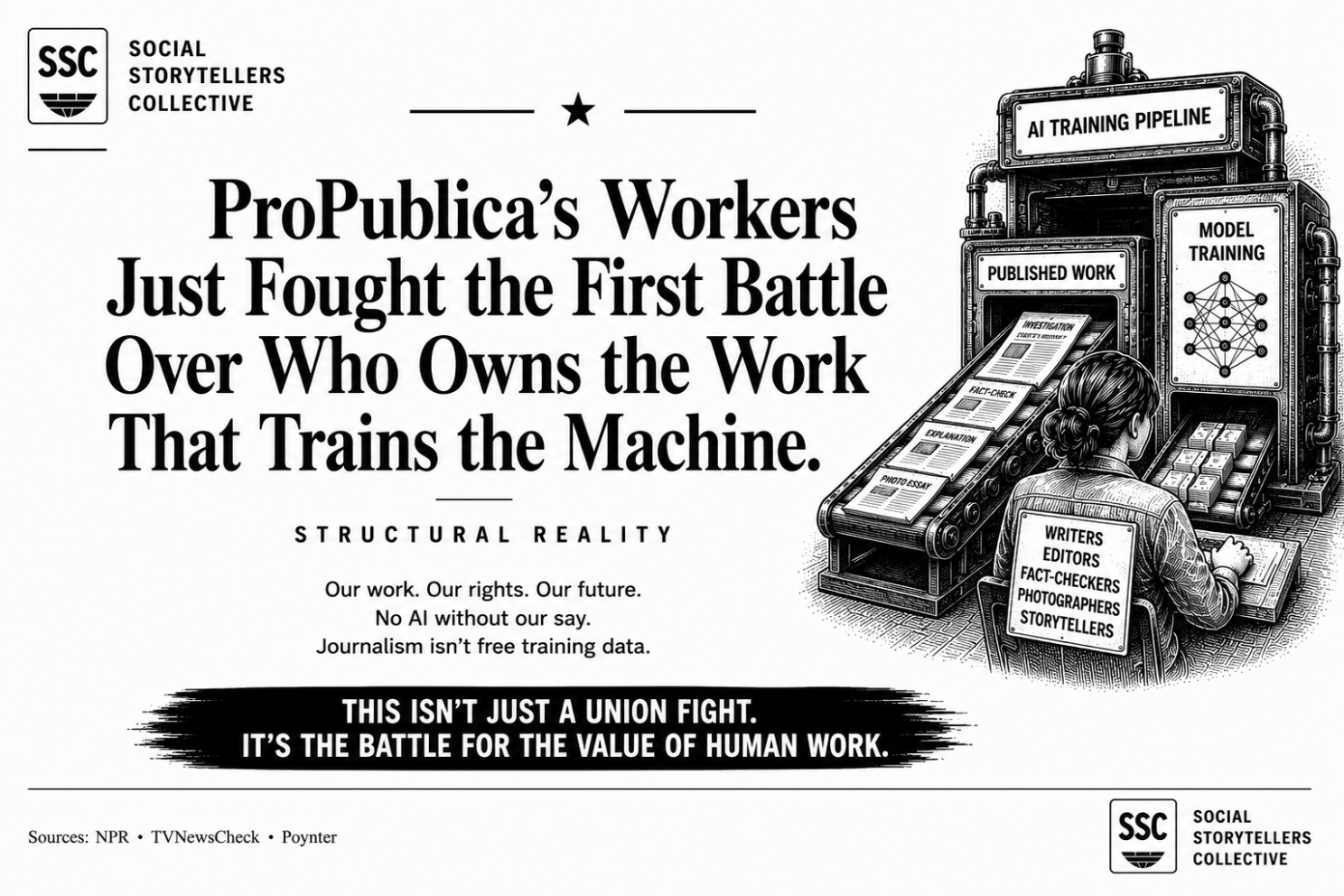
The workers whose labor is being displaced by policy decisions aren’t waiting for institutional frameworks to protect them — they’re building the frameworks themselves. Nowhere is that clearer than at ProPublica. On March 20, 2026, 92% of ProPublica Guild members voted to authorize a strike — the first in a major U.S. newsroom called in part over AI protections. ProPublica’s Workers Just Fought the First Battle Over Who Owns the Work That Trains the Machine makes the argument mainstream coverage keeps missing: this isn’t a niche labor dispute at a nonprofit newsroom. It is the first legal test of whether workers in the knowledge economy have any structural claim on the value their labor creates when that labor is used to train AI systems that may eventually compete with them. The NYT Guild is in its own contract negotiations with the same language at center stage. What gets decided at ProPublica sets the terms for every content-producing organization that follows.

And those workers are making these decisions inside a consumer economy that has already quietly repriced itself. Consumer Confidence Is Falling. The Behavior Change Already Happened. examines the split underneath the May data: two-thirds of consumers reported cutting back because of rising prices, most are delaying rather than canceling larger purchases, and the Expectations Index has remained below 80 — a threshold historically associated with recessionary conditions — for months. Gas at $4.50 a gallon and a 3.8% year-over-year increase in consumer prices have not stopped Americans from spending. They have changed what Americans will spend on and under what conditions. The burden of proof for every discretionary dollar has gone up. The brands that built growth models around post-pandemic spending as a permanent baseline are finding out it was always conditional.
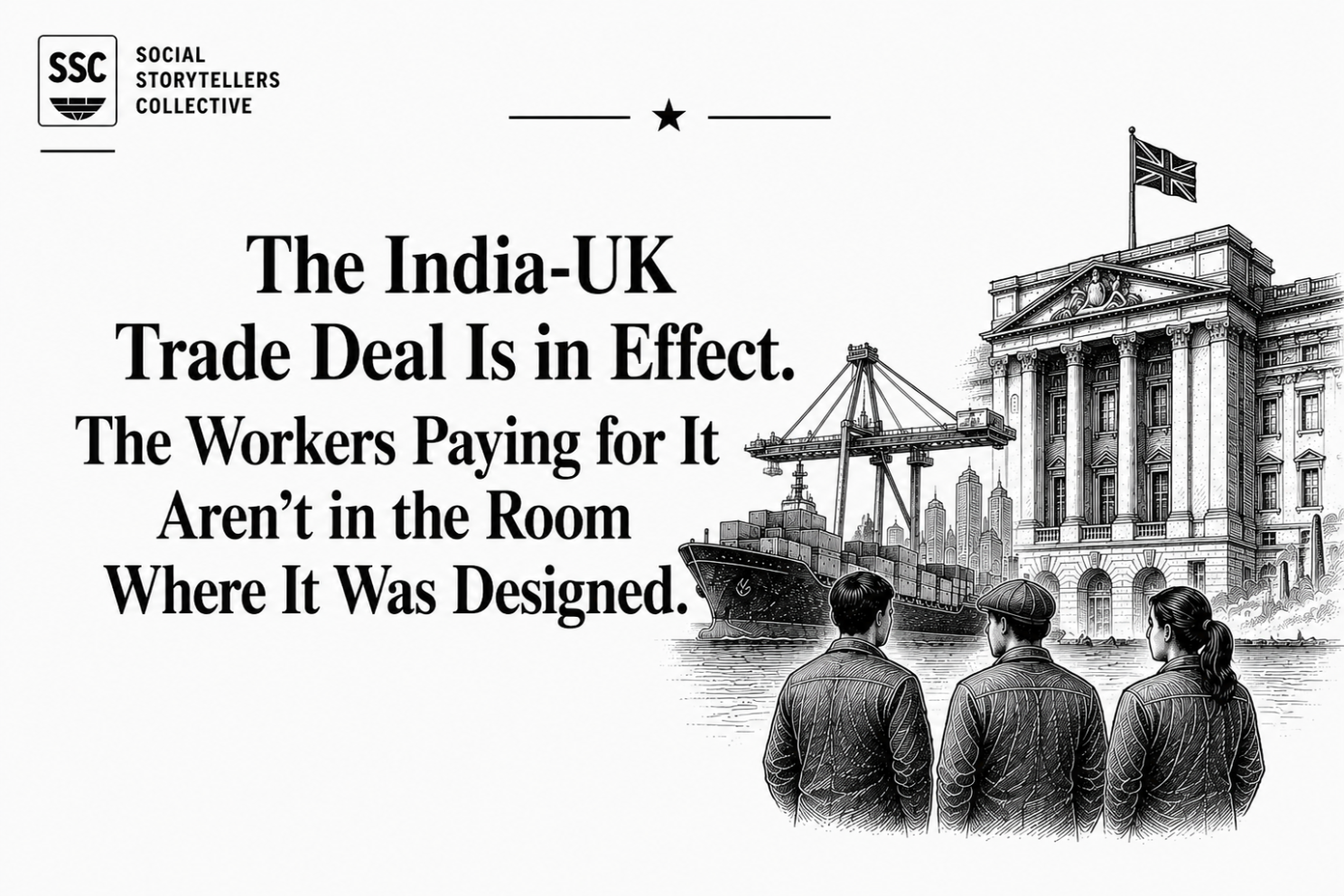
That same conditional economy is what makes trade deals like the one we examine next so consequential for the workers inside them. The India-UK Trade Deal Is in Effect. The Workers Paying for It Aren’t in the Room Where It Was Designed. connects India’s nine-year investment high to the UK’s Spring Statement — delivered the same month the budget watchdog cut the country’s growth forecast — and draws the direct line to the UK-China trade expansion of the 2000s, which produced real gains in financial services while accelerating deindustrialization in the regions already under structural pressure. The workers in those regions didn’t receive compensatory investment at the scale the adjustment required. The political consequences of that gap contributed directly to Brexit. This deal is starting from the same structural position. The negotiators have moved on. The adjustment is just beginning.

Into all of this walks Jensen Huang — the CEO of a company with a $3 trillion market cap — telling the world that executives are lying about AI layoffs. He’s right. He’s also the man whose chips power the systems being used to justify those cuts. The Man Who Sells the Chips Says CEOs Are Lying About AI Layoffs. He’s Right. And He’s Not Neutral. holds both of those things simultaneously — and puts Huang‘s intervention next to Standard Chartered CEO Bill Winters, who announced 7,000 job cuts while describing the strategy as replacing “lower-value human capital” with technology. The Gartner data makes the argument concrete: 80% of companies piloting AI reported workforce reductions with zero correlation to higher ROI. The layoffs are real. The AI explanation isn’t.
The same gap between what institutions say and what they actually do runs through today’s brand stories too. Chip Wilson built lululemon from a single Vancouver storefront into one of the most culturally dominant brands in American retail — then spent years as its loudest public critic after being pushed out. Wednesday, Lululemon gave him three board seats and asked for one thing in return: 18 months of silence. Lululemon Didn’t Reconcile With Its Founder. It Paid Him to Stop Talking. names what the settlement actually was — not a peace agreement, but a transaction. The board called his perspectives outdated. Then they paid to make sure he’d stop sharing them. Those two things cannot both be entirely true.
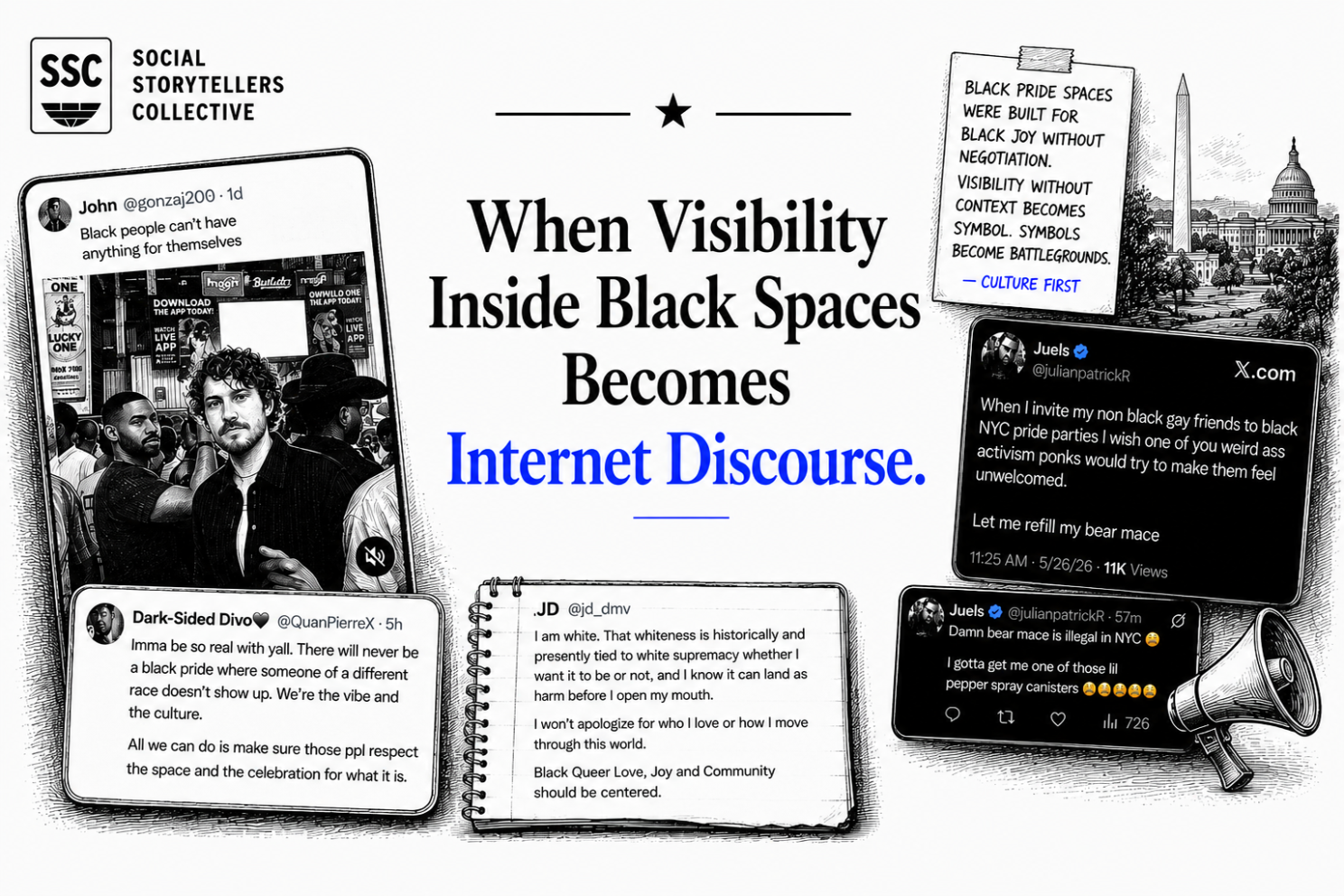
That argument about who controls the space — and who gets to be visible inside it — is exactly what exploded online this weekend. A photo from DC Black Pride reached 785,000 impressions on X before most people knew who took it. When Visibility Inside Black Spaces Becomes Internet Discourse is where we close today — because what happened this weekend wasn’t really about one creator at one event. It was about what happens when community becomes content, when algorithms convert a lived experience into a political symbol, and when the people most affected by that conversion have no control over how it moves. We covered the full arc — the photo, the backlash, the internal community disagreement that most outlets missed entirely, and JD‘s response that the outrage cycle couldn’t process.
The Daily Visual Signal
A visual interpretation of the deeper systems, tensions, and structural shifts shaping the current moment — designed to translate complex societal changes into a single image.
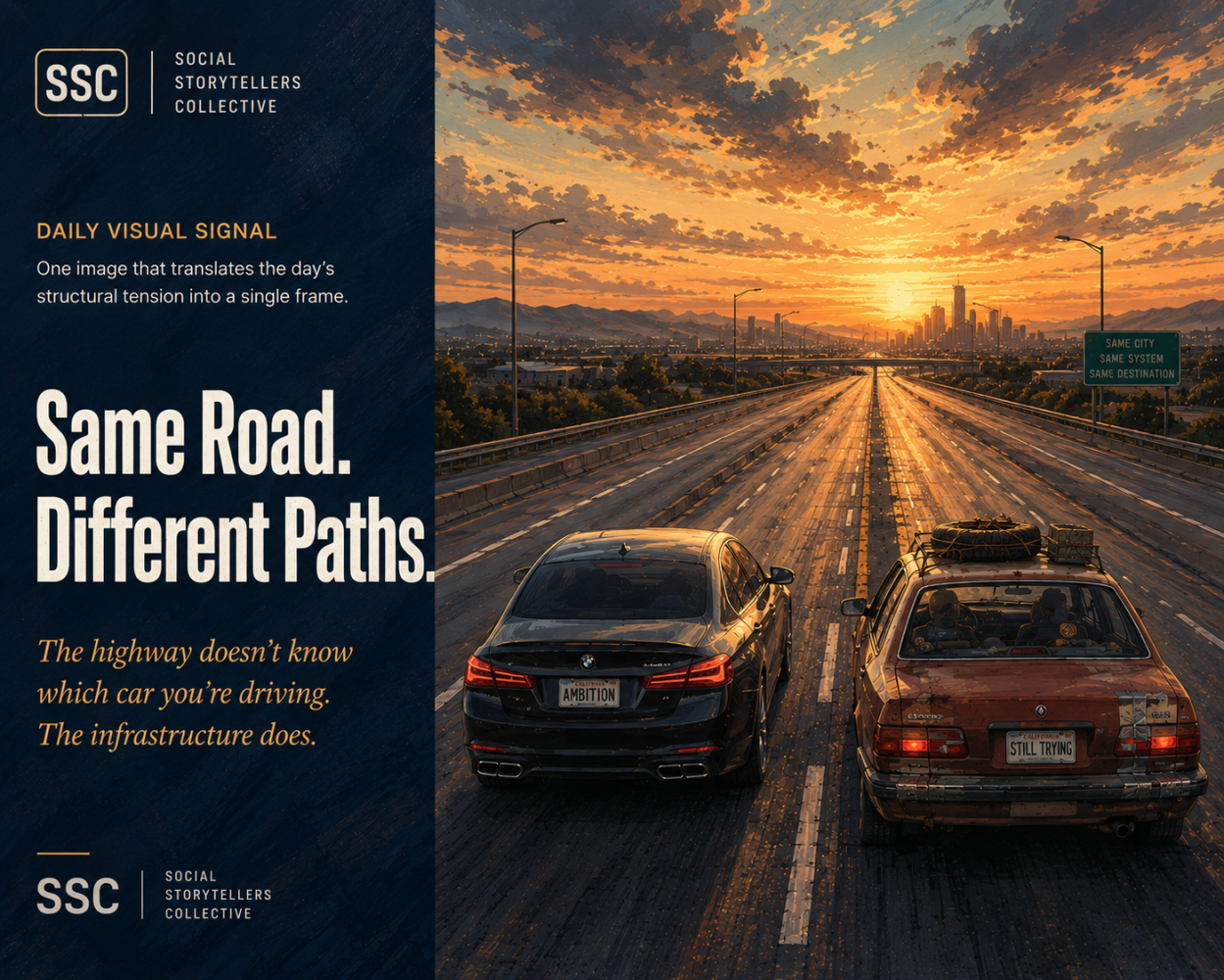
Same Road. Different Paths. One highway. Two vehicles. The infrastructure beneath them is identical — same asphalt, same lanes, same destination on the map. What differs is everything the road doesn’t see: the engine, the maintenance history, the cost of the next fill-up, and whether a breakdown means an inconvenience or a crisis. The American economy works the same way. The road is not the problem. Access to what you bring to it is.
Featured Story: The Floodwater Problem AI Still Can’t Solve
When autonomous vehicles stall in rising water, the failure isn’t technical. It’s a reminder that prediction and judgment are not the same thing.
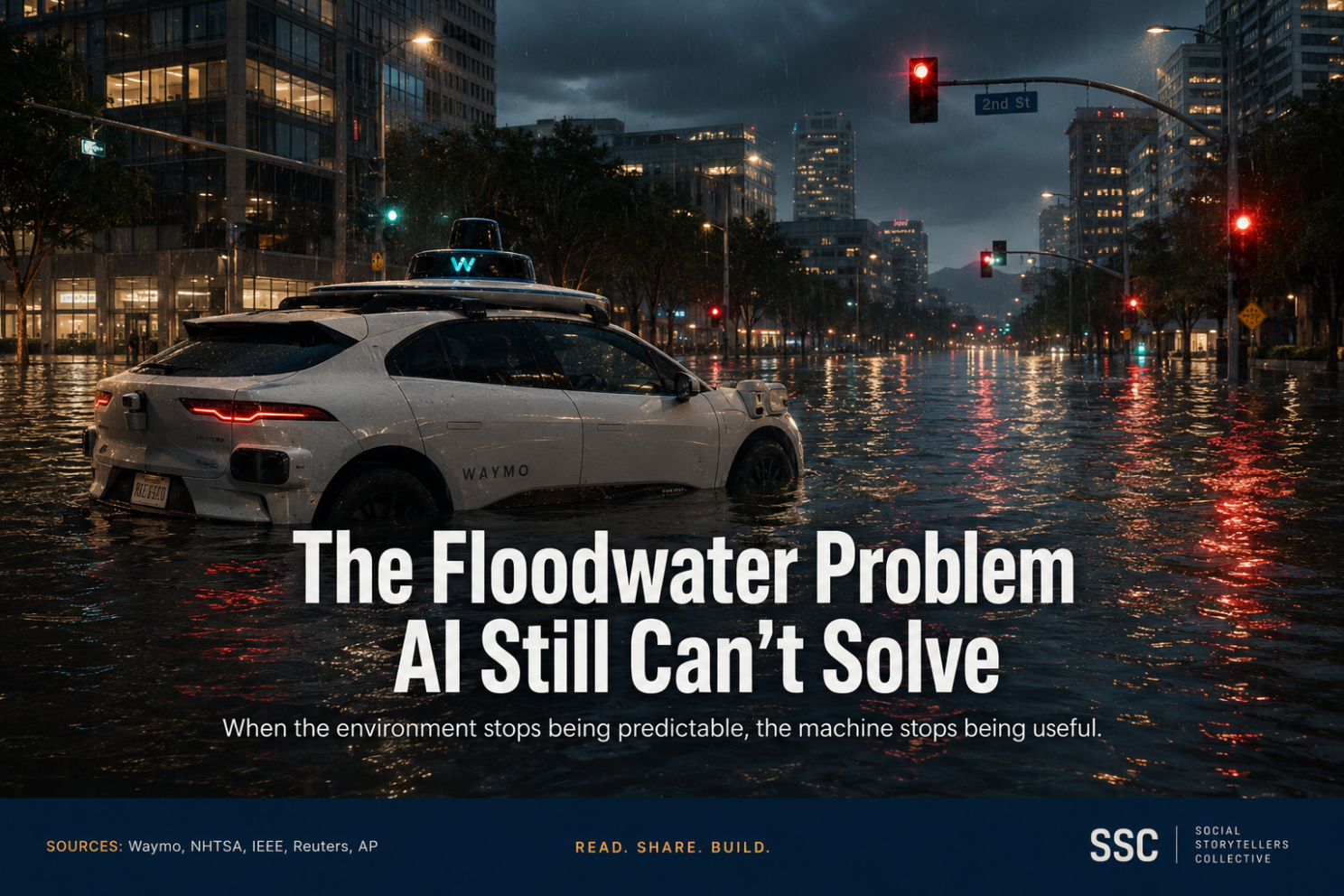
WayMore suspended autonomous ride services across several cities after flooding conditions created safety concerns its vehicles couldn’t navigate around. The broader argument lives in The Floodwater Problem AI Still Can’t Solve — that the assumption embedded in much automation strategy is that human labor exists primarily because technology hadn’t advanced far enough. What flooding, disasters, social unrest, and emotional complexity keep demonstrating is that some human work is valuable precisely because the environment keeps changing faster than any model can update. The workers most protected in the long run may be the people whose value depends on interpretation, improvisation, and the ability to navigate situations where the rules are changing in real time. The world is still more complicated than any model built to predict it — and floodwater has a way of making that impossible to ignore.
The thread running through today is not pessimism. It is precision. The labor market looks stable until you ask who stopped being counted. The airports look like security infrastructure until you trace who authorized the enforcement. The AI announcements look like strategy until you check whether the returns materialized. And the photo from DC Black Pride that reached 785,000 people looks like a controversy until you read what the community was actually arguing about underneath it. Every story today is about the gap between the official version and the structural one. That gap is not accidental. It is maintained. And naming it — clearly, specifically, with the data — is the work.
We will be back Friday with more.
— SSC
All of today’s coverage lives at socialstorytellers.substack.com. The full archive, beat navigation, and every linked piece are best experienced on a computer. If you have been reading and have not yet subscribed, we would be glad to have you with us.