
NEWS DESK | SOCIAL STORYTELLERS COLLECTIVE
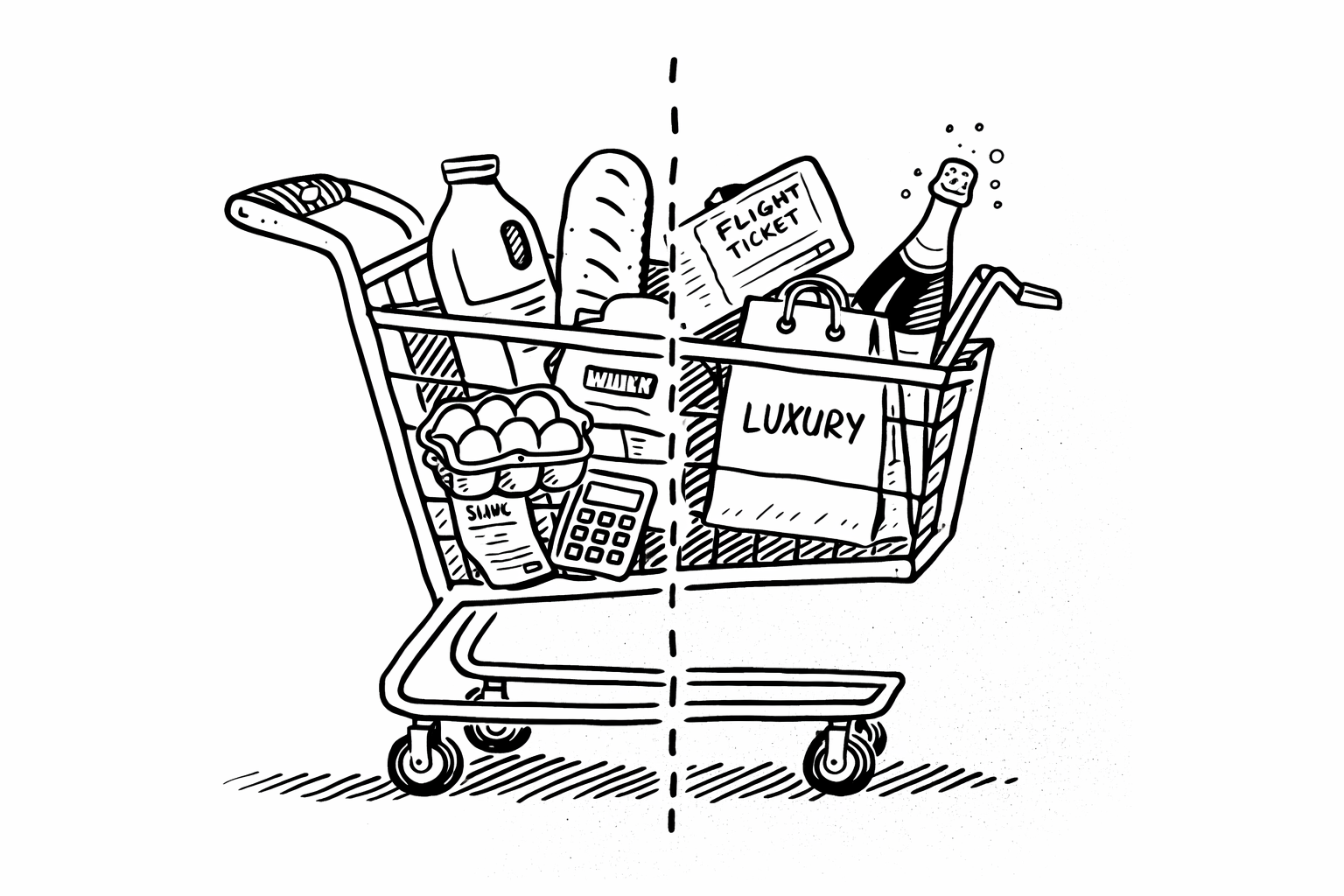
Retail spending continues to grow, travel demand remains steady, and overall consumer activity has avoided the collapse many economists feared. But beneath those national numbers lies a quieter and more complicated reality. Consumer spending in the United States increasingly resembles what economists describe as a K-shaped economy — one where financial fortunes diverge sharply depending on where households sit on the income ladder.
For higher-income Americans, the economy has remained relatively supportive. Strong equity markets, steady wage growth, and greater access to credit have helped affluent households maintain discretionary spending. Airlines report strong demand for premium seats, luxury brands continue to expand, and travel among wealthier consumers has remained resilient even as broader uncertainty lingers. For many other households, the story looks entirely different. Over the past several years, the cost of essentials — housing, groceries, insurance, and utilities — has absorbed a growing share of monthly budgets. According to analysis of household spending patterns, essentials now account for more than 60 percent of total spending among lower-income households, leaving far less room for anything else. Restaurants are visited less frequently. Subscriptions are trimmed. Clothing purchases are delayed. Even small indulgences that once felt routine are reconsidered.
Corporate America has already begun to acknowledge the divide. Companies that cater to budget-conscious consumers have reported declining traffic among lower-income customers, prompting a renewed focus on discounts and value menus. At the same time, businesses targeting affluent consumers are expanding premium offerings, reflecting the continued strength of spending at the top of the income spectrum.
This divergence reflects deeper structural forces. Wealth gains in recent years have been heavily concentrated among households with significant financial assets — equity markets surged over the past year, benefiting higher-income investors who hold a larger share of stocks, while housing, where middle-income households hold most of their wealth, has seen much slower growth. The labor market has added another layer of pressure. Unemployment rates have risen more sharply among younger workers and Black Americans than the national average, a reminder that economic slowdowns rarely affect all groups equally and that the distance between the two economies can be widest for those already navigating the most constrained financial circumstances.
Yet despite these disparities, overall consumer spending continues to expand. Economists estimate that U.S. consumer spending grew about 2.7 percent in 2025 and is expected to rise roughly 2.8 percent in 2026. The explanation lies in who drives that number. Higher-income households already account for more than 60 percent of total consumer spending, meaning their financial stability carries outsized influence over the broader economy. As long as these households remain confident and financially secure, overall spending can continue to grow — even as millions of other households quietly tighten their budgets. Consumer spending may still be expanding, but the experiences shaping those numbers increasingly belong to two very different financial realities.