
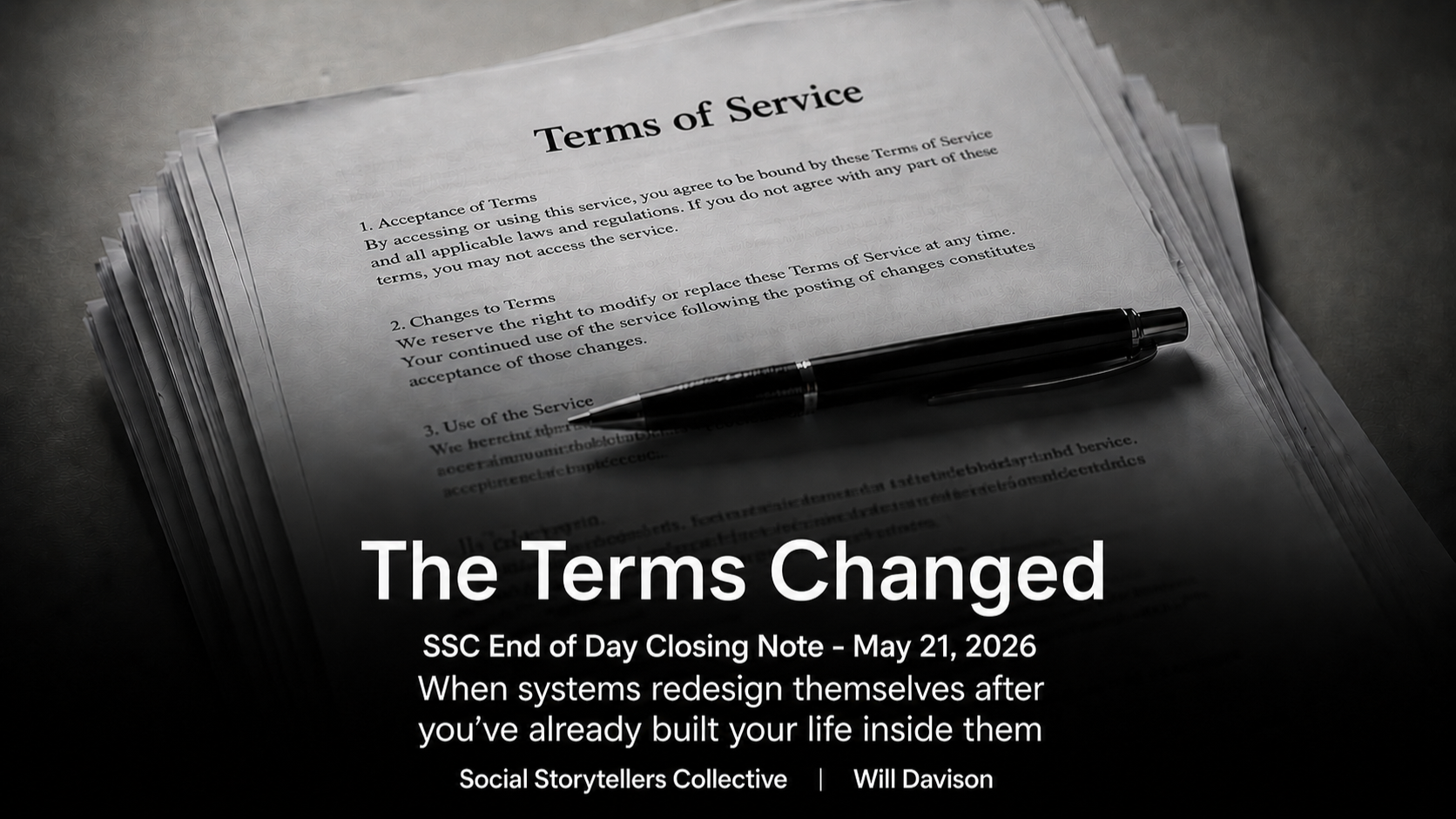
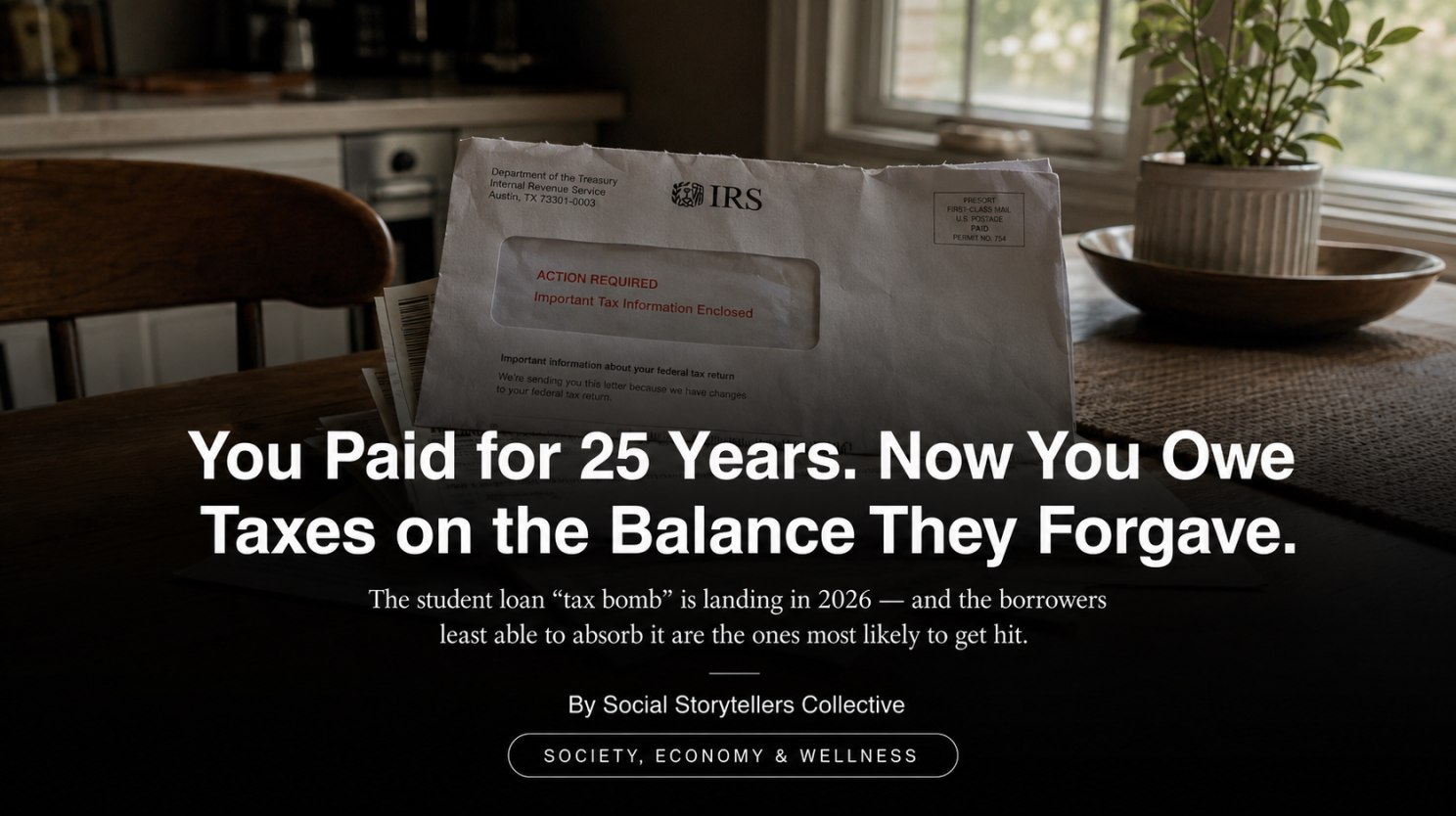
A woman at a kitchen table opens a letter from the IRS. She’s been paying her student loans for twenty-five years. The balance is gone — discharged, finally, after a quarter century of low payments and accrued interest on a debt that was always supposed to disappear. The letter says congratulations. A second letter says she owes $8,800 in federal taxes on the money she never received. The system worked exactly as designed. So did the tax code.
The word today isn’t transformation or disruption or collapse. It’s terms. Specifically: the terms that were set when you signed up, built your business, booked your flight, or trusted your government — and the terms that exist now, after the institutions that set them quietly rewrote the agreement. That pattern runs through everything today. Google announced it is redesigning search so you never need to leave. A student loan borrower who crossed the twenty-five-year finish line discovered her forgiveness comes with a tax bill she didn’t know was coming. Target reported its best quarter in over a year by building a business model that no longer depends on the customers it alienated. United Airlines is projecting a record summer — for the passengers who didn’t get priced out when jet fuel doubled after the Iran strikes. And exactly one year ago today, Moody’s stripped America of its last perfect credit rating. Congress responded by passing a bill that will add four trillion dollars to the debt. The institutions aren’t failing. They’re functioning. The people absorbing the cost of that functioning are just rarely the ones writing the press releases.
Today marks the close of a four-part SSC series that began Monday. Each day this week, we published one chapter of the same story — a structural argument about what happens when the credentialing system that previous generations used to build economic stability is stress-tested from every direction at once. Today’s final chapter is the sharpest one.
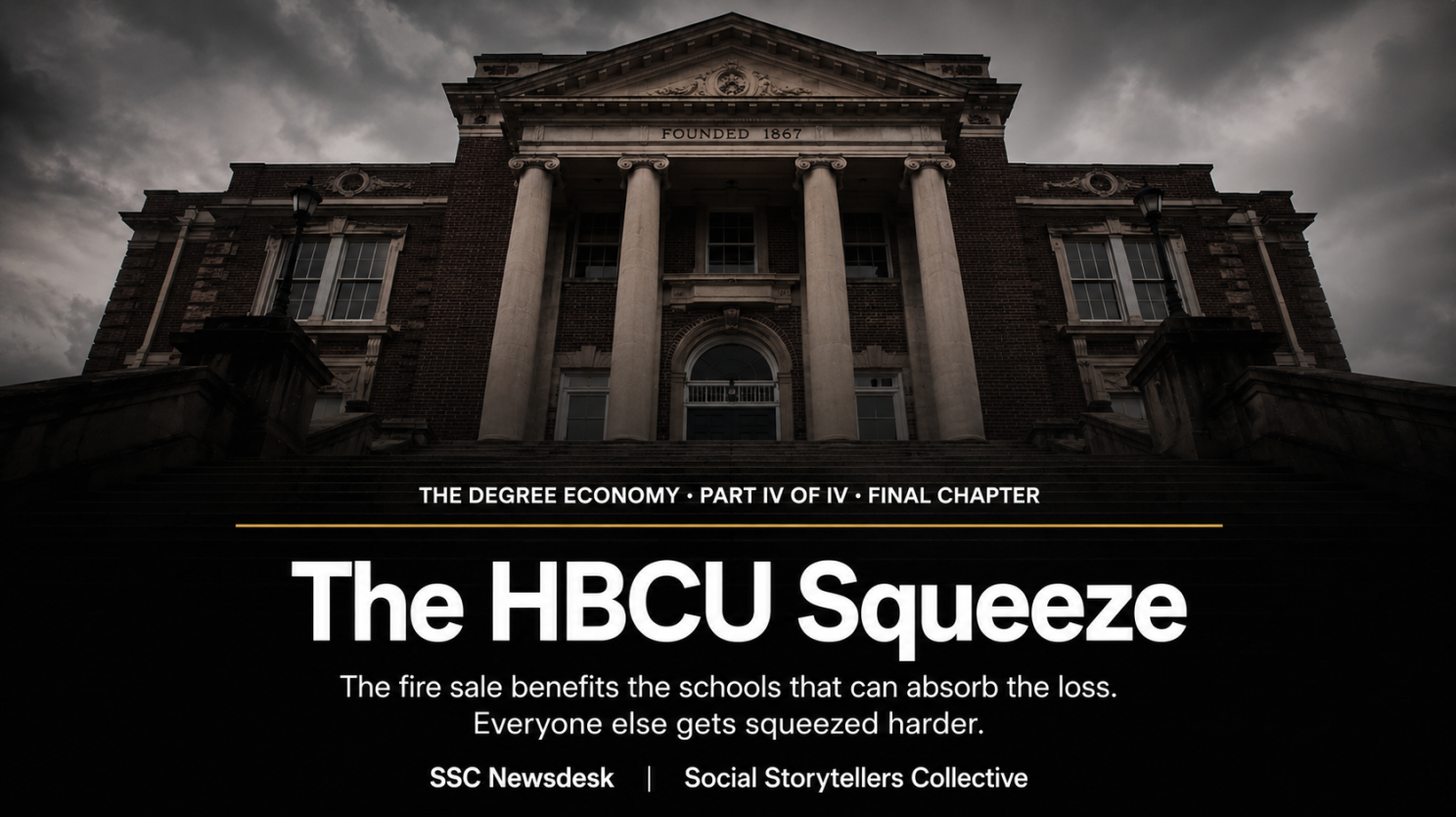
Where The Credential Economy Leaves Behind The Institutions Built To Close The Gap
The MBA is on sale. HBCUs are not leading it. The schools cutting tuition by 40% — Purdue, UC Irvine, Johns Hopkins, Washington University — have the institutional margin to absorb the short-term revenue loss. HBCU business schools are operating in a fundamentally different environment. Their students are disproportionately Pell Grant-eligible, first-generation, and from lower- and middle-income Black families — the same families whose financial capacity is being compressed by federal workforce reductions, DEI rollbacks, and the broader economic instability this series has documented. The fire sale is happening around them. The conditions that would make it usable for them are deteriorating simultaneously.
The federal funding picture makes it worse. The Trump administration announced a one-time $500 million HBCU boost — funded by eliminating $350 million in grants previously supporting Hispanic-Serving Institutions. A redistribution between underserved communities, not new investment in either. The 2026 budget proposed a 14.4% cut to Title III funding — the primary federal mechanism supporting HBCU quality and stability. Howard University faced a $64 million proposed cut two days after Trump told a national audience HBCUs had “nothing to worry about.” Nearly half of all HBCUs have been targeted for federal funding terminations. The private HBCU scholarship ecosystem is also contracting following DEI rollback guidance. This is the squeeze — and SSC will keep following it.
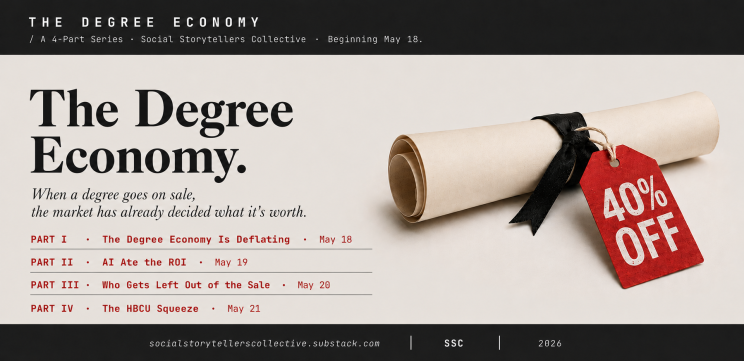
The Degree Economy — A 4-Part Series | Social Storytellers Collective
The MBA is on sale. The jobs it was supposed to unlock are disappearing. And the workers who most need the upgrade are the least positioned to use the discount. We will continue to follow the credentialing economy as it restructures in real time.
Part I — The Credential Is Deflating — When a degree goes on sale, the market has already decided what it’s worth.
Part II — AI Ate the ROI — The jobs the MBA was supposed to unlock are the first ones being eliminated.
Part III — Who Gets Left Out of the Sale — A 40% cut on something you couldn’t afford is still unaffordable.
Part IV — The HBCU Squeeze — The fire sale benefits the schools that can absorb the loss. Everyone else gets squeezed harder.
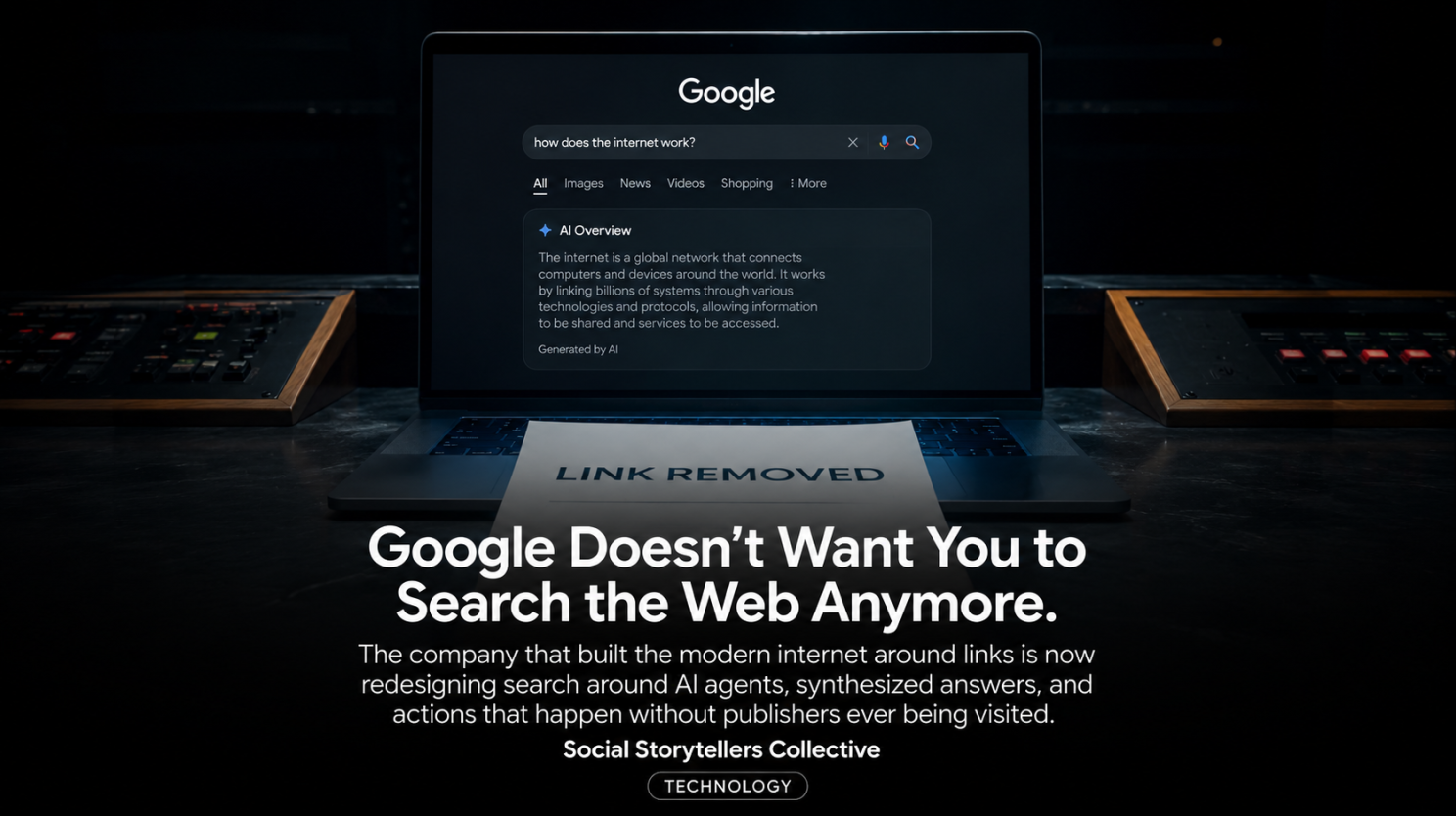
Where The Infrastructure of the Internet Decides You’re No Longer the Point
At its 2026 I/O conference, Google unveiled what may become the single biggest transformation to internet behavior since the search engine went mainstream. The company is no longer building a tool for finding websites. It is rebuilding Search into an AI operating layer that answers questions directly, performs tasks autonomously, and acts on behalf of users — without requiring them to navigate the open web at all. For more than two decades, the internet economy depended on a stable exchange: publishers created information, Google indexed it, users searched for it, and traffic flowed outward through links. That relationship is ending. The destination is no longer the website. Increasingly, the destination is Google itself.
What remains largely unaddressed in Google‘s rollout is who decides what the AI surfaces. Algorithmic systems have never been neutral arbiters of information. For Black and Brown communities, that history is not abstract — it is a track record of search results that criminalized, flattened, or erased. AI synthesis does not resolve those distortions. It automates them. The open web was built around movement. AI-native search is built around settlement. What’s ending is not the internet — it’s the assumption that users navigate it themselves.
Where The Promise of Debt Relief Arrives With a Bill Attached
As of January 1, 2026, federal student loan forgiveness under income-driven repayment plans is taxable again. The provision that shielded discharged debt from federal taxation expired on December 31, 2025, and Congress did not extend it. A borrower earning $50,000 who has $40,000 discharged sees their taxable income jump to $90,000 for that year alone — a federal tax swing of nearly $8,800, arriving at what was supposed to be the end of the road. The borrowers most likely to be hit hardest are the ones IDR was designed to help: social workers, teachers, caregivers, public sector employees who borrowed to access opportunity and spent decades in fields that don’t pay at the level their debt assumed.
The broader context makes this harder. The Education Department pulled its IDR payment tracking tool from StudentAid.gov in April 2025. It has not been restored. More than 530,000 borrowers remain in the processing backlog. A partial shield exists for borrowers whose eligibility was established before December 31, 2025 — but it requires dated documentation most borrowers didn’t know to keep. Two decades of payments. A balance that grew while they made them. A tracker that disappeared. A tax bill they didn’t know was coming. The student loan system has never operated the same way for everyone. 2026 is making that visible in the tax code.
Where A Turnaround Gets Reported Without Naming What Was Lost
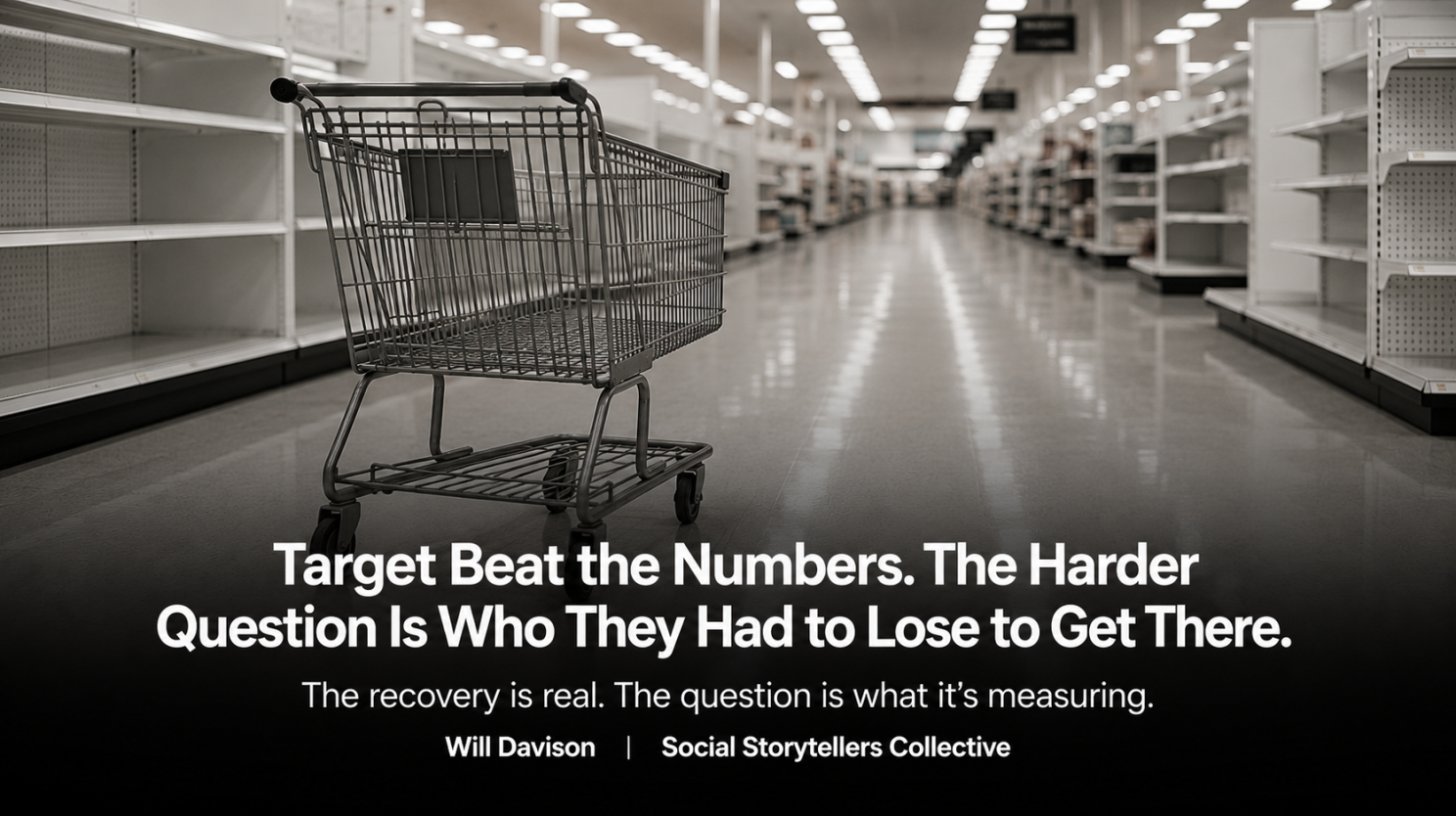
Target reported its best quarter in over a year this morning — net sales up 6.7%, same-store sales up 5.6%, the first positive comp in five consecutive quarters, EPS of $1.71 beating analyst expectations by nearly 27%. The growth is real. The question is what it’s measuring. The recovery is concentrated in infrastructure businesses — Target Circle 360membership revenue, Roundel advertising, the Target+ marketplace — with non-merchandise sales surging nearly 25%. These are durable business lines. What they are not is evidence that Target won back the customers it lost.
The context the earnings call didn’t address: Target rolled back its DEI initiatives in early 2025, dropped out of Fortune’s World’s Most Admired Companies top 50 for the first time since 2001, and saw 11% fewer consumers say they’d recommend the brand in the months following the rollback, per brand analytics firm Caliber. The American Federation of Teachers passed a boycott resolution in March over Target‘s response to ICE activity in Minneapolis. Target didn’t win its customers back. It built a business model that needs fewer of them. One good quarter makes it easier not to ask the difference.
Where A Boom Economy Turns Out to Have a Guest List
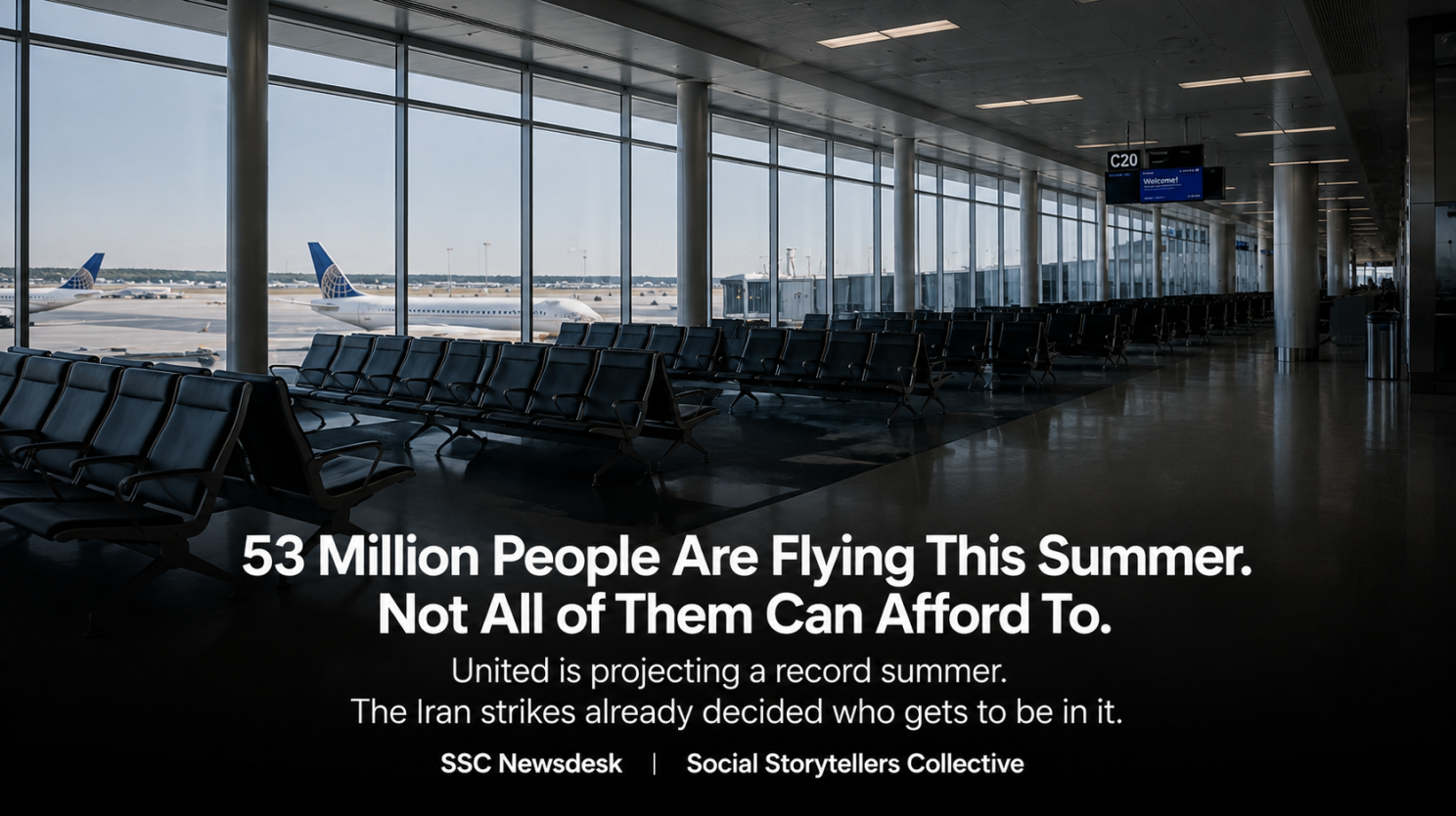
United Airlines announced today that it expects more than 53 million passengers this summer — about 3 million morethan last year — driven by a rare European solar eclipse on August 12, World Cup matches across North America, and major concert tours. Eclipse bookings to Bilbao, Madrid, Barcelona, and Reykjavík are up more than 50%. The headline is a travel boom. The subtext is a travel consolidation.
Jet fuel was $2.39 a gallon on February 27, the day before U.S. and Israeli strikes on Iran began. By April 2, it had spiked to $4.78. United cut 5% of its capacity — off-peak routes, redeyes, mid-week flights — shed its cheapest fare classes, and slashed its full-year profit forecast from $12–14 per share to $7–11. Last-minute Caribbean fares rose 74%. United‘s summer forecast measures what’s booked. It doesn’t measure who got priced out before they booked. The Iranwar restructured who gets to participate in summer travel. The demand that remained is the demand that could afford to stay.
Where The Bill for a Decade of Borrowing Finally Arrives
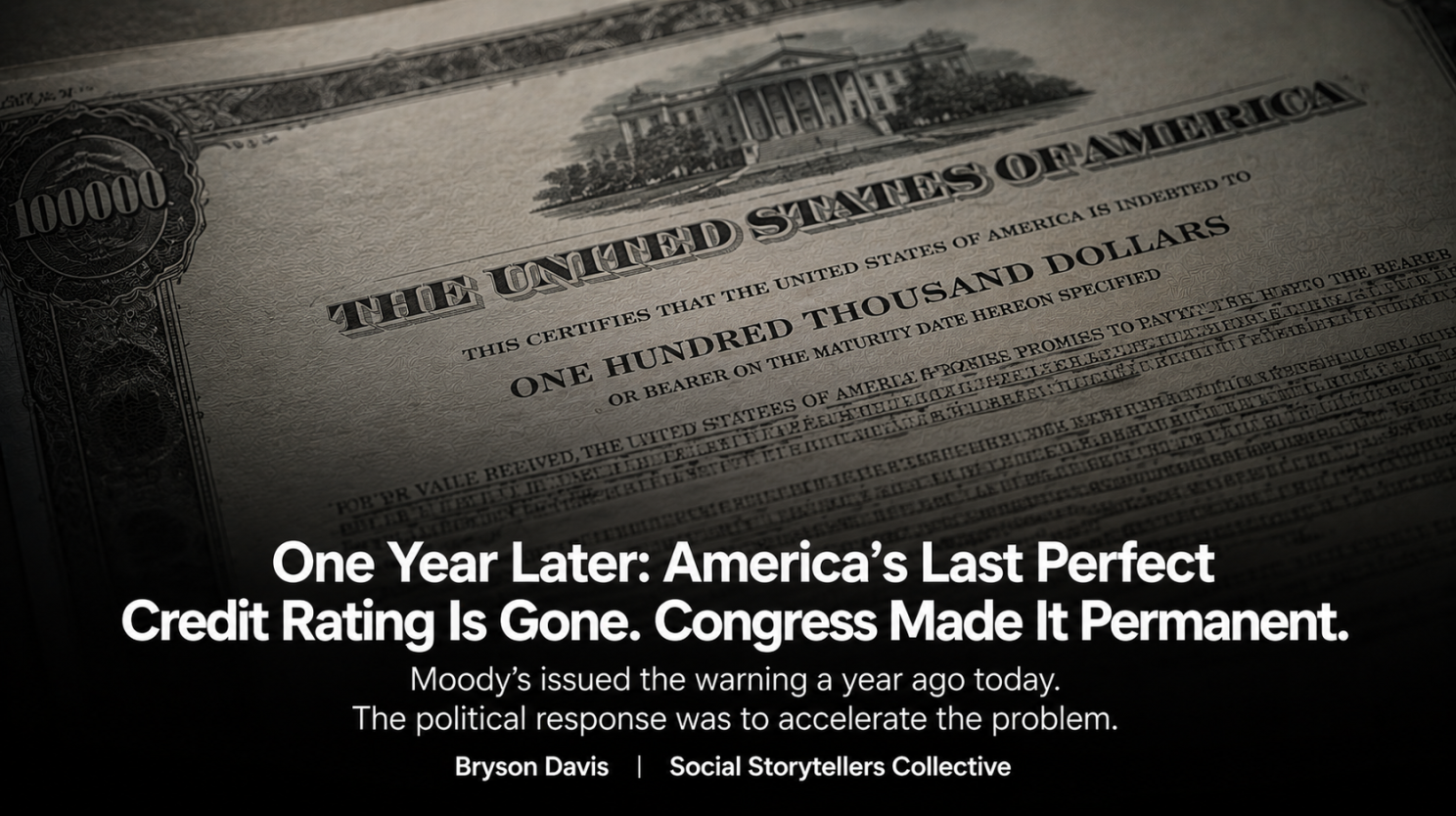
One year ago today, Moody’s stripped the United States of its last perfect credit rating — downgrading U.S. sovereign debt from Aaa to Aa1, the third and final major ratings agency to do so, following S&P in 2011 and Fitch in 2023. The reasoning was consistent and simple: more than a decade of growing deficits, rising interest payments, and successive administrations that failed to act. Interest payments on the national debt had surpassed defense spending. The White House called the downgrade “a lagging indicator.” Congress responded by passing the One Big Beautiful Bill — a package the CBO estimated would add approximately $4 trillion to the deficit over the next decade. Moody’s had specifically cited that legislation in its downgrade rationale.
A year later, those projections are no longer warnings. They are the operating condition. Today, markets closed down across the board — S&P 500 off 0.67%, Dow down 0.65%, Nasdaq down 0.84%. 113,863 tech workers have been laid off so far in 2026. A student loan borrower is opening a tax bill for debt that was supposed to disappear. The anniversary matters not because the downgrade was a crisis — markets largely absorbed it — but because of what came after. A rating agency looked at the trajectory and issued a formal warning. The political response was to accelerate it. The people most dependent on the programs now under fiscal pressure didn’t get a vote on the terms.
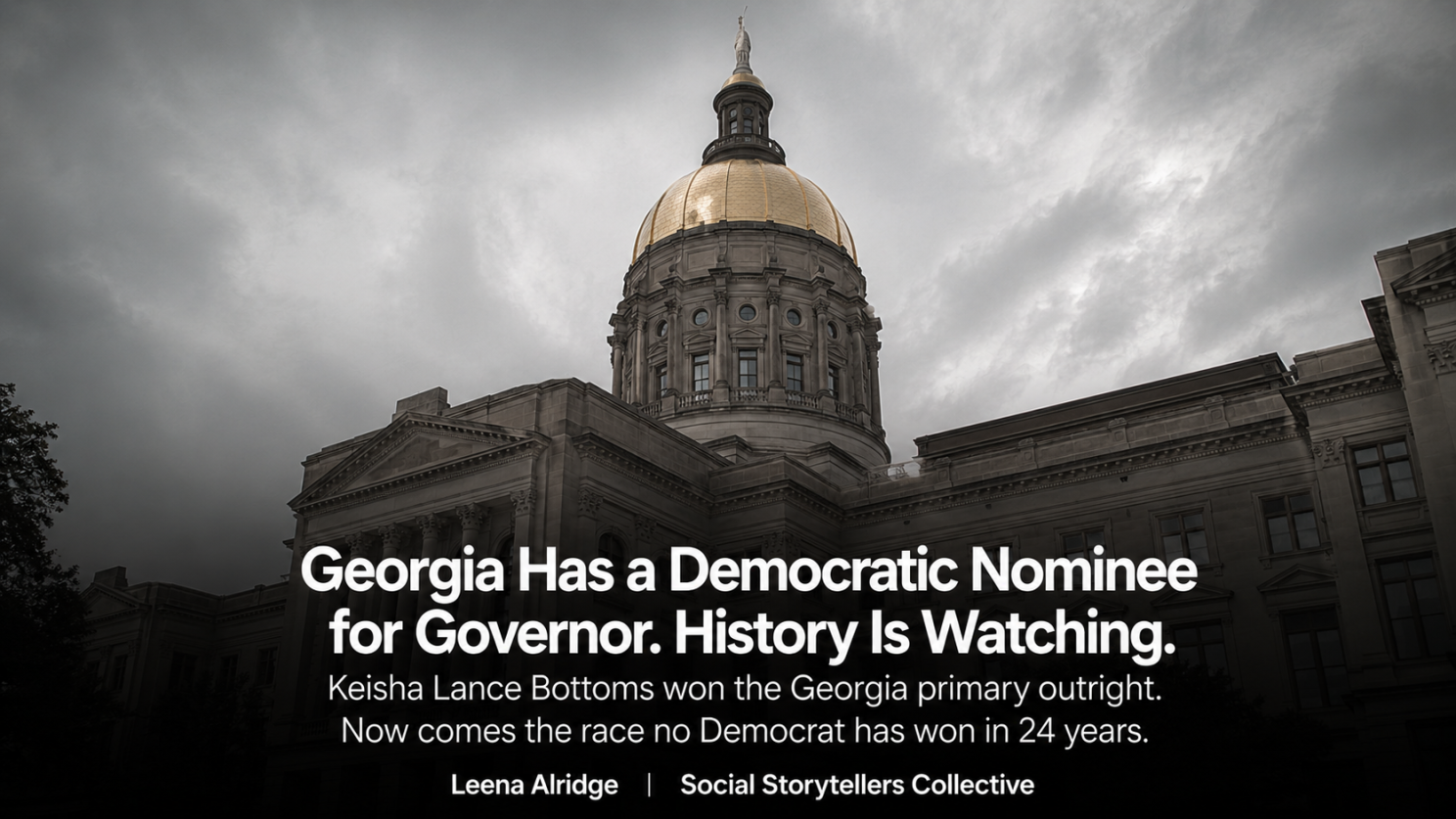
Keisha Lance Bottoms won the Georgia primary outright. Now comes the race no Democrat has won in 24 years.
Keisha Lance Bottoms won the Georgia Democratic gubernatorial primary outright on Tuesday, May 19 — clearing 50% of the vote in a crowded field and avoiding the runoff her rivals had counted on. She is now the Democratic nominee for governor of Georgia, the only statewide office that has eluded Democrats for 24 consecutive years. If she wins in November, Bottoms will become the first Black woman elected governor in U.S. history — and the first woman and first African American to hold the office in Georgia. The Republican side is still fighting: Lt. Gov. Burt Jones(Trump-endorsed) and billionaire Rick Jackson are headed to a June 16 runoff, handing Bottoms a head start on the general while her opponents spend four more weeks tearing each other apart.
This is the third consecutive cycle Georgia Democrats have nominated a Black woman for governor — Stacey Abramsran in 2018 and 2022. Bottoms enters the general with Biden’s endorsement, a platform centered on Medicaid expansion, affordable housing, a teacher income tax exemption, and a direct stated intention to fight the Trumpadministration’s agenda in Georgia. The state flipped in 2020, swung back in 2024, and is now the defining test of whether that political realignment has any staying power. Georgia hasn’t had a Democratic governor since 1998. Bottoms is betting the state is ready. The party — and the country — is watching.
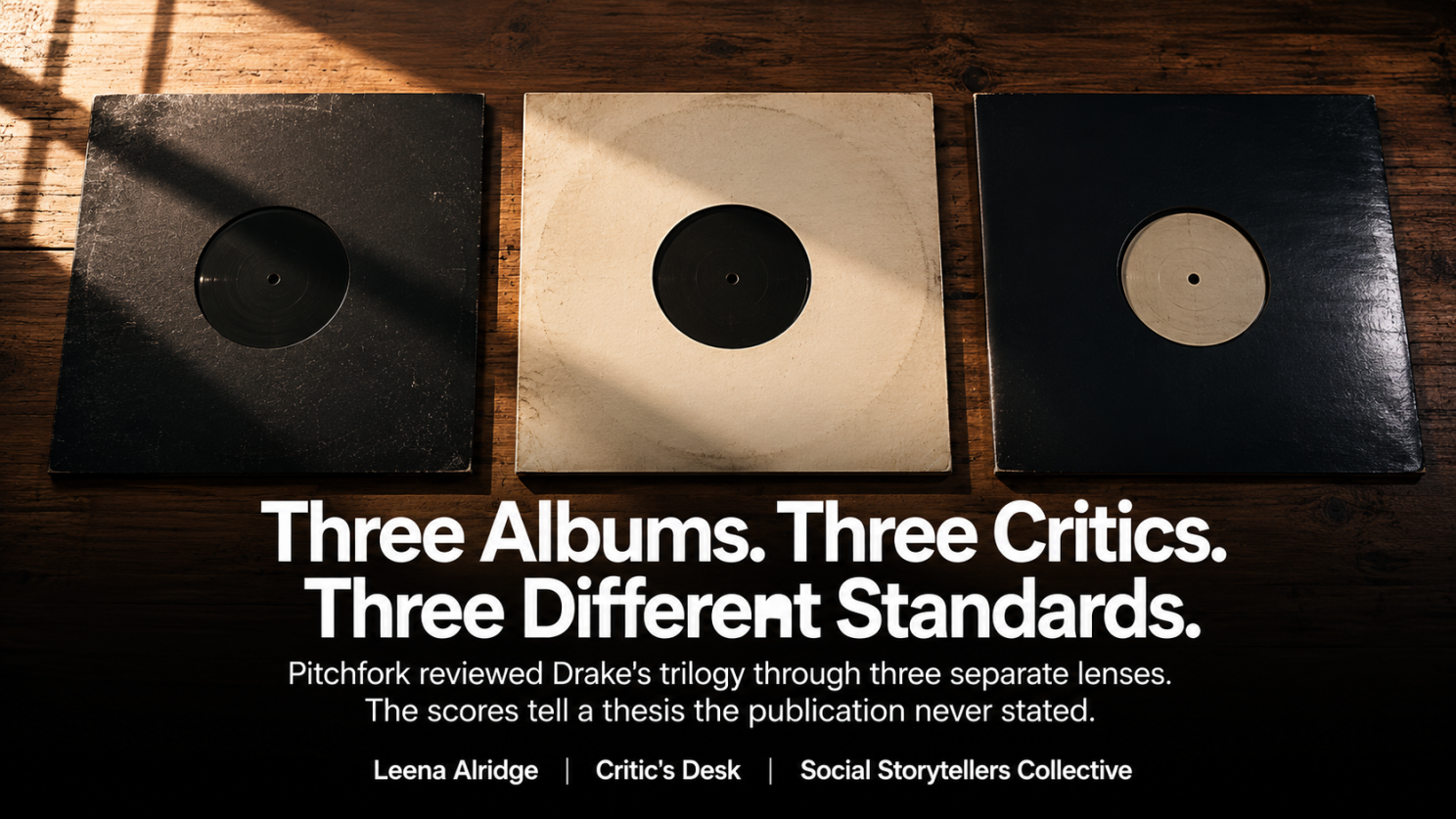
Where The Mic Gets Passed — Or Doesn’t
Drake dropped a surprise trilogy on May 15 — ICEMAN, Maid of Honour, and HABIBTI, 43 tracks released simultaneously — and Pitchfork reviewed each one separately, with a different critic assigned to each installment. The scores: ICEMAN 4.8, Maid of Honour 5.7, HABIBTI 6.4. ICEMAN charted number one in 78 countries the same week it received the publication’s lowest score. The pattern in those scores tells a thesis Pitchfork never stated: defensive Drake scores lowest, restrained Drake scores highest. That’s a preference dressed as methodology.
The contrast with Pitchfork‘s 1.3 for Chris Brown‘s BROWN sharpens the argument. Drake‘s work was evaluated for artistic decline. Brown‘s was evaluated for moral legitimacy. Different frameworks, applied to different artists, in the same publication, in the same month. The gap between the 4.8 and the 78-country chart run is the real story. Fans aren’t just defending Drake — they’re rejecting the premise that these institutions get to issue the verdict.
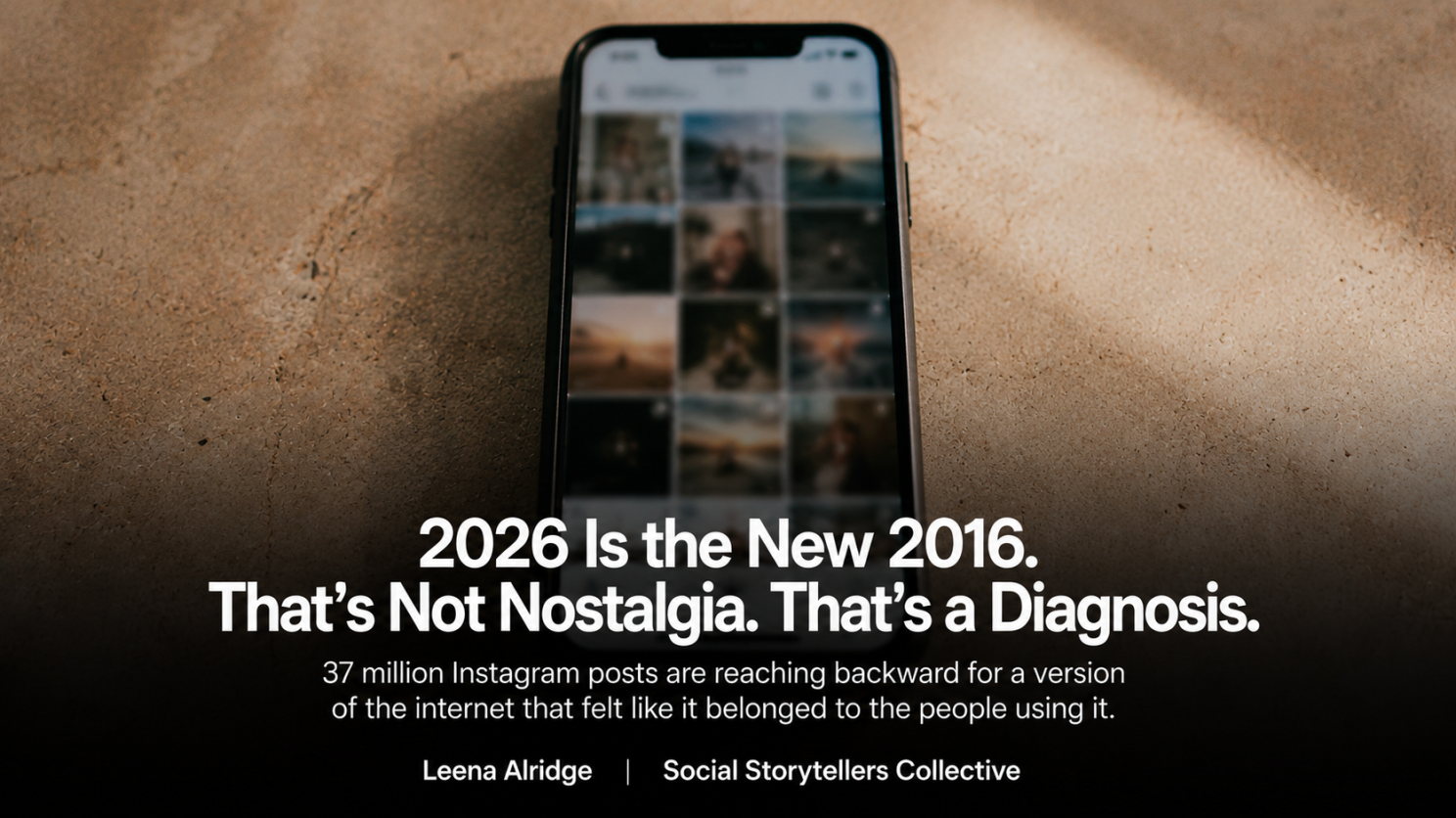
2026 Is the New 2016. That’s Not Nostalgia. That’s a Diagnosis.
The most widespread viral trend of the year has a simple premise: post a photo from 2016, caption it “2026 is the new 2016.” The hashtag has logged over 1 million TikTok posts and 37 million Instagram posts. John Legend posted it. Reese Witherspoon posted it. The trend is being reported as nostalgia. It’s something sharper.
2016 was the last year before the internet felt like it was actively working against the people using it — before the feed became a slot machine, before every platform optimized for outrage over connection. The aesthetic people are reaching for isn’t just the chokers and the Snapchat filters. It’s the version of online life that felt like it belonged to them, before it was redesigned around someone else’s revenue model. That longing doesn’t land in a vacuum. It lands on the same day Google announced it’s rebuilding search so you never have to leave. 37 million Instagram posts reaching backward for 2016 and one company announcing the end of the navigable web are the same signal from opposite dire
Featured Story: Leon Smith didn’t wait for the system to close the gap. He spent 25 years closing it himself.
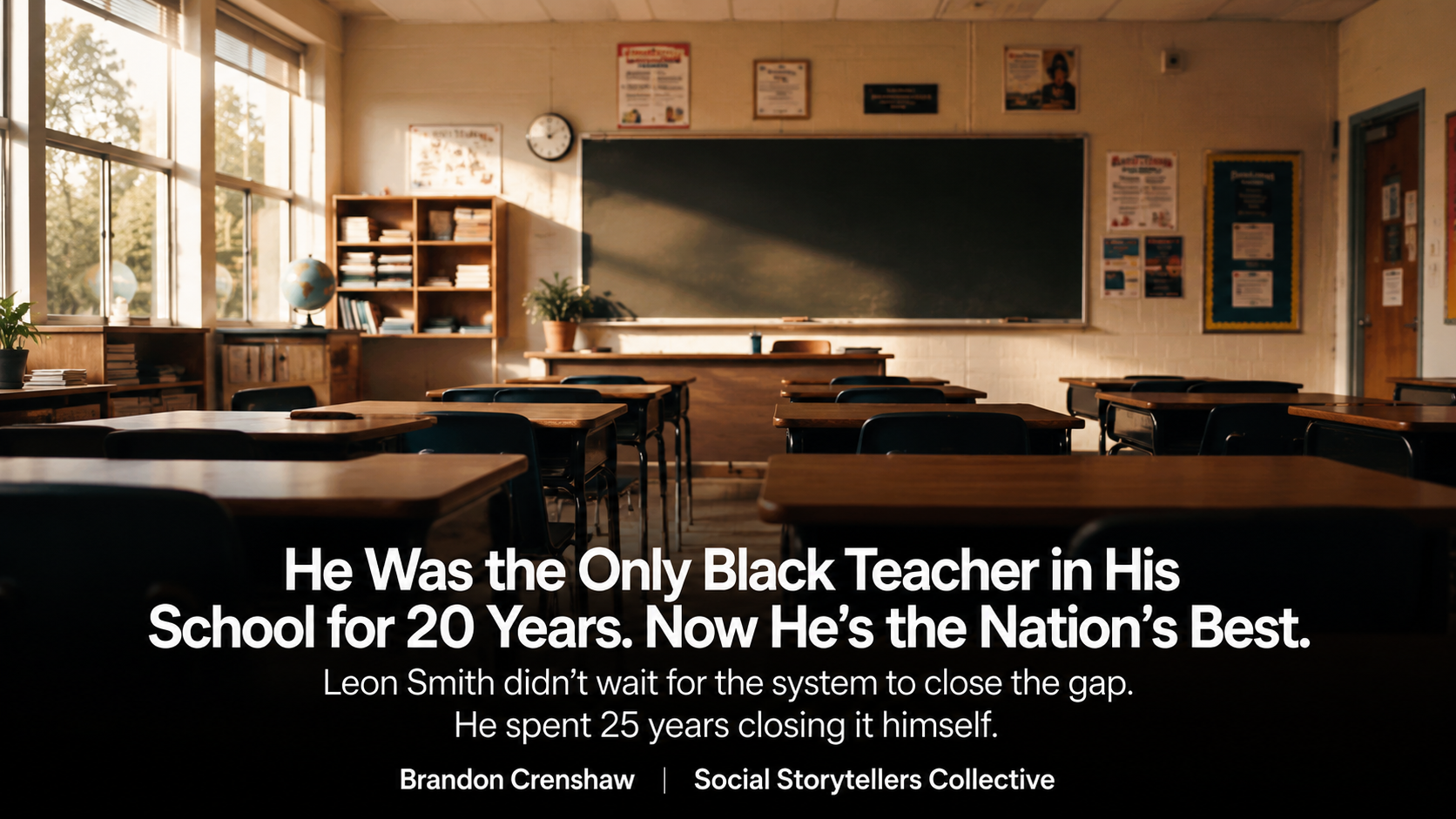
Leon Smith was in 10th grade the first time he had a Black teacher. It was a student teacher — a few weeks — but something shifted. “He made me feel a sense of belonging, a sense of dignity,” Smith said. That moment sent him into a career he has now spent 25 years building at the same school, Haverford High in Pennsylvania. For approximately 20of those years, he was the only Black teacher in the building. He worried about whether sharing his own life — intertwined as it was with Black history — would bring criticism. He stayed anyway. Built Haverford‘s first AP African American Studies course. Launched a program to recruit students of color into teaching. On April 21, 2026, Leon Smith, 46, was named the 2026 National Teacher of the Year.
The announcement happened on CBS Mornings. Midway through the interview, the hosts brought out his childhood basketball idol — Julius Erving, Dr. J, who lives around the corner from Haverford High. “You gotta be kidding me right now,” Smith said. About 80% of U.S. teachers are white. The majority of public school students are people of color. Smith spent two decades being the only person in his school closing that gap — not because the system made it easy, but because he understood, from one student teacher in 10th grade, exactly what was at stake when someone like him walked into a room. “Remember that you are who your students need,” he said this week. He’s been acting on that belief for 25 years. Now the whole country knows his name.
Daily Visual Signal
Inflation. One image that translates the day’s structural tension into a single frame.
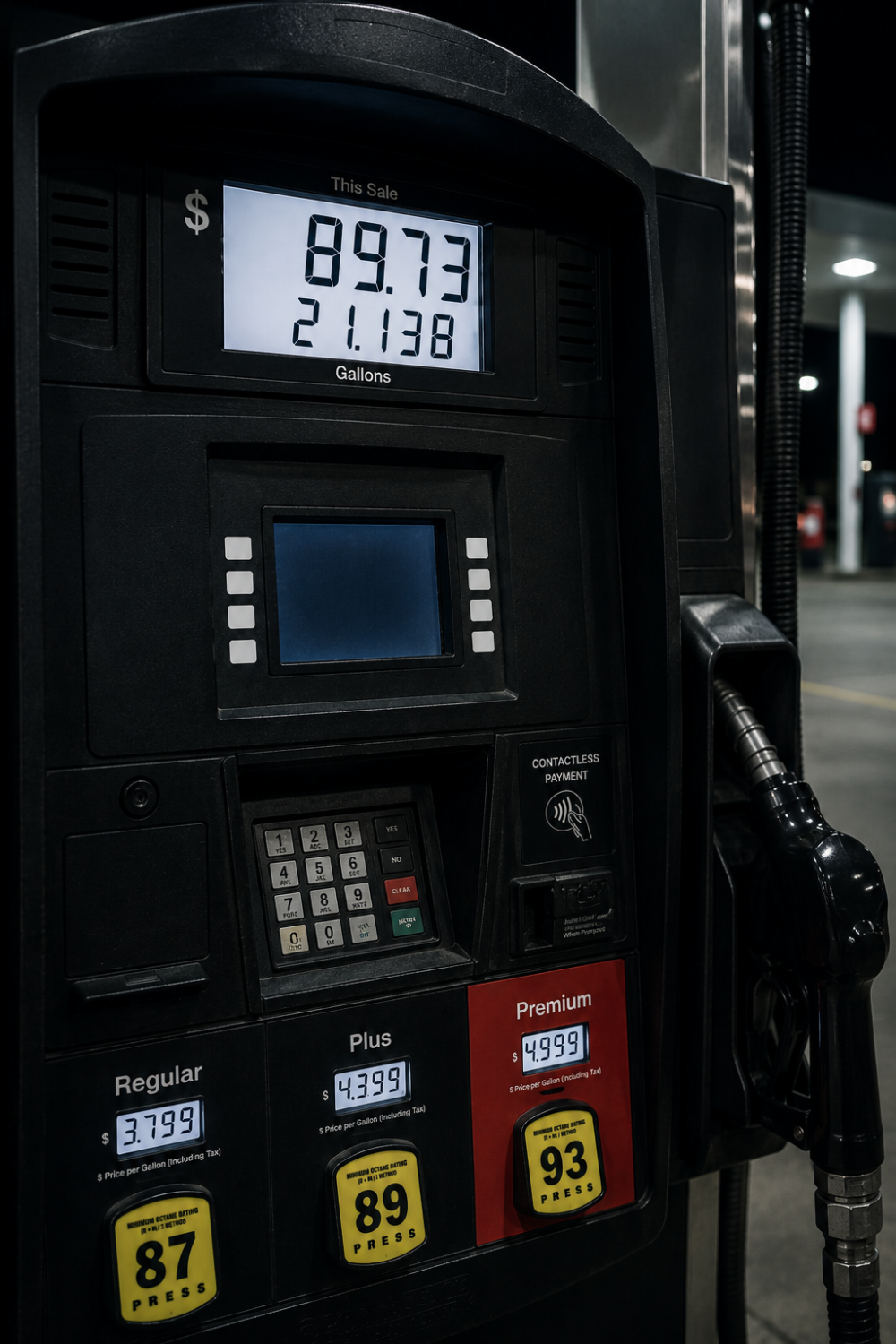
A gas pump frozen mid-transaction. The display reads $4.99 a gallon. No hand on the handle. No car in the frame. Just the number, lit up, on a pump built for a price that no longer exists. The war started. The price changed. The pump just kept counting.
Today’s edition lives in the gap between institutions operating by their own logic and people deciding to act anyway. The systems worked. The press releases went out on time. The people inside them absorbed the cost quietly, without much ceremony. Leon Smith didn’t wait for the terms to change. He changed what he could reach. Keisha Lance Bottoms didn’t wait for Georgia to be ready. She ran anyway. Both of them understood something the institutions in today’s stack seem to have forgotten: the terms only stay changed if someone shows up to change them back.
We’re tracking all of it. Back tomorrow with the next move.
Social Storytellers Collective
Social Storytellers Collective | SSC End of Day Closing Note | May 21, 2026