
On this special Sunday, we celebrate the mothers, grandmothers, aunties, guardians, and maternal figures whose labor — seen and unseen — holds families, communities, and entire generations together.
Happy Mother’s Day to the women who nurture, guide, sacrifice, protect, teach, and continue showing up even when the world asks too much of them. Your impact extends far beyond the moments people publicly acknowledge.
Wishing every mother a day filled with love, rest, appreciation, and the reminder that what you carry matters.
From AI layoffs to global housing pressure, institutions are moving faster than the public’s ability to process the consequences
Today did not arrive with a single clean headline. It arrived with several — each one appearing to operate in its own lane until you look at what they are all actually measuring. Access. Who has it, who is being filtered out of it, and what systems are doing the filtering while everyone is focused elsewhere.
Today’s stories are all circling the same underlying shift: systems that were once designed around scale, stability, and gradual adaptation are now reorganizing around speed, automation, and individual survivability. Whether the subject is healthcare, labor, housing, or professional identity, the pattern is becoming harder to ignore. Institutions are moving faster than the public’s ability to process the consequences — and in many cases, faster than the evidence itself. What connects today’s news cycle is not just technological acceleration. It is the growing realization that entire economic and social environments are being recalibrated in real time, often without clear rules for who absorbs the disruption.
Where AI stops being a tool and starts becoming infrastructure
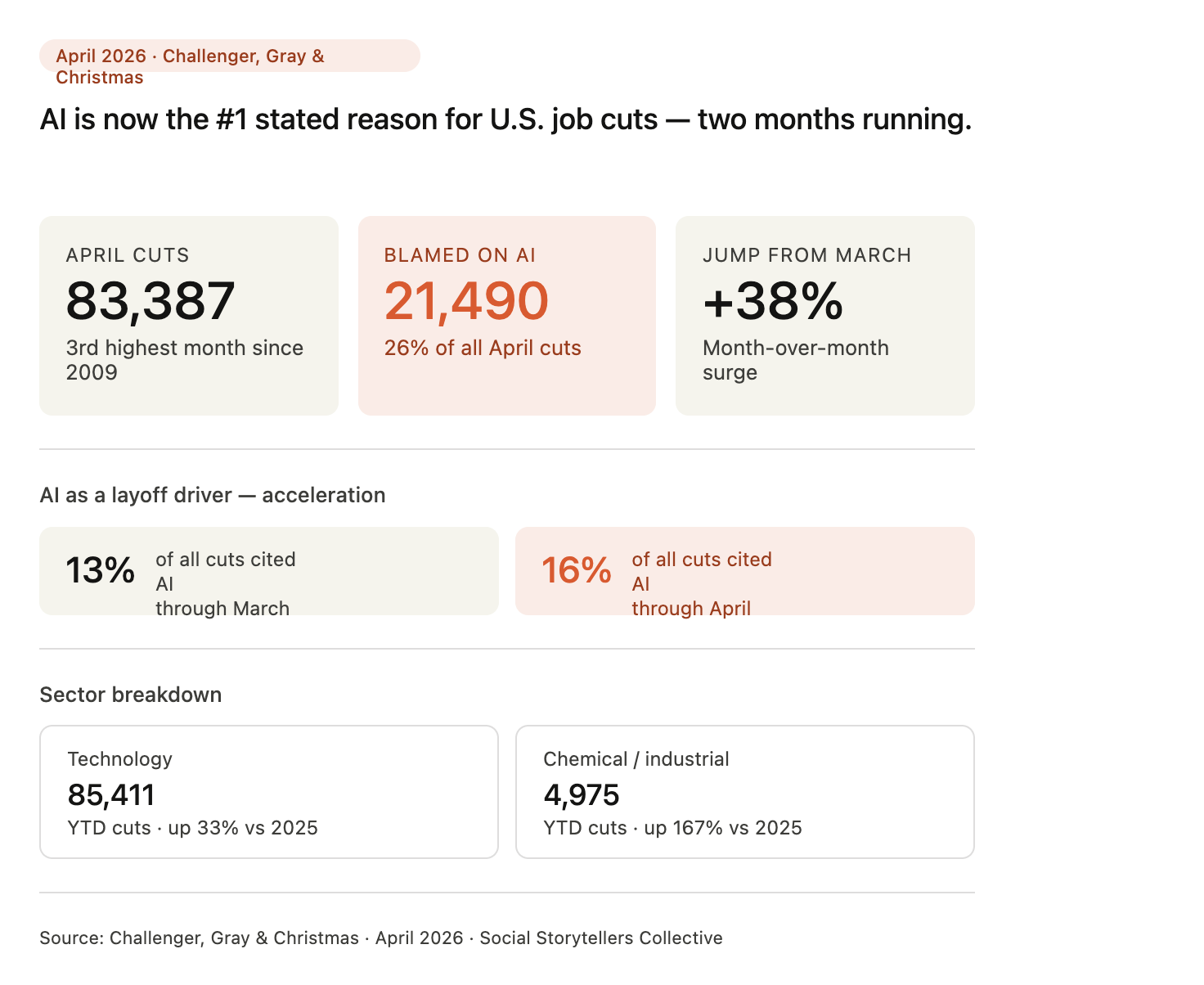
The AI Layoff Machine Is Running — And It’s Just Getting Started examines how artificial intelligence is no longer operating as a speculative concern inside workforce conversations. According to new data from Challenger, Gray & Christmas, AI was the leading stated reason for job cuts for the second consecutive month, accounting for more than 21,000 announced layoffs in April alone. What makes the shift notable is not just the volume. It is the normalization. AI is moving from experimental productivity layer to active workforce restructuring mechanism — and companies are increasingly comfortable saying so publicly.
That transition connects directly to AI Adoption Is Becoming a Workplace Compliance Metric, where KPMG’s internal AI tracking dashboard reveals how quickly professional environments are reframing AI usage from optional enhancement to measurable expectation. Employees are now being benchmarked against one another based on adoption rates, with some workers reportedly expected to reach usage levels as high as 75%. The implication is significant: knowing how to use AI may no longer function as a competitive advantage for knowledge workers. It may simply become the baseline requirement for remaining employable inside certain industries.
The Three-Year Degree and the AI Trap is where that repositioning enters the education system. The UNC System’s approval of accelerated three-year bachelor’s degrees is being framed as an affordability initiative. Underneath it is the same pattern running through the rest of today’s cycle: an institution reorganizing itself around a signal it may be misreading. Entry-level hiring in AI-exposed roles is down 13%. The tasks that once trained new workers have been automated. The jobs that remain are demanding AI fluency before workers have had any real opportunity to develop it. Universities are compressing the education designed to build adaptability at the exact moment the labor market is demanding more of it. The system is moving faster than the evidence — and the students with the least margin for error are the ones being asked to absorb the consequences.
The labor implications extend further in One Person Is Becoming a Company, which looks at Zoom’s new grant initiative targeting solopreneurs. On the surface, the program appears entrepreneurial and empowering. Underneath it is a broader structural reality: platforms increasingly believe that AI-enabled individuals can now operate with capacities that once required departments, teams, or entire firms. The modern worker is not just being asked to adapt to new tools. They are being repositioned as scalable operating systems themselves.
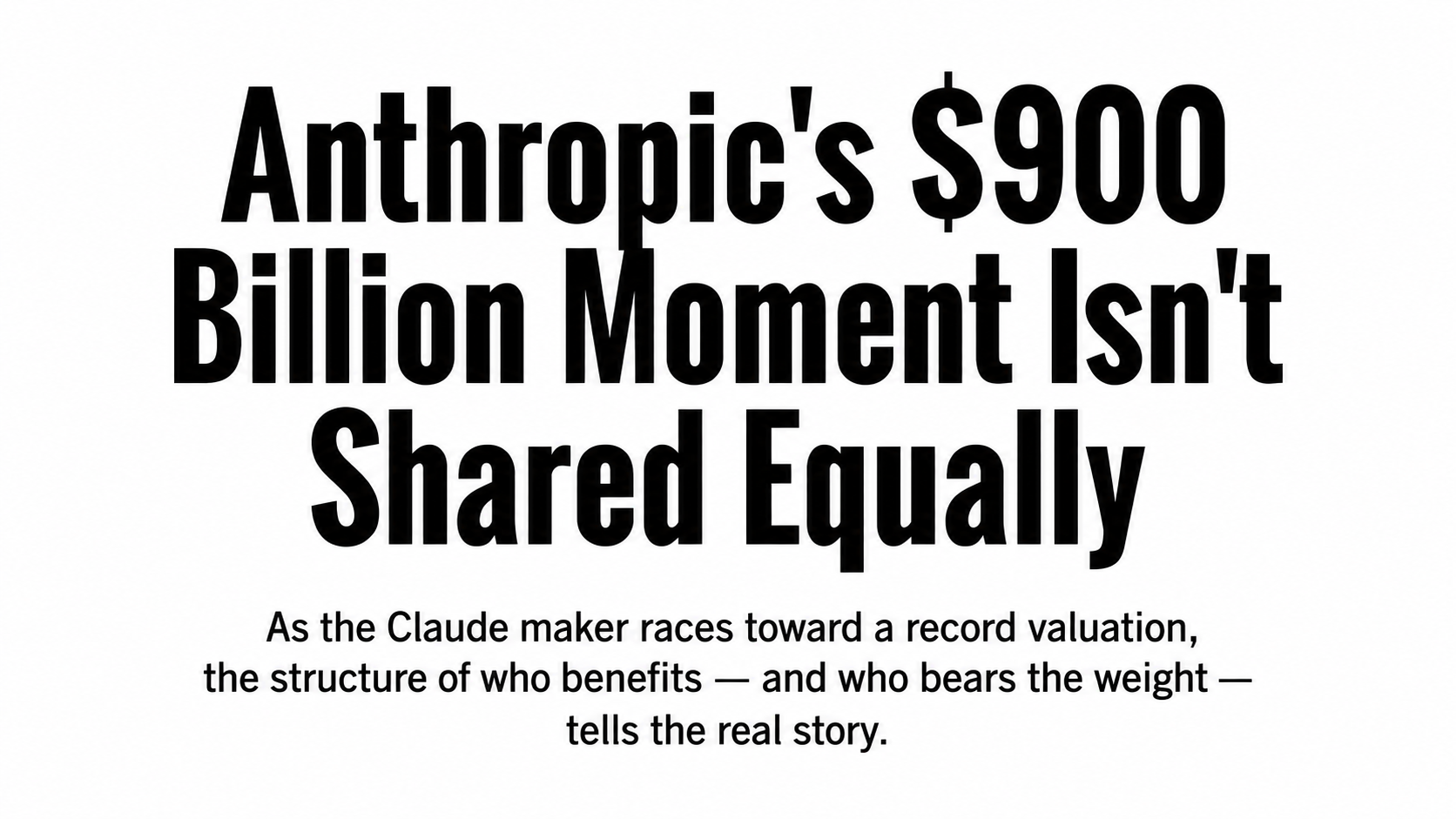
The technology story today is the one hiding inside a headline number. Anthropic’s $900 Billion Moment Isn’t Shared Equally — Anthropic is finalizing a funding round that would value it at nearly $900 billion, surpassing OpenAI’s $852 billion mark from March and making it the most valuable AI startup in the world. The company’s annualized revenue has climbed from $9 billion at the end of 2025 to $40 to $45 billion today — one of the fastest acceleration curves in private market history. The 1,500 employees generating that revenue hold equity on four-year vest schedules, while institutional investors hold preferred stock in a far more protected position. Valuation tripled in three months. The gains concentrated at the top of the capital stack. The number that matters most isn’t $900 billion. It’s how much of that reaches the people generating it — and when. That question lands differently when the institution at stake was built expressly to route economic opportunity toward communities that had been systematically excluded from it.
The layoffs at Black Enterprise are a labor story on the surface. Fifteen freelancers losing work at one of the most historically significant Black business publications in the country matters on its own. But Black Enterprise Was Already Telling The Story reveals something deeper. Earl Graves Sr. founded the magazine in 1970 as a deliberate act of economic and cultural infrastructure — the same year Essence published its first issue — at a moment when Black Americans were building institutions designed to last. What the freelancer cuts expose is how that model of permanence has had to adapt to a new survival economy — one built on digital scale, conference revenue, and brand partnerships. Black Enterprise is not alone in this. Ebony stopped printing in 2019; its archive of three million photo negatives now lives in the Smithsonian. Essence navigated a contested return to Black ownership. The institutions built to document and sustain Black professional life are increasingly operating inside the same survival economy reshaping every other industry in today’s cycle — where legacy credibility no longer guarantees economic insulation, and the people who built these pipelines absorb the disruption first.
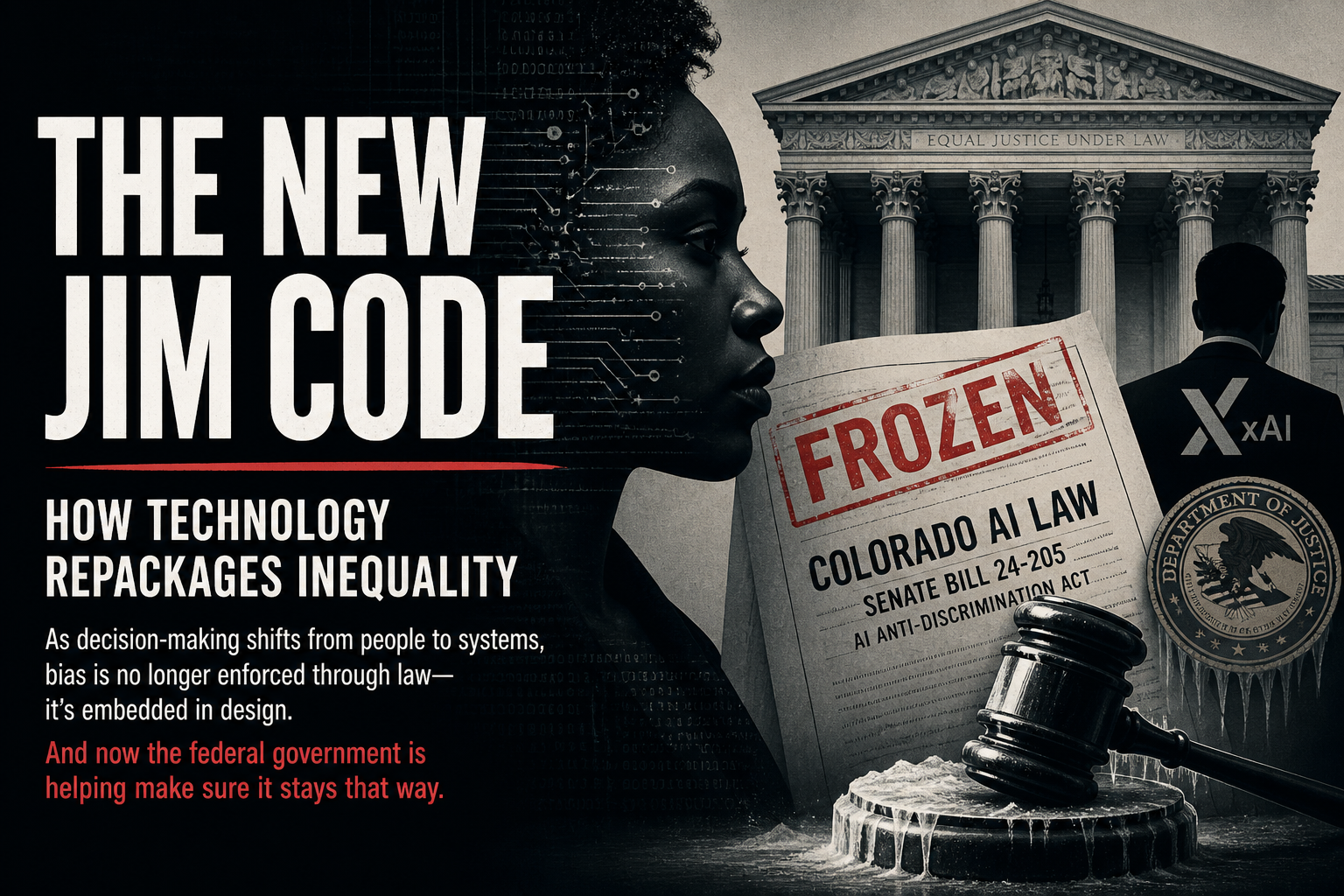
But the deeper question running beneath all three pieces is who these systems were built to serve — and who they were built to screen out. The New Jim Code: How Technology Repackages Inequality makes that question unavoidable. When a federal judge paused enforcement of Colorado’s algorithmic discrimination law, it exposed how far ahead the technology has moved compared to the governance structures meant to hold it accountable. Bias has not been removed from modern systems. It has been restructured — translated from explicit policy into design, scaled through automation, and shielded behind the language of neutrality. As AI becomes infrastructure, the question of who absorbs its consequences is not abstract. It is already being answered in hiring decisions, lending models, and access to services.
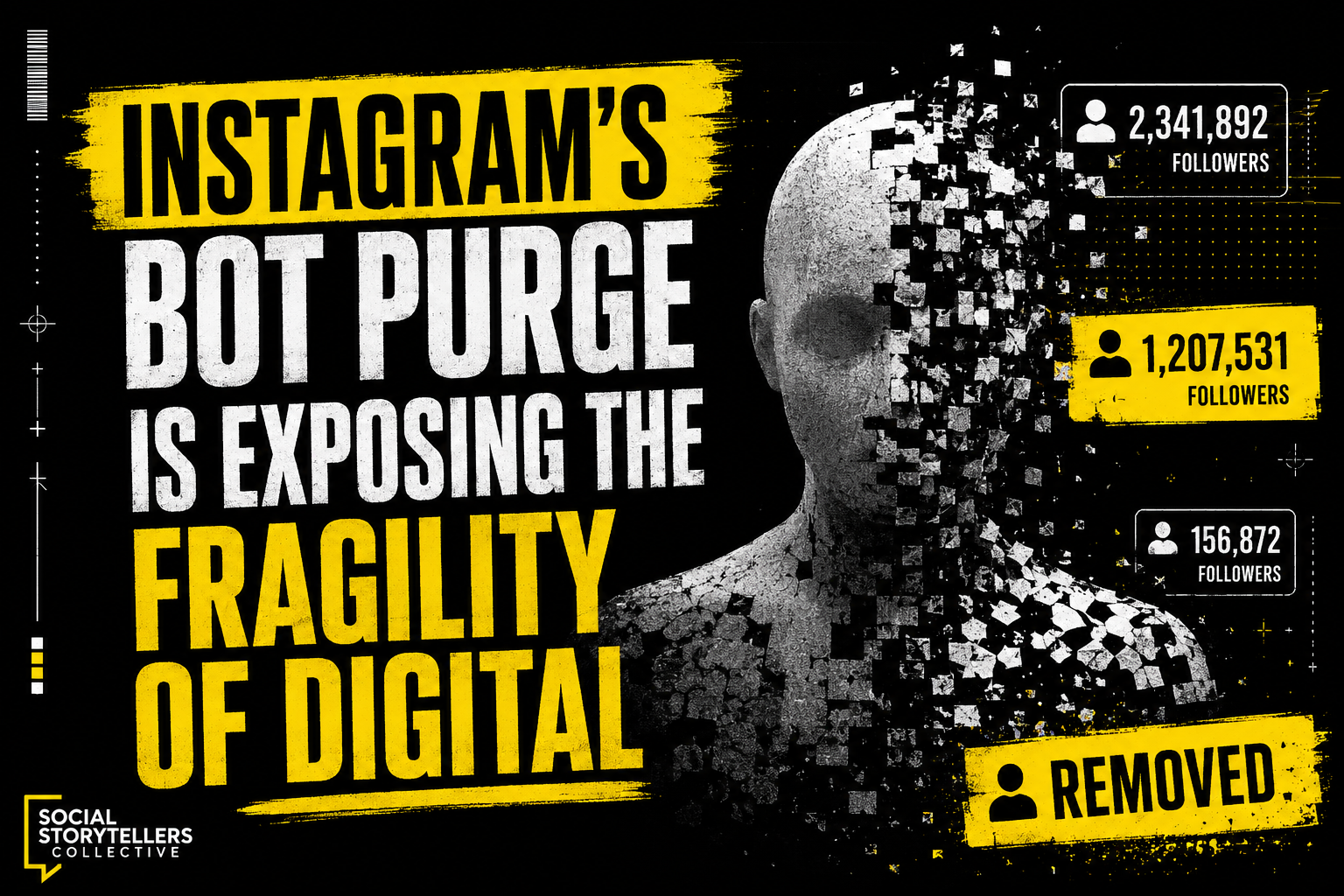
And then there is what Meta did to Instagram this week — quietly, overnight, without advance notice. The Great Purge of 2026 deployed advanced AI and neural network models to identify and remove bot accounts, spam profiles, inactive users, and accounts linked to third-party follower growth services — wiping millions of followers from hundreds of thousands of accounts in a single six-hour window. Kylie Jenner lost over 15 million followers. Cristiano Ronaldo lost nearly 18 million. BLACKPINK dropped 10 million. The purge was framed as routine platform hygiene. What it actually demonstrated is how far AI-driven moderation has advanced — and how much platform power Meta can exercise over the public-facing credibility of creators, brands, and businesses without a single day’s warning. The technology didn’t just clean up a metric. It restructured an entire economy’s foundation overnight.
And yet that same platform power — deployed instantly against follower counts — moves at an entirely different speed when the harm is human. Banned From Kick, Locked on X, and Still Streaming: How Platforms Keep Failing the Same Test follows Dalton Eatherly — known online as ChudTheBuilder — who built an audience of more than 170,000 followers on Kick by livestreaming racial harassment of Black people in public spaces. Kick permanently banned him only after public pressure made inaction too costly. X locked his account this week after flagging six posts using dehumanizing language targeting Black people — content that had already generated thousands of impressions before enforcement triggered. He is now streaming on Pump.fun. Meta can restructure an entire creator economy in six hours. It took multiple platforms, sustained public backlash, and civil rights organizations filing formal notices to move against one account publishing documented racial harassment. The technology is not the variable. The threshold is. That gap between platform capability and platform will is a question the entire industry is going to have to answer — not just for one account, but for the architecture itself.
Where medicine becomes economic force
That same pattern of acceleration appears in healthcare through Ozempic and Alzheimer’s: A Promising Signal, an Incomplete Science, and a System Moving Faster Than Both. GLP-1 medications like Ozempic are already reshaping consumer behavior, retail patterns, and food economics. Now researchers are exploring whether the drugs may also have implications for neurological diseases such as Alzheimer’s. The possibility is scientifically significant, but the larger story is about velocity. Public enthusiasm, investor attention, and corporate positioning around GLP-1s are expanding faster than long-term evidence can fully validate. The result is a healthcare environment where market momentum increasingly moves ahead of scientific certainty.
Where affordability becomes political
That tension between mobility and stability surfaces globally in Mexico City Is Starting to Push Back Against Remote Worker Privilege. A nightclub’s viral decision to charge Americans nearly $300 for entry while heavily discounting locals became symbolic of a much larger backlash building across global cities. What residents in Mexico City, Barcelona, and Lisbon are increasingly reacting to is not tourism itself, but the economic distortion created when remote workers earning foreign salaries enter local housing markets and reshape affordability in real time.
The story reflects a broader shift in public mood surrounding digital nomad culture. For years, location independence was framed as aspiration — flexibility, freedom, global mobility. But cities are now confronting the downstream consequences: rising rents, Airbnb proliferation, language displacement, and growing frustration among locals who feel priced out of their own communities. The nightclub controversy matters because it reveals how pricing itself is becoming political expression. Affordability is no longer just an economic concern. It is becoming an identity and sovereignty issue for cities trying to maintain stability under globalized pressure.
The Daily Visual Signal
A visual interpretation of the deeper systems, tensions, and structural shifts shaping the current moment — designed to translate complex societal changes into a single image.
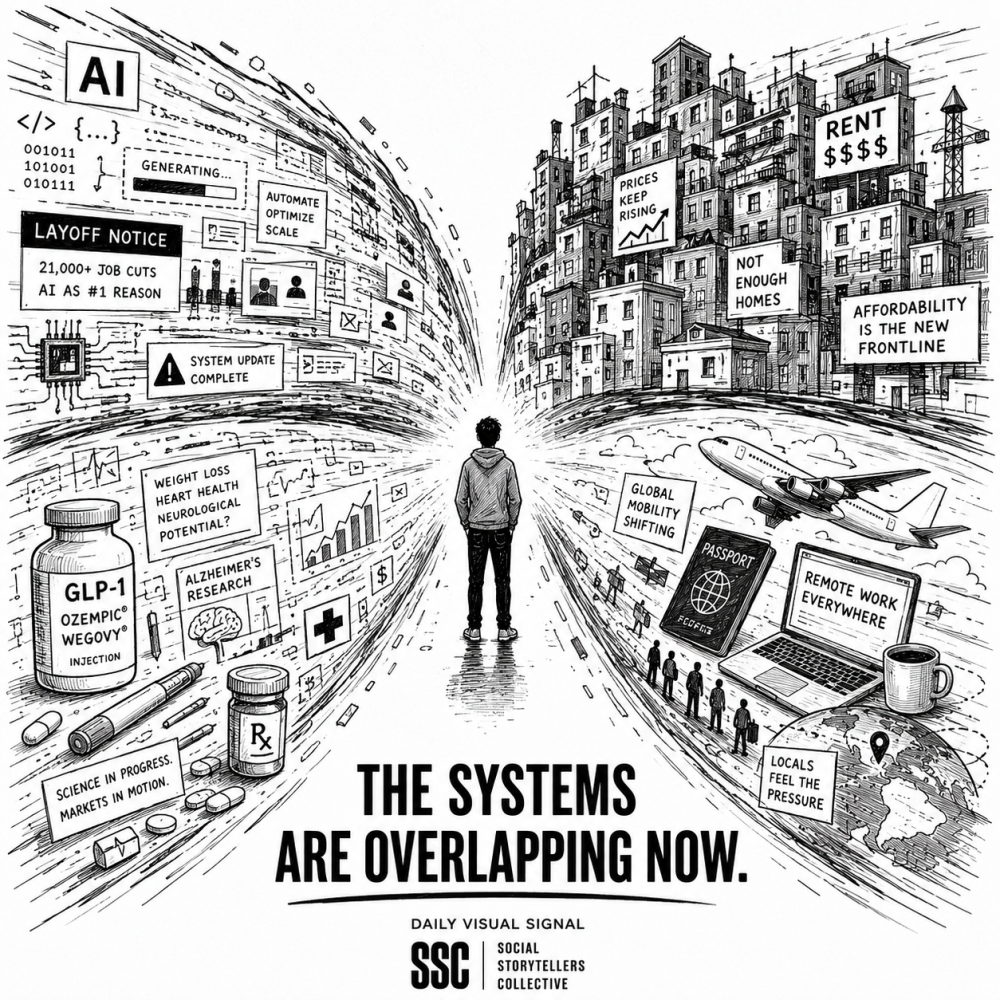
Today’s visual captures what happens when disruption stops arriving in isolated categories and starts collapsing into everyday life all at once. AI, housing pressure, healthcare transformation, labor instability, and global mobility are no longer separate conversations. They are overlapping systems reshaping how people work, live, move, and survive in real time.
The figure at the center is not standing in front of one crisis. They are standing inside multiple accelerating systems at once.
The common thread running through today’s cycle is that systems are no longer changing quietly. AI is restructuring labor in public view. Medicine is becoming market infrastructure before the science fully settles. Global mobility is colliding with local affordability. And increasingly, individuals are being asked to absorb volatility that institutions once buffered. The future is not arriving in isolated sectors anymore. It is arriving simultaneously across work, housing, healthcare, and identity — and the overlap is becoming impossible to separate.