
From AI’s missing correction to Ghana’s surrogacy market — the gap between the official version and the structural one.
A LinkedIn post went viral this week celebrating the fact that elite tech companies are paying up to $775,000 for senior communications roles. The post framed it as proof that storytelling is having a moment.
Social Storytellers Collective read it differently in The $775,000 Question: Who Gets to Tell AI’s Story? The same industry paying those salaries has spent the past five years cutting the journalists — disproportionately Black and Brown — most equipped to fill them. The $107,000 national average for a director of communications sits twelve times below the ceiling at Netflix. That gap is not a skills gap. It is an access gap — and the communicators being pushed out of newsrooms are the same demographic profile now flooding the applicant pools for roles that pay four to ten times what they were earning before.
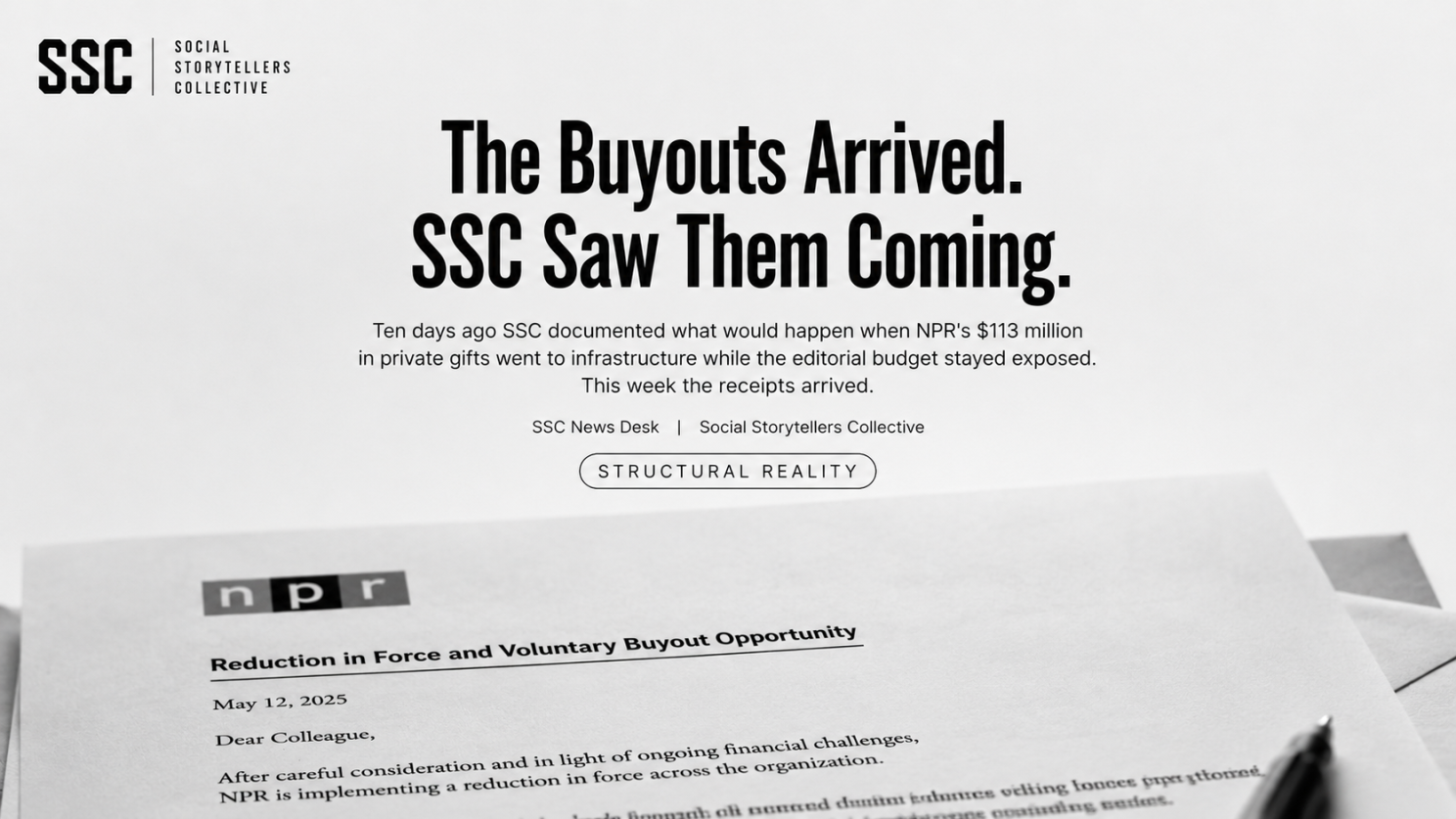
Ten days ago SSC documented what would happen when NPR received $113 million in private gifts and directed the money toward infrastructure while the editorial budget stayed exposed. In The Money Went to the Machine. The Journalists Got Buyout Notices., the argument was precise: the donors funded the container. The journalists were the contents. And the contents were negotiable. This week NPR laid off 10 journalists and offered buyouts to 18 more — including national political correspondent Don Gonyea, managing editor Vickie Walton-James, and investigations correspondent Joe Shapiro. The expertise those journalists carried does not transfer to a content management system. It walks out the door with the person who built it. In The Buyouts Arrived. SSC Saw Them Coming., SSC names what the receipts confirm — and why the vacuum these layoffs are expanding is the information environment story nobody covering the layoffs is telling.
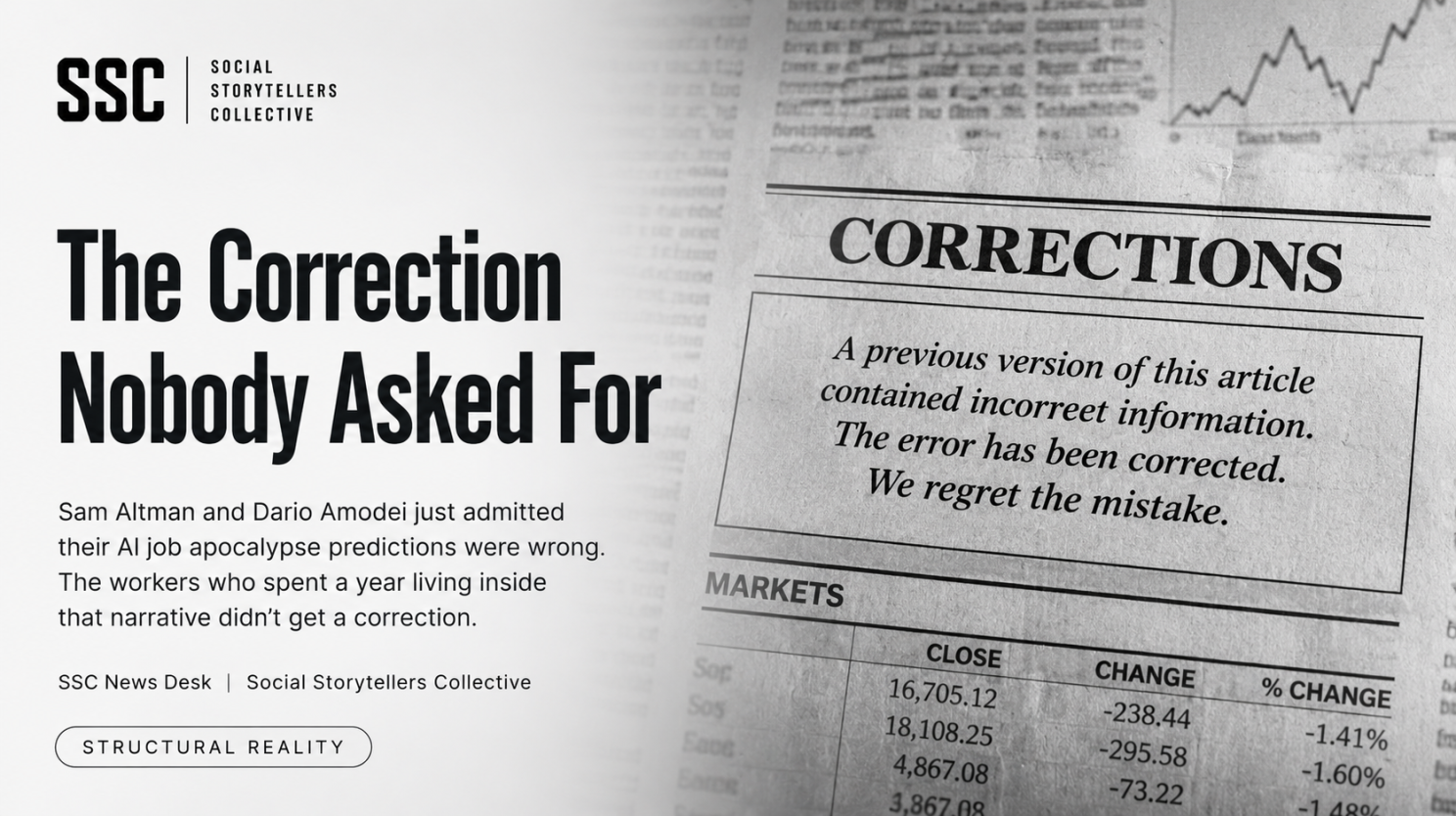
Sam Altman said he was “pretty wrong.” Dario Amodei has reframed automation as a productivity multiplier. Both men spent the better part of a year warning that AI would gut white-collar employment — and in The Correction Nobody Asked For, SSC examines what it means that the correction arrived on an IPO timeline. The workers who spent 2025 in therapy offices discussing the end of their careers, or who accepted worse terms because they felt replaceable, did not get a caveat in real time. Both OpenAI and Anthropic are preparing IPOs targeting late 2026 at valuations near or above $1 trillion and $380 billion respectively. The prediction was wrong. The damage it did was not hypothetical. And the correction arrived on a schedule that serves the people who made the mistake, not the people who lived inside it.
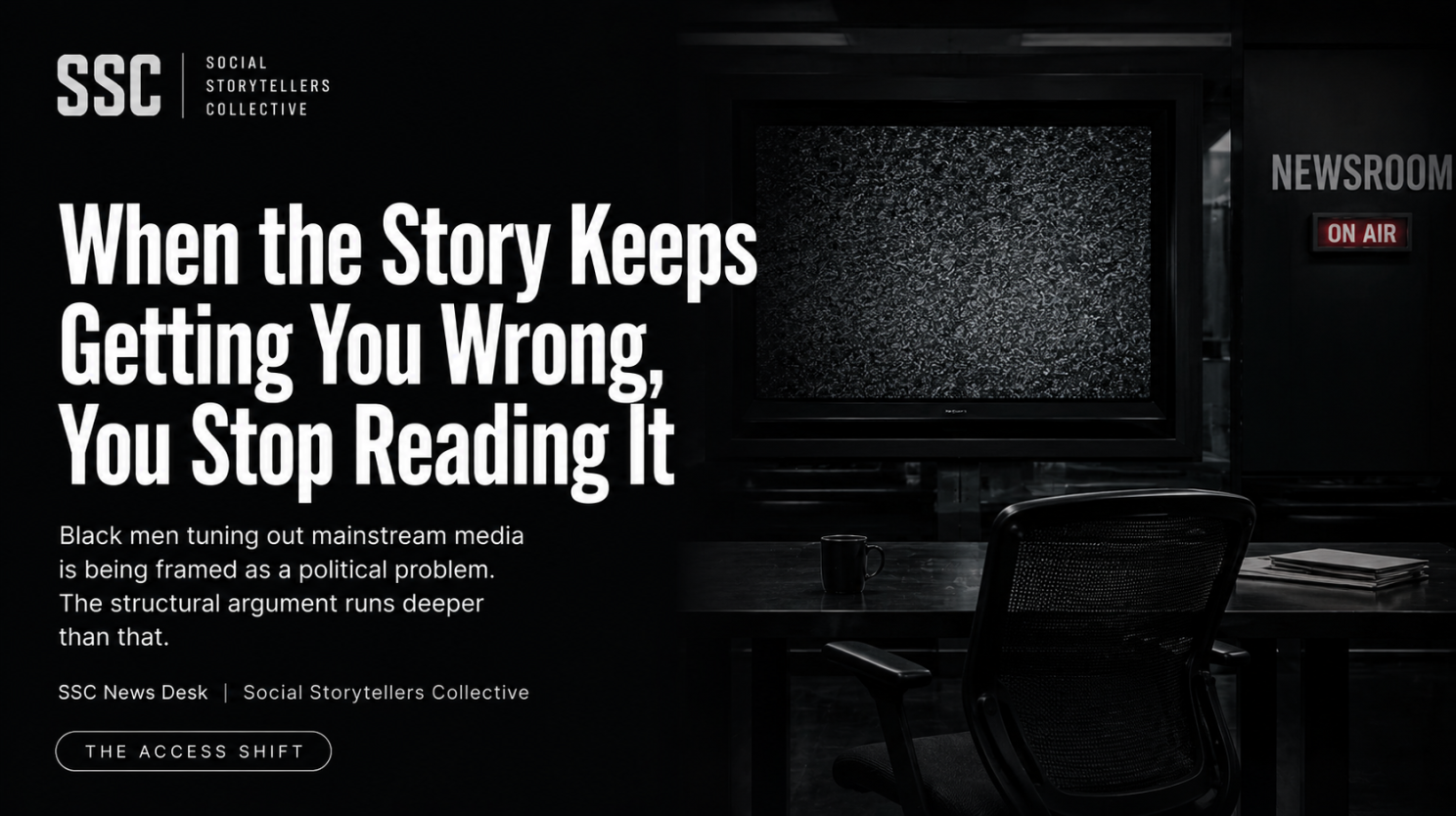
A focus group of Black men conducted last week by Democratic research firm Navigator Research found they had largely stopped trusting mainstream media and migrated toward YouTube, independent podcasters, and local news. In When the Story Keeps Getting You Wrong, You Stop Reading It, SSC makes the argument the political framing keeps missing — this is not disengagement. SSC contributor Bryson Davis reported earlier this month that 650,000 Black men exited the labor force between November 2025 and April 2026. The headline called it stabilization. The same outlets now puzzled by their absence spent years cutting the journalists most likely to cover what was actually happening. It is a rational response to a long record of institutional failure — and the vacuum it creates is the real story.
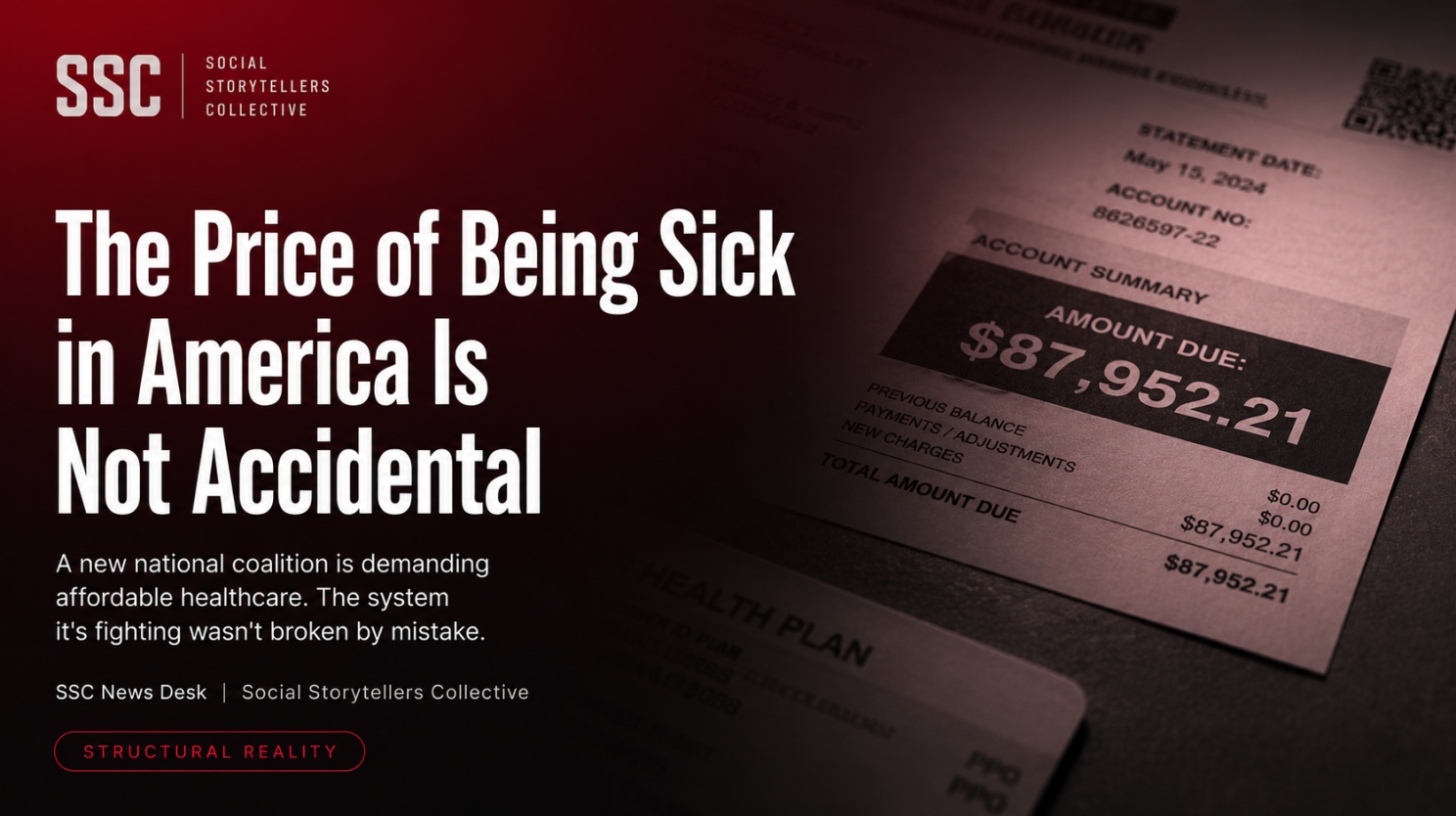
A national coalition launched this week with a name that leaves little room for interpretation. One Nation, Overcharged— backed by the Robert Wood Johnson Foundation and anchored by the NAACP, National Urban League, Black Women’s Health Imperative, and more than 130 partner organizations — is mobilizing around a single demand: a healthcare system that prioritizes people over profit. In The Price of Being Sick in America Is Not Accidental, SSC connects the coalition launch to the $187 billion in SNAP cuts moving through Congress and to the USDA‘s decision to discontinue its annual food security report at precisely the moment when what happens next matters most. The seven largest for-profit health insurance companies booked more than $54 billion in profits last year. The system is not broken. It is working as designed.
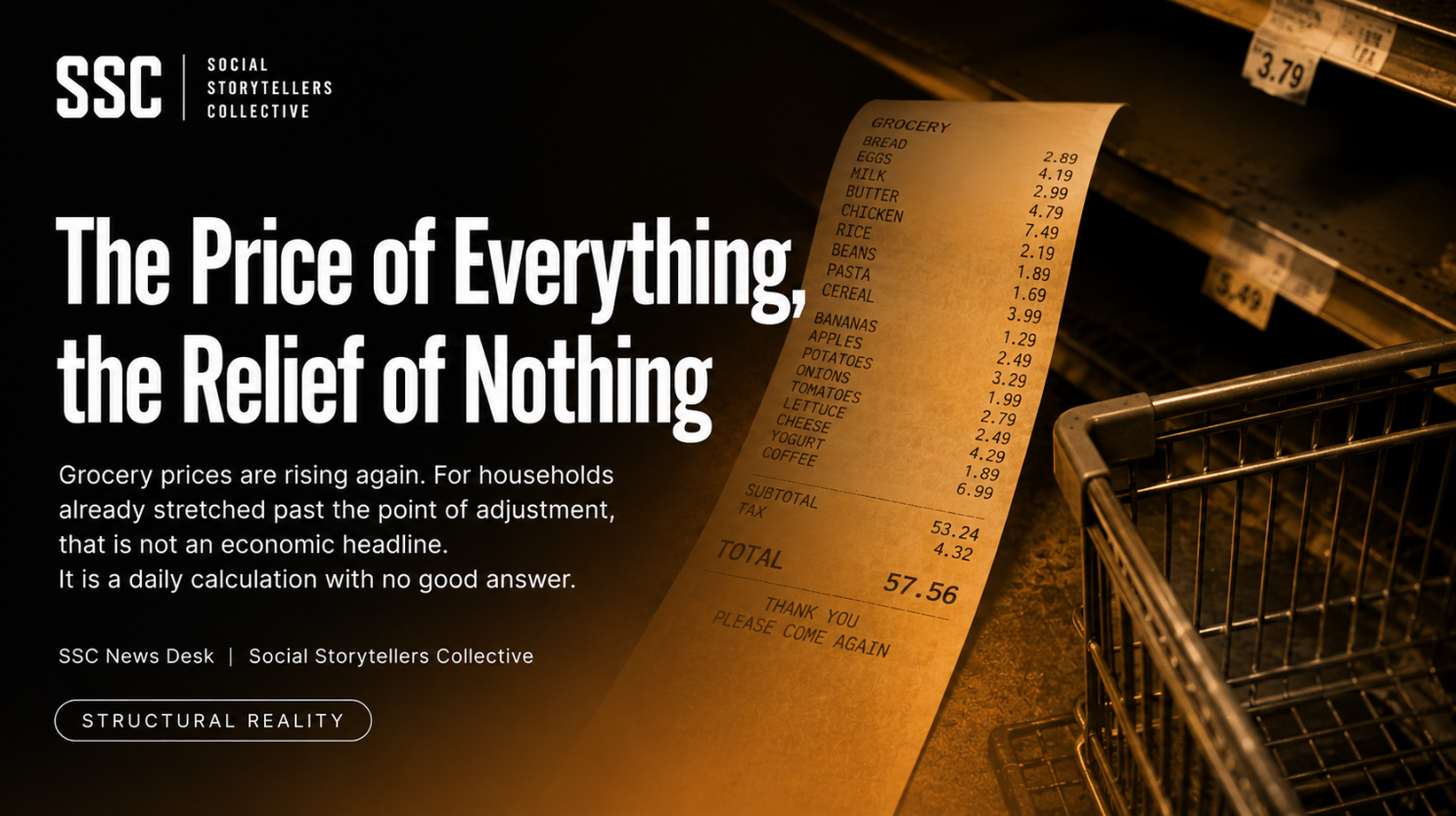
Grocery prices rose in April by the most in nearly four years, and in The Price of Everything, the Relief of Nothing, SSC traces the compounding pressure of the Iran war’s energy shock, a strong El Niño forming in August, and $187 billion in SNAP cuts arriving simultaneously in the households already spending the highest share of their income on food. Analysts have found that food prices rise sharply after major shocks but fall only slowly and partially afterward — leaving households permanently reset to a higher baseline. For the 48 million people in food-insecure households, that permanent recalibration is not background noise. It is the whole picture.

For twenty years, the deal was simple. Meta‘s platforms were free. In exchange, users were the product. In Free Was Never Free. Now Meta Is Making That Official, SSC examines what Instagram Plus at $3.99 a month, Facebook Plus at $3.99, and WhatsApp Plus at $2.99 actually represent — not a product launch, but the conversion of digital public space into tiered private space. Meta has projected capital expenditure of $125 billion to $145 billion in 2026, nearly double what it spent in 2025. The communities that built these platforms — the same ones navigating grocery inflation, medical debt, and compressed household budgets — are the ones least equipped to pay for access to them.
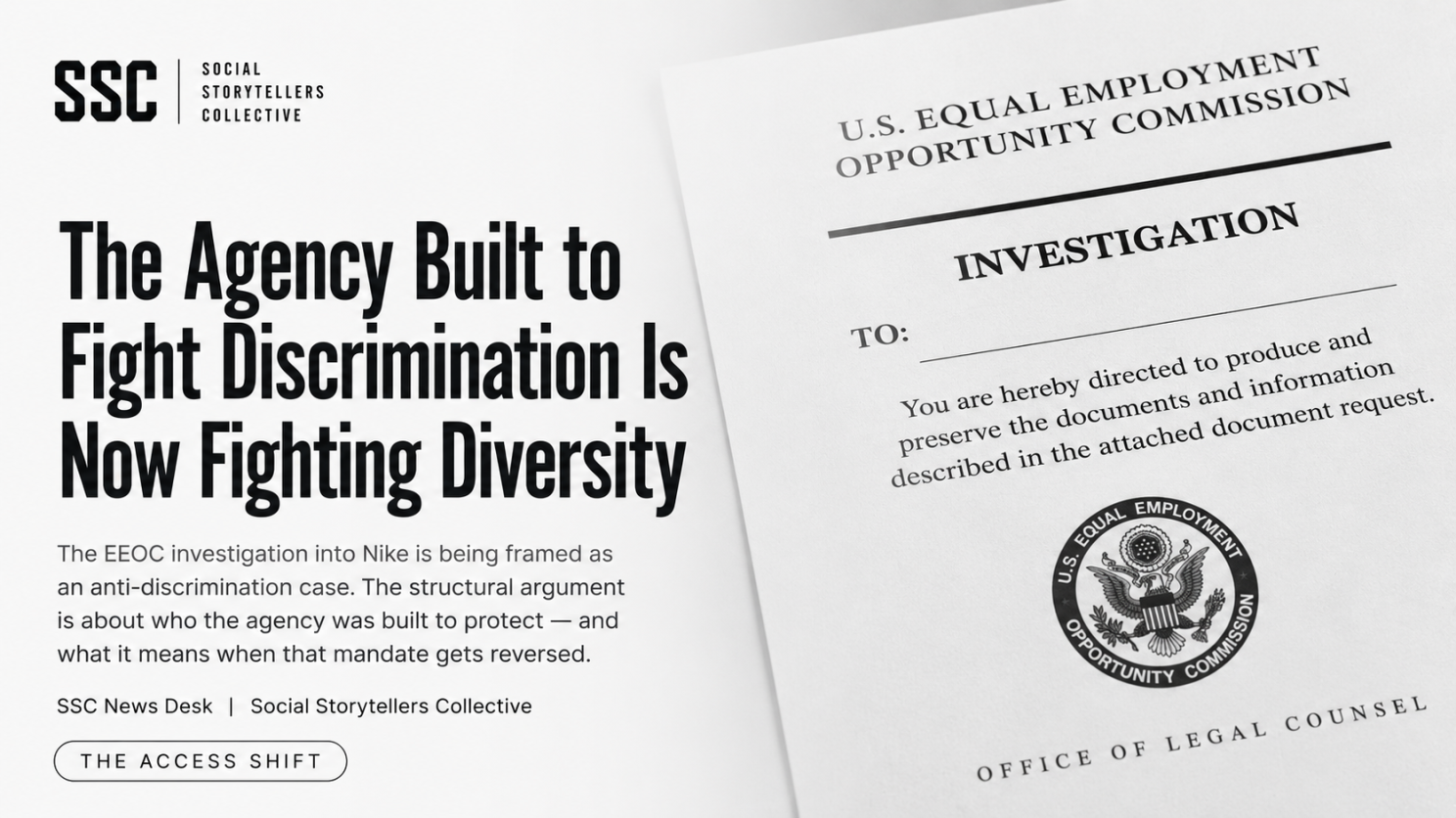
The agency created by the Civil Rights Act of 1964 to protect workers from discrimination has opened an investigation into whether Nike discriminated against white employees by trying to hire more people of color. In The Agency Built to Fight Discrimination Is Now Fighting Diversity, SSC traces how Nike‘s public diversity commitments after 2020 became the evidence in a federal investigation — and connects it to months of prior SSC reporting on Nike‘s specific relationship with Black culture, from the body branding controversy to the market cap collapse that got blamed on Black athletes. EEOC Chair Andrea Lucas confirmed the agency’s inquiries will intensify throughout 2026. The companies that said nothing and did nothing have less exposure. The enforcement structure creates an incentive to have never tried.
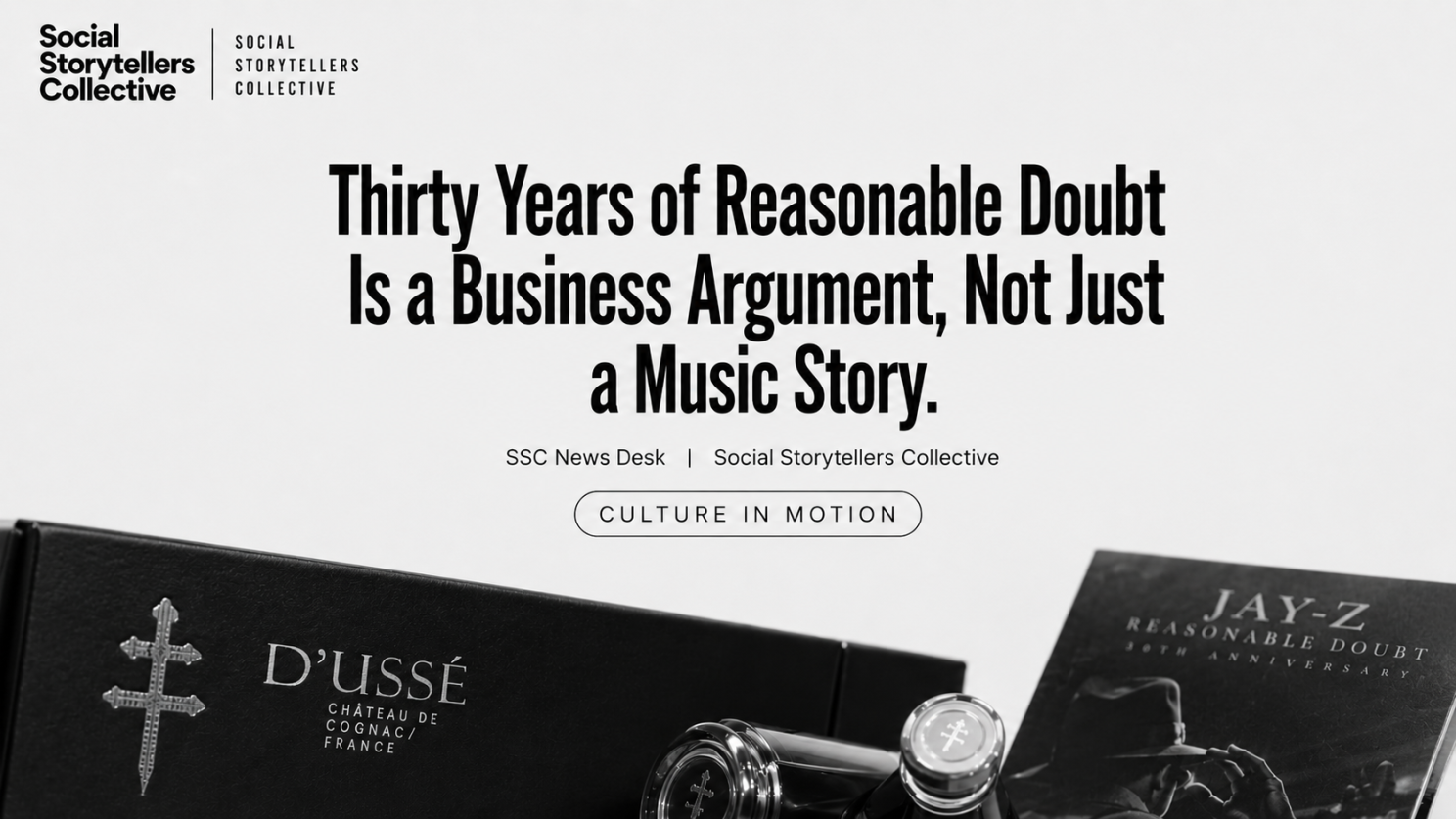
On the cultural front, Thirty years ago JAY-Z couldn’t get a major label to sign him and pressed Reasonable Doubt independently. This week, D’USSÉ Cognac — the luxury spirits brand he co-founded with Bacardi — launched a nationwide campaign celebrating that anniversary with a limited-edition collector’s box set, a signature cocktail, and live activations across six cities including Houston. As Black Enterprise Magazine reported, the campaign includes dedicated experiences at The Roots Picnic and JAY-Z‘s upcoming Yankee Stadium residency — his first solo stadium shows in nearly a decade. SSC sources Black Enterprise‘s reporting and builds the ownership argument underneath the celebration in Thirty Years of Reasonable Doubt Is a Business Argument, Not Just a Music Story. The album’s title was always gesturing toward something larger than hip-hop. The D’USSÉ campaign is the proof of concept arriving three decades later.
A New Jersey-based surrogacy agency launched a free consultation service this month for single men researching Ghana as a surrogacy destination. In Ghana Is Becoming a Destination for Single Fathers. The Women Making It Possible Deserve a Closer Look, Leena Alridge examines the structural conditions underneath the press release. Ghana has become one of the few countries on the African continent where single men can pursue surrogacy legally and affordably — surrogacy in the United States runs $150,000 to $220,000, while programs in Ghana start at $35,000. Surrogates receive approximately $10,000. The gap between what intended parents pay and what the women carrying those pregnancies receive is the mechanism that makes the destination attractive. The legal framework protecting those women is, by the admission of researchers at the University of Ghana, not yet comprehensive surrogacy legislation. The bill that would close those gaps has been in draft form since 2021. It has not passed.
The Daily Visual Signal
A visual interpretation of the deeper systems, tensions, and structural shifts shaping the current moment — designed to translate complex societal changes into a single image.
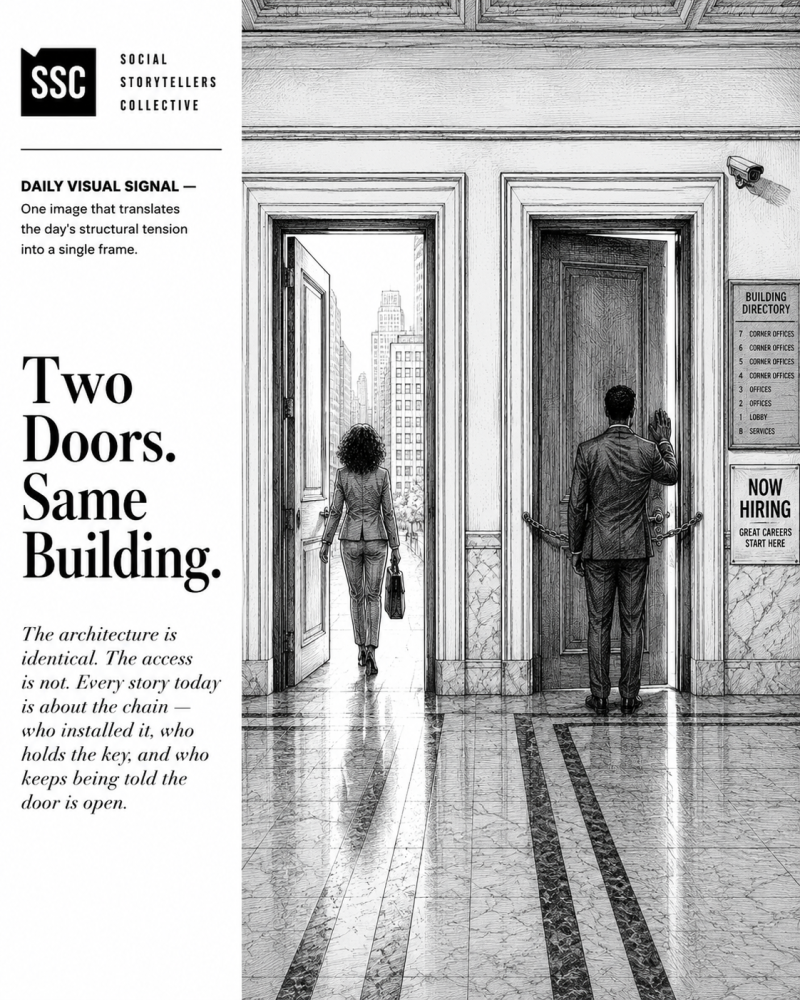
Two doors. Same hallway. Same building. The door on the left is wide open — light pouring through, a clear path visible beyond it. The door on the right is open too, but just barely — a sliver of light at the edge, a chain visible across the frame. The floors underneath both doors are identical. The architecture is the same. What differs is not the building. It is the mechanism controlling access. The stories in today’s edition are all about that chain — who installed it, who holds the key, and who keeps being told the door is open when the chain is still there.
Featured Story
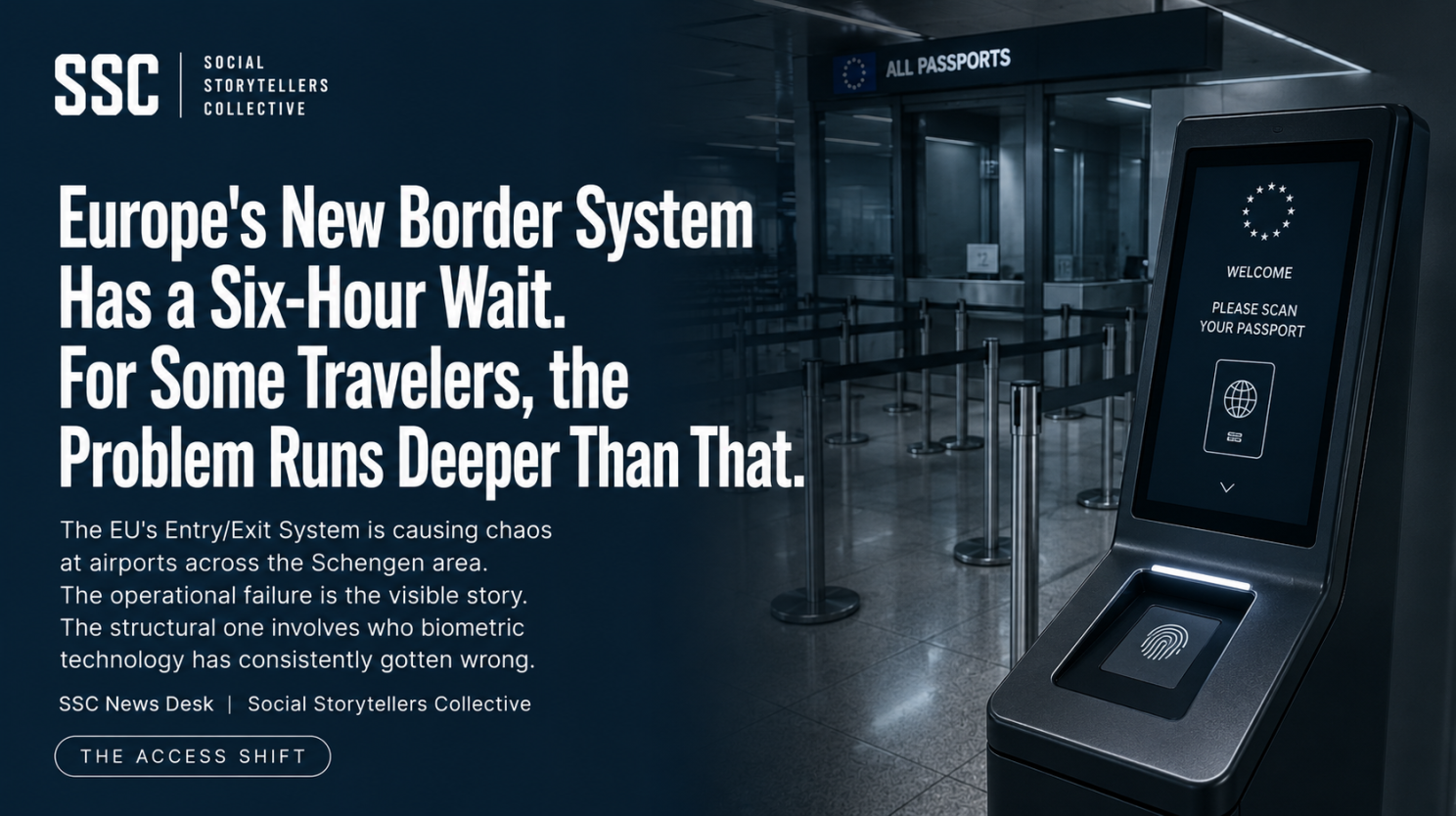
The EU‘s Entry/Exit System went fully live on April 10, 2026, and within hours airports across the Schengen area were in crisis. Seven-hour queues at Lisbon. Five to six hours at Geneva. Three hours or more at peak periods across Paris CDG, Madrid, Barcelona, and Prague. In Europe’s New Border System Has a Six-Hour Wait. For Some Travelers, the Problem Runs Deeper Than That, SSC examines the structural argument underneath the travel disruption headline — a decade of independent research showing that facial recognition technology misclassifies Black women at a rate of nearly 35 percent while achieving near-perfect accuracy for white men. Deploying a system with that documented accuracy gap at every border crossing across 29 countries, with institutional authority behind it and no meaningful accountability for the errors it produces, is not a tech implementation story. It is an equity story.
Coming Monday: The Credentialing Class
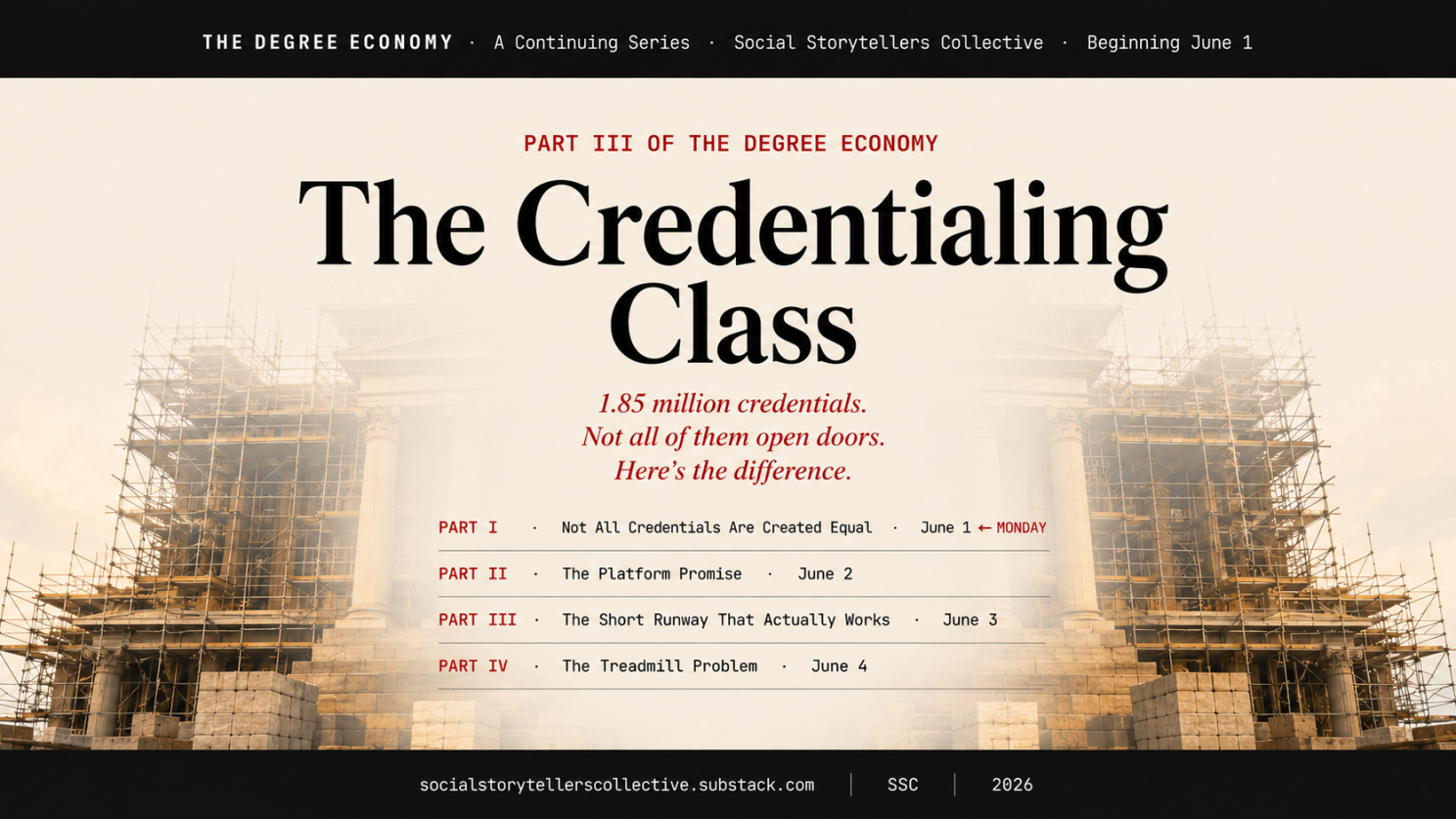
The MBA is on sale. The jobs it was supposed to unlock are disappearing. And the workers who most need the upgrade are the least positioned to use the discount. Since May 18, SSC has been examining what happens when the credentialing system that previous generations used to build economic stability is stress-tested from every direction at once.
The Degree Economy traced the deflation of the four-year degree across four installments — The Credential Is Deflating,AI Ate the ROI, Who Gets Left Out of the Sale, and The HBCU Squeeze — building the case that when a degree goes on sale, the market has already decided what it’s worth. The HBCU Ascent followed — While PWIs Contract, HBCUs Are Growing opened the series, The Infrastructure Moment examined what the HBCU Research Institution launch actually means structurally, and The Employer Gap closed it: the schools are producing more. The market isn’t absorbing it proportionally.

Michael Preysman didn’t know Everlane had been sold to Shein until the news broke publicly. The founder and former CEO of the brand he built around radical transparency discovered the sale the same way everyone else did — through press reports. In Everlane Just Sold to Shein. Its Founder Is Starting Over Without Venture Capital. That’s the Story, SSC examines what Still Radical — Preysman‘s new label built on the same principles with one structural difference, no venture capital and no private equity — is actually arguing. The financing model is the founding argument. The question it is asking is whether sincerity is financeable without the institutional money that has historically been the only path to scale. That is where we close today.
The through line across this edition is not complicated once you see it. The institutions that were supposed to hold the line kept letting go — and called it progress while they did it. The workers absorbed it. The families navigated it. The communities most exposed to the consequences had the least say in any of it. Naming what the official version is designed to obscure — clearly, specifically, and with the data to back it up — is the work.
All of today’s coverage lives at socialstorytellerscollective.substack.com. The full archive, beat navigation, and every linked piece are best experienced on a computer. If you have been reading and have not yet subscribed, we would be glad to have you with us.
— SSC