From red carpets to redrawn maps, vacant apartments to $3.9 billion deals, today’s stories kept asking the same question: who actually has access, and on whose terms?
Today did not arrive with a single clean headline. It arrived with several — each one appearing to operate in its own lane until you look at what they are all actually measuring. Access. Who has it, who is being filtered out of it, and what systems are doing the filtering while everyone is focused elsewhere. But today also arrived with something else: proof that some people refuse to let the system write their ending.
At 75 years old, Peggy Moore turned her tassel at Temple University’s 139th Commencement Ceremony this spring — after working at the school as an Administrative Specialist for 44 years. She raised two children. She cared for an elderly mother. She started and stopped and started again. “I had a lot of obstacles,” she said. “And I overcame all those obstacles.” Temple was founded in 1884 specifically as a university for working people who could not afford to stop working while they learned. The institution was built for exactly this moment, for exactly this person. In a week full of stories about the distance between what systems promise and what they deliver, Peggy Moore closed that distance herself. That is where today begins.

Peggy Moore is not the only person this week who refused to let the odds write her story for her.

Not every story today is about a system failing. Some are about people who refused to let the system write their ending. He Was Born Dead. His Mother Never Believed It — Seattle Seahawks linebacker Derick Hall entered the world at 23 weeks, weighing 2 pounds 9 ounces, without a heartbeat, given a 1% chance of survival. His mother Stacy Gooden-Crandle was handed a do-not-resuscitate form in a Gulfport, Mississippi NICU. She refused to sign it. Twenty-five years later she was on the Super Bowl field watching her son hold the Vince Lombardi Trophy. This one is for every parent who ever decided their child’s story wasn’t over.
Those are the stories that remind you why the systems matter in the first place. Now here is what the systems are actually doing.
This morning, the April jobs report landed better than almost anyone expected.
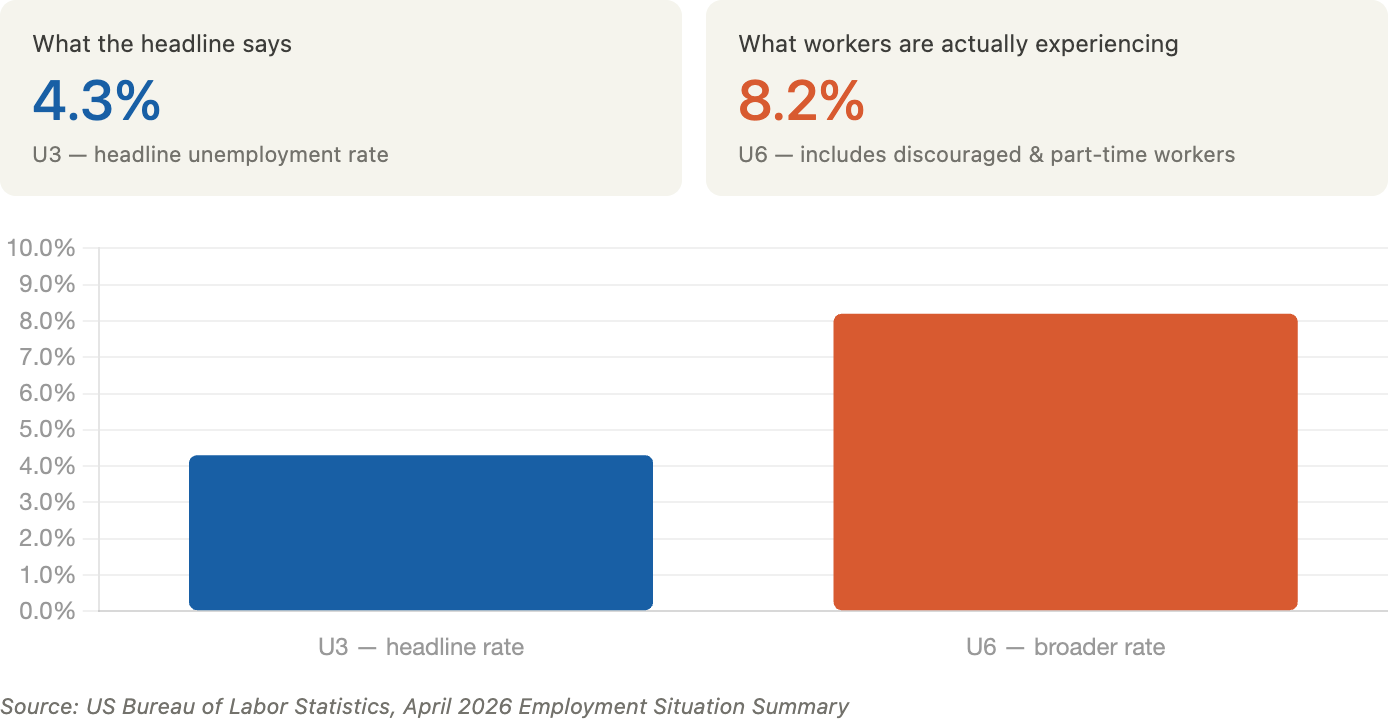
115,000 jobs added. Nearly double the 65,000 economists forecast. The unemployment rate held steady at 4.3%. At the headline level, this is a labor market that held. But as SSC reported today in The Numbers Looked Fine, the headline is doing exactly what headlines are designed to do — summarize without explaining. The U6 unemployment rate, the broader measure that captures discouraged workers and people stuck in involuntary part-time work, rose to 8.2%. AI was the single most cited reason for job cuts in April for the second consecutive month — 21,490 layoffs, 26% of all cuts. The people who feel left behind by a strong jobs report are not misreading the data. They are reading the part of it that was never designed to be seen. That is today’s access question before the first story even starts.
Costa Rica Will Let You Live There Tax-Free is circulating as a lifestyle story. It is not. The two-year tax exemption for foreign-earned income is a targeted capital attraction strategy with an income filter built directly into it — designed for people whose money is already portable, already substantial, and already operating outside the constraints that make relocation impossible for most people reading the headline. The sun is the marketing. The structure is the story.
Boston Renters Finally Have Options. That’s More Complicated Than It Sounds. runs the same logic through a different zip code. Apartment availability in the city has surged to its highest level in nearly a decade — 45% above where it was this time last year. But the neighborhoods carrying the biggest jumps are not Beacon Hill or the Back Bay. They are Fort Hill, Roxbury, Mission Hill, and Allston — communities showing availability rates above 13% with year-over-year increases of 70% or more. These are neighborhoods that have absorbed the city’s housing pressure the longest. The window opened. The question the data does not answer is whether the people who built those neighborhoods can still afford to walk through it — or whether the surge in availability is less a relief story than a displacement story wearing relief’s clothes. Costa Rica and Boston are not the same story. They are the same system operating at different scales.
The aviation reporting today ran the same logic through a different system. Jet Fuel Volatility Is Reshaping the Economics of Travel is not a LATAM earnings story. It is a signal about how cost pressure at the operational level redistributes downward — onto routes, pricing, and the travelers with the least flexibility to absorb either. Airport Access Is Becoming a Geopolitical Economic Lever extended that further. The US-Mexico airline agreement is not a diplomatic footnote. It is evidence that governments are actively learning to use aviation infrastructure as an economic pressure point. The skies are not neutral. They never were.
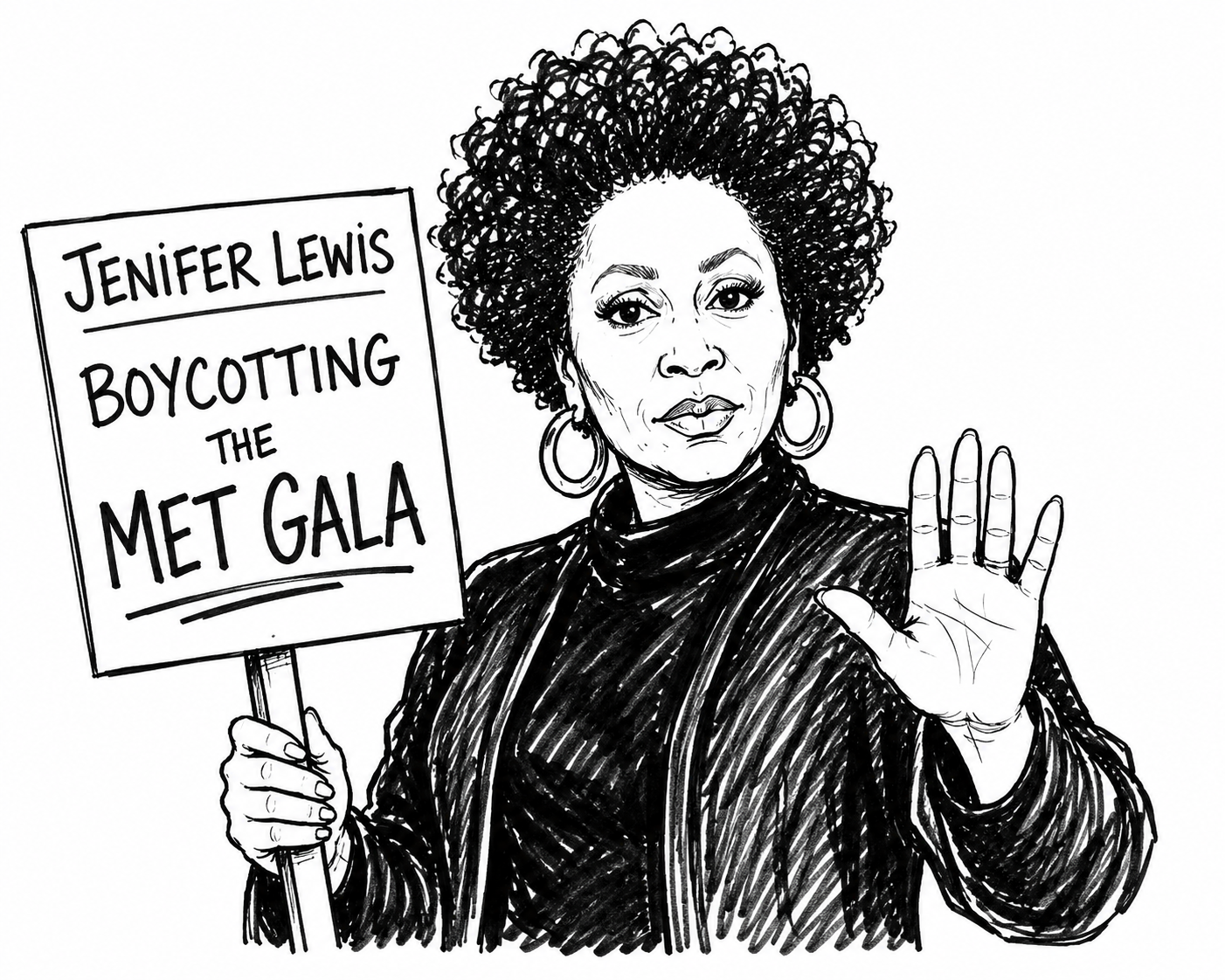
The cultural reporting today was doing the same analysis in a louder register. Celebrity Visibility Is Increasingly Colliding With Political Accountability is built around one specific detail that reframes everything: Jeff Bezos and Lauren Sánchez did not attend the 2026 Met Gala. They chaired it — while Amazon’s labor practices remain among the most scrutinized in the country and Jenifer Lewis was online asking publicly why the people with the most visibility keep showing up to the rooms that least require their presence. The audience is paying attention to the gap. That is new.

Druski’s Viral Skit Turned a Casting Debate Into a Conversation About Cultural Ownership caught something the internet processed as comedy but that landed as critique. When Druski posted a slavery-era parody about Black British actors “taking all the roles,” the laugh came first — and then the question underneath it didn’t go away. Why does Hollywood increasingly reach outside the United States for Black dramatic talent when it wants prestige? The representation has expanded. The infrastructure producing it — and capturing its returns — has not moved nearly as far. Druski said it funny. The conversation it started was serious.
A Black Woman Is About to Own an MLB Team. That Sentence Has Never Been Written Before is where that inversion finds its counterweight. Kwanza Jones is on the verge of making history — a $3.9 billion agreement to purchase the San Diego Padres, pending a June vote among all 30 club owners, that would end 123 years of Major League Baseball existing without a Black woman at the top of an ownership table. To understand why that number matters, you have to trace the full arc. Robinson’s 1947 breakthrough with the Dodgers did not just integrate baseball — it coincided with the collapse of the Negro Leagues, Black-owned teams and Black-run front offices whose wealth was absorbed by the same integration that opened the sport’s doors. The ownership never followed the talent. A June vote stands between Jones and the first real break in that pattern. Jones is buying the whole franchise.
They Don’t Make a Manual for This is the day’s most personal story and also its most structurally precise. When rapper Isaiah Rashad publicly addressed questions about his sexuality, what struck observers wasn’t the disclosure itself — it was the absence of any established language for how to do it inside hip-hop culture. Rashad named that absence directly. It is not just a cultural observation. It is a description of what it costs to move through systems that were never designed to support the people most exposed by them. The manual does not exist. That is the point.

The Next Shift in Weight Loss Isn’t the Drug. It’s the Format. brought today’s access question into healthcare without flinching. Eli Lilly’s oral GLP-1 approval is expanding the market not because the drug got better but because the format barrier dropped. Over 80 percent of early users are new to GLP-1s entirely. That is not a pharmaceutical story. That is an access story — and it immediately raises the harder question about whether removing the format barrier also removes the economic one, or simply makes the same product more convenient for the same people.
Essence Fest Is Being Pulled Into the Economics of Political Power is where today’s argument gets most direct. The calls for Essence Festival to leave New Orleans are not a cultural debate. They are a structural one — about whether major cultural and economic events should continue generating revenue and visibility for governments whose policies are actively working against the communities those events represent. That question is being asked publicly now, with institutional weight behind it. It is not going away.
That argument found its most literal expression this week in Nashville. On Thursday morning, protesters filled the halls of the Tennessee State Capitol. By Thursday evening, their representation was gone. They Drew the Map. Then They Erased the People . In a 48-hour special session called at Donald Trump’s direct request, Tennessee’s Republican supermajority passed a new congressional map that carves up Shelby County — home to majority-Black Memphis — into three separate districts, eliminating the state’s only majority-Black congressional seat. The 9th District, which backed Kamala Harris by 43 points in 2024, transforms under the new lines into a seat Trump would have carried by 21 points. Governor Bill Lee signed it into law the same day it passed. The NAACP filed an emergency lawsuit within three hours of his signature. Tennessee is now the ninth state to enact a new congressional map ahead of the midterms — part of a redistricting campaign that could deliver Republicans as many as 14 additional House seats nationally. The Voting Rights Act took years to pass. It took 48 hours to functionally undo it in Tennessee.
Today’s stories looked like they were covering different beats. They were covering the same one. These are not comfortable stories. They are necessary ones.
The Daily Visual Signal
A visual interpretation of the deeper systems, tensions, and structural shifts shaping the current moment — designed to translate complex societal changes into a single image.
ACCESS IS NOT DISTRIBUTED EVENLY.
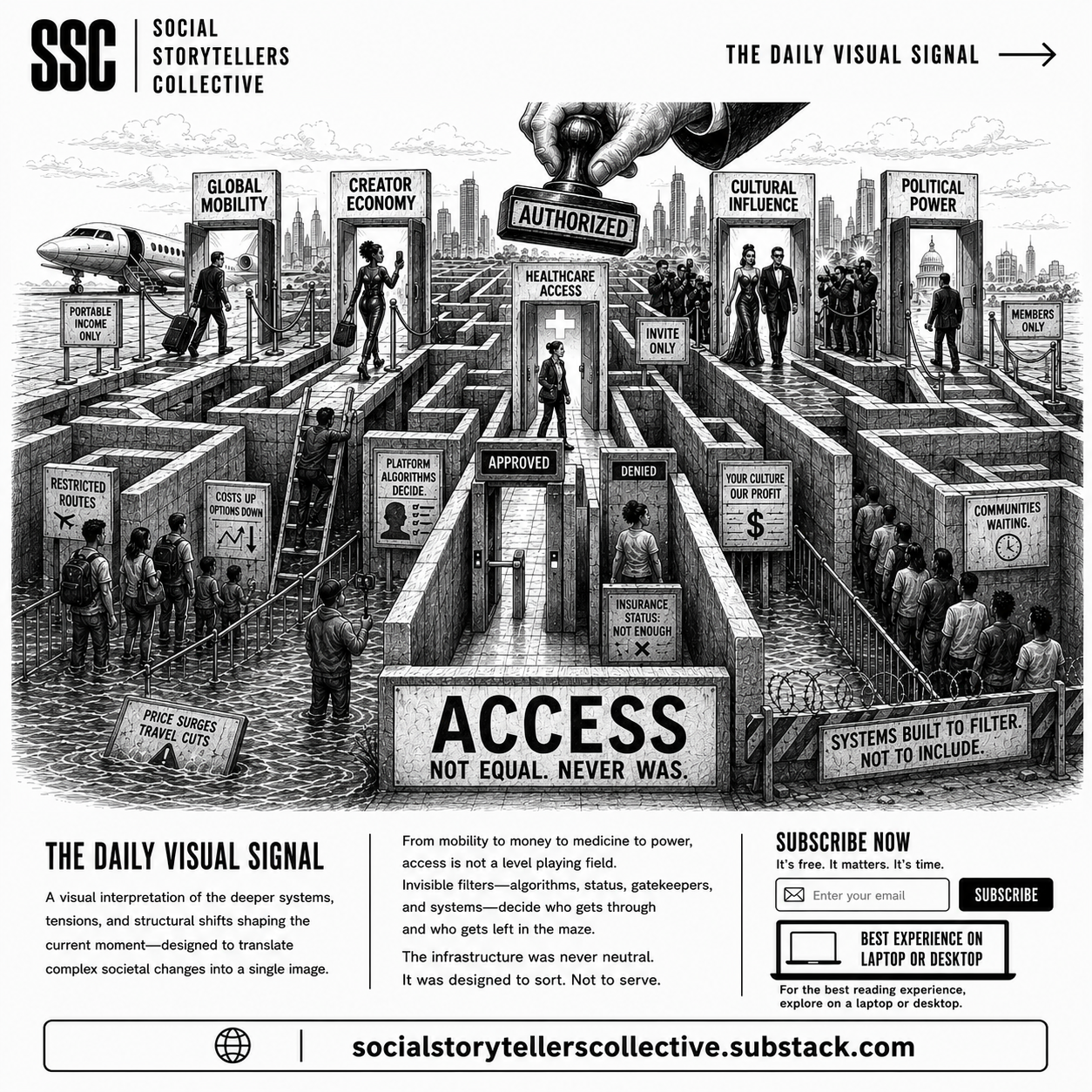
Today’s stories were framed as travel, culture, healthcare, economics, and politics. Underneath them was the same structural question: who gets to move freely through systems designed to reward portability, visibility, wealth, and proximity to power — and who keeps encountering barriers disguised as policy, pricing, procedure, or “eligibility.” The filtering is no longer hidden. It is becoming the infrastructure itself.
Featured Story: The Culture Is Theirs. The Economy Isn’t.
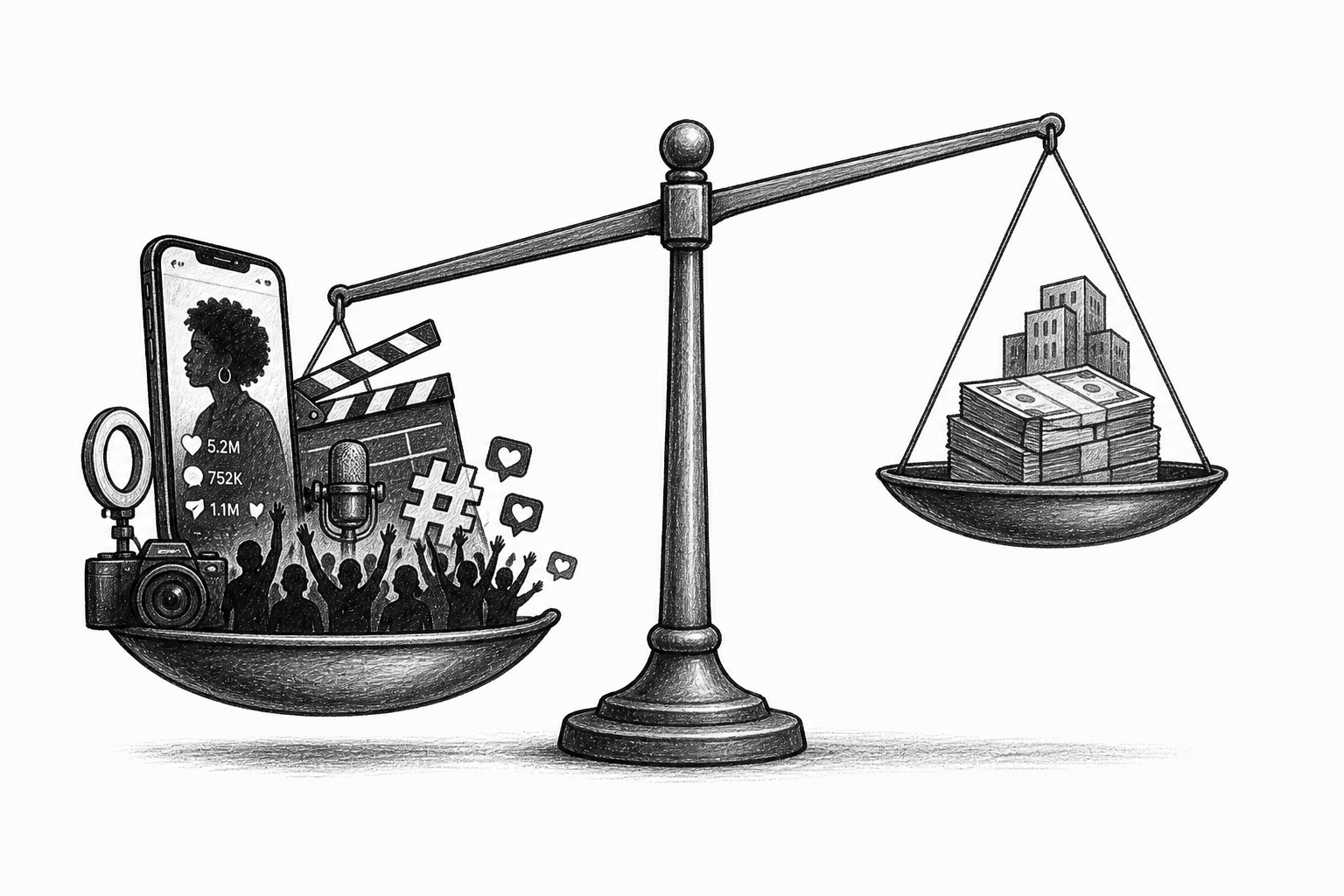
The creator economy has a gap problem. The people generating the most cultural value are not the people capturing the most financial return — and the data makes that gap impossible to ignore. Black entrepreneurs represent 17% of TikTok’s global creators. Nielsen data consistently shows Black creators generate higher media value than their counterparts in fashion, lifestyle, and gaming — the three categories driving the most advertiser spending in the space. Black audiences consume media at rates 31.8% higher than the general population. The culture is not a niche. It is the engine. The Culture Is Theirs. The Economy Isn’t examines who is building the creator economy, who is capturing its returns — and why those two groups remain stubbornly different.
Every story today arrived in a different package. A jobs report. A baseball deal. A redrawn map. A diaper campaign. A 75-year-old woman in a cap and gown. A rent surge in neighborhoods that have waited the longest for relief. A platform that moves at the speed of algorithm when it wants to — and the speed of public pressure when it has to.
Different packages. Same question underneath all of them: what does it actually take to move freely through systems that were not designed with everyone in mind?
That question does not belong to any one community. It belongs to anyone who has ever felt the gap between what a system promised and what it delivered. That is most of us. That is why these stories matter.
We will be back tomorrow with more.
— SSC