
The signal is showing up in plain sight. PayPal is reportedly willing to pay up to $236,000 for a Head of CEO Content. The most advanced AI companies in the world are investing heavily in content strategists. That is not a hiring trend. It is a structural shift in how companies understand where value is actually created.
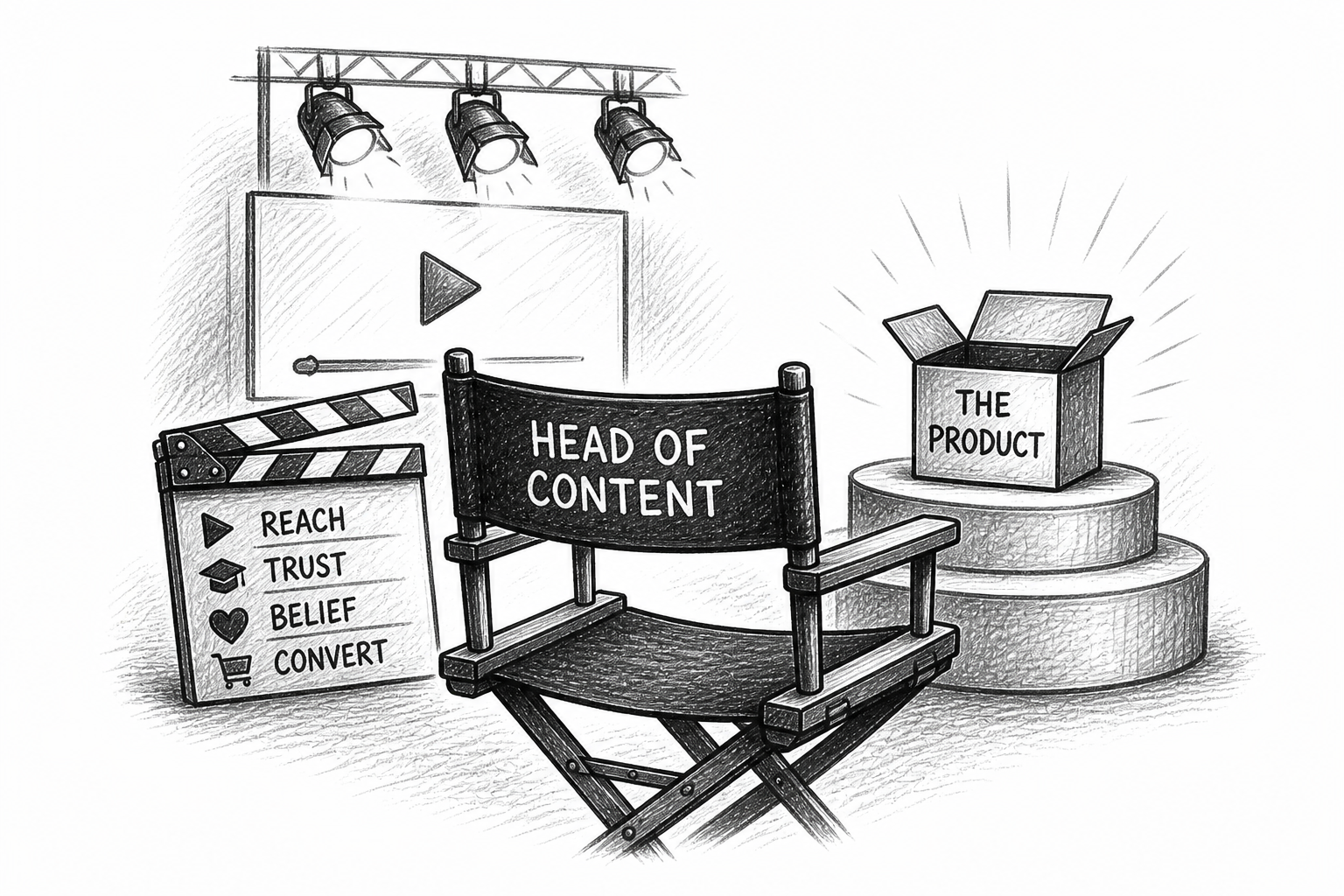
The brands shaping markets right now are no longer treating content as marketing. They are treating it as infrastructure. The job is not to promote the product after it is built. The job is to build a system of attention that makes the product inevitable — to create the context in which the product becomes the logical conclusion of an audience’s engagement rather than the beginning of a sales pitch.

The Netflix analogy circulating in brand strategy conversations gets at something real. Netflix does not rely on a single hit. It builds formats, categories, and repeatable systems that keep audiences returning. When something works, it does not get archived — it gets scaled, serialized, and turned into a franchise. The implication for brands is direct: a viral post is not a win. It is a prototype. The real leverage comes from turning that moment into a system that compounds — one that generates reach, builds trust, and converts attention into revenue across multiple layers of engagement simultaneously.
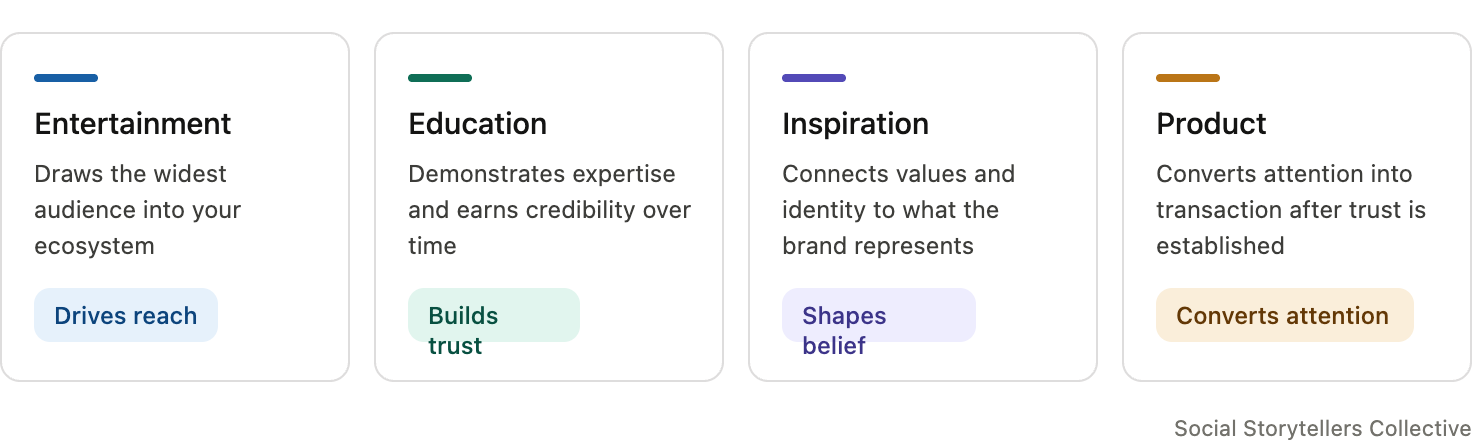
That system requires structure, not just volume. The strongest content operations today are deliberate portfolios. Entertainment to drive reach. Education to build trust. Inspiration to shape belief. Product to convert attention into transaction. Most brands collapse all of this into one lane — speaking to one audience, in one tone, for one outcome — and then wonder why their growth plateaus. The market has already fragmented into multiple layers of engagement. A single-lane approach produces a single-lane result.
There is also a shift happening in who carries the narrative. The model where the founder alone represents the brand is breaking down — not because founder voices don’t work, but because the market has become too segmented for any single voice to hold all of it. Five people with distinct perspectives and 50,000 followers each routinely outperform a single centralized account with a larger audience. Distribution is no longer primarily about size. It is about credibility within specific communities — and credibility requires the right voice, not just the loudest one.
The case studies that keep surfacing reinforce the same pattern. A bagel shop builds a show around the line, not the product, and generates tens of thousands of views with a fraction of the audience size most brands chase. A hat company launches collections like films, turning the release itself into the marketing event. In both cases, the product is still there — but it is downstream. The content creates the context that makes the purchase meaningful. The brand becomes something people engage with before they ever transact with it. And that sequence — engagement before transaction — is what separates brands that hold attention from brands that have to keep buying it back.
The framing that the best brands don’t have the best product, they have the best show, is not dismissing product quality. It is acknowledging that attention now determines whether quality is even discovered. The content is the entry point. The product is the proof. And the companies that understand that sequence are not just improving their marketing — they are restructuring how value moves through their entire operation. The show is not a campaign. It is the business model.