
The findings did not emerge from a whistleblower or an inspection report. They emerged from one child’s story. Child Q was a 15-year-old Black schoolgirl strip-searched by Metropolitan Police officers while on her period, without an appropriate adult present, after police wrongly suspected her of carrying cannabis. The incident came to light in 2022 and sparked public protests. The two officers involved were dismissed without notice in 2025 after a disciplinary panel found they had committed gross misconduct. At the time, many hoped her case was isolated. The Children’s Commissioner’s report, published April 22, confirms it was not.
Black children in England and Wales are eight times more likely to be strip-searched by police than their white peers — and nearly five times more likely to have force used against them during those encounters. Black children make up just 6% of the population of 10 to 17 year olds according to the 2021 census, yet account for 35% of all children strip-searched. The overall number of searches has declined — down 56% from 854 in 2020 to an estimated 377 in 2024 — and that decline has been used to signal progress. The Children’s Commissioner, Dame Rachel de Souza, is explicit that it should not be read that way. The reduction in total numbers, she writes, is masking searches that remain unnecessary, unsafe, and underreported. The disparity is not improving. For Black children, the data shows a reversal of what had briefly appeared to be a narrowing trend.
The force data is where the report becomes most precise about what is actually happening in these encounters. Nearly one in five stop-and-search interactions involving children used force — but in 43% of those cases, no further action was taken. Force was deployed. Nothing was found. No charge followed. The justification offered for using force on Black children differs from the justification offered for white children in ways that are not incidental. White children are more likely to be described as having a mental health need as the reason force was applied. For Black children, officers are more likely to cite their size and build. One framing extends compassion. The other extends threat assessment. The difference in language is a difference in how childhood is being perceived — and it is being perceived differently by race.
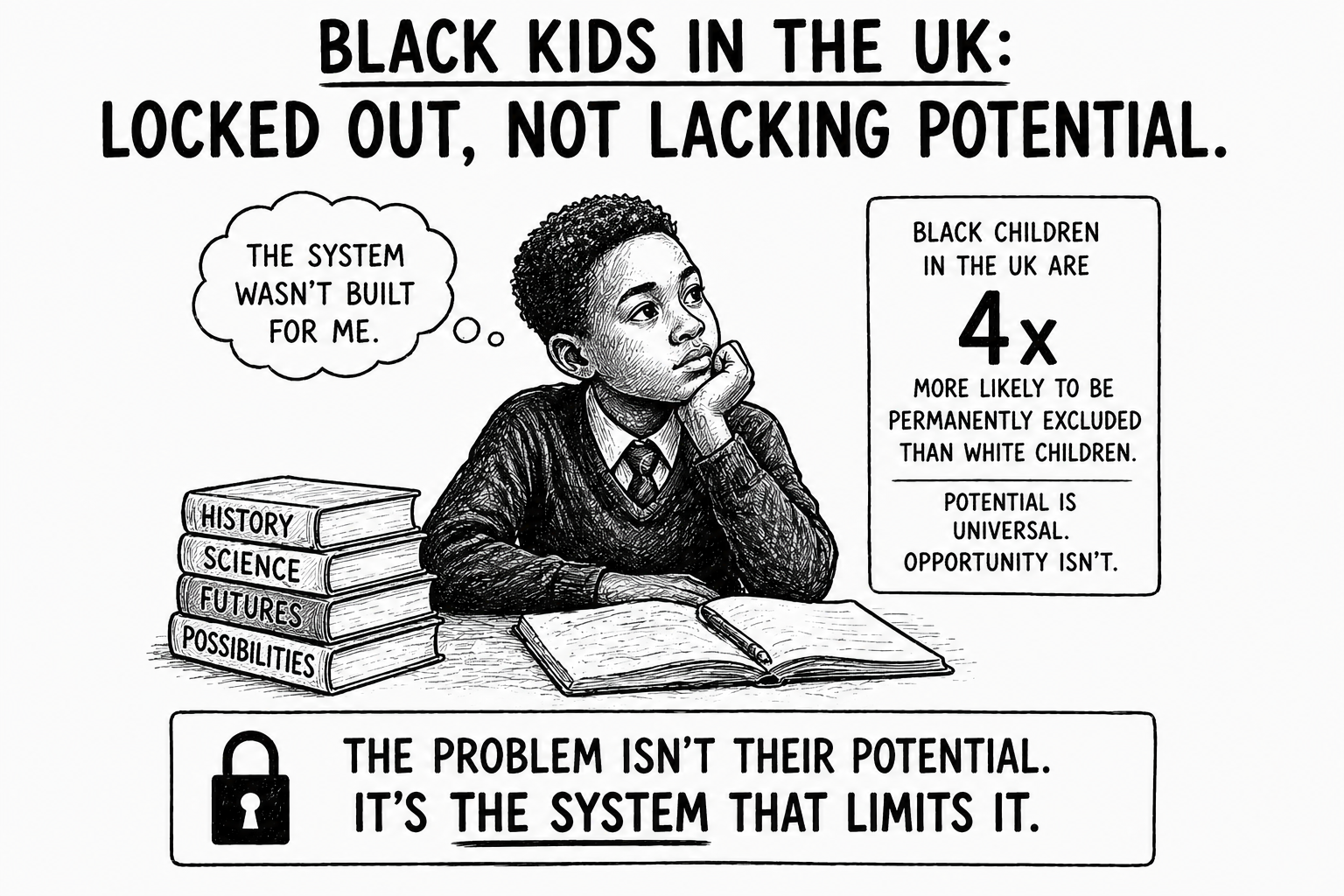
Dame Rachel names this pattern directly: the adultification of Black children, where they are perceived as older than they are and somehow less deserving of protection. Adultification is not a new concept in research on how institutions interact with Black youth. It has been documented in American school discipline data, in the juvenile justice system, and in child welfare decisions. What the UK report confirms is that it operates inside British policing with enough consistency to show up as a statistically significant pattern across six years of data. This is not individual officer bias expressed in isolated incidents. It is a systemic outcome produced reliably enough to be measured.
Almost a third of searches involve children who have already been strip-searched before — a finding that raises its own structural question. Repetition at that rate suggests the searches are functioning as a form of ongoing surveillance and control rather than targeted responses to specific risk. The youngest child subjected to a search was eight years old. Forty-six incidents involved children under 11. The legal threshold for strip search requires an immediate risk of serious harm. The data does not support that threshold being met consistently — particularly in cases where force was used and no further action followed.
The National Police Chiefs’ Council has responded by announcing updates to guidance and committing to a child-centered approach. The Home Office has pointed to reforms underway. These are the expected institutional responses to a report of this kind — procedural adjustments framed as evidence of accountability. What they do not address is the interpretive framework that produces the disparity in the first place. Guidance cannot change what officers perceive when they see a Black child. Policy cannot legislate away the judgment that a child’s size and build constitutes sufficient justification for force when the same logic is not applied to white children in comparable situations.
Between January 2018 and June 2024, almost 3,400 children across England and Wales were subjected to strip searches — many in public view, often without parents or carers being notified. That number accumulated across six years of reports, commissioner investigations, public protests, officer dismissals, and policy consultations. The institution has had repeated opportunities to correct the pattern. The pattern has not been corrected. What has changed is the language used to describe the commitment to correcting it. The search, in that sense, is still the message — about who is presumed dangerous, who is presumed deserving of protection, and which children the system has decided are not quite children yet.