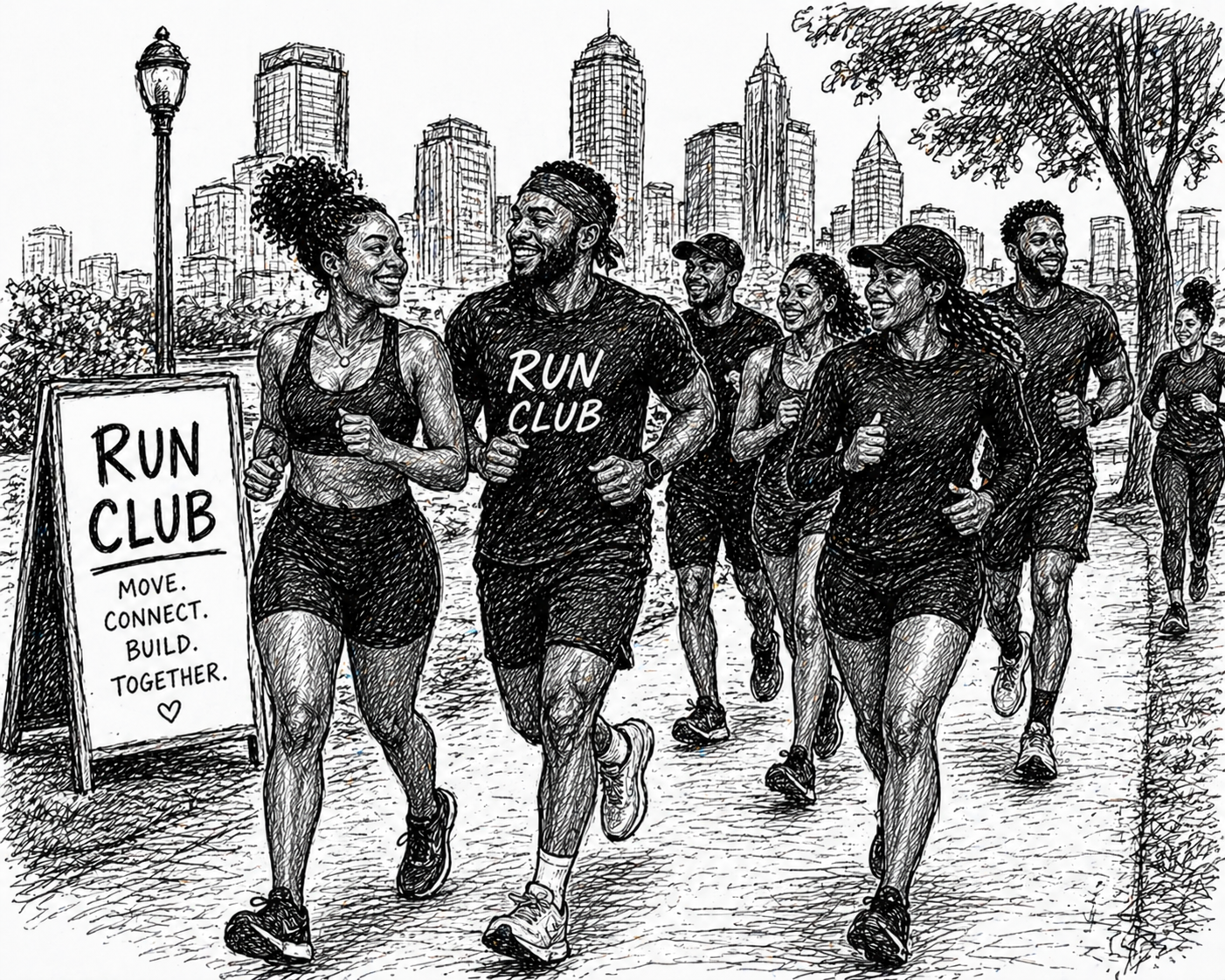
I have watched the run club become something in Houston that it wasn’t five years ago — not just a fitness routine but a social infrastructure, a weekly anchor, a reason to show up somewhere that has nothing to do with a screen or a work obligation. That observation is not unique to Houston. It is being measured at scale. Global run club memberships surged 59% in 2024, and the number of new clubs tripled compared to the previous year, according to Strava’s Year in Sport report. Google searches for “run clubs near me” increased 200% in the United States over the same period. The run club is not a fitness trend. It is a social formation filling a structural void — and the market has noticed.
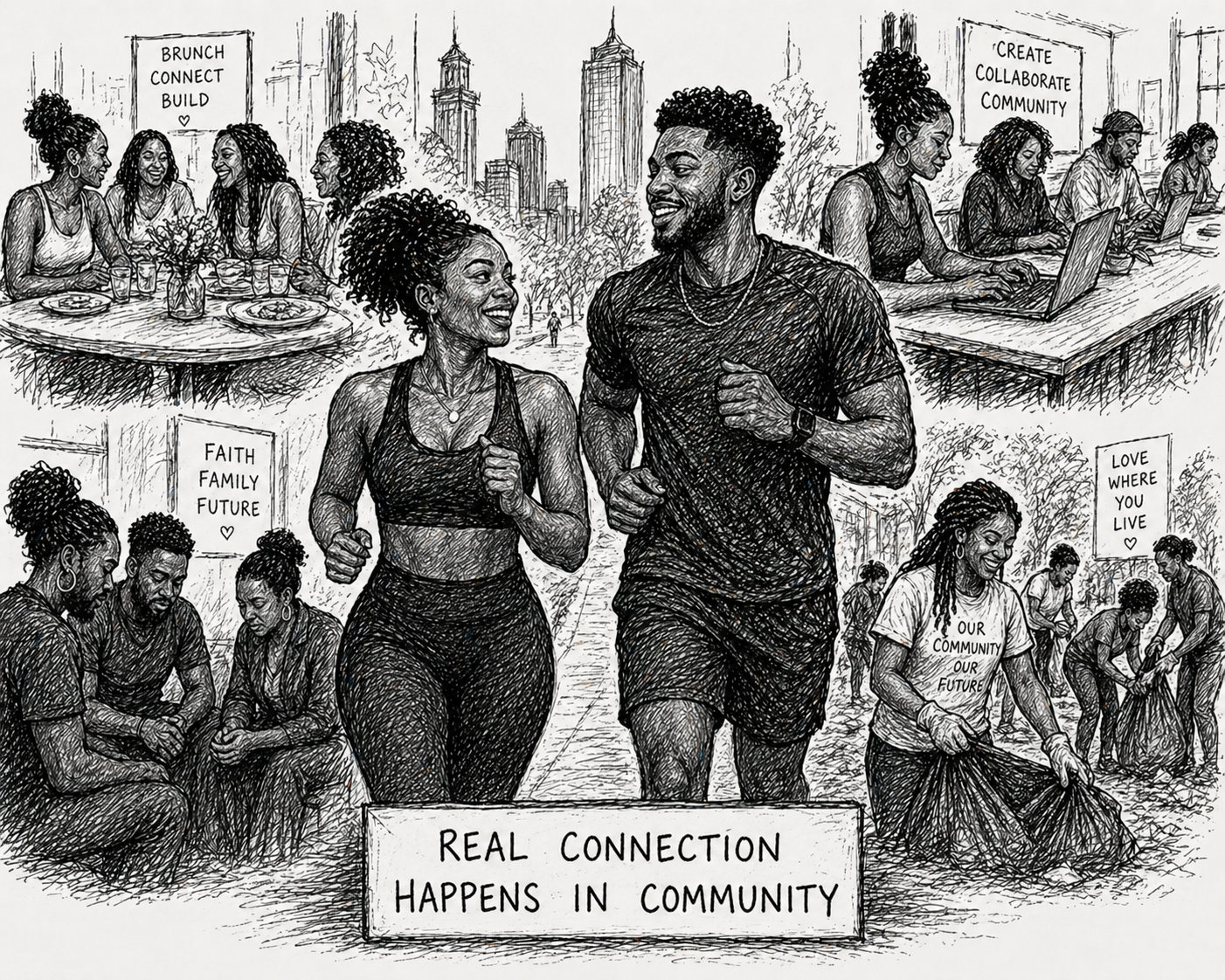
The void is specific. The third place — the social environment that is neither home nor work, where people gather without agenda or transaction — has been eroding for decades. Bars became expensive. Churches lost younger members. Community centers were defunded or converted. Neighborhood anchors disappeared under the pressure of rising commercial rents and changing social patterns. What replaced them, largely, was the digital environment — and the run club is the most visible current example of something being rebuilt in the physical world to fill the gap that digital substitution left. Over half of Gen Z join run clubs not for the fitness, but to meet new people — a statistic that says everything about what the club is actually providing and relatively little about running.
84% of Strava users cite social connection as their primary reason for exercising. The run is the mechanism. The community is the product. That distinction matters because it explains both why run clubs have grown so fast and why brands are now moving toward them with urgency. Major apparel and nutrition brands have shifted significant marketing spend from traditional digital ads to hyper-local run club sponsorships, capturing the high-engagement loyalty these groups command. In December 2025, a global sportswear giant acquired a controlling stake in a network of independent urban run clubs in New York and London. The community that was built without institutional backing is now being institutionalized — and the question that follows every version of this story is the same one: what does the community lose when the infrastructure around it is owned by someone whose primary interest is the return on that ownership?
The run club’s power came from its accessibility. No membership fee. No equipment requirement. Show up, run, stay for the coffee. That model is not naturally compatible with brand partnership economics, which require exclusivity, data, and the ability to convert community loyalty into measurable commercial outcomes. Running now sits at the center of a roughly $13 billion global apparel market, and the brands competing inside it have correctly identified the run club as the most credible distribution channel for reaching a consumer who has become deeply skeptical of traditional advertising. The trust that community members extend to each other is now being treated as an asset to be monetized — which is precisely how trust stops being trust.
The run club will not disappear. The community instinct that produced it is too durable and too necessary for that. What is worth watching is whether the version that survives commercial absorption retains the qualities that made it worth joining in the first place — the low barrier, the absence of transaction, the feeling that you are showing up somewhere because people are there, not because a brand paid to put them there. That distinction is subtle until it isn’t. And the window for the community to define its own terms before the market defines them instead is narrower than it appears from the outside of a Saturday morning run.