
Thousands of people rallied across American cities on May 1st — Chicago, Denver, Las Vegas, and others — organized under a coalition demanding what they called an “affordability agenda rooted in dignity.” The standard coverage framed it as a labor protest. That framing undersells what the data actually shows.
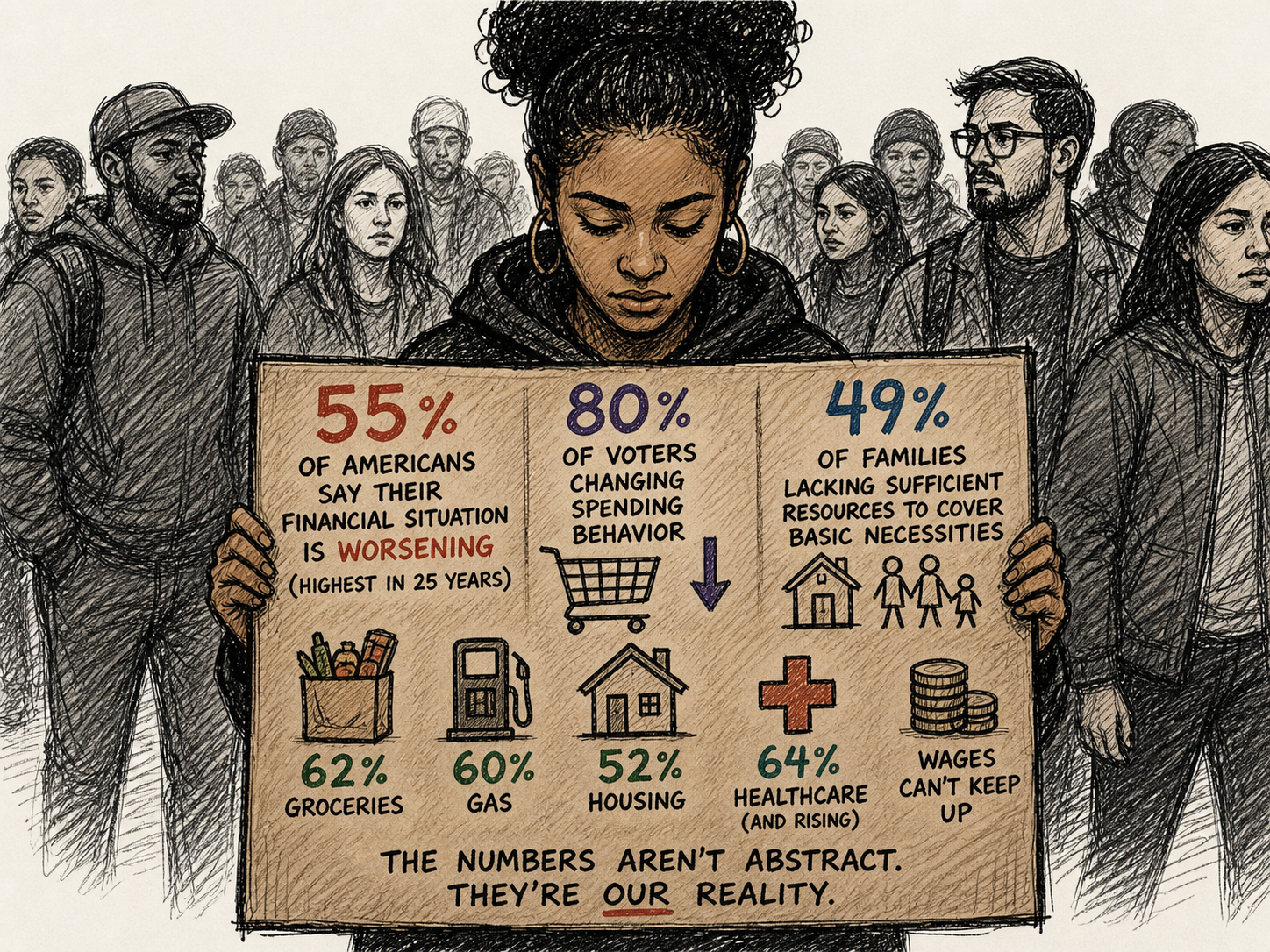
Fifty-five percent of Americans say their financial situation is worsening — the highest share recorded in 25 years. That’s not a protest sentiment. That’s a structural reading of a cost environment that has outpaced wages, savings, and coping capacity for a majority of the country. Nearly 80 percent of voters report changing their spending behavior, cutting entertainment and travel not as lifestyle choices but as financial necessity. Forty-nine percent of families report lacking sufficient resources to cover basic necessities. These numbers predate whatever policy changes are still working their way through the system.
The specific pressure points are groceries at 62 percent, gas at 60 percent, and housing at 52 percent — with healthcare concern sitting at 64 percent and expected to rise as additional coverage changes take effect. What’s notable about that list is that it’s not discretionary. These aren’t categories people can opt out of. They’re the floor of economic participation, and the floor is rising faster than the incomes of the people standing on it.
What the protest framing obscures is that this is the same population showing up in the Black unemployment data, the same population the NYC racial equity plan is trying to address, and the same population that tariff-driven small business contraction is hitting from the business-ownership side. The affordability crisis doesn’t have a single cause or a single face. But it has consistent geography — it concentrates in communities that were already carrying the most economic exposure before costs started climbing.
The rally is the visible layer. The 55 percent is the story underneath it.