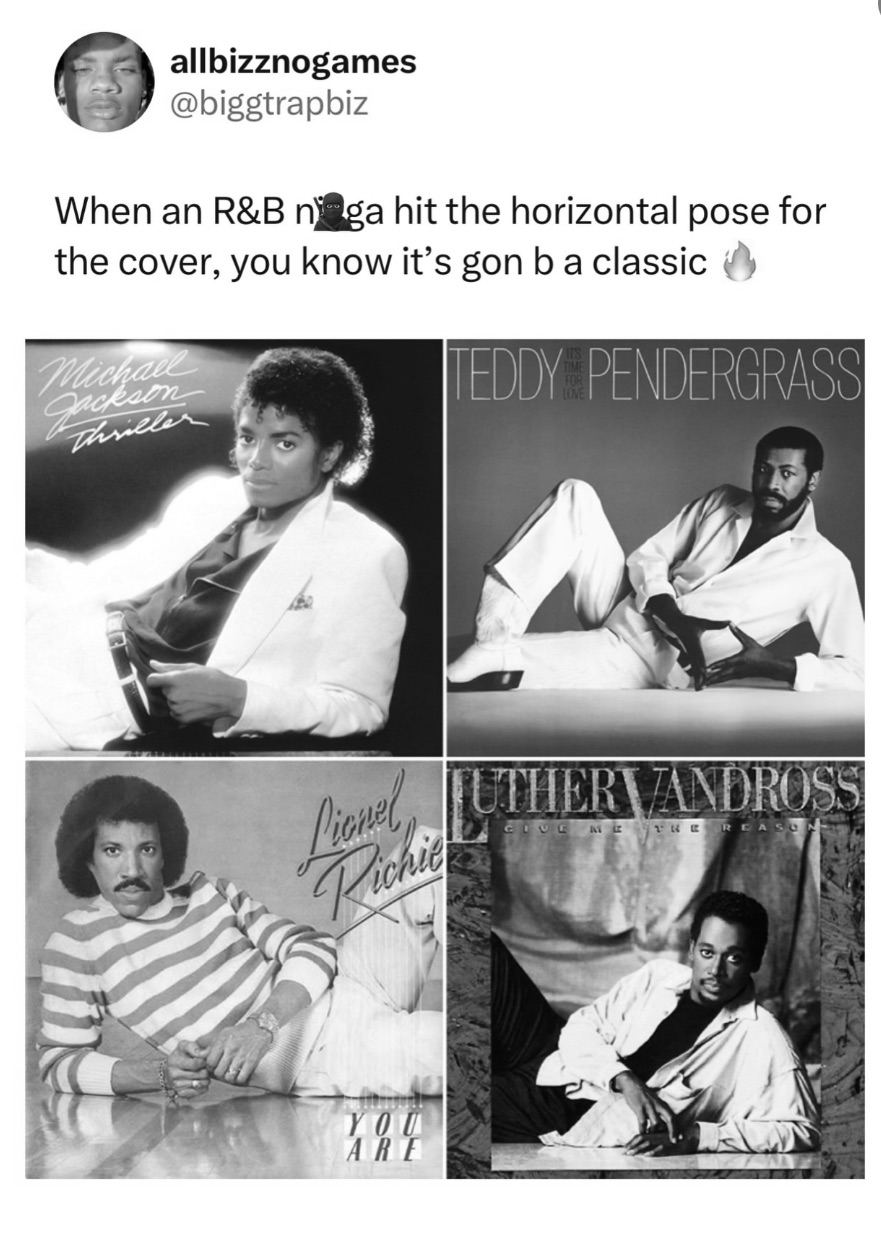
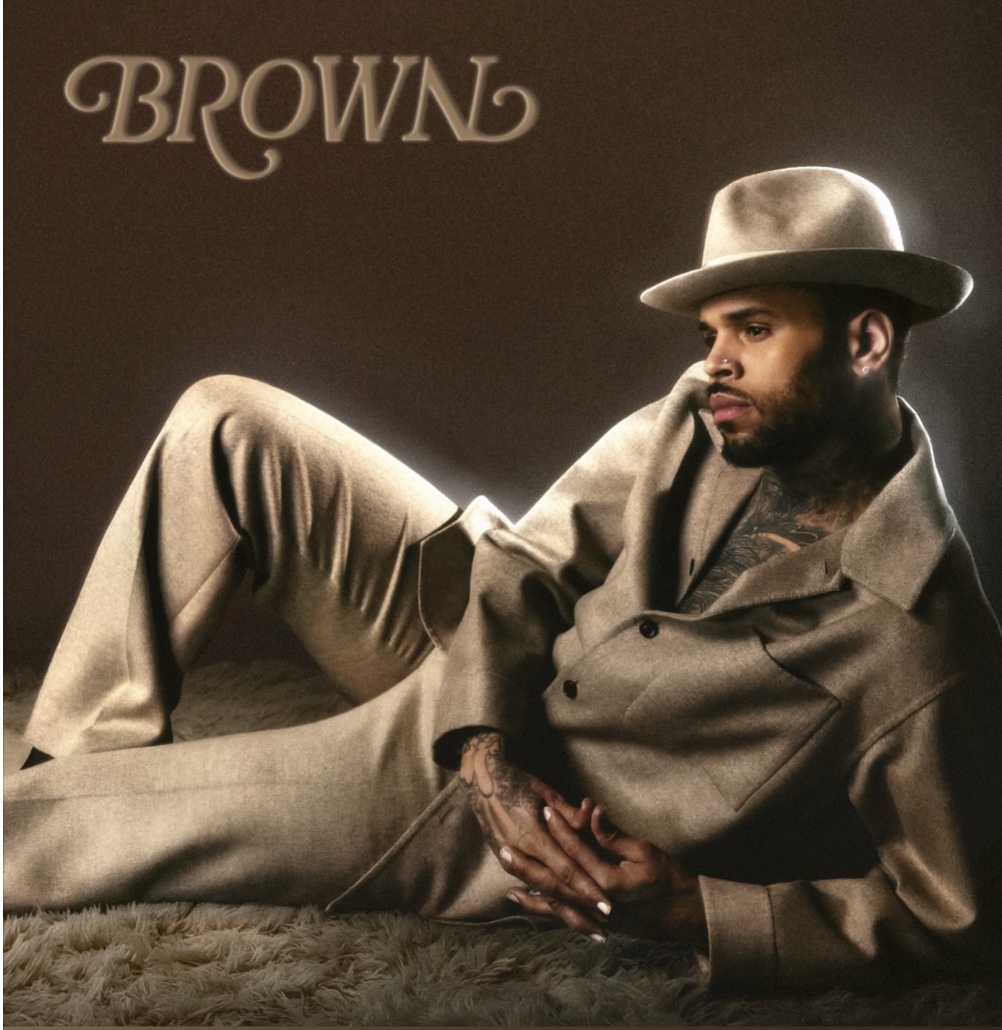
Before a single track drops, an album cover is already making a claim. Chris Brown’s Brown — his 12th studio album, due May 8th — is making a specific one. The cover image shows Brown horizontal, draped in earth tones, hat tilted, weight settled into the frame with the kind of deliberate ease that doesn’t happen by accident. The internet recognized it immediately. Michael Jackson’s Thriller. Teddy Pendergrass. Lionel Richie’s You Are. Luther Vandross. The horizontal pose isn’t a coincidence — it’s a citation.
That citation is doing real cultural work. The reclining pose in classic R&B album art carries a specific set of associations: sensuality without aggression, confidence without performance, a kind of softness that reads as power precisely because it isn’t trying to prove anything. These were men who understood that stillness on a cover communicated mastery — that the music would do the rest. When that visual grammar was established, it functioned as a signal to a specific audience that what was inside the sleeve was worth their full attention. Brown invoking it now is a deliberate appeal to that lineage — a way of locating himself in a tradition that predates him and asking to be evaluated on those terms.
What makes the move interesting is its timing. Brown is releasing this album as R&B is experiencing a broader nostalgia recalibration — audiences are actively reaching backward toward the classic era, toward the production values and emotional registers that defined the genre before it splintered into a dozen subgenres and streaming micro-moods. SSC has documented how legacy and nostalgia function as strategic assets in Black cultural production — the visual grammar Brown is borrowing was built by Black artists whose cultural output became the most imitated, least compensated creative force in American life. Brown’s invocation of that lineage is different in kind — he’s not a brand borrowing the aesthetic, he’s an artist claiming membership in the tradition. But the question of whether that claim is earned sits in the same cultural space.
The broader pattern SSC examined in its Converse piece applies here in a different register — nostalgia as positioning strategy, as a way of reducing the storytelling cost by borrowing a narrative that already exists. The cover positions Brown as a response to the audience’s appetite for the classic era rather than a departure from it. The title itself — one word, his name, the color — strips everything back to something elemental. The visual follows that logic exactly.
Whether the music earns what the cover promises is the question the internet is now sitting with. The pose signals classic. The pose has always signaled classic. The men whose covers Brown is referencing backed it up with albums that held. The canon he’s invoking is unforgiving about the gap between the claim and the delivery — and the audience that recognized the reference instantly is the same audience that will know if it lands.
The cover is working. The rollout is working. May 8th will tell us whether the argument is.