
Somewhere in a federal courthouse in Oakland Monday, a jury dismissed Elon Musk’s lawsuit against OpenAI in under two hours. The case was thrown out on a technicality — filed too late. The substance of whether a nonprofit built to benefit humanity betrayed that mission was never adjudicated. But the trial put the cap table into the public record on the way out. Greg Brockman: $30 billion. Ilya Sutskever: $7 billion. Sam Altman: over $2 billion in stakes in companies that did business with OpenAI. The mission statement still says “for the benefit of humanity.” The financial architecture says something else entirely.
That’s the receipt. And today’s edition is full of them.
NPR got a different kind of receipt yesterday. Two weeks ago, the network announced $113 million in private gifts — the second and third largest donations in its 56-year history. This week, it offered buyouts to approximately 300 newsroom employees. Layoffs follow by May 26 if not enough people take them voluntarily.
These two facts are not in tension. They are the same sentence. The $113 million went to technology infrastructure. The journalists got severance notices. One speaks to innovation. One speaks to cost. Together they describe an institution that has accepted the terms of private philanthropy and is now reorganizing itself around them.
The mission doesn’t disappear. It quietly reorients toward what the money was given to build.
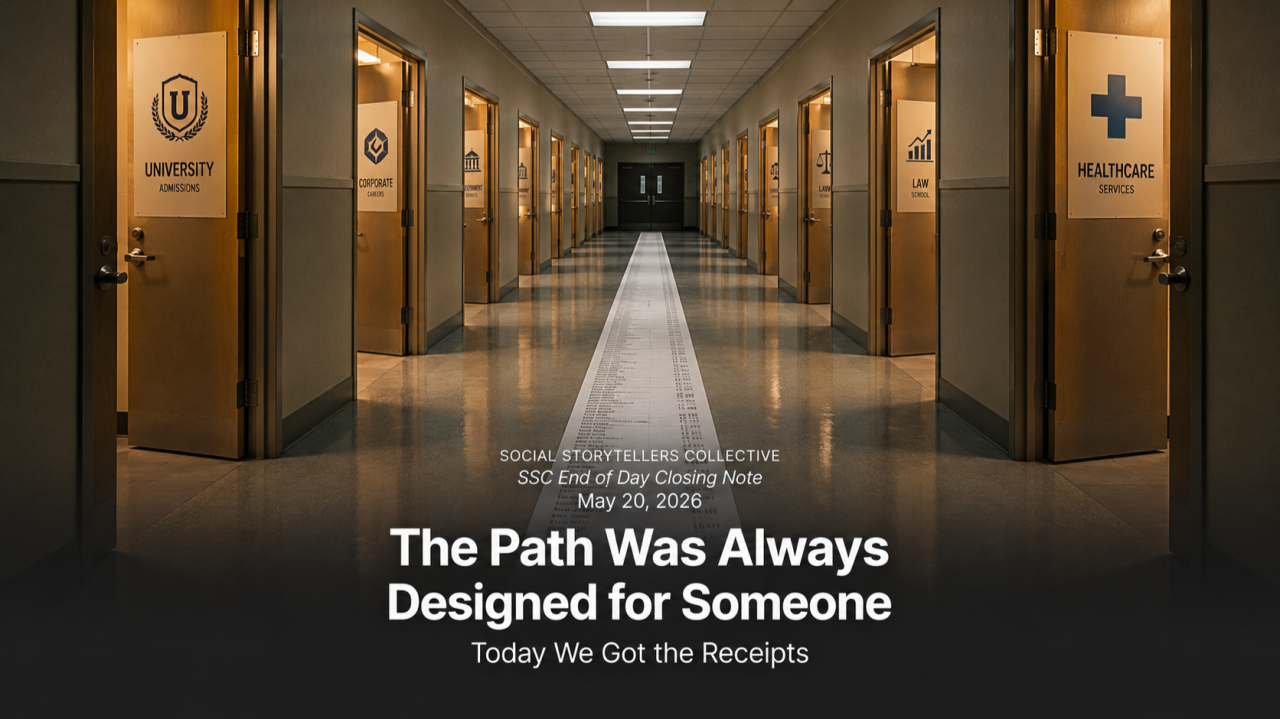
The word doing work today is designed. Every system in today’s cycle was built for someone. The credential was built for the pipeline. The pipeline was built for the firms. The firms are restructuring around AI. The DOJ fund was built around a lawsuit filed by the president against his own government. The college athletics economy was built around Black labor while the states hosting those stadiums work to reduce Black political power. The HIV prevention infrastructure was built — in English, in clinics, for people with insurance and documentation — for someone. Just not everyone.
When you look at who gets left out across all of today’s stories, it is not random. It follows the same fault lines every time. The receipts are in. The design was always visible. Today we just have more documentation.
The Degree Economy: Who Gets Left Out of the Sale
Part III of SSC’s four-part series

A 40% cut on something you couldn’t afford is still unaffordable.
The discount looks generous on paper. 40% off at Purdue. 38% off at UC Irvine. 50% scholarships at Johns Hopkins. The headlines frame this as expanded access — the MBA finally within reach for working professionals.
But access requires more than a lower number. It requires the ability to stop working long enough to earn the degree. And the people who most need a credential upgrade to navigate the restructuring labor market are, in large part, the people least positioned to use a discount that still costs between $36,000 and $99,000 — and still requires time away from an income they cannot afford to lose.
The job hugger statistic is the clearest window into this. As of February 2026, 57% of American workers describe themselves as job huggers — people clinging to current positions rather than exploring career changes or graduate education. That number was 45% in August 2025. In six months, the share of workers afraid to move rose by twelve percentage points. The fear is rational. Stepping away for a degree is not a calculated risk for a median-income worker. It is a financial crisis in waiting.
The workers most urgently displaced by the current restructuring are not the workers best positioned to use the discount to recover from it. Federal layoffs disproportionately targeted Black women — 33% of federal layoffs despite representing 12% of the federal workforce. Between February and July 2025, Black women lost 319,000 jobs while white women gained 142,000 and white men gained 365,000. By March 2026, the unemployment rate for Black women had reached 6.1%, against a national average of 4.4%.
The most honest version of what the fire sale offers is this: a lower barrier to an investment whose return is less certain than it has ever been, available primarily to workers who have enough stability to take on the risk of uncertainty. The discount addresses the price. It does not address the structural conditions that determine whether the degree pays off. Who gets left out of the sale is not a mystery. It is the same people who have always been left out when institutions optimize for their own survival and call it access.
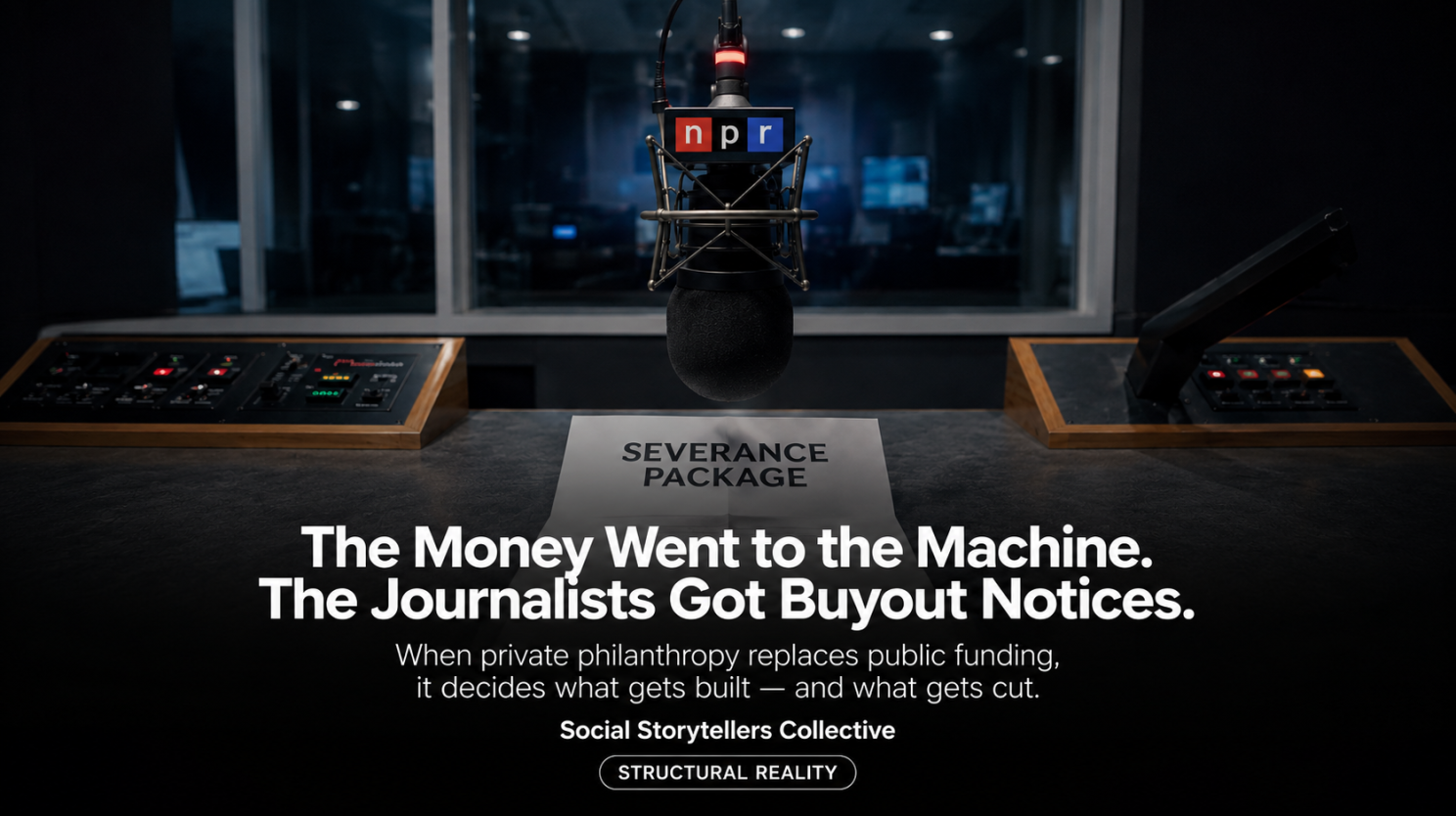
When private philanthropy replaces public funding, it decides what gets built — and what gets cut.
NPR received $113 million in private gifts two weeks ago — the second and third largest donations in its 56-year history. This week it offered buyouts to 300 newsroom employees, with layoffs to follow by May 26 if not enough people take them voluntarily. The money and the notices arrived in the same month. That is not a contradiction. It is a priority statement. What gets lost in that framing is the harder argument SSC examines in The Money Went to the Machine. The Journalists Got Buyout Notices. — that when private philanthropy replaces public funding, it doesn’t fill the gap. It decides what the gap is worth filling. The $113 million went to technology infrastructure. The journalists got severance notices. Federal dollars came with democratic accountability built in. Private philanthropy comes with donor intent built in. Those are not the same thing — and the audiences who most depend on NPR’s coverage are the least likely to show up in a donor’s calculation of what is worth preserving.
8,000 employees are being cut this week. 7,000 others are being reassigned to AI. The memo that explained both decisions was the same memo.
On Wednesday morning, Meta employees across the globe began receiving layoff notifications at 4 a.m. local time. 8,000 people will lose their jobs by end of week. One word kept appearing in employee descriptions of the last several weeks: dread.
But the layoff number is not the most important number in this story. The more revealing figure is 7,000 — the number of Meta employees being reassigned to AI roles before the cuts begin. In a single internal memo, Mark Zuckerberg‘s company divided its workforce into two categories: the people the AI economy needs, and the people it has already decided it doesn’t.
The 8,000 cuts and the 7,000 reassignments are not separate decisions. They are two sides of the same one. Meta has now conducted significant layoffs in 2022, 2023, and 2026. Each round arrived with its own efficiency rationale. Each round left a smaller, more anxious workforce wondering when the next memo would arrive.
The sorting is not random. It follows the contours of existing skill distribution, educational access, and professional network — which means it follows, with uncomfortable precision, the contours of existing inequality. Who gets reassigned and who gets the 4 a.m. email is not a mystery. It is a decision. And the decision has a shape.
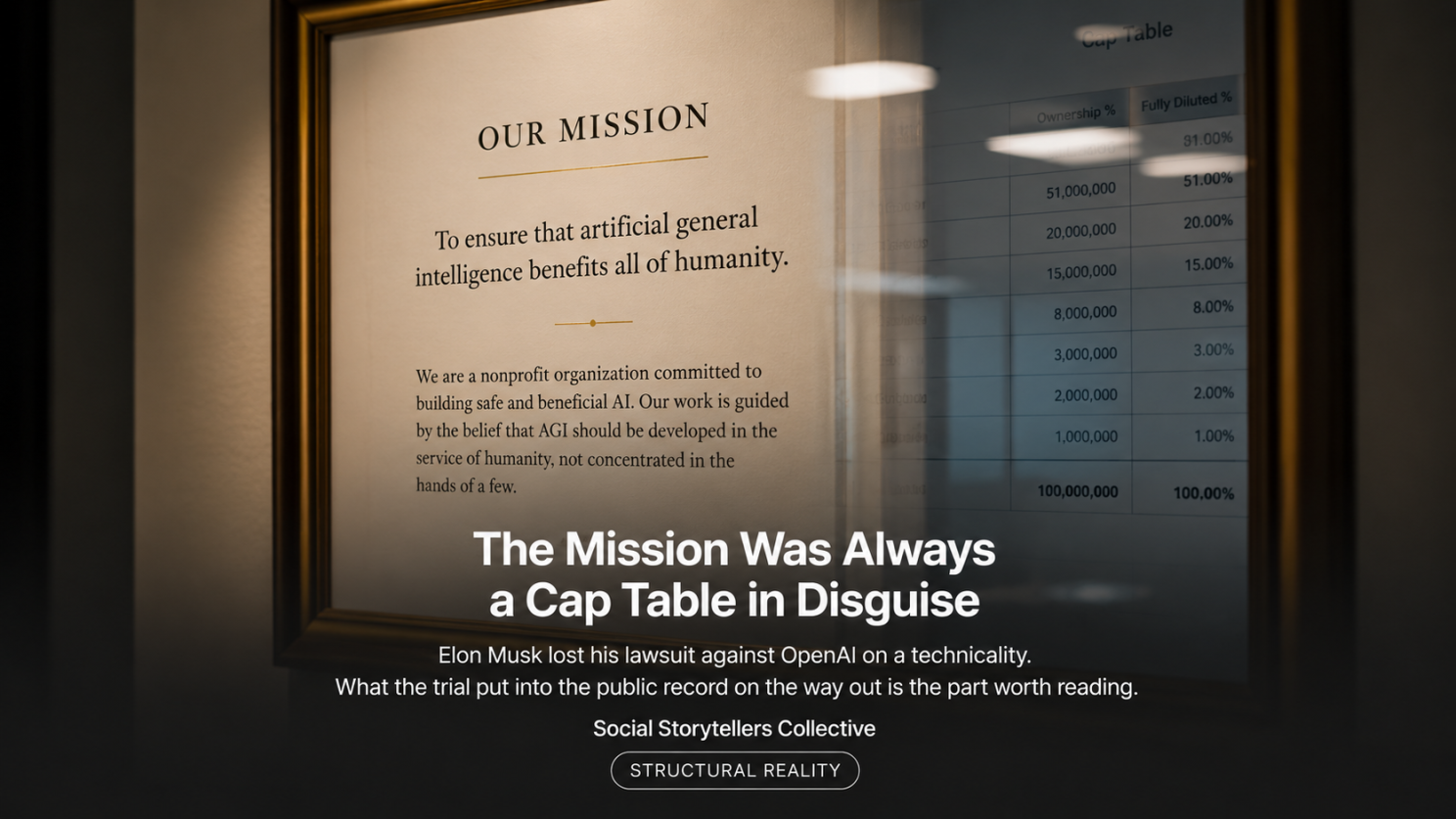
Elon Musk lost his lawsuit against OpenAI on a technicality. What the trial put into the public record on the way out is the part worth reading.
The jury took less than two hours. After three weeks of testimony, a federal jury in Oakland unanimously rejected Musk‘s claims against OpenAI on Monday — not on the merits, but because he filed too late. The substance of whether OpenAIbetrayed its original nonprofit mission was never adjudicated.
What the trial could not avoid was the financial architecture. Greg Brockman: almost $30 billion. Ilya Sutskever: roughly $7 billion. Sam Altman: over $2 billion in stakes in companies that did business with OpenAI. Microsoft: over $100 billion invested. These numbers came from a federal courthouse, under oath, in a trial about whether a nonprofit betrayed its public mission.
The mission statement said the technology would benefit humanity. The cap table says it has already made a small number of people extraordinarily wealthy — before a single share has traded publicly, before most of the world has any meaningful access to or ownership of what OpenAI has built. The IPO is coming. The cap table is already set. The mission statement is still there, on the website, unchanged.
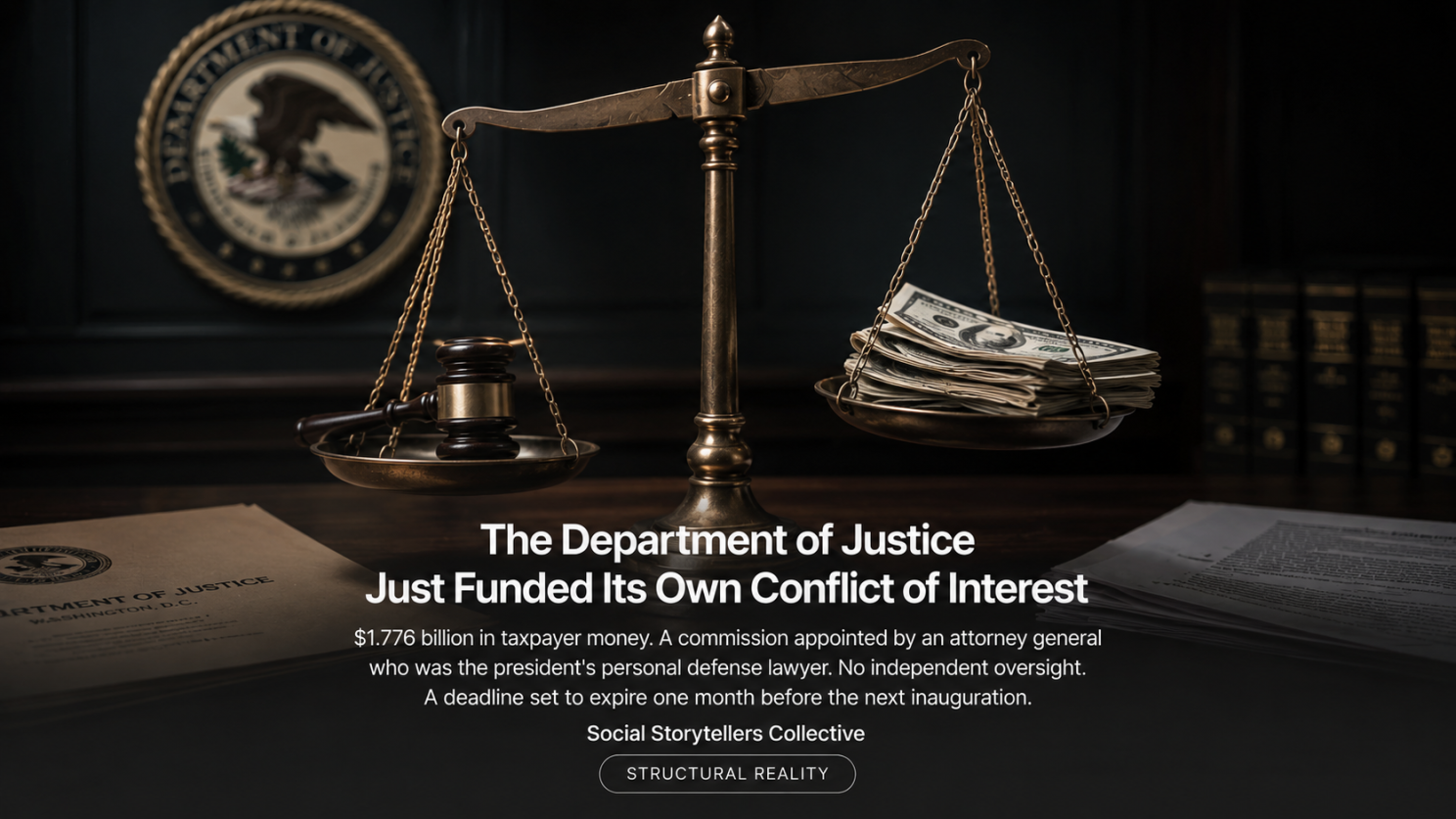
$1.776 billion in taxpayer money. A commission appointed entirely by an attorney general who was the president’s personal defense lawyer.
The DOJ announced Monday the creation of the “Anti-Weaponization Fund” — $1.776 billion drawn from the federal Judgment Fund, the permanent Treasury appropriation used to pay legal settlements against the government. Established as part of settling President Trump‘s lawsuit against the IRS. The president and his family receive a formal apology. No direct monetary damages. The DOJ notes there are no partisan requirements to file a claim.
That last line is doing a great deal of work.
The fund is overseen by a five-member commission — all appointed by Acting Attorney General Todd Blanche, who was previously Trump‘s personal defense attorney in the federal cases against him. The man who defended the president against federal prosecution now controls the commission deciding who was wrongfully prosecuted by the federal government.
Consider the day this landed in. Gas at $4.51 a gallon, up from $3.19 a year ago. 44% of Americans describing their financial situation as bad or very bad. The administration that has spent two years saying the budget cannot accommodate housing relief, healthcare, or student debt forgiveness just moved $1.776 billion in taxpayer money — without a congressional vote — into a fund its own attorney general controls. Among the most likely beneficiaries: the roughly 1,600 defendants convicted or charged in connection with the January 6th attack on the Capitol.
The fund that was framed as protection against government overreach is being used to financially rehabilitate the people who committed the most visible act of political violence in recent American history. Calling that weaponization is not a legal argument. It is a rebranding.
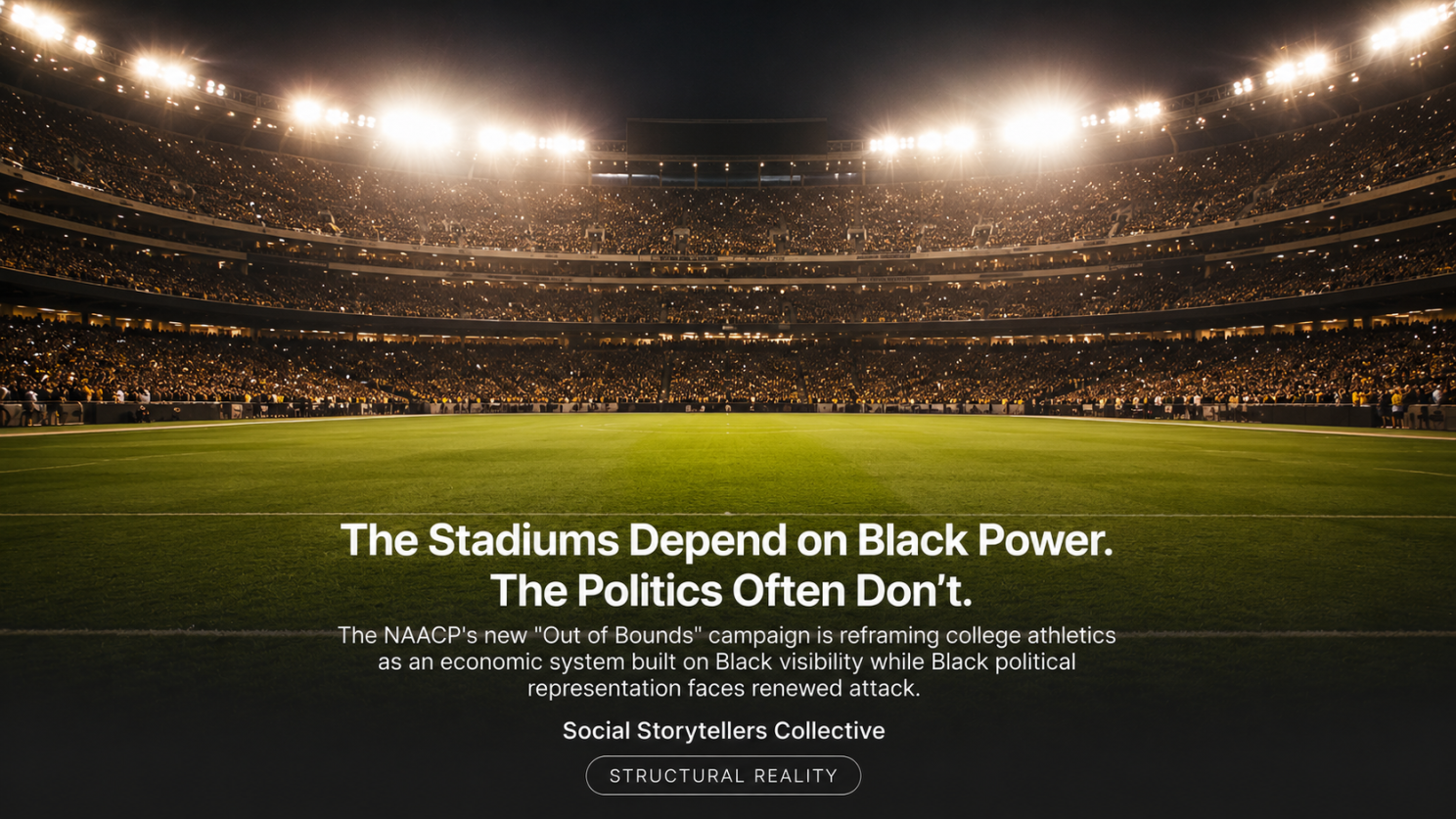
The NAACP’s new “Out of Bounds” campaign is reframing college athletics as an economic system built on Black visibility while Black political representation faces renewed attack.
The NAACP launched its “Out of Bounds” campaign today — a national call for Black athletes, families, fans, alumni, and consumers to withhold athletic and financial support from flagship public universities in eight states accused of weakening Black voting rights following the Supreme Court’s 6–3 ruling in Louisiana v. Callais. The targeted states — Tennessee, Louisiana, Alabama, Florida, Mississippi, South Carolina, Texas, and Georgia — all home to programs generating more than $100 million in annual athletic revenue built heavily on Black athletic labor and cultural influence.
NAACP President Derrick Johnson was direct: “The same power that built these programs can be redirected. And it will be.”
The contradiction the campaign is naming has always been there. The stadiums are full. The voter rolls are being thinned. The NAACP is arguing those two facts belong in the same sentence.
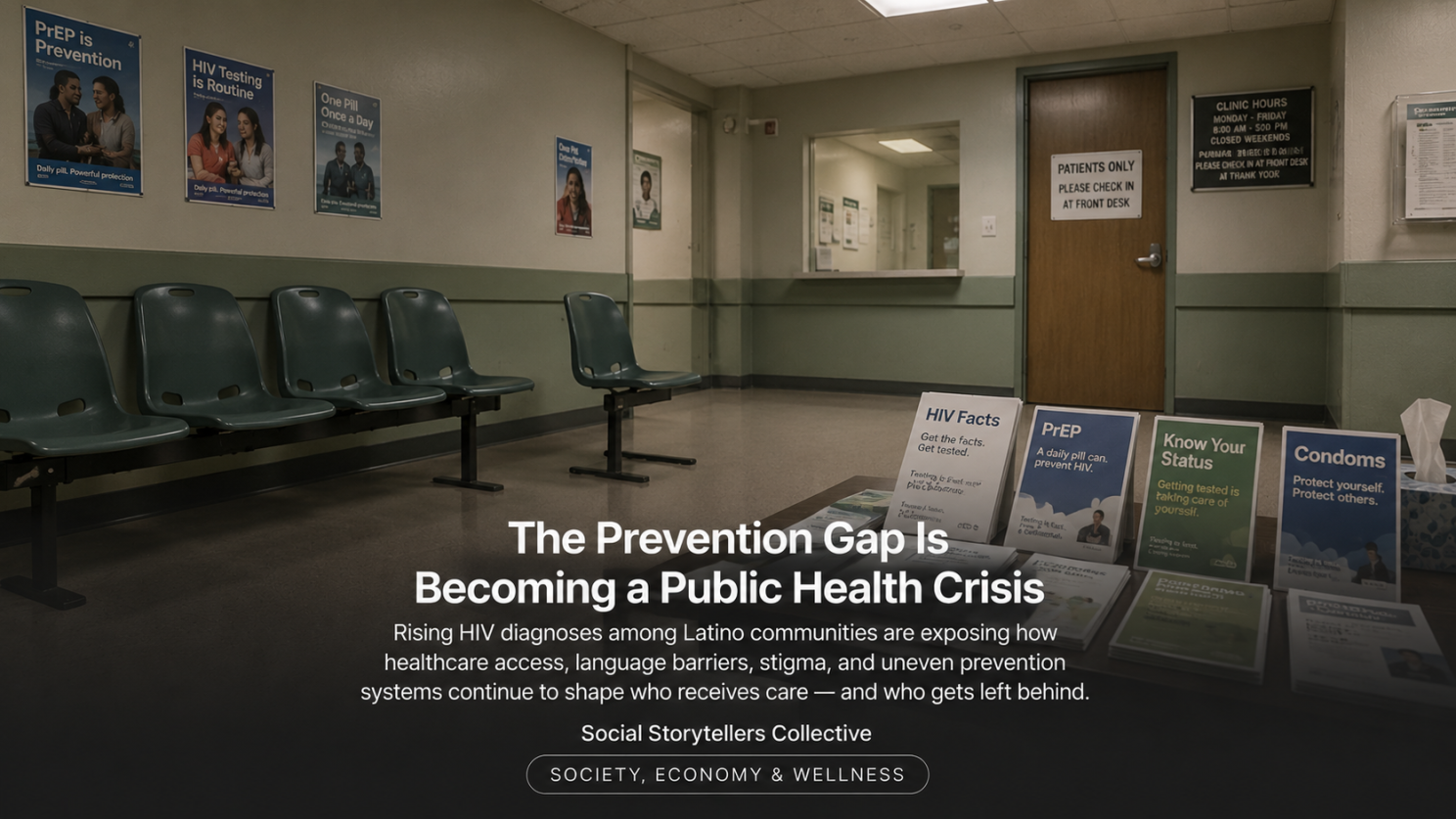
Rising HIV diagnoses among Latino communities are exposing how healthcare access, language barriers, stigma, and uneven prevention systems shape who receives care — and who gets left behind.
Latinos now account for nearly one-third of new HIV diagnoses in the United States — despite representing less than one-fifth of the national population. But that number exists inside a broader racial landscape that demands equal candor. Black Americans represent approximately 12% of the U.S. population and account for nearly 38% of new HIV diagnoses. The rate of new diagnoses among Black adults is roughly eight times that of White people. Only 11% of Black Americans eligible for PrEP were prescribed it in 2022, compared to 82% of eligible White Americans.
That last number is not a medical statistic. It is a system failure rendered in a ratio.
The science moved. The distribution system did not keep pace. HIV prevention campaigns still rely heavily on English-language outreach, clinic-centered care models, and digital health literacy assumptions that do not align with how vulnerable communities actually navigate healthcare. In the current political environment, walking into a clinic and asking for an HIV test is not a simple medical calculation for many people. It is a risk assessment. And too many people are calculating the risk is too high.
The tools exist. The distance between the tools and the people who need them most is the crisis.
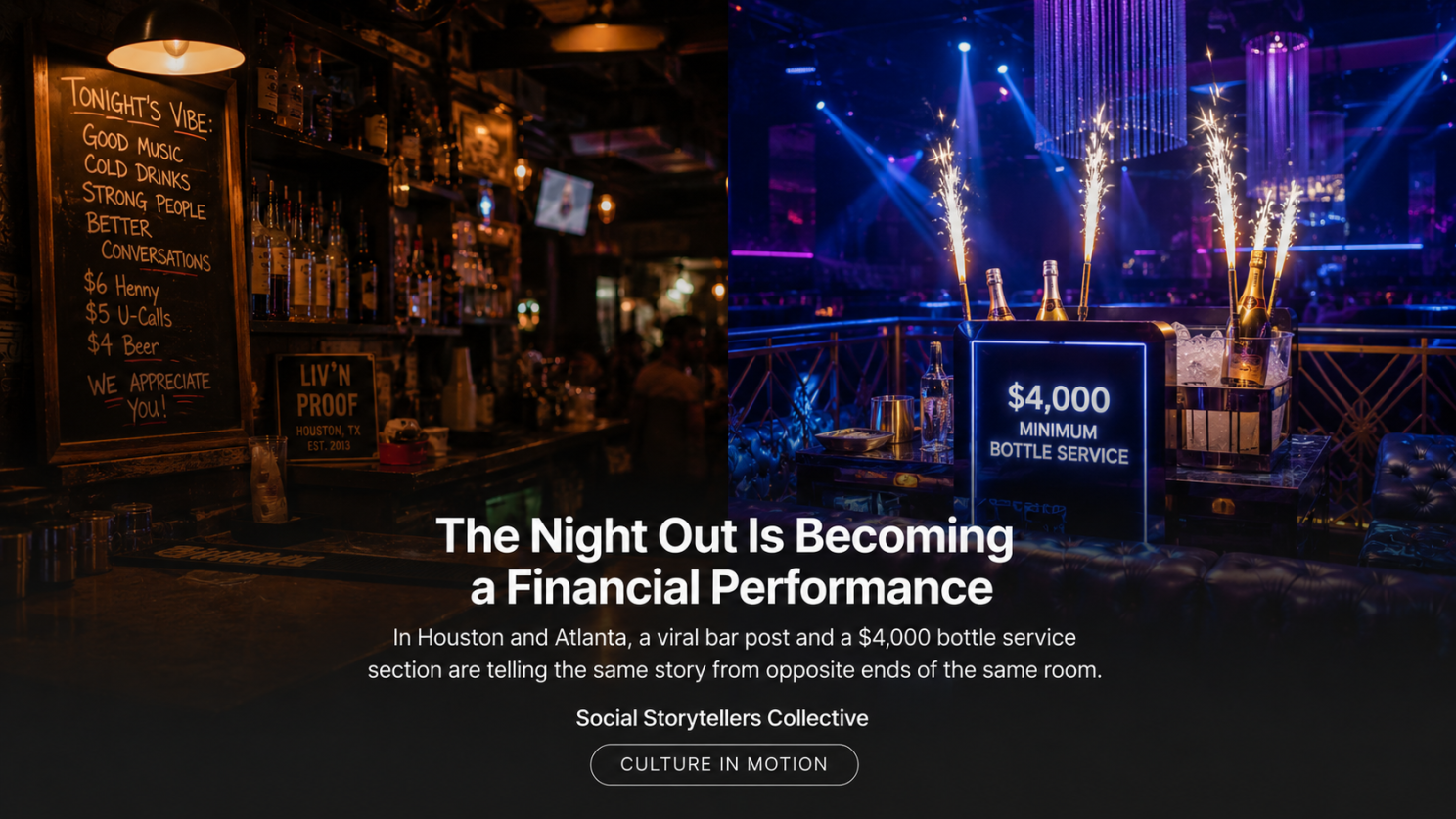
In Houston and Atlanta, a viral bar post and a $4,000 bottle service section are telling the same story from opposite ends of the same room.
A Houston bar called The Liv’n Room posted something today that stopped scrolls cold. Bold red letters. A woman named Jhy center frame. The text: We regret to inform y’all but: JHY IS FIRED. The reveal at the bottom: fired up and ready to serve you the best vibes and cocktails on Sunday. The Monica soundtrack underneath — “U Should’ve Known Better” — was not background music. It was a second layer of the joke that rewarded the people already inside the culture.
591 hearts. 100 comments. People didn’t just like the post. They came to participate in it.
That is the thing The Liv’n Room understood that most brands don’t. You cannot manufacture belonging. It either lives in the community or it doesn’t. The joke only lands if Jhy is someone you already know.
In the same cities where moments like that go viral, a different kind of nightlife content is spreading — sections priced between $2,000 and $4,000 in Houston and Atlanta clubs. The VIP section is no longer simply a place to sit. It is content. Sparklers, bottle parades, and elevated seating engineered for visibility because visibility now carries economic value. The section operates as proof of access in an economy where access increasingly functions as currency.
The Liv’n Room and the $4,000 bottle section are not opposites. They are two expressions of the same underlying need — to belong to something, to be seen inside a room that feels worth being in. One is free to participate in. The other has a cover charge that could cover two months of rent. Both are selling the same thing. Only one of them knows its audience well enough to give it away.
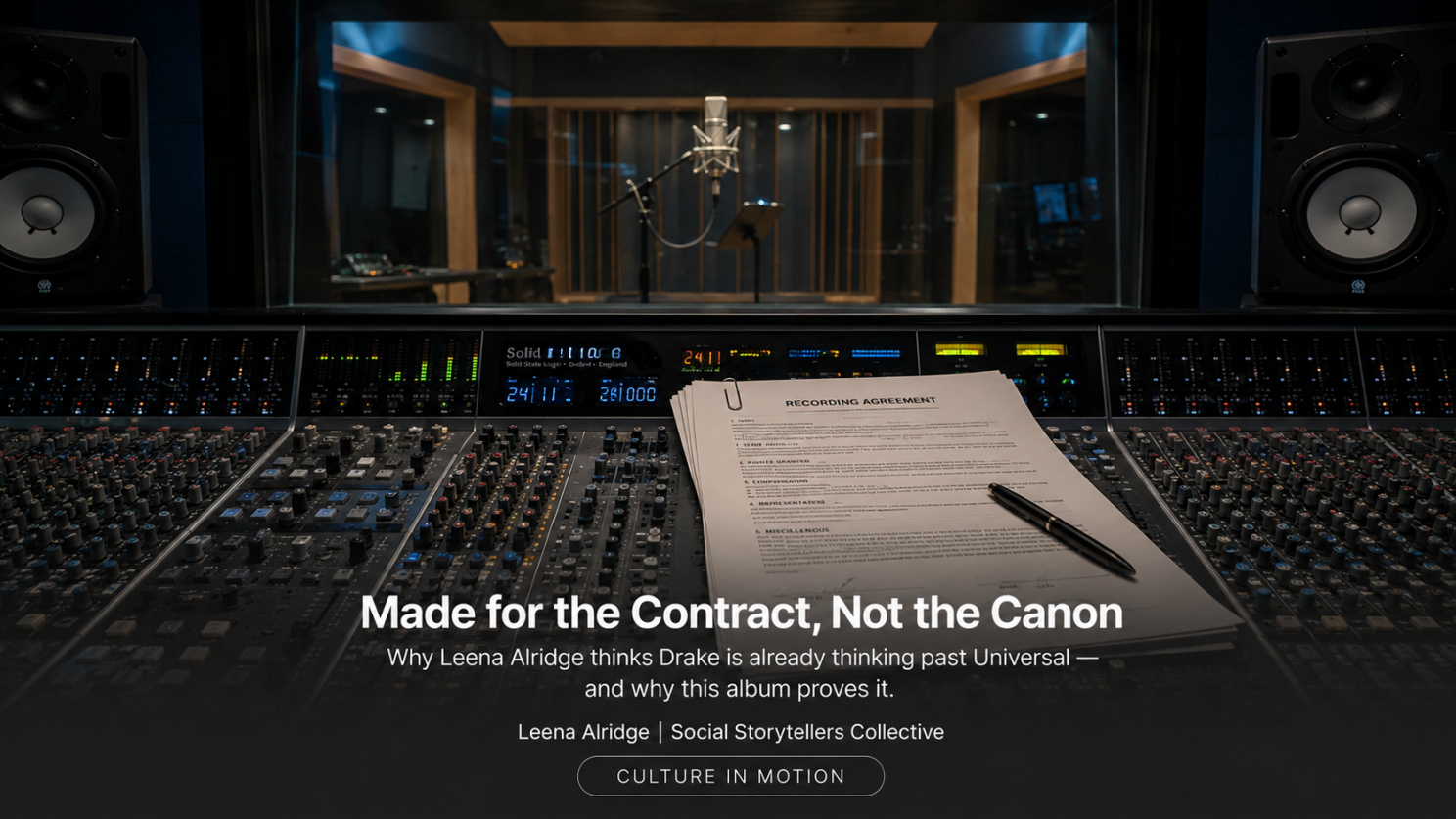
Why I thinks Drake is already thinking past Universal — and why this album proves it.
Made of Honour is not a good album. It is a functional one. Three songs earn their place — Shabang, BBW, and New Bestie. The rest sounds like an artist who has already made his decision and is finishing the paperwork.
The theory circulating through music circles is simple: Drake‘s recent output doesn’t sound like an artist building legacy. It sounds like an artist exiting a deal. Not collapsing. Not spiraling. Exiting. And the music is the evidence. When audiences start discussing contracts more than songs, they are usually sensing a shift in artistic posture. People can hear when an artist sounds hungry. They can also hear when an artist sounds procedural.
Procedural is the word quietly haunting this album. Stature is not the same as stakes. Whatever he’s saving it for better be worth the wait.
Daily Visual Signal
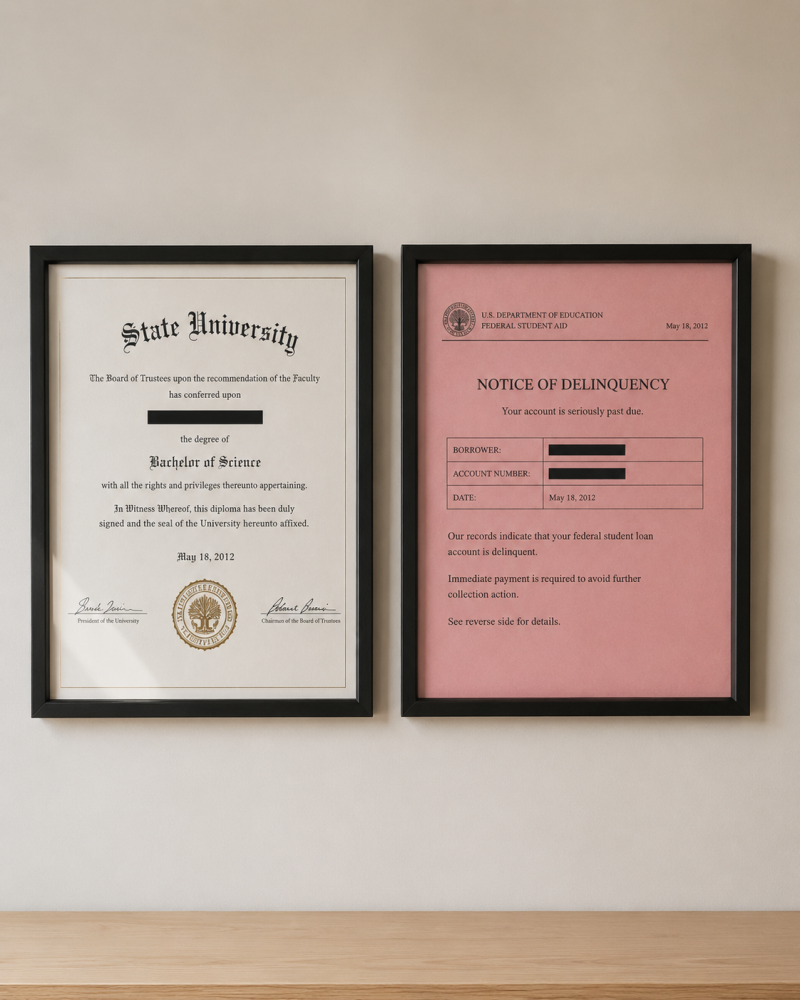
A diploma hung on a wall. Clean frame. Official seal. The name on it is redacted. Below it on the same wall — a pink slip. Same frame. Same official register. One document says you earned the credential. The other says the credential wasn’t enough. Both are dated the same year.
Featured Story
Today’s featured story is The American Dream Is Becoming a Legacy Product — by Will Davison.
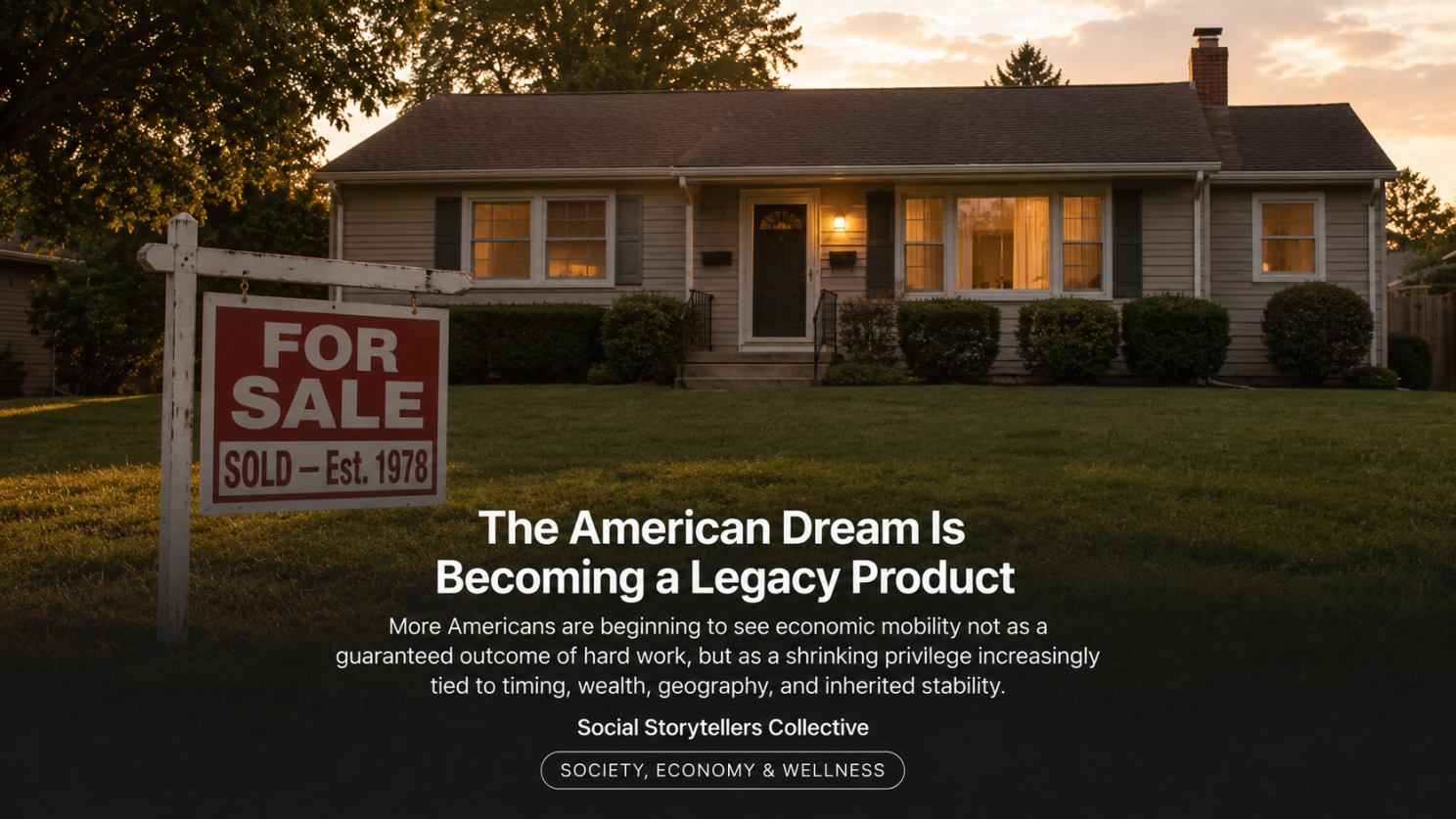
More Americans are beginning to see economic mobility not as a guaranteed outcome of hard work, but as a shrinking privilege increasingly tied to timing, wealth, geography, and inherited stability.
41% of Americans now say the American Dream was once possible but is no longer attainable for most people. The piece is not about pessimism. It is about precision. The workers doing everything right and watching the distance between effort and stability continue to grow anyway. The degree earned. The network built. The hours logged. The boxes checked. And at the end of it — not arrival, but the creeping realization that arrival may have been the wrong word for what was ever on offer.
The Dream has not disappeared. It has stratified — drifting upward toward people with the stability they started with rather than the work they’re willing to put in. That is not a crisis of motivation. It is a crisis of the promise.
Today’s stories are not separate events. They are the same negotiation running across different institutions simultaneously. A credential that was always more accessible to the people who needed it least. A workforce sorted into relevant and replaceable by the same memo that announced the sorting. A nonprofit mission converted into a cap table before anyone outside it had a meaningful say. A justice fund built for the people who attacked the process it claims to protect. A Dream that calcified into a legacy product for the people who got there first. A stadium economy that depends on Black labor while the political system around it works to reduce Black power. A prevention infrastructure built for someone — just not everyone who needs it.
The receipts are in. The design was always visible. Today we just have more documentation of who it was designed for — and who was never part of the plan.
The question Wednesday keeps asking: when the people the system wasn’t designed for stop pretending it was — what does the system do next?
We will be back tomorrow with Part IV of The Degree Economy: The HBCU Squeeze. More soon.
— SSC
Subscribe to the SSC End of Day Closing Note — daily analysis at 3PM, every weekday. socialstorytellers.substack.com
Join SSC Systems & Signals — our private LinkedIn group for deeper conversation. linkedin.com/groups/20390015