
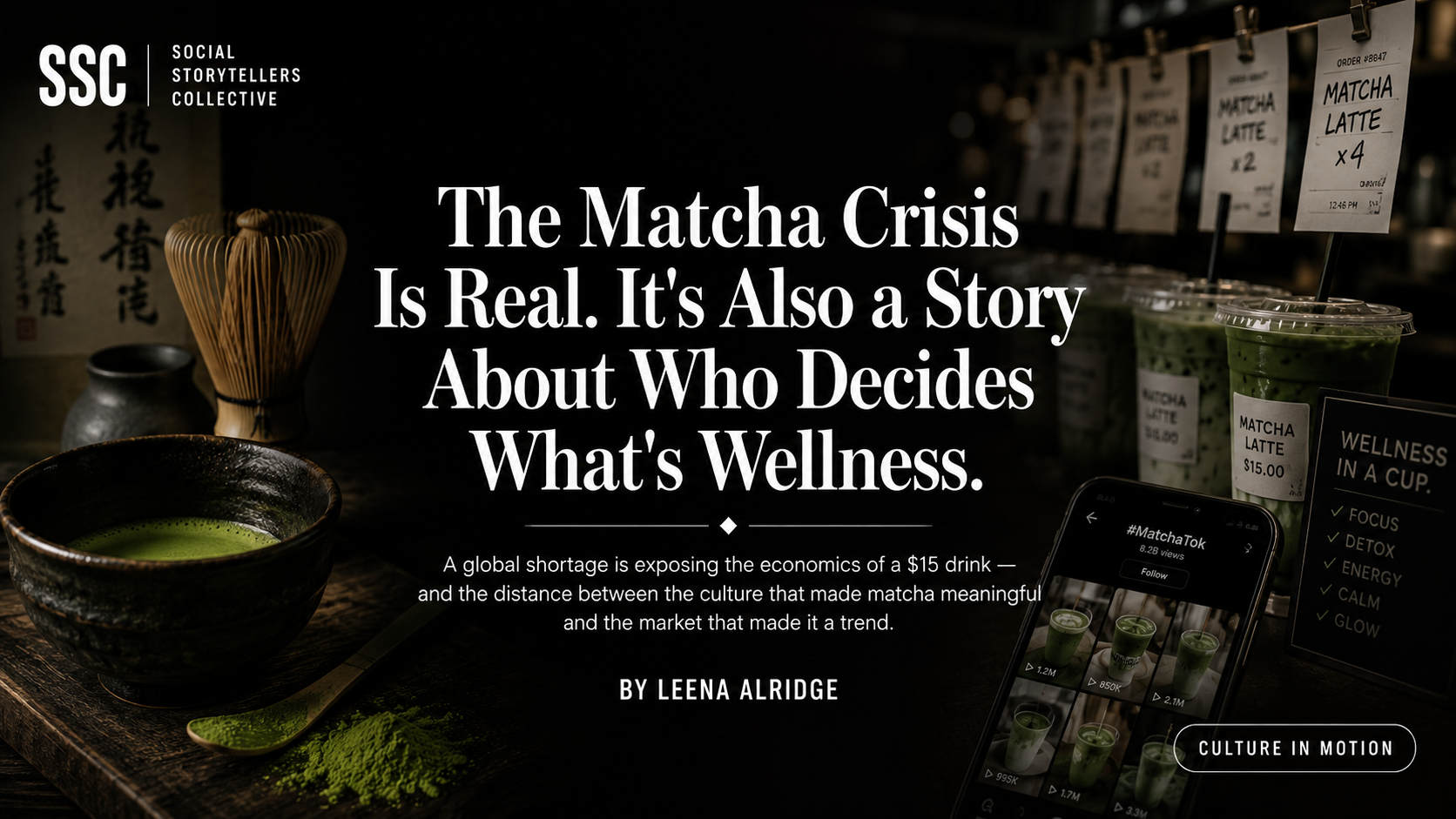
Five days a week I walk into Kyo Matcha in Brookline and order the same thing: a Strawberry Matcha Latte. On the days I want to indulge, I add a slice of the Matcha Crepe Layer Cake. It is a ritual that has become as much a part of my week as anything else — the kind of small, consistent pleasure that anchors a day before it gets complicated. Which is why the news landing this week felt personal. The matcha is running out. And the story of how that happened is bigger than a supply chain problem.
The shortage is not coming. It is already here and getting worse. Global matcha demand has grown roughly 10 percent annually over the past several years, driven largely by Western markets where matcha has been absorbed into the wellness and coffee shop economy at a pace Japanese producers were never positioned to match. The harvest cycle for high-quality matcha tea leaves — shade-grown for three to four weeks before hand-picking — cannot be accelerated to meet a trend. The land cannot be expanded quickly. The farmers who know how to do it are aging out of the industry faster than new ones are entering it. The result is a structural supply constraint meeting an algorithmically amplified demand spike, and the gap between them is showing up in price increases, product shortages, and quiet reformulations at chains that would rather swap in a cheaper ingredient than explain what happened to the original.
That is where the cultural argument lives — and it is one worth sitting with. Matcha did not arrive in American wellness culture as a Japanese agricultural product with a complex supply chain and a centuries-old ceremonial tradition. It arrived as an aesthetic. Electric green, photogenic, associated with calm, focus, and a kind of aspirational health that sells well on Instagram. Starbucks drove an earlier shortage in 2001. The current crisis is larger, deeper, and more structurally embedded — but the mechanism is the same. A product with deep cultural roots in Japan gets absorbed into Western consumer culture, demand explodes, supply cannot respond at the pace the market requires, and the communities and farmers who built the tradition absorb the disruption while the trend moves on to the next green powder.
The wellness industry has a consistent pattern of extracting cultural products from their origins, flattening their complexity into a consumable aesthetic, and leaving the source communities to manage the consequences. Matcha is not the first and will not be the last. What the current shortage makes visible is the distance between the version of matcha that #MatchaTok sells — effortless, abundant, Instagram-ready — and the version that exists in Uji and Kagoshima, where farmers are aging out of the industry, harvests are shrinking, and the raw material behind the latte economy is quietly running out.
For now, I will keep showing up at Kyo Matcha five days a week. The Strawberry Matcha Latte is still on the menu. The Matcha Crepe Layer Cake is still worth the indulgence. But the story behind that cup is more complicated than the cup itself — and the people who built the tradition that made it worth ordering deserve to be part of the conversation about what happens next.