
Nearly 34,000 apartment building workers in New York City came within days of striking before reaching a tentative agreement that will raise average annual pay from roughly $62,000 to $71,000 over four years and increase pensions by 15 percent. The scale of the potential disruption was significant — these workers service buildings that house approximately 1.5 million residents, meaning a strike would have touched daily life across one of the most densely populated and economically stratified cities in the country. The immediate story is averted disruption. The deeper story is about the specific kind of leverage that place-based, continuity-dependent labor retains in an economy that has spent the last decade convincing itself that most forms of worker power are eroding.
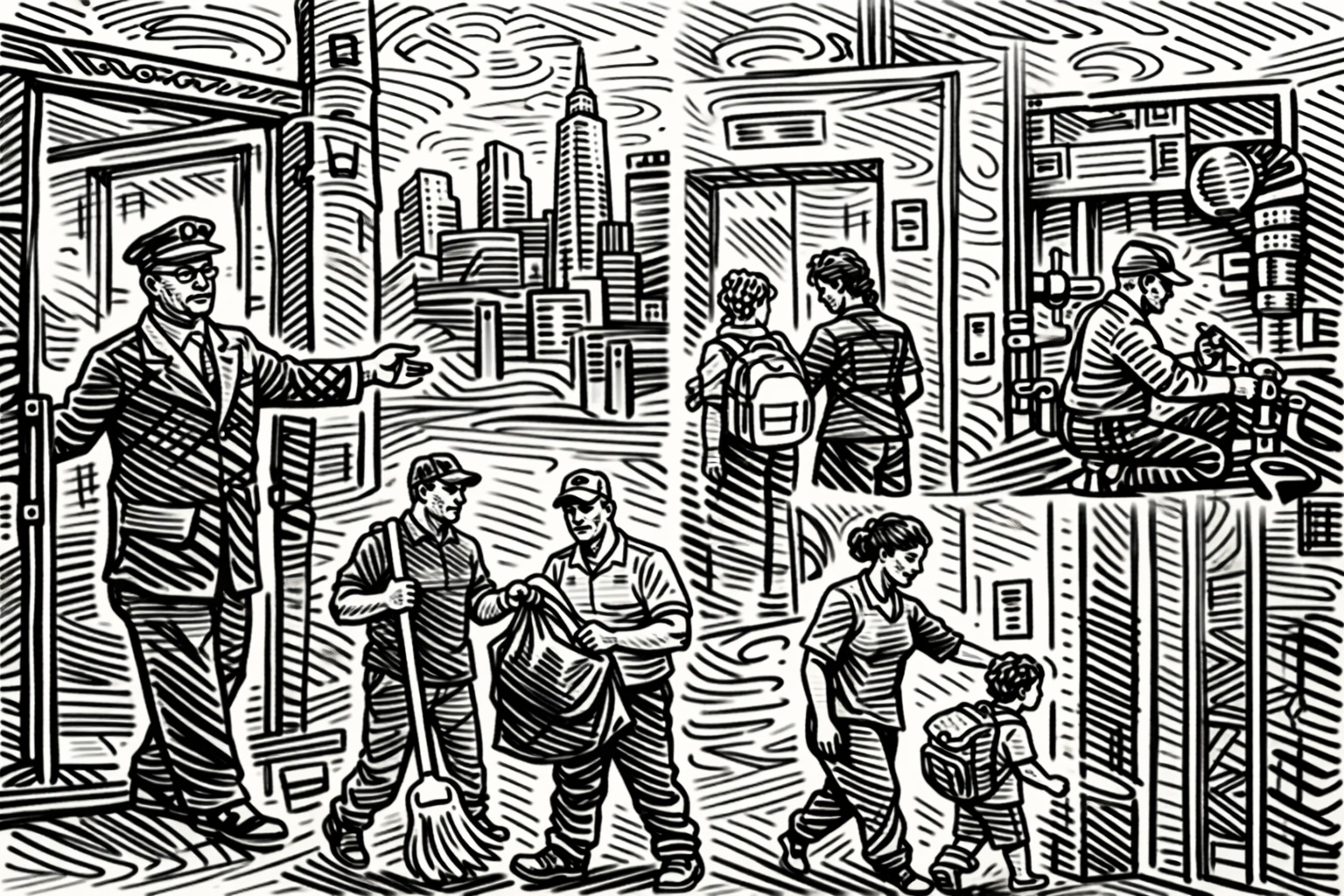
That leverage is not symbolic. It is operational. Doormen, porters, and superintendents occupy roles that are rarely centered in economic conversations about the future of work — conversations dominated by automation, remote work, and the platform economy — yet their absence would quickly destabilize building operations, tenant expectations, and property management systems across the city. The work is tied to place, continuity, and human presence in ways that make substitution genuinely difficult and disruption genuinely costly. This is the distinction that gave the workers negotiating power: not scarcity in the traditional sense, but embeddedness — the degree to which the functioning of a critical urban system depends on their consistent, physically present participation in a way that cannot be replicated by a temporary replacement or a digital alternative.
The New York housing market context makes the leverage visible in a specific way that the wage figures alone do not capture. Median rents in many parts of the city remain above $3,000 per month, with luxury units commanding significantly more. The workers maintaining these buildings operate within that high-value ecosystem without sharing proportionally in its returns. The tension is structural and persistent: assets whose value is partly a function of the quality of their management and maintenance depend on comparatively lower-paid labor to sustain that value on a daily basis. The agreement narrows that gap but does not close it — even at $71,000 annually, many of these workers will earn significantly less than the income levels associated with the buildings they service. The deal reflects a system adjusting at the margins rather than redistributing value in proportion to contribution.
The broader labor pattern embedded in this moment deserves attention precisely because it cuts against the dominant narrative about where worker power is concentrating and where it is disappearing. Conversations about the future of work focus heavily on automation risk, AI displacement, and the platform economy — all of which are real forces with real consequences. What those conversations consistently underweight is the portion of the economy that remains dependent on roles that cannot be digitized, automated, or delivered remotely. Cleaning, maintenance, security, and the daily management of residential infrastructure require physical presence and continuity that technology has not found a way to replicate at scale. These roles are not disappearing. They are being renegotiated under new economic pressures, and as the New York settlement demonstrates, that renegotiation — when organized — can still produce immediate and measurable outcomes in a labor market where organized power is increasingly rare. For Black and Brown workers who are disproportionately represented in building services and similar place-based essential roles, that retained leverage is not just an economic fact. It is one of the few remaining sites where collective action can produce concrete gains without the institutional advantages that higher-wage professional workers take for granted.