
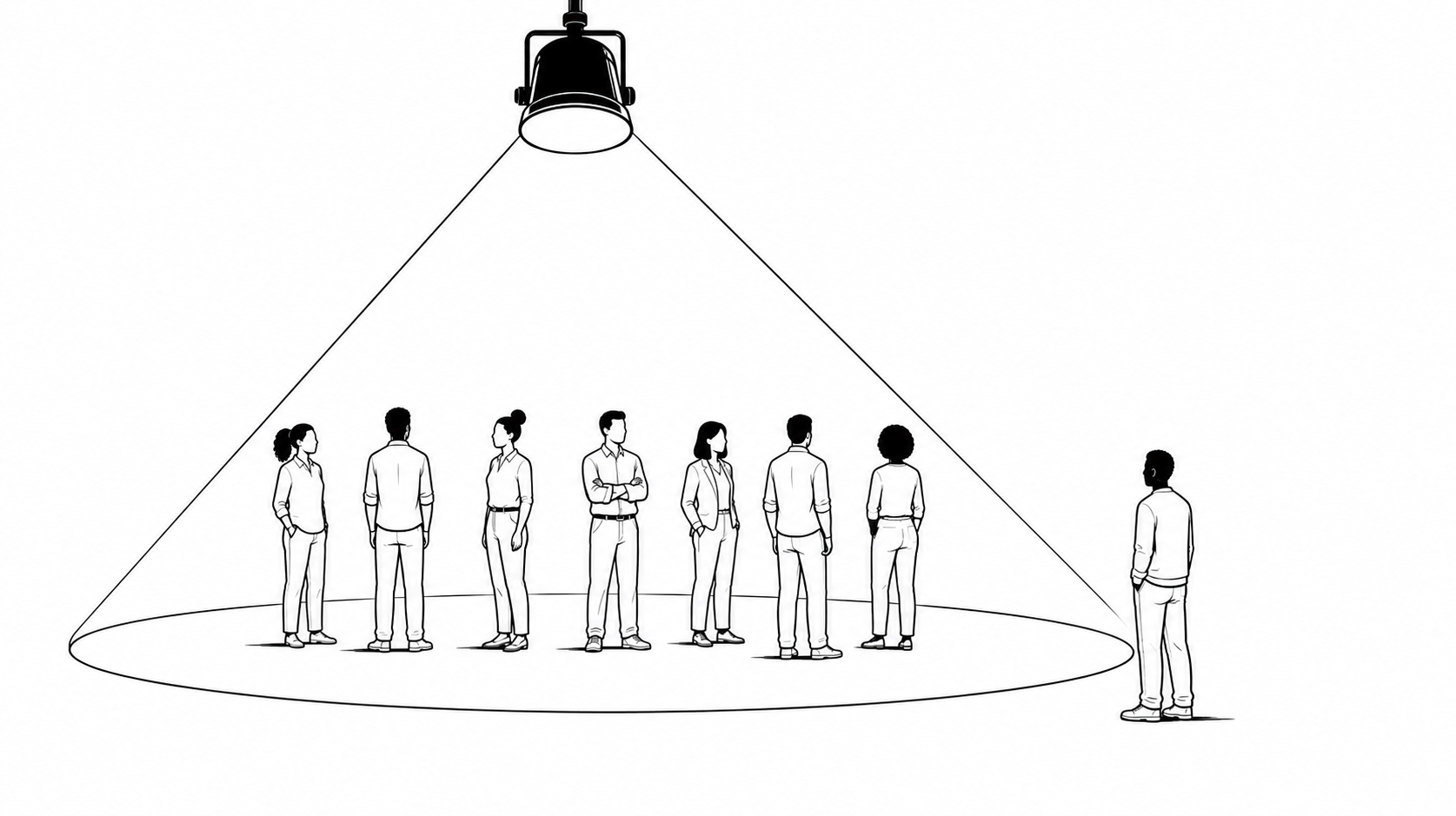
The Bureau of Labor Statistics reported this morning that the U.S. economy added 172,000 jobs in May and the unemployment rate held at 4.3 percent. Both figures beat expectations. Buried in the same report: 1.8 million Americans have been out of work for 27 weeks or more. CNBC reported Thursday that the number is surging, carrying consequences that extend well beyond the labor market into financial strain and mental health. Both numbers came from the same report. They are not describing the same economy.
The workers producing the strong headline and the workers producing the long-term unemployment figure are not the same people. Understanding why requires looking at three structural conditions that have not changed because the headline improved.
The front door is filtered. Before a hiring manager sees a resume, an algorithm has likely already decided whether it is worth reviewing. As SSC documented in The AI Resume Screen Won’t See You Coming, AI resume screening tools now favor white-associated names 85 percent of the time. In direct comparisons, Black male-associated names were never preferred over white male-associated names — not once. Nearly 98.4 percent of Fortune 500 companies now use AI in their hiring process. This is not an edge case. It is the standard operating procedure of the labor market. The EEOC guidance that once held employers accountable for discriminatory AI outcomes was quietly removed in January 2025. There is currently no federal enforcement mechanism for what the algorithm decides.
The back door is a ghost. Between 28 and 32 percent of posted job openings are ghost jobs — positions that exist to collect resumes, satisfy internal HR requirements, or signal growth to investors rather than fill actual roles. In June 2025, employers reported 7.4 million job openings but made only 5.2 million hires. As SSC reported in The Job Switch Sounds Good on Paper, the conventional advice to switch jobs to grow wages requires an open door. A meaningful share of the doors visible on LinkedIn and other job platforms right now are painted on the wall. Workers who apply, wait, and never hear back are not failing to navigate the market. They are navigating a market that was never designed to respond to them.
The safety net has a ceiling. Unemployment benefits run out at 26 weeks in most states. After that, workers fall out of the benefit system — and largely out of the policy conversation. The 1.8 million figure is what remains visible. Workers who exhausted benefits and stopped being counted are not in that number. The mental health consequences CNBC flagged — financial strain, prolonged uncertainty, social isolation — are real. They are also downstream. The upstream condition is a hiring architecture that filters applicants before a human reviews them, posts positions it never intends to fill, and withdraws financial support at the 26-week mark regardless of how distorted the market has become.
The distribution of long-term unemployment tracks the same fault lines SSC has been documenting all week. The Black male employment gap that 25 years of policy has not closed. The credential economy that collects tuition regardless of outcome. The labor market that added 97,006 announced job cuts in May — the highest May total since 2020 — while simultaneously producing a headline number that beat every forecast. The workers on each side of that ledger are not the same people.
The 172,000 jobs added this morning are real. So are the 1.8 million people who have been searching longer than the safety net was designed to support. The headline measures hiring activity. Long-term unemployment measures who the recovery is not reaching. An economy can produce both simultaneously. The gap between those two numbers is not a data anomaly. It is where structural exclusion lives — visible in the BLS tables, invisible in the headline.