
Part of Society, Economy & Wellness — examining how economic pressure reshapes labor, access, and everyday life.
NEWS DESK | SOCIAL STORYTELLERS COLLECTIVE
The economic story of the Iran war is being told through gas prices and stock market swings. The labor market story is quieter — and more damaging for the communities already navigating the most precarious ground.
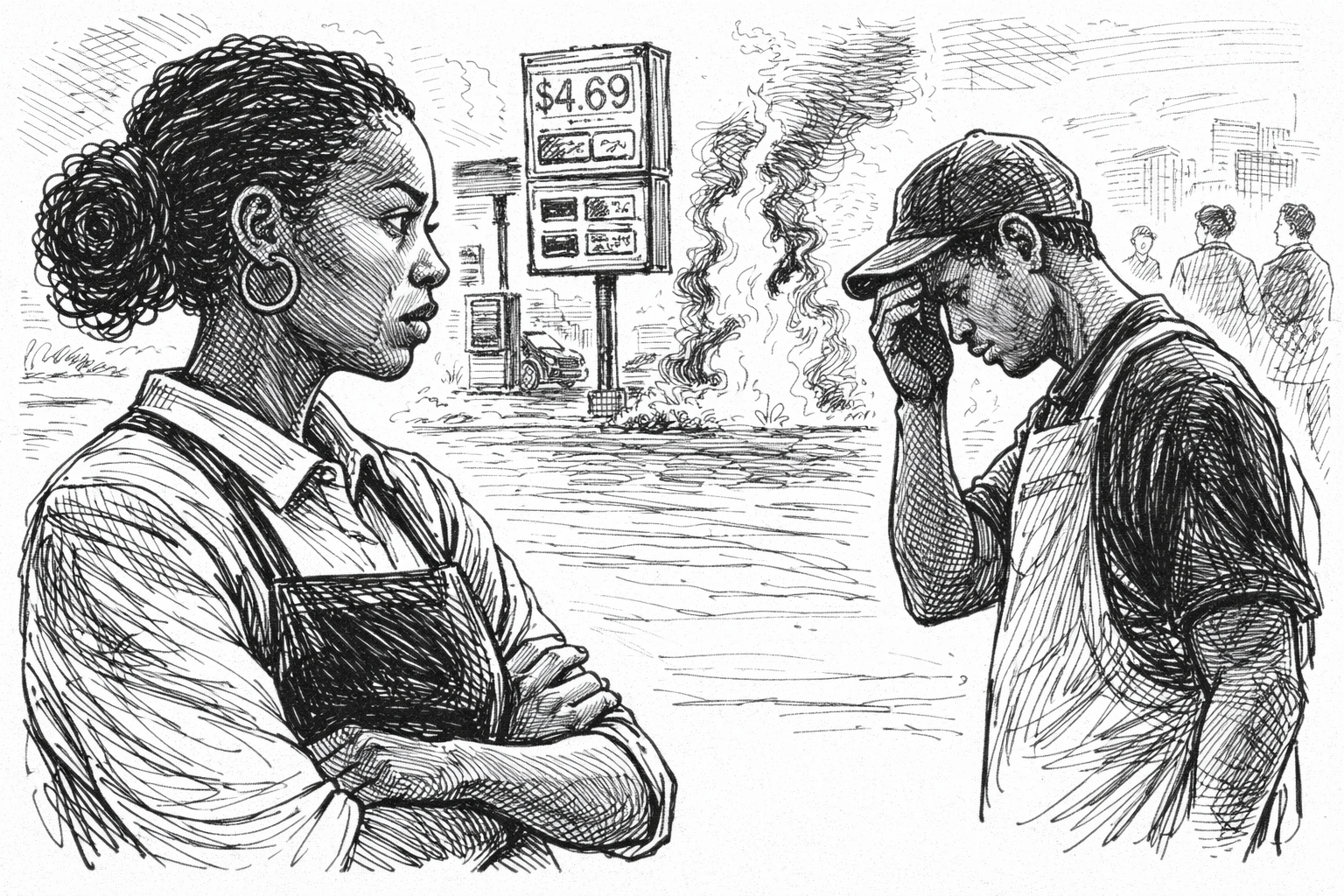
Goldman Sachs estimates the oil shock will suppress payroll growth by roughly 10,000 jobs per month through the end of the year, with losses concentrated in leisure, hospitality, and retail. The mechanism is direct: when energy prices rise, discretionary spending falls. Vacations get canceled. Restaurant visits decline. Shopping gets trimmed. The people who lose their jobs are not the ones making those spending decisions — they are the ones whose livelihoods depend on them.
That contraction is landing on a Black labor market that was already in recession before the war began. Black unemployment stood at 7.7% in February 2026 — nearly double the white rate — while more than 300,000 Black women exited the workforce in 2025. The war does not create that disparity. It accelerates it. As SSC documented in The Black Recession Is Already Here and AI Isn’t Replacing Workers Yet — But It’s Already Closing the Door on New Ones, the labor market was already narrowing along racial lines before this shock arrived. The Iran war is compressing a timeline that was already moving in the wrong direction.
Goldman projects overall U.S. unemployment will rise to 4.6% by the third quarter of 2026, with roughly half of that increase tied to the oil shock and the rest to slowing job growth that predated the conflict. The administration has framed the economic cost of the war as manageable. That framing assumes the cost is shared. It isn’t.
Why This Matters
Every major oil shock produces broad economic pain. The real question is how that pain is distributed — and along what lines. In 2026, the pattern holds: the communities with the least cushion absorb the deepest impact. The Iran war is a foreign policy decision with a domestic economic cost, and that cost is landing in the service economy, in Black labor markets, and in household budgets far removed from the decisions that set it in motion.