
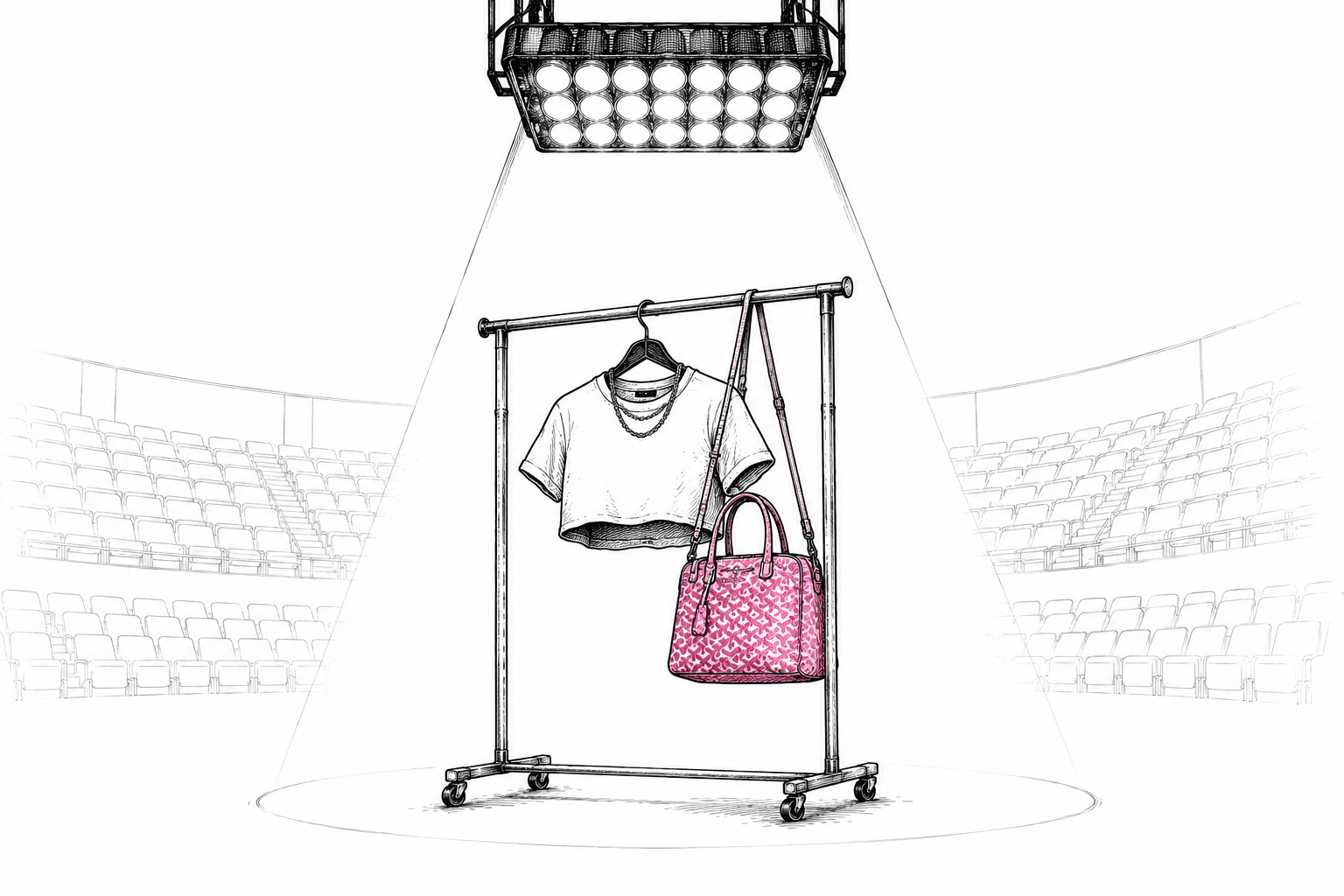
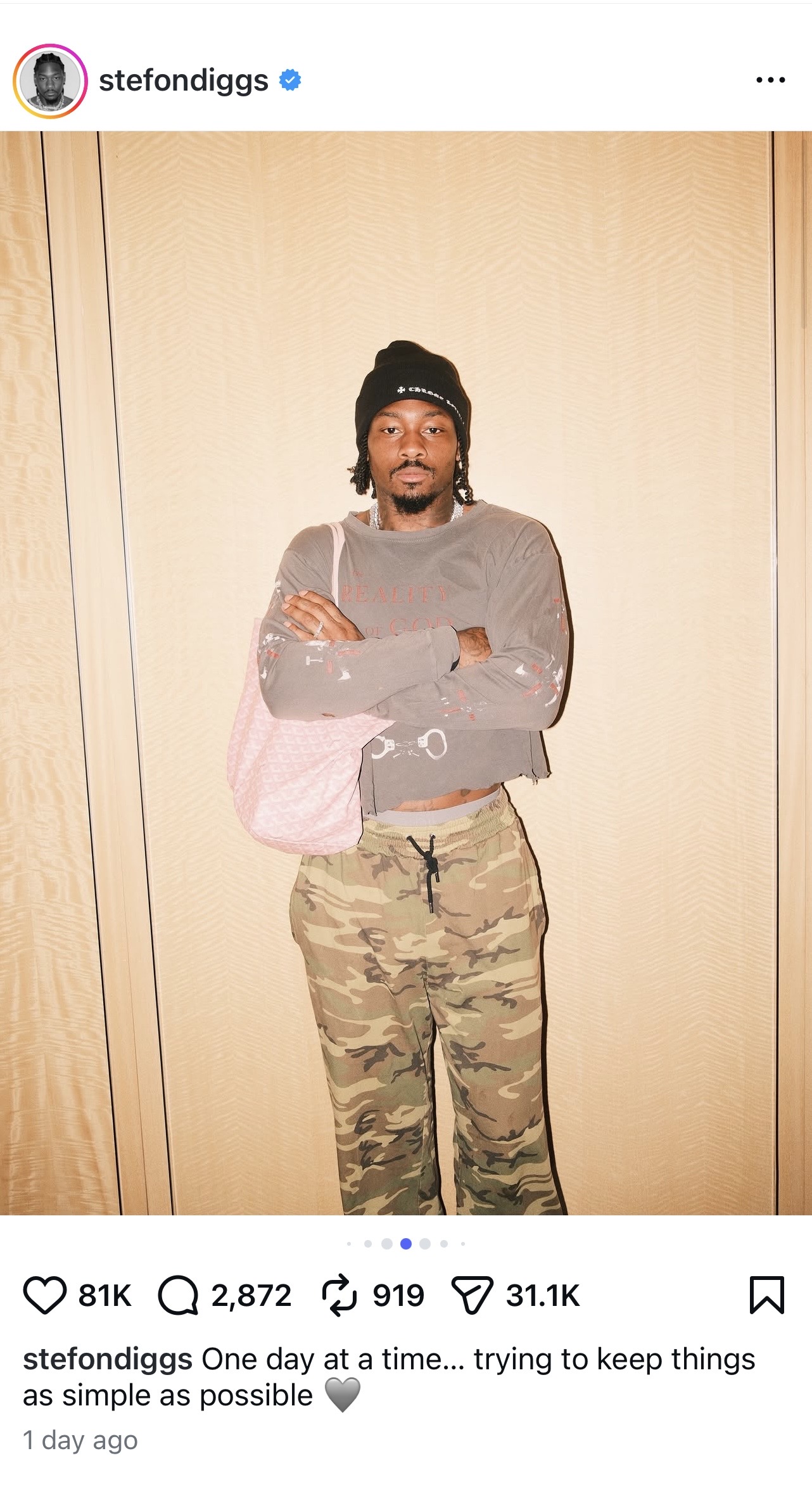
Stefon Diggs posted an Instagram carousel. Among the photos, one image — widely identified as the fifth slide — showed the NFL wide receiver carrying a pink Goyard bag in a cropped shirt. The comment section did the rest. Thousands of responses followed, most framed as jokes or memes, nearly all organized around the same question: what does this say about his masculinity? The photograph supplied the occasion. The platform supplied the verdict.
This is the same mechanism SSC examined last week in The Nails Are Not the Story. The Reaction Is. The object of scrutiny shifted from painted nails to a pink luxury bag. The enforcement structure did not shift at all. Online audiences repeatedly attach masculinity debates to whatever visual cue is available because the cue is incidental — the comment section is performing social regulation, and the image simply provides the opening.
That regulation runs through Instagram’s carousel format in ways a single image cannot replicate. Socialinsider’s 2025benchmark report found carousel posts average an engagement rate of 0.55%, outperforming Reels at 0.52% — not because users passively view more images, but because each additional slide creates another opportunity for reinterpretation, another reveal, another invitation to react collectively. By the time viewers reached the slide that dominated discussion, they were already inside a format designed to sustain engagement rather than produce a single impression — and the masculinity enforcement traveled through that format slide by slide, comment by comment.
The enforcement itself rarely looks like condemnation. It arrives through humor, reaction GIFs, sarcasm, and laugh emojis that make social pressure feel casual even as thousands of participants reinforce the same expectation simultaneously. The casualness is the mechanism. Distributed enforcement functions precisely because no single participant has to own what they are collectively doing.
The platforms where these conversations accumulate are not neutral spaces. Men account for roughly 60 percent of X’sglobal audience, per Statista’s 2024 estimates, and Reddit skews similarly male across its largest communities. Those demographics do not determine outcomes — but they shape the social environment in which masculine norms get rewarded, challenged, or defended, and in which participation itself becomes a performance for an audience that already knows the script.
Platform incentives strengthen those scripts rather than simply hosting them. Research by Haslop et al. (2024) and a 2025study in the International Journal of Communication examining masculinity on TikTok found that algorithmic visibility consistently favors performances aligned with hegemonic masculine norms — risk-taking, toughness, emotional control. Engagement systems reward recognizable participation, and recognizable participation reproduces familiar judgments. Every highly liked joke signals to the next participant what kind of response earns affirmation. Every viral comment resets the social baseline for everyone who arrives afterward. What reads as spontaneous crowd behavior is algorithmically reinforced cultural regulation at scale.
The infrastructure producing this outcome was not built for or by Stefon Diggs. As carousel formats expand and comment-section visibility becomes more central to how platforms rank and distribute content, the conditions that produced this moment will repeat. Millions of people enforced a gender norm through a laugh emoji and generated measurable engagement revenue for the platform in the same motion. The platform made both indistinguishable from entertainment — and that is the design, not the side effect.
Get SSC analysis delivered to your inbox every day. Subscribe free on Beehiiv: socialstorytellerscollective.beehiiv.com