
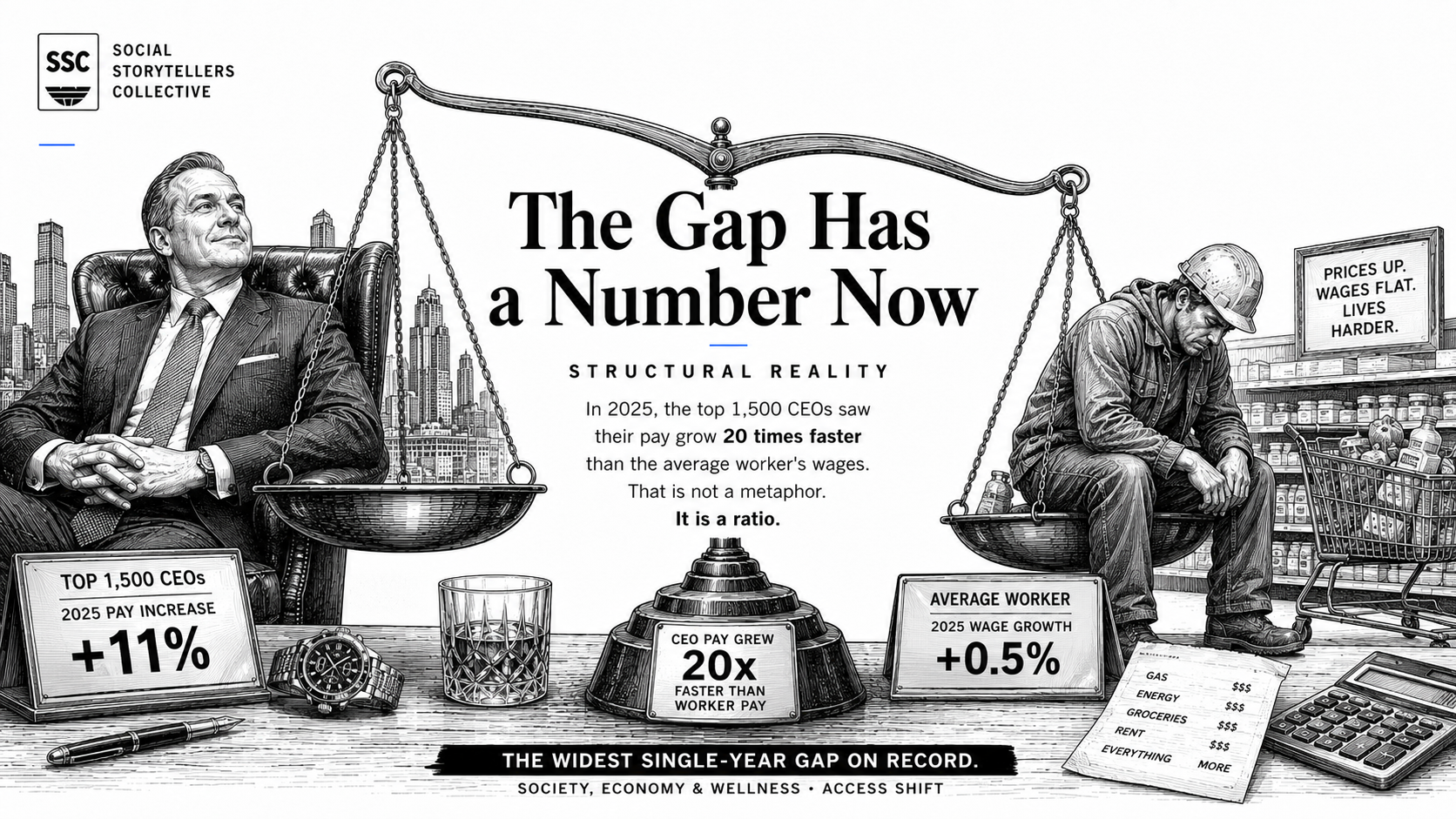
Last year, the top 1,500 CEOs of the world’s largest corporations received an 11% real-terms pay increase. The average global worker saw their real wages grow by 0.5%. That means CEO pay grew 20 times faster than worker pay in a single year — not over a decade, not across a generation, but in 12 months while gas prices, energy bills, and grocery costs were climbing for the same workers whose wages barely moved.
In the United States specifically, the gap is sharper. CEO pay grew 25.6% last year. Worker wages grew 1.3%. That is a 20.4x difference — the widest single-year gap on record, according to a joint analysis by Oxfam America and the International Trade Union Confederation. Patricia Stottlemyer, Policy Lead for Labor Rights at Oxfam America, was direct: you cannot talk about the affordability crisis without also talking about wealth inequality. The two are not separate conversations. They are the same one.
This data lands in the same week SSC has been documenting the “performance culture” vocabulary spreading across Nestlé, HSBC, 3M, Unilever, and Novo Nordisk — corporations calling for higher standards and leaner organizations while the people at the top of those same organizations took home 11% more in real terms last year. The language flowing down asks workers to do more with less. The compensation flowing up tells a different story about what the organization actually values.
The affordability crisis is not a coincidence. It is a distribution problem. The money exists. The 2025 CEO pay numbers confirm it moved — just not toward the people absorbing the cost of rising rents, energy bills, and grocery prices. The gap has a number now. 20 times faster. That number belongs in every conversation about why the economy feels the way it feels for most people living inside it.
SSC covers labor, work, and the structural forces shaping economic life in America and globally.