Across economy, labor, culture, travel, and politics, today’s stories share a single structure: systems redefining who their function still works for
Every story in today’s note is built around the same structural tension — the distance between what systems claim to do and what they actually produce. Admissions processes that promise merit. Maps that promise fair representation. Credit systems that promise opportunity. Hiring markets that promise mobility. Industries that promise access. The gap between the promise and the delivery is not accidental. In most cases, it is the design.
But today also arrived with proof that some people refuse to let that gap be the final word.
We are opening with a story that runs the argument in the other direction — what happens when a system performs exactly as well as the data says it should, and the coverage still refuses to acknowledge it.
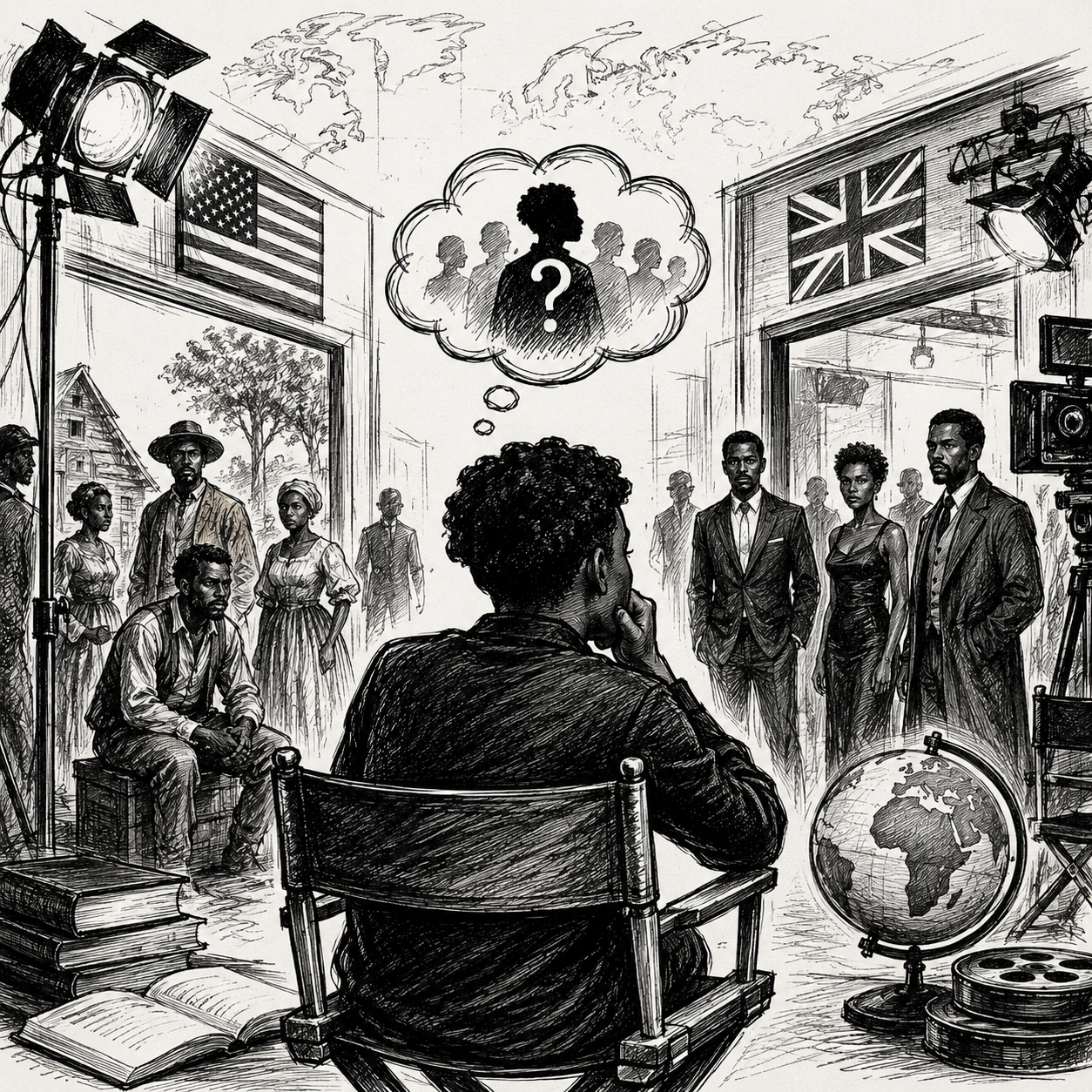
Africa Is Not Rising. It Already Rose. Sub-Saharan Africa is expected to outpace Asia in economic growth in 2026. Six of the ten fastest-growing economies in the world this year are African. Foreign direct investment on the continent rose 75% in 2024, reaching $97 billion and lifting Africa’s share of global FDI from 4% to 6%. West Africa is projected to expand 4.4% this year. East Africa 5.8%. This is not emergence. It is performance — and it has been building for longer than the current Western news cycle is willing to acknowledge. The gap is not always between promise and failure. Sometimes it is between reality and the frame used to describe it.
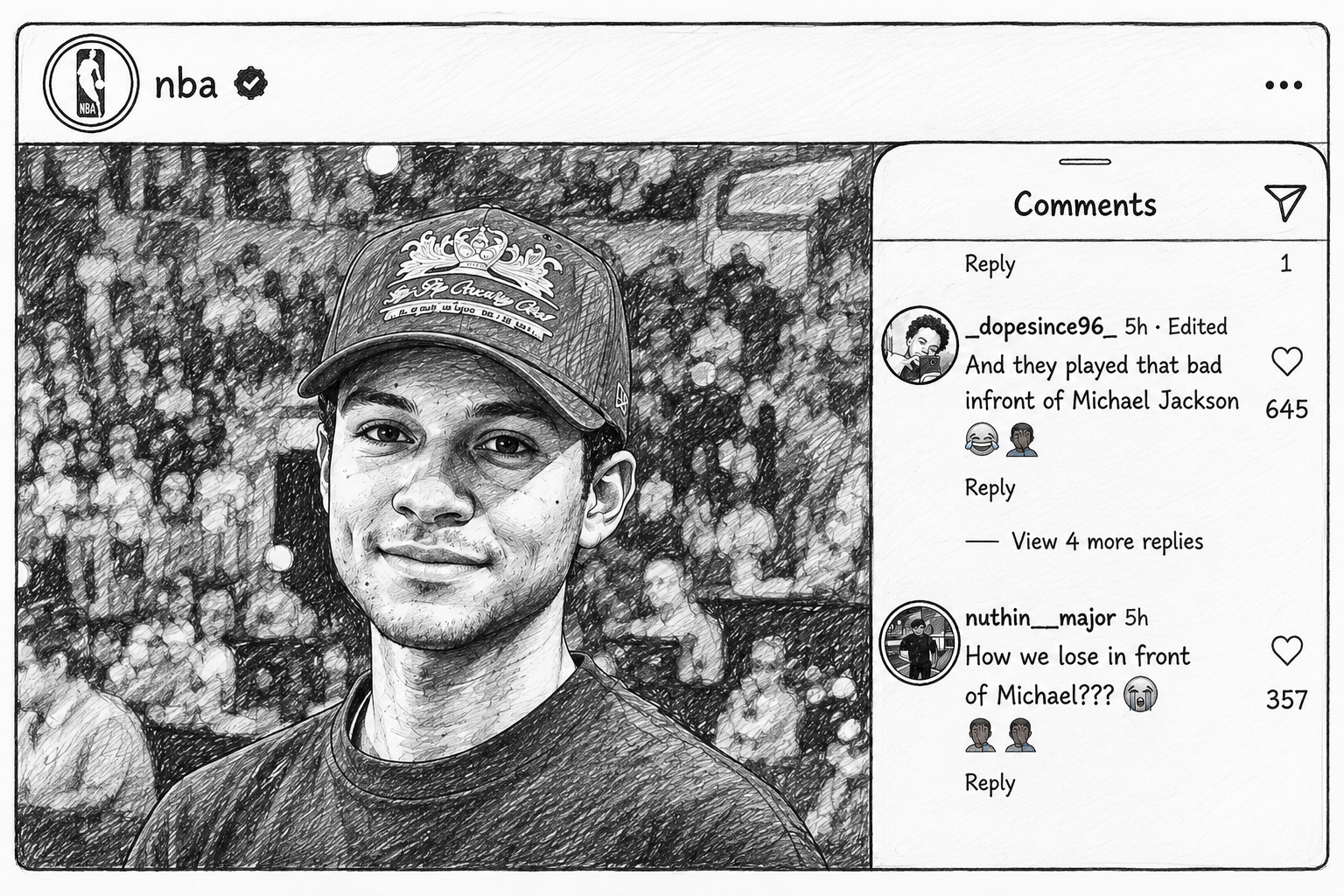
The cultural moment today started on the NBA’s Instagram. The Internet Wasn’t Just Making a Joke. It Was Reacting to a Legacy Becoming Visible Again. Yesterday the NBA posted a photo of Jaafar Jackson courtside — and the comment section did the rest. “How we lose in front of Michael???” “And they played that bad in front of Michael Jackson.” The jokes moved fast because the recognition moved faster. Jaafar is not just a fan who resembles his uncle. He is the actor who just carried Michael — the Michael Jackson biopic — to $497 millionworldwide and the biggest opening in music biopic history at $97 million domestically. Weeks after audiences watched him inhabit one of the most recognizable figures in entertainment history, the NBA posted one photo and the internet did it all over again in real time. The comments were funny. What they revealed was not. Most fame fades. Very little becomes generational shorthand. Michael Jackson’s image still operates at a scale where people instantly project meaning onto anyone carrying visible traces of it — especially someone who spent two years preparing to carry it on film.

The entertainment economy is running its own version of today’s through line. Kevin Hart Has 100 Million Followers. That Wasn’t Enough to Run a Media Company. TMZ reporting this week describes HartBeat Productions — once valued at $650 million — navigating layoffs, internal disputes, stalled productions, and executive tension while Hart became increasingly removed from day-to-day operations as film commitments expanded. The allegations matter less as a story about one company than as a signal about an entire era of celebrity entrepreneurship reaching its stress test. Hollywood and venture capital spent a decade betting that charisma could substitute for institutional infrastructure. Podcasting has cooled. Streaming is spending cautiously. Brands want measurable returns. In that environment, companies built around a singular personality become vulnerable the moment that personality cannot anchor every division at once. Ryan Reynolds structured his exit before the scaling pressure arrived. Jay-Z handed operational complexity to LVMH. Rihanna’s Fenty succeeded because LVMH’s infrastructure ran underneath it. The celebrities who built durable enterprises understood early that attention and operational durability are not the same thing. The ones who didn’t are learning it in public now.
In Tennessee, the infrastructure was redrawn in 48 hours. They Drew the Map. Then They Erased the People. A Republican supermajority passed a new congressional map carving up Shelby County — home to Memphis — into three separate districts, eliminating the state’s only majority-Black congressional seat. The 9th District — which backed Kamala Harris by 43 points in 2024 — transforms under the new lines into a seat Trump would have carried by 21 points. The NAACP filed an emergency lawsuit within three hours of the governor’s signature. The Voting Rights Act took years to pass. Tennessee functionally dismantled it in two days.
A federal judge ruled that the dismantling was happening at the funding level too. A Federal Judge Says DOGE Used Race and Gender as Criteria for Grant Cuts — DOGE staffers used terms connected to diversity, equity, inclusion, Black history, women, and other protected characteristics to identify grants for termination. Projects tied to Black civil-rights history, Holocaust testimony, Jewish women, Asian American experiences, Native communities, and women-focused scholarship were flagged for elimination. The map was redrawn in Nashville. The grants were filtered in Washington. The architecture is the same.
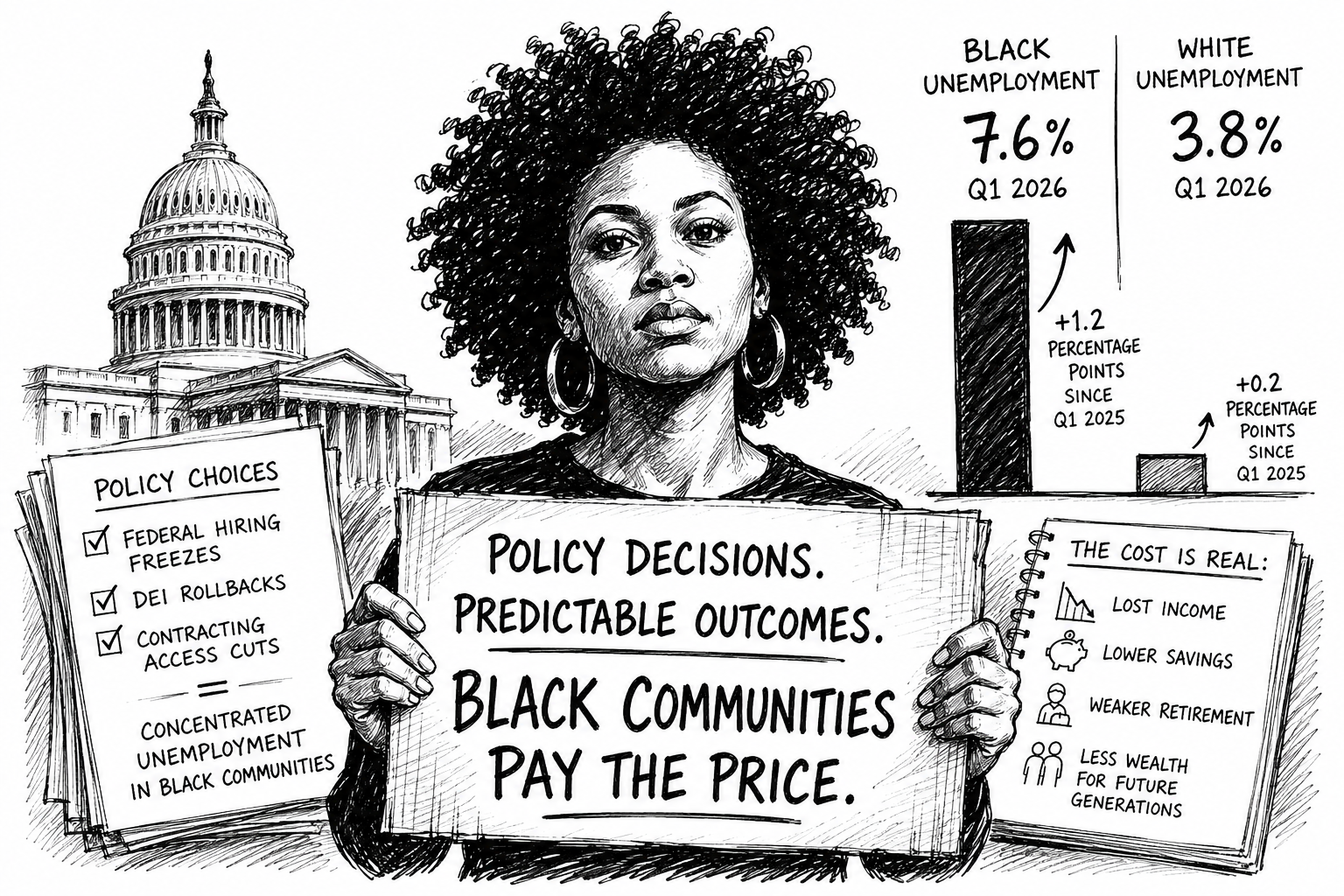
The pattern did not start this week. The Recession Inside the Recovery documents what federal policy has been quietly producing for months: Black unemployment climbed to 7.6% in Q1 2026 — not because of a broad economic downturn, but because of federal workforce reductions, DEI rollbacks, and contracting changes that targeted specific communities while the headline rate held steady. The headline labor market looks stable. The communities underneath it are not.
The Credit Score Was Always a Gate, Not a Measure. It was never a neutral assessment of financial responsibility. It was a sorting mechanism built on top of redlining, wealth exclusion, and racialized policy — and algorithmic lending has not fixed that history. It has automated it. The promise was access. The delivery has been a filter that compounds the disadvantages it was built on top of.
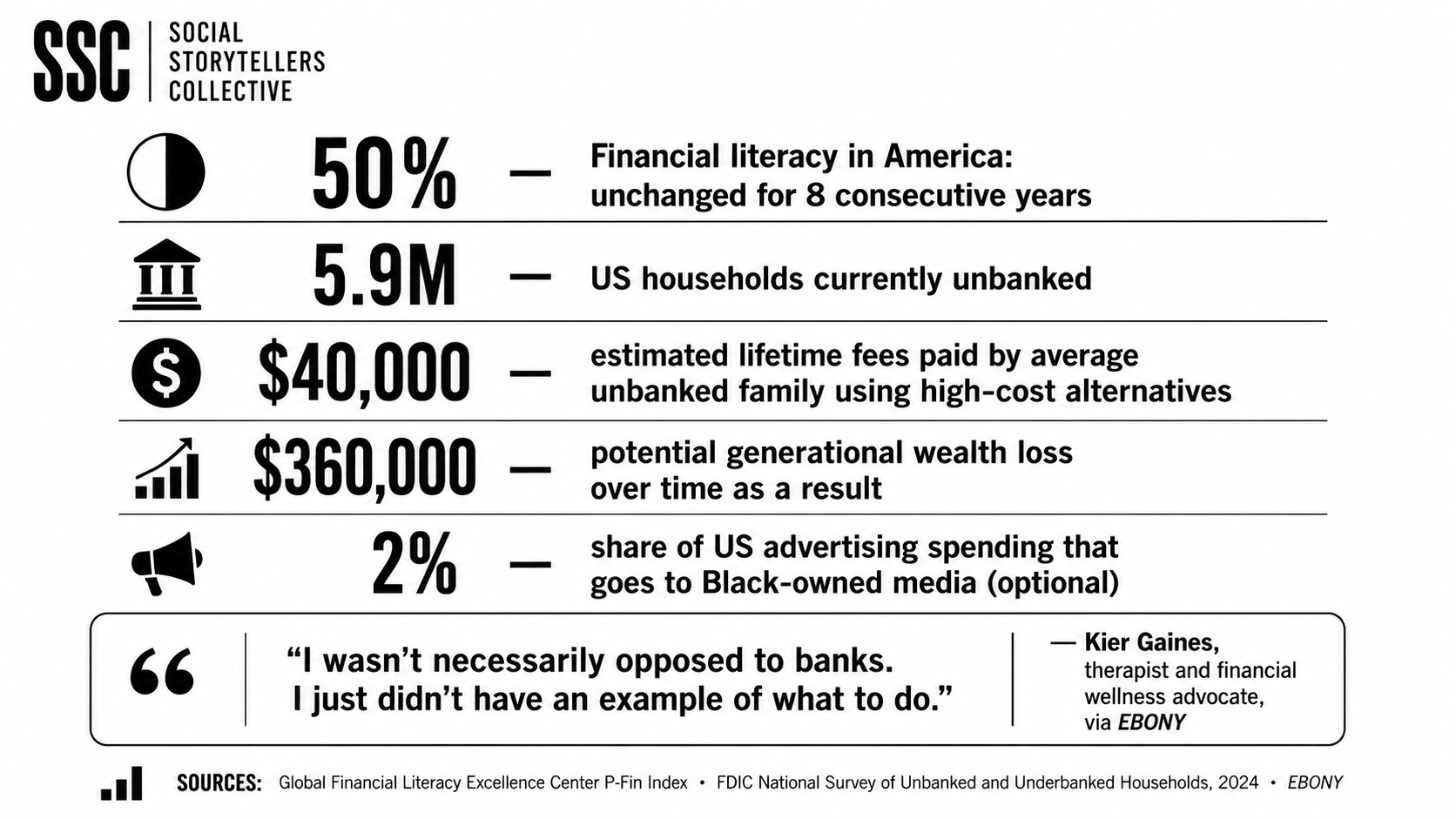
Today the access question runs through money too. Nobody Taught You What They Were Never Shown — financial literacy has hovered at exactly 50% in America for eight consecutive years. That flatline is not a measurement of individual capacity. It is a structural indictment. “I wasn’t necessarily opposed to banks,” therapist and financial wellness advocate Kier Gaines told EBONY. “I just didn’t have an example of what to do.” Nobody teaches you what they were never shown. The 5.9 million US households currently without bank accounts are not failing the system. The system failed them first.
Passports Are Becoming Financial Enforcement Tools. The State Department is now revoking passports — not just blocking renewals — for Americans with unpaid child support. Mobility itself is becoming conditional on debt compliance. When governments use access to movement as a mechanism of financial punishment, the people with the least flexibility to absorb it are always the ones who pay first.
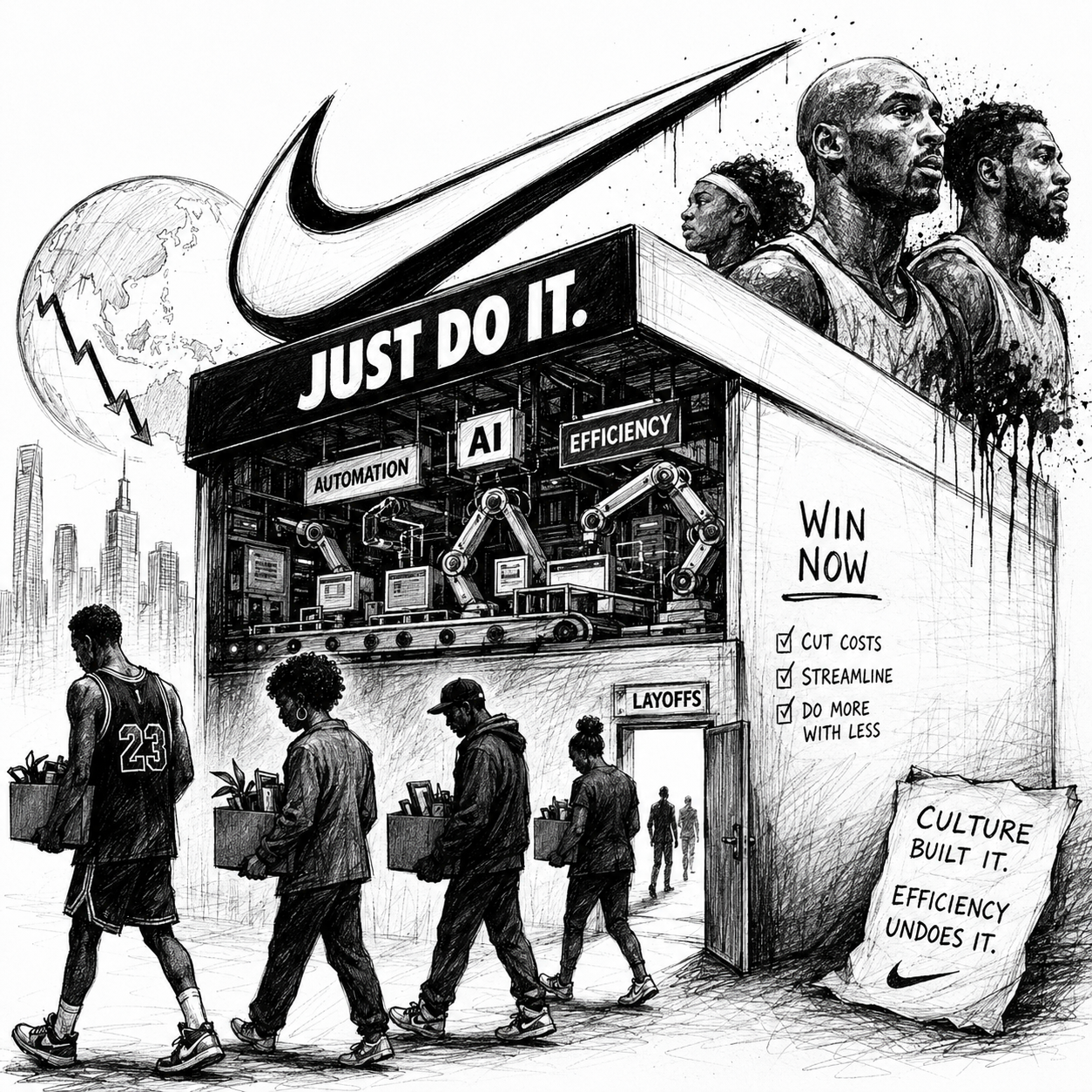
The pattern shows up in the brands too. Nike’s Layoffs Show How Even Global Brands Are Rebuilding Around Efficiency — Nike is cutting approximately 1,400 jobs globally in its second major round of layoffs this year, concentrated heavily inside its technology division. Combined with 775 roles eliminated earlier in the year, Nike has shed more than 2,100 positions in less than twelve months, with sales expected to drop 20% in China this quarter. The company that built one of the most recognizable brand identities in the world on the backs of its athlete partnerships is now repeatedly restructuring the workforce behind that brand. When an institution with that level of symbolic weight keeps contracting, it signals something beyond financial pressure. It reveals how unstable even the most globally recognized brands have become.

Gallup’s State of the Global Workplace report found 41% of employees globally experience “a lot of stress” during the workday — near historic highs — as AI anxiety, affordability strain, and the expectation to remain endlessly adaptable produce a workforce that is employed but psychologically depleted. The economy may be stabilizing statistically while deteriorating psychologically. That is not a wellness story. It is a structural one.
Today’s stories looked like they were covering different beats. They were covering the same one. These are not comfortable stories. They are necessary ones.
The Daily Visual Signal
A visual interpretation of the deeper systems, tensions, and structural shifts shaping the current moment — designed to translate complex societal changes into a single image.
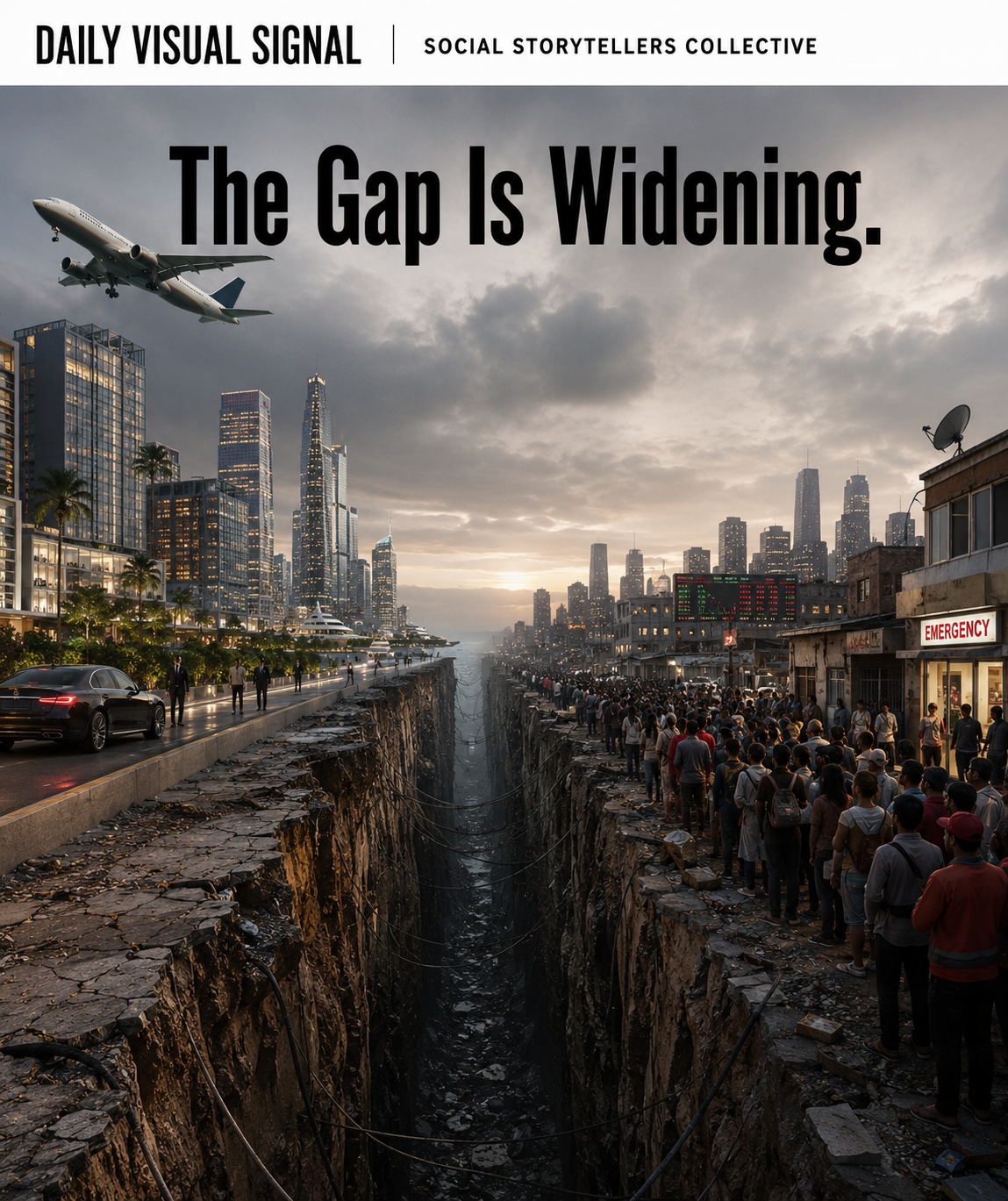
The Gap Is Widening. Many of today’s systems still appear operational from the outside. Flights still depart. Markets still grow. Newsrooms still publish. Healthcare systems still function. But underneath the surface, the pressure required to maintain that appearance is becoming increasingly unevenly distributed. The instability is not always visible in the presentation. It is visible in who is being asked to absorb the strain required to keep everything appearing normal.
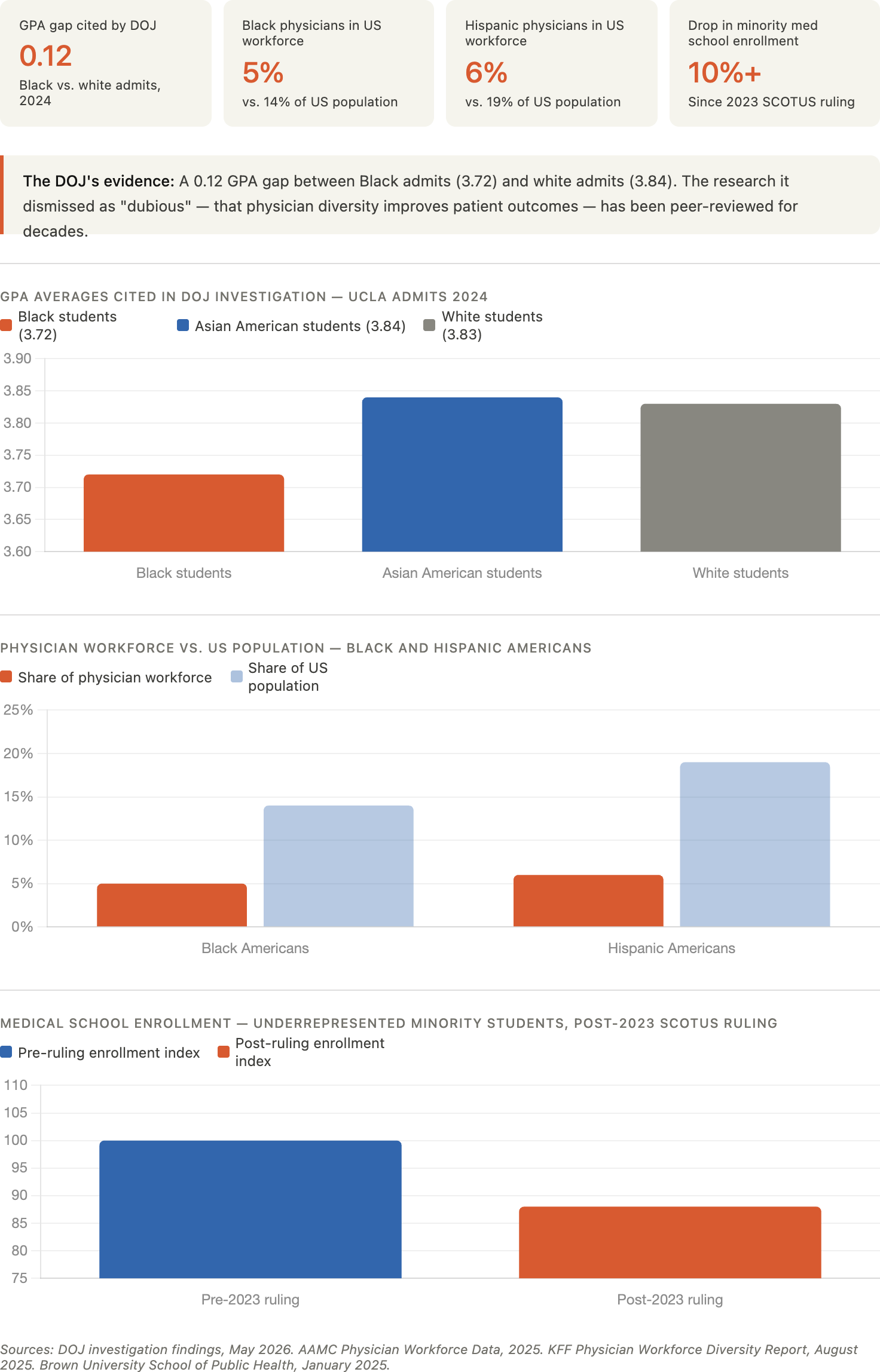
Featured Story: The GPA Was Never the Point. Neither Is This Investigation.
The DOJ’s case against UCLA’s medical school is being covered as an admissions story. It is not. It is the latest move in a coordinated dismantling of the institutional levers that produced any measurable racial equity in American medicine — using a 0.12 GPA differential as legal cover while dismissing decades of peer-reviewed research on what actually saves lives. Black and Hispanic physicians represent just 5% and 6% of the US medical workforce respectively. Following the Supreme Court’s 2023 ruling, AAMC data show a double-digit drop in enrollment of Black, Hispanic, and Native American students at medical schools nationally. The pipeline was already narrow. The investigation is targeting the institutions still trying to widen it.
What today’s stories share is not a single crisis or a single sector. It is a single pattern: the distance between what systems claim to produce and what they actually deliver — and who absorbs the weight of that distance when it goes unexamined.
We will be watching.