
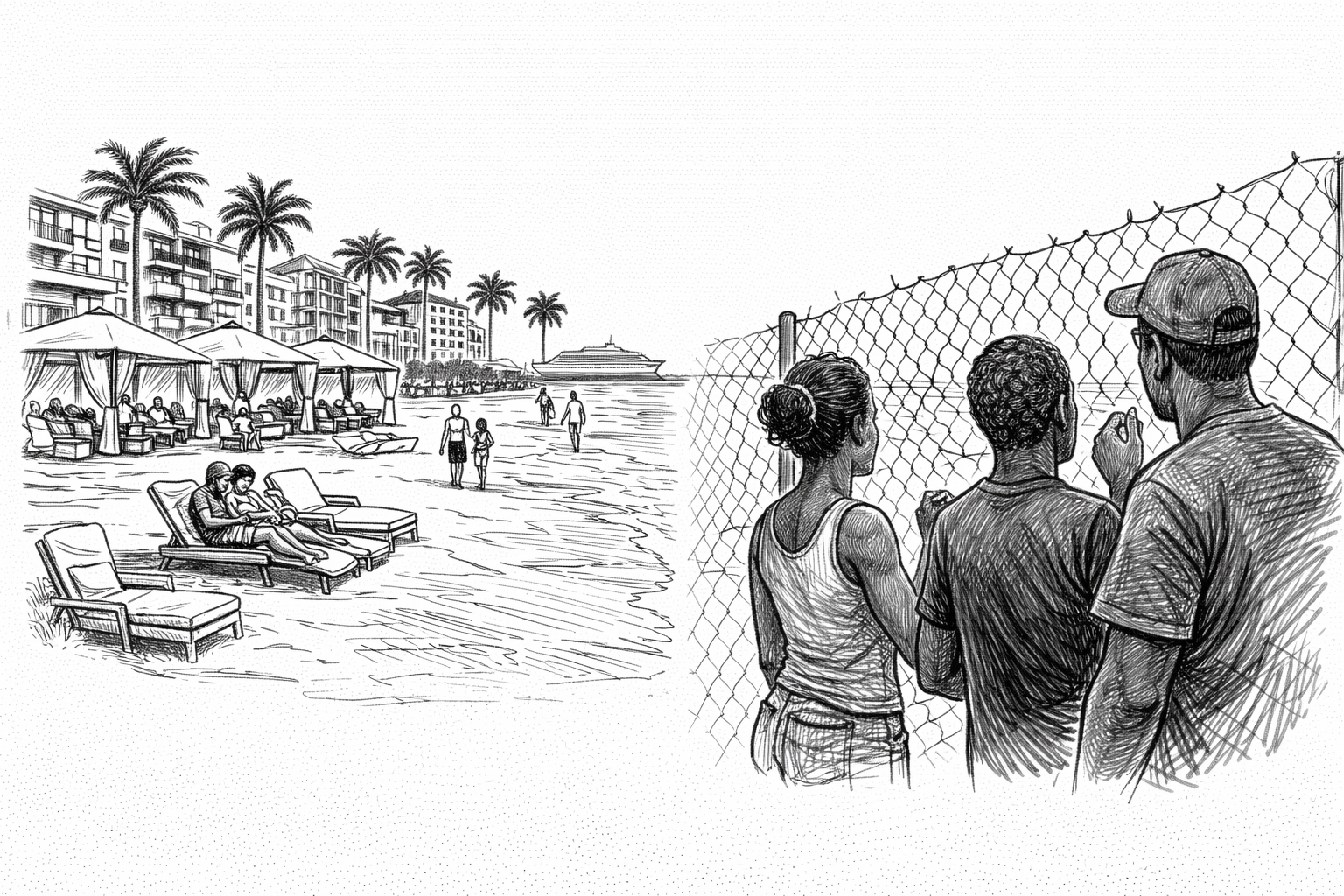
Part of Society & Economy — examining how economic expansion reshapes access, identity, and community within Black and Brown populations globally.
The Dominican Republic’s tourism story has moved past recovery and into something that looks like structural repositioning. The numbers from early 2026 are not incremental gains. They are records, and they are signaling a shift in how the island fits into the global travel economy.
The country opened 2026 with 1.22 million tourists in January — the first time air arrivals have surpassed 800,000 in a single month — with the Tourism Ministry projecting real GDP growth between 4.0% and 4.5% for the year, positioning the Dominican Republic as one of the fastest-growing economies in Latin America and the Caribbean. February continued the trajectory: more than 1.18 million visitors arrived, representing a 13.1% increase year over year, with the United States accounting for 39% of total arrivals and Canada at 24%. Hotel occupancy reached 87%. The government is targeting 11.5 million total tourists by year’s end.
What is driving the surge is partly organic demand and partly geopolitical displacement. As Cuba collapses as a viable tourism destination under the U.S. fuel blockade, the Dominican Republic is absorbing market share that the island’s crisis is generating. New low-cost carrier Arajet has expanded direct flights from secondary U.S. and Canadian cities, while ultra-luxury openings including the St. Regis Cap Cana and The Ritz-Carlton Reserve are signaling a deliberate repositioning toward high-net-worth travelers who previously would have chosen St. Barts or Mustique. The island is simultaneously capturing the budget overflow from Cuba and the premium market from the global luxury tier. That is an unusual dual positioning, and it reflects a tourism strategy that is more sophisticated than the country’s prior “affordable beach vacation” brand suggested.
The question SSC is positioned to ask — and that the tourism data alone does not answer — is who inside the Dominican Republic benefits from this growth. The country’s Afro-Dominican majority has historically been marginalized within its own national identity, navigating a racial politics that has oscillated between denial of African heritage and open discrimination against Haitian migrants. A tourism boom that draws billions in revenue and positions the island as a luxury destination does not automatically translate into economic mobility for the communities whose labor, culture, and landscape make that destination possible. The Dominican Republic’s global standing is rising. Whether that rising tide is lifting the boats of its Black and mixed-race working population, or primarily serving the interests of its tourism investor class and the foreign visitors they are courting, is the structural question that the record numbers do not address and that SSC’s global beat is built to pursue.