
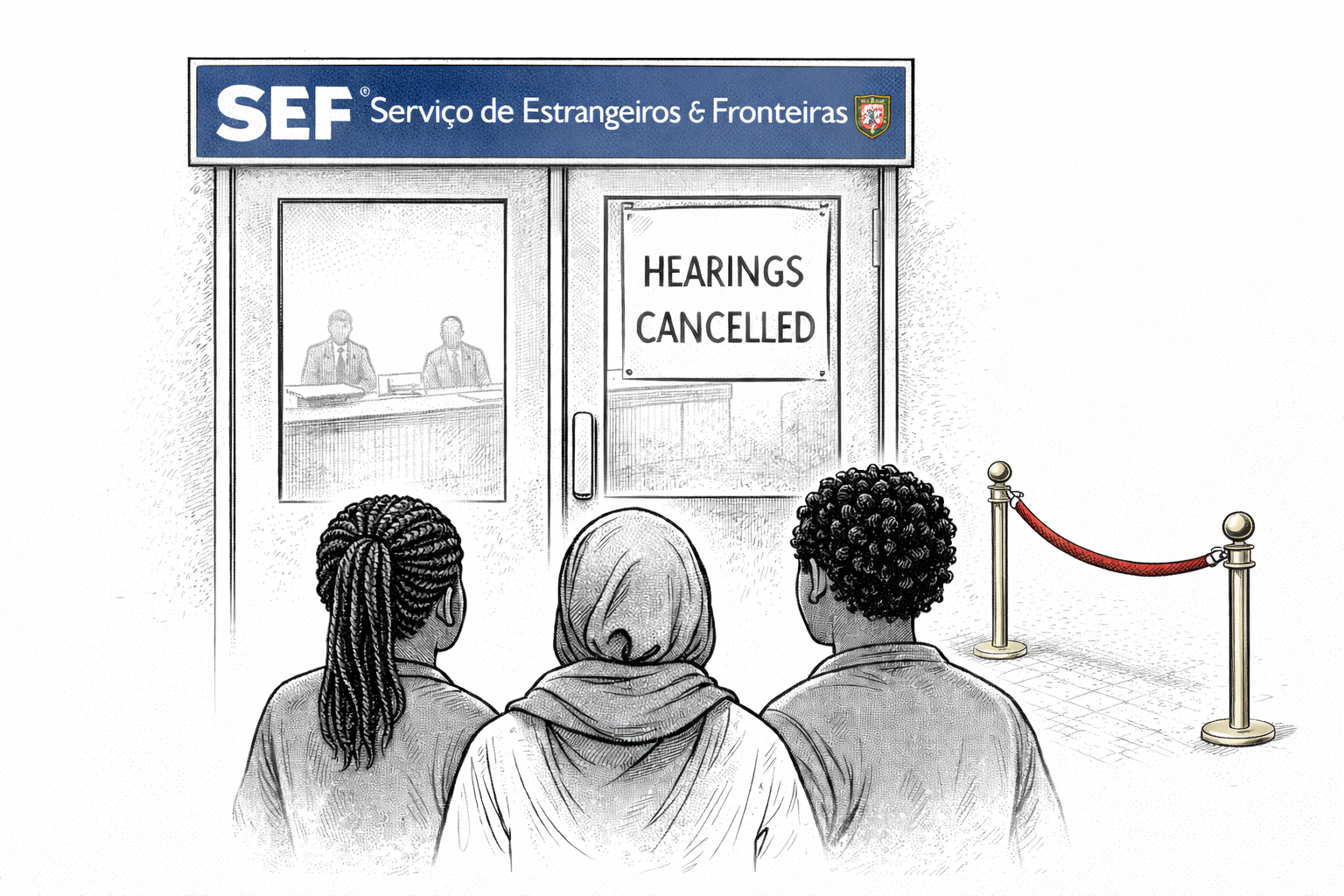
For the past decade, the idea of the digital nomad has been framed as a breakthrough: work from anywhere, live globally, build a life untethered from geography. It was marketed as freedom — enabled by remote work technology and reinforced by countries willing to welcome foreign income. That openness was real and intentional. Governments across Europe, Southeast Asia, and Latin America created visa pathways designed to attract remote workers who could spend locally without competing directly in domestic labor markets. The lifestyle content followed: Instagram-ready apartments in Lisbon, co-working cafes in Chiang Mai, morning routines on Barcelona rooftops. The image was democratic. The access was always more conditional.
Countries like Portugal positioned themselves at the center of that shift, offering relatively accessible residency options and building entire ecosystems around short- and long-term stays from foreign remote workers. But the same conditions that made those programs attractive are now producing pressure — and the response is tightening. Portugal’s Digital Nomad Visa now requires a minimum monthly income of €3,680 — nearly $4,000 USD — along with €11,040 in liquid savings and proof of accommodations. The Portuguese parliament also voted in October 2025 to extend the residency requirement for citizenship from 5 years to 10 years. The Golden Visa program, which had offered investment-based residency pathways, has been significantly curtailed in response to housing pressure in Lisbon and Porto, where local residents have linked rising costs directly to foreign demand tied to remote workers and investment migration.
This is not an isolated adjustment. It reflects a broader recalibration of how mobility is managed. The digital nomad model was never just about individual freedom — it depended on policy decisions, tax frameworks, and housing systems that could absorb an influx of mobile workers. As those systems strain under the pressure of foreign demand, the terms of access are shifting. Income thresholds are rising, documentation requirements are becoming more complex, and the conditions for staying long-term are becoming more restrictive. What was once framed as an open pathway is becoming a structured system — one with a much higher price of admission than the lifestyle content suggests.
The gap between the image and the reality is worth examining specifically, because the image has always been built on a specific kind of body. The digital nomad aesthetic — the Instagram apartment, the co-working café, the morning run through a European city — centers a figure that is implicitly white, implicitly Western, and implicitly already positioned in an income bracket that makes the income thresholds manageable. The Black professionals, Latino freelancers, and workers of color who pursued location independence precisely as a route around workplace discrimination in the United States — around the exhaustion of navigating white professional environments in person, around the return-to-office mandates that disproportionately cost them — are navigating a different version of this closing door.
As SSC covered in The Return to Office Isn’t About Collaboration. It’s About Control, remote work offered Black knowledge workers a specific form of protection that physical office environments historically had not. The ability to deliver without being in the room — to be evaluated on output rather than navigated through the informal politics of a workplace where the norms were not built for you — was not a perk. For many Black professionals, it was a structural advantage that changed the terms of their careers. The digital nomad pathway extended that logic globally: if the workplace is the problem, remove the workplace from the equation entirely. What is now closing is not just a visa. It is that exit.
Portugal’s income threshold of €3,680 per month — roughly $48,000 annually before accounting for housing, insurance, and the required savings balance — already screens out the workers for whom remote work was most transformative. The freelancers building portfolios. The independent contractors in the early phases of their careers. The creatives whose income is real but variable. These are not edge cases in the digital nomad ecosystem. They are the majority of it. What the visa infrastructure is doing, as it tightens, is selecting for the subset of that population with the most cushion — and that selection is not racially neutral. Income, savings, and documentation requirements are not neutral filters. They land along existing fault lines.
At the same time, the image of the digital nomad has not kept pace with those changes. The lifestyle continues to be marketed as widely accessible — shaped by social media narratives that emphasize flexibility and freedom as though the barriers to both were technical rather than structural. The gap between perception and reality is widening in exactly the way SSC has documented across The Access Shift series: access is being redesigned around new conditions, the conditions are being communicated as requirements rather than choices, and the communities least positioned to meet the new conditions are the last ones the marketing acknowledges as part of the audience.
Why This Matters
The digital nomad economy was built on the idea that location no longer determines opportunity. What is emerging now is a reminder that systems still do. As countries tighten access, the lifestyle becomes less about freedom and more about qualification — shifting the question from who wants to move to who is allowed to, and from what the dream promises to who the infrastructure was actually built to serve. For Black and brown professionals who pursued location independence as a structural solution to workplace environments that were not designed for them, that shift is not an abstraction. It is a door closing on an exit that was never as open as the content made it look.