
A new round of layoffs is underway at The Daily Wire, with Barrett Media reporting that staff reductions have impacted multiple teams across the organization. The exact number of employees affected has not been disclosed, but the cuts appear to be part of a broader restructuring effort rather than an isolated adjustment. Early indications surfaced through social media, where political reporter Cameron Arcand confirmed he was among those laid off, pointing to the human impact behind what the company frames as a strategic shift.
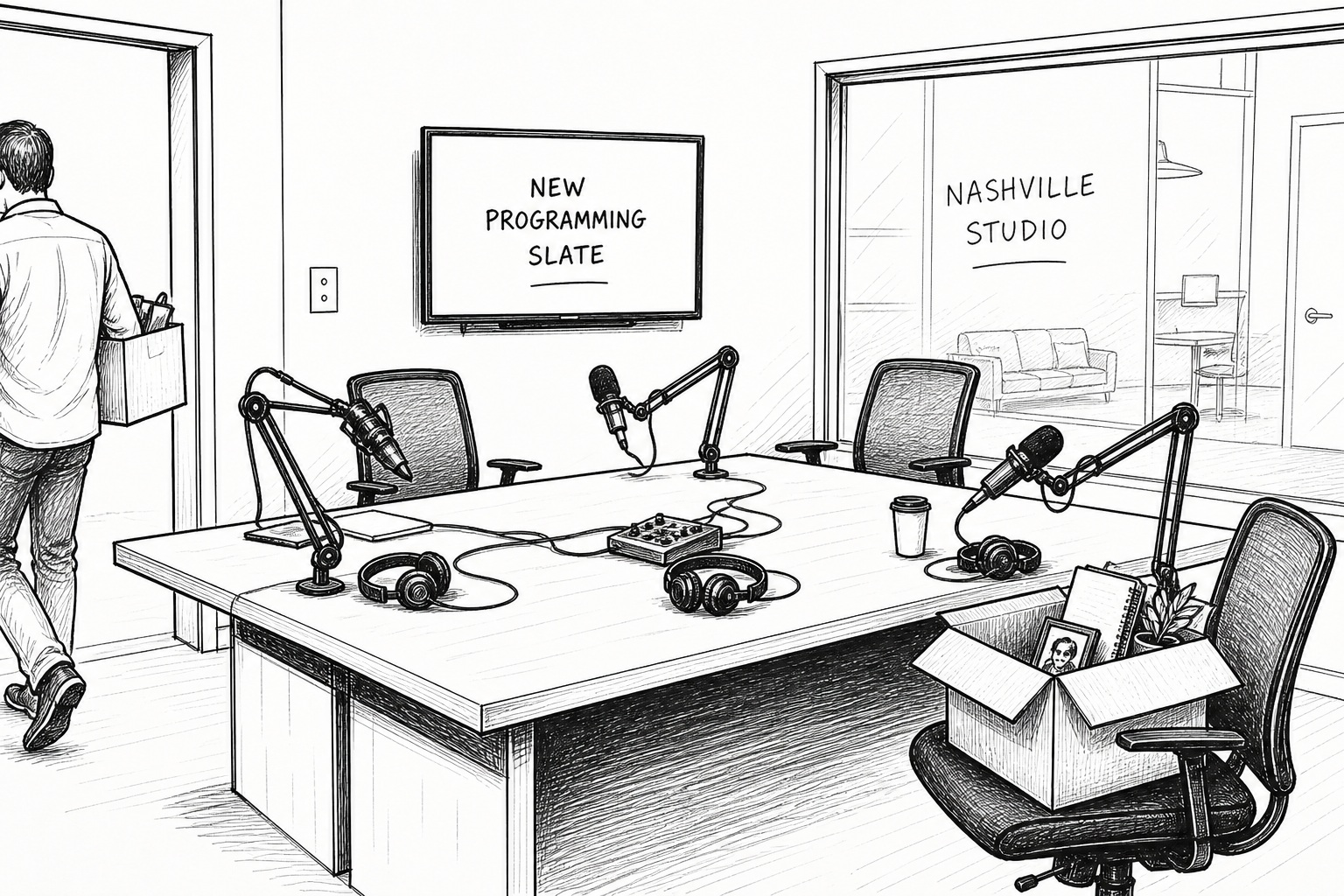
In a statement, the company described the layoffs as a “difficult decision” tied to organizational restructuring, emphasizing that affected employees played a key role in building the outlet’s current scale and influence. The cuts are reportedly concentrated in its Nashville production operations, even as the company has expanded its geographic footprint over the past year, adding production staff in Washington, D.C., the Northeast, and Florida. That redistribution of labor signals a recalibration rather than contraction—moving resources toward regions and formats the company sees as central to its future.
The timing reflects a broader transition underway at The Daily Wire, which has been investing heavily in entertainment programming and new content verticals beyond its core political commentary. According to the company, the restructuring is intended to free up resources for an “ambitious slate” of upcoming projects, suggesting that growth is being redirected rather than paused. At the same time, leadership has indicated continued investment in editorial operations and investigative journalism, including recent hiring and the establishment of a Washington bureau with access to the White House briefing room.
This round of layoffs follows earlier cuts in March 2025, reinforcing a pattern that is becoming increasingly common across media organizations: expansion into new formats often coincides with internal consolidation. The result is a workforce model that shifts alongside strategy—prioritizing scalability, geographic reach, and content diversification, while reducing roles tied to legacy production structures. For media companies navigating audience fragmentation and platform competition, restructuring is no longer episodic; it is becoming part of the operating model itself.