
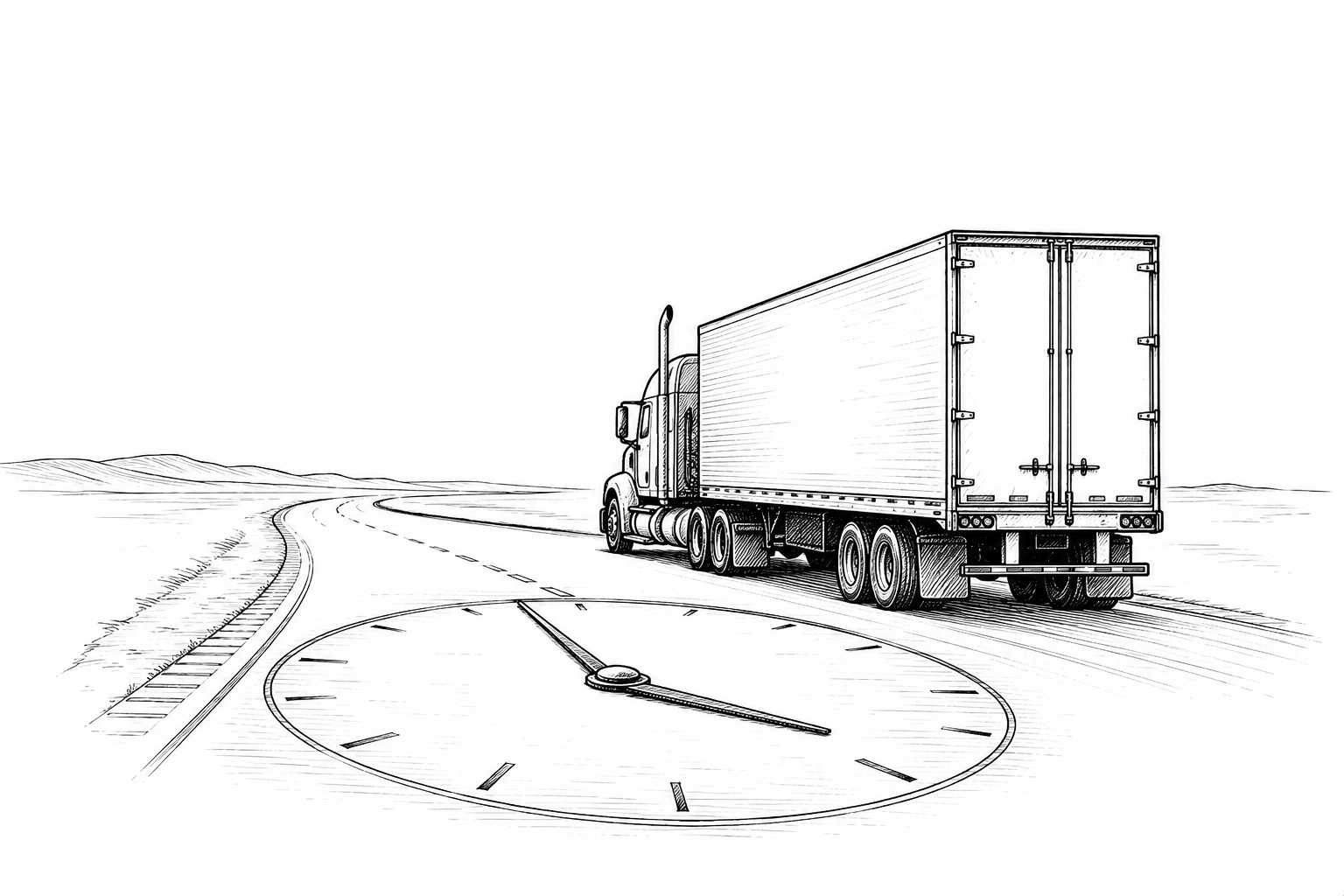
Wall Street Journal reporter Esther Fung reported this week that commercial truck drivers across the United States drove 4 percent slower in late April than they did at the start of the year, according to transportation analytics company INRIX, which analyzed more than 60 million commercial truck trips across 10 major metropolitan areas during the first four months of 2026. The slowdown follows a sharp increase in fuel prices after the United States and Israel launched joint military strikes against Iran on February 28, disrupting oil markets through the Strait of Hormuz — the passage carrying roughly one-fifth of the world’s oil supply. By March 31, the national average price of gasoline exceeded $4.02per gallon for the first time since 2022, while diesel climbed to $5.45. Driver Michael Whitaker, who hauls heavy equipment across multiple states, now spends approximately $1,200 to fill his truck, compared with roughly $750 before prices surged.
Driving slower is sound fuel management. Lower speeds reduce aerodynamic drag and improve efficiency, allowing drivers to save hundreds of dollars over the course of a week. Whitaker reduced his cruising speed from roughly 65–68 mph to 62–65 mph. The physics are straightforward. The economics are more revealing. Every mile per hour sacrificed to save fuel also extends the amount of time required to complete the trip — time for which most drivers are not compensated.
Truck driving is one of the few occupations in which workers are expected to personally finance the primary input required to perform their own labor. Most long-haul drivers are paid by the mile rather than by the hour. That structure rewards movement, not labor time, and functions tolerably when operating costs are stable. Fuel spikes dismantle the logic entirely. A driver facing $5.45 diesel must either absorb the cost directly or reduce speed to conserve fuel — but neither decision generates additional pay. The adjustment happens through the driver’s own time. Hours extend. Earnings stay fixed to mileage. The carrier that sets the compensation structure absorbs none of it.
The vulnerability did not begin with the conflict in Iran. The conflict exposed it. The pay-by-mile model has always transferred operational risk onto drivers instead of onto the carriers that establish the terms. When diesel was $3.76, that arrangement was invisible. At $5.45, it is a slower truck on every highway in the country, driven by a worker adding hours to his day because slowing down is the only variable he controls.
Oil Price Information Service chief oil analyst Denton Cinquegrana told Newsweek that elevated fuel prices could persist through the remainder of 2026 and into the second half of 2027 — because restoring normal shipping conditions through the Strait of Hormuz is the only mechanism that brings prices down, and that timeline belongs to no driver. Whitaker summarized it plainly to the Journal: “If you want to be a good business person, you figure it out.”
What he figured out is a workaround, not a solution. The trucking industry is not building new compensation models or developing new technology to absorb fuel volatility. It is relying on drivers to quietly extend their workdays to keep freight moving at acceptable cost. Every future geopolitical disruption — every conflict that touches an oil supply route, every sanctions regime that moves crude prices — will move through the same channel: the driver’s unpaid time. The American supply chain runs on a workforce that has been structured to absorb shocks that no individual worker caused and no individual worker can prevent. That is not a trucking problem. It is a template.