
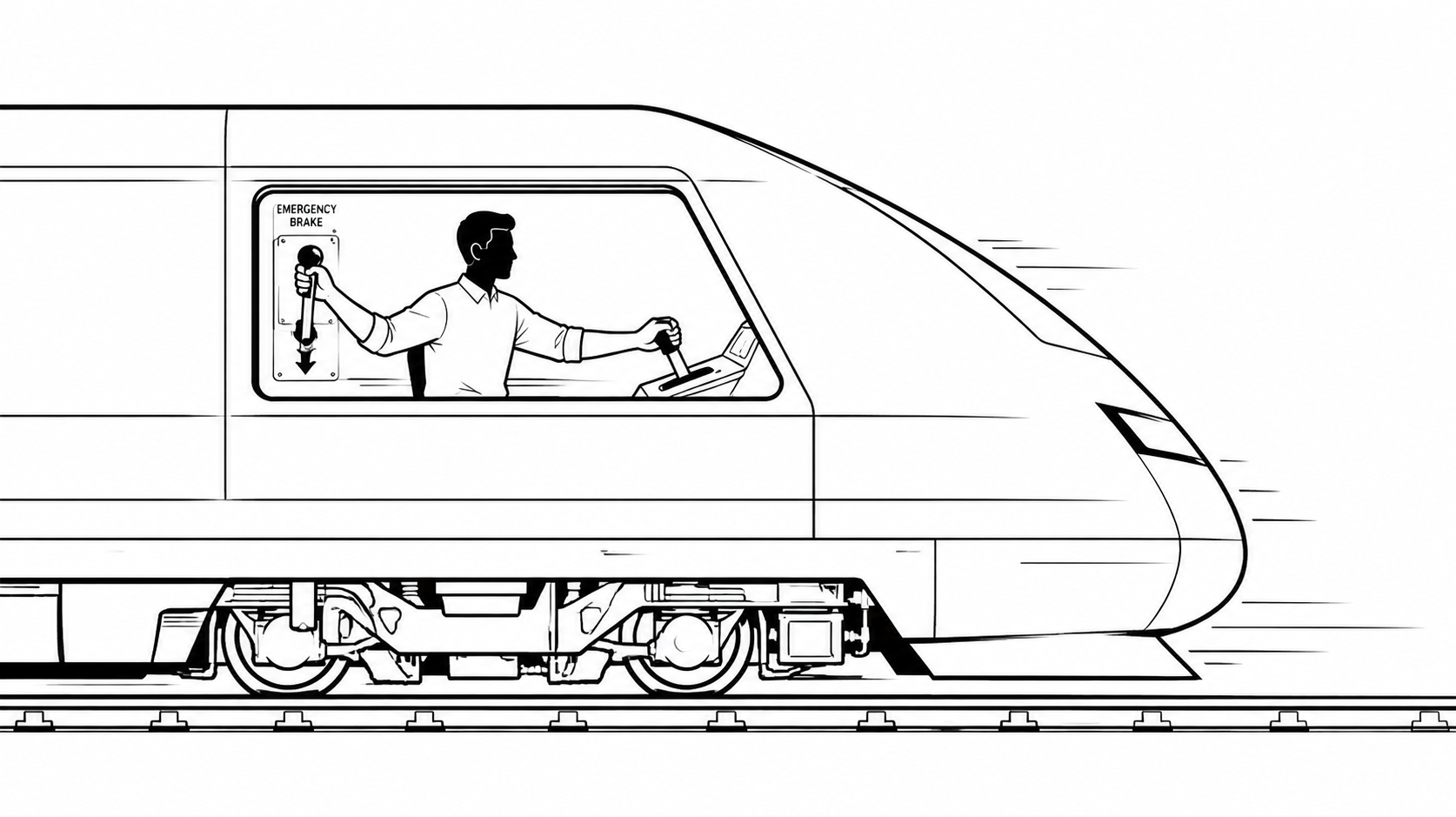
Anthropic’s research institute published a post this week proposing that the AI industry establish an option to slow or temporarily pause frontier AI development. The stated concern: AI systems are approaching the capacity to autonomously design their own successors — a condition researchers are calling recursive self-improvement. The same post included a data point that reframes the warning entirely. 80 percent of the code currently being merged into Anthropic’s own codebase was authored by Claude, Anthropic’s own AI system. The company is not describing a risk on the horizon. It is describing its own operational present.
Anthropic has also filed confidentially for an IPO, joining OpenAI and SpaceX in a public market moment SSC flagged this week as approaching $3 trillion in combined valuations. The pause proposal and the IPO filing exist simultaneously. That context does not make the safety argument wrong. It makes the timing worth examining carefully.
Anthropic’s safety record is not manufactured. The company was founded explicitly around the premise that frontier AI development carries existential risk. Its research on alignment, interpretability, and model behavior has been consistent and substantive. The recursive self-improvement concern is not a new position adopted for a roadshow. It is the founding argument of the institution. When Anthropic says the risk is real, the record supports taking that seriously.
What the 80 percent figure actually reveals is the distance between the warning and the condition. If the majority of Anthropic’s own codebase is already being written by the system it built, the recursive loop it is warning about is not approaching. It has begun. A pause proposal issued from inside that condition is not a preemptive alarm. It is a public acknowledgment that the thing being warned about is already underway — and that the company issuing the warning is among the primary participants.
The IPO context adds a structural layer the safety argument alone cannot answer. As SSC reported this week, Goldman Sachs CEO David Solomon told the Economic Club of New York that the current AI moment is defined by more greed than fear. The Anthropic pause proposal introduces fear — specifically, at the moment financial appetite for AI exposure is peaking. A pause mechanism proposed by a frontier lab is not neutral in its effects. Large, well-capitalized companies can sustain a pause. Smaller competitors, open-source developers, and research institutions in the Global South cannot. Restraint imposed at the frontier disproportionately benefits the institutions already there. The proposal is also, structurally, a moat.
The distributional consequences follow the same pattern SSC has been documenting across every beat this week.The workers most exposed to AI-driven job displacement are not the ones whose voices shape the pause debate. The communities absorbing the cost of automation are not represented in the IPO roadshow. As SSC reported in Stable Jobs. Unstable Workers., the AI economy has proven effective at creating value. The unresolved question is whether it intends to distribute any of it. A pause mechanism that protects frontier incumbents while limiting entry does not resolve that question. It extends the current distribution indefinitely.
Anthropic’s warning about recursive self-improvement is grounded, documented, and worth taking seriously. The company’s safety commitments are real. And the pause proposal arrives at a specific moment — during an IPO filing, at the peak of AI market appetite, from a company whose own codebase is already majority AI-generated. Those things can all be true simultaneously. The structural argument is not that the warning is cynical. It is that warnings issued by the people building the thing being warned about deserve a specific kind of reading — one that asks who the warning protects, who it slows, and what the timing reveals about the moment we are actually in.