
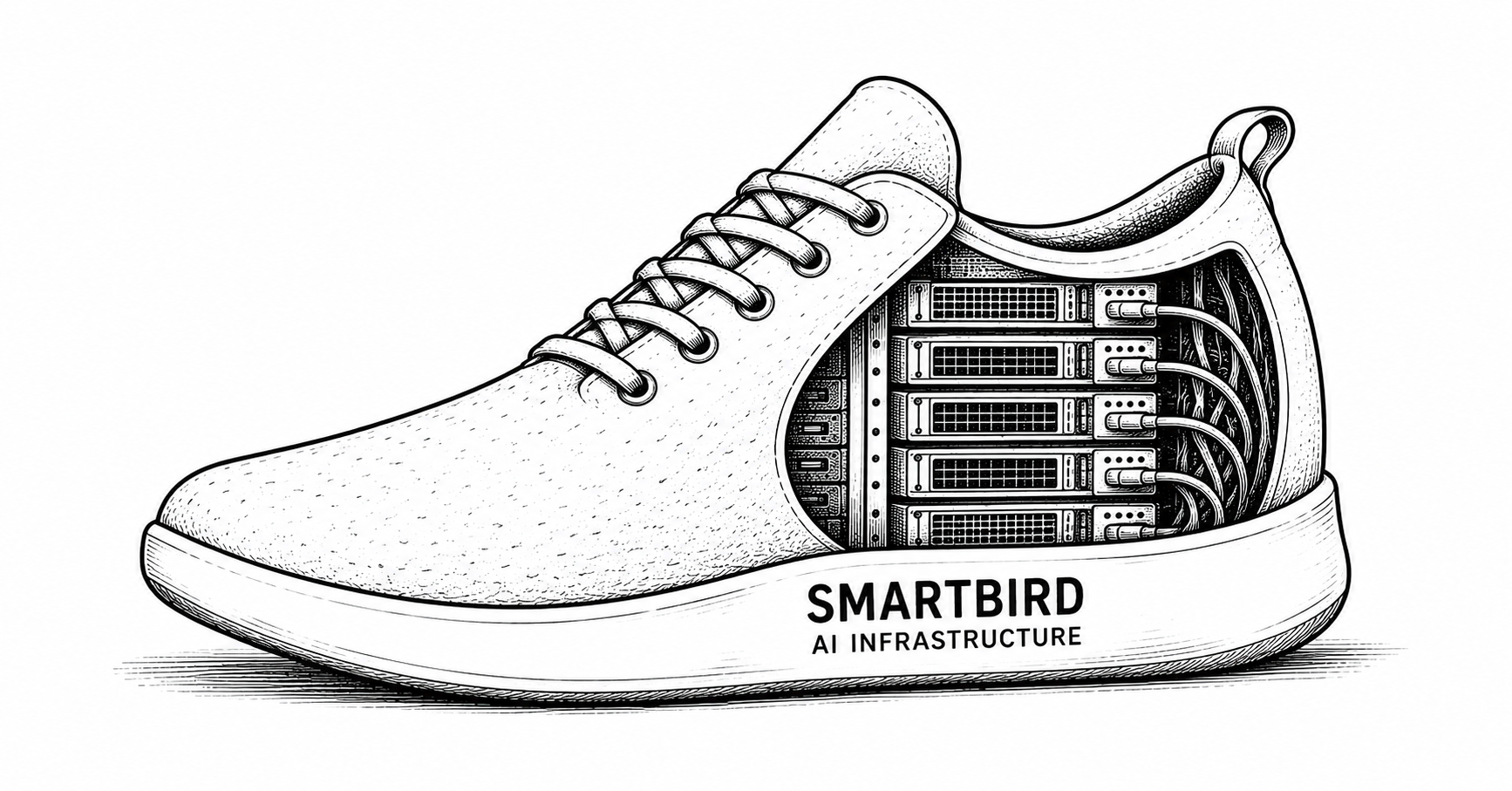
The shift says as much about where capital is flowing as it does about the future of consumer brands.
Business Insider’s Ben Bergman reported that the company formerly known as Allbirds has adopted the name Smartbird, appointed Nadia Carlsten as president and CEO, and formally repositioned itself around AI infrastructure after first announcing plans for a new direction in April. Carlsten, who previously led the Danish Centre for AI Innovation, said the company intends to provide dedicated AI infrastructure for organizations that want AI capacity without having to own and operate the underlying hardware themselves.
Capital follows growth. That mechanism helps explain why a company once associated with wool sneakers and sustainable consumer branding now wants to compete in AI computing. The center of gravity in technology has moved away from applications and toward the physical systems required to run them. GPUs, networking, power, and data centers have become scarce assets, and companies that control access to those assets increasingly occupy a more valuable position than companies selling finished products.
The rebranding itself says something about the economics of AI. For years, startups tried to differentiate themselves through consumer experiences. AI has changed that equation. Models attract attention, but infrastructure captures spending. Every company building AI products ultimately depends on computing capacity, and demand has grown faster than supply. That imbalance has turned infrastructure providers into strategic gatekeepers.
Carlsten framed the opportunity around organizations that need dedicated AI capacity because of performance, cost, security, or sovereignty concerns. Her argument reflects a broader shift already underway. Businesses increasingly want AI capabilities, but many lack the expertise to manage clusters, networking, and specialized hardware. Infrastructure providers are positioning themselves as intermediaries that absorb the complexity while customers focus on products and services.
The unusual part is not that Smartbird wants to participate in the AI boom. It is that the company carrying that ambition was once known for shoes. Corporate identities have traditionally evolved gradually. The AI era is producing something different. Investors and executives are willing to abandon established categories if they believe infrastructure offers a larger opportunity. Brand equity that took years to build matters less when markets reward access to computing power.
Power is moving from companies that package products to companies that control the systems products depend on. AI has created a hierarchy where infrastructure sits closer to the source of value creation. Firms with access to capacity, energy, and specialized expertise hold leverage that software companies and end users increasingly need.
That dynamic suggests the next phase of the AI economy may look less like a race between chatbots and more like a competition over industrial assets. The companies with the strongest position may not be the ones building the most visible products. They may be the ones quietly deciding who gets access to the machines underneath.