
When Black unemployment reaches 7.5 percent while the national rate sits at 4.4 percent, the instinct in mainstream coverage is to note the disparity and move on. What that framing misses is the mechanism — and the mechanism is the story.
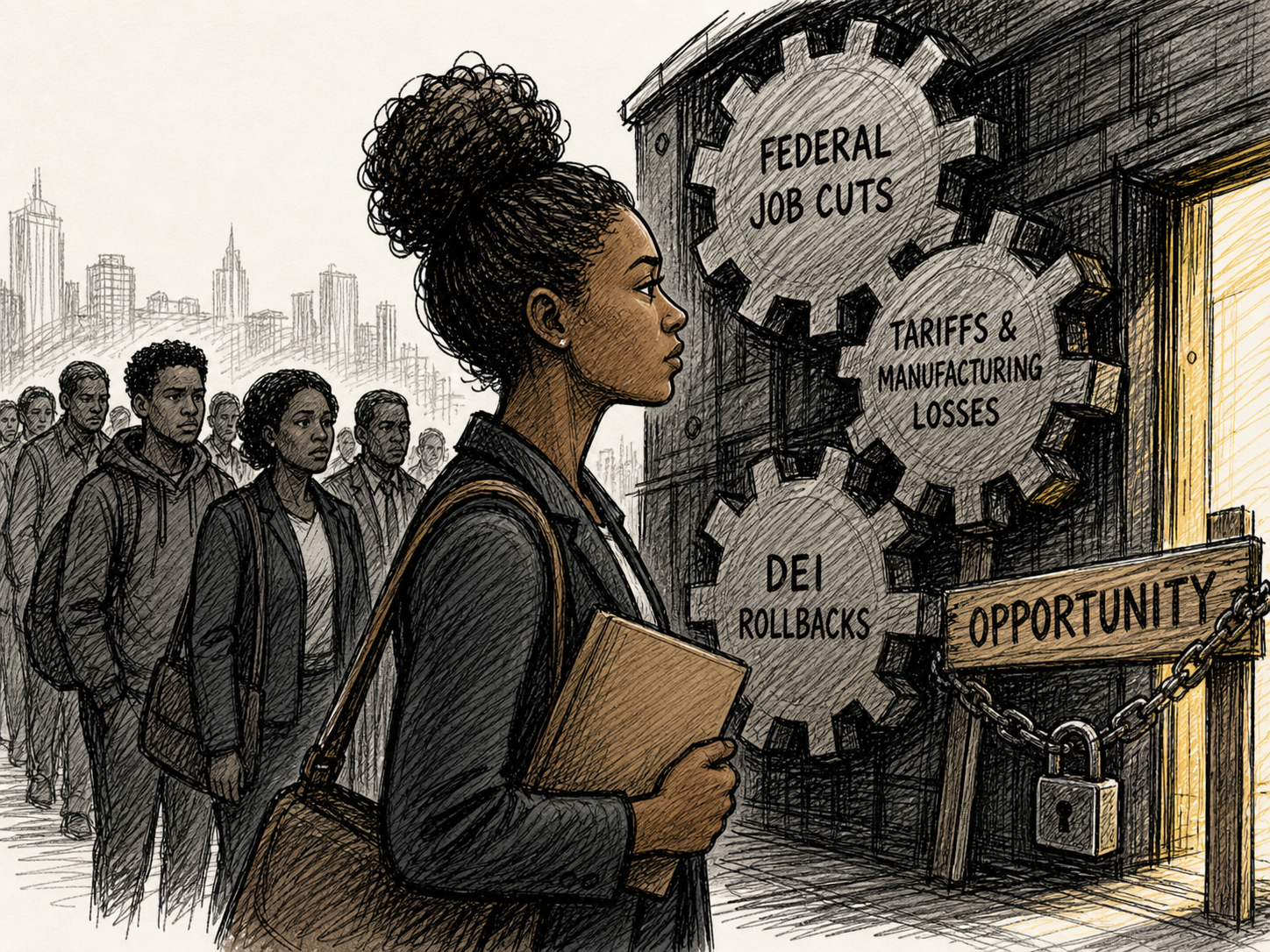
This isn’t a recession that happened to Black workers. It’s a recession that was structured to find them first. Three policy forces converged in 2025 and produced a predictable outcome: federal workforce reductions eliminated jobs disproportionately held by Black workers, tariff-driven manufacturing contraction hit an industry Black households depend on, and DEI rollbacks removed the institutional buffers that had slowed the “last hired, first fired” dynamic that has governed Black labor market vulnerability for a century. None of these forces operated independently. They compounded.
The federal workforce dimension is the most direct. The public sector has functioned as the primary pathway to the Black middle class since Reconstruction — not because Black workers preferred government jobs, but because private sector discrimination made them the most reliably accessible route to stable employment, benefits, and pension accumulation. When the federal workforce shed 277,000 jobs concentrated in agencies like the Department of Education and Health and Human Services, the impact wasn’t evenly distributed. Black women held a disproportionate share of those roles. Black women in leadership positions within equity programs were targeted first, because the programs themselves were targeted. The layoff wasn’t colorblind. The policy wasn’t either.
Manufacturing added a second layer. Tariffs eliminated approximately 70,000 manufacturing jobs since April 2025 — a sector where Black workers are overrepresented relative to their share of the overall workforce. These aren’t the high-visibility tech layoffs that generate LinkedIn discourse. They’re quiet contractions in plants and facilities that don’t produce press releases. The workers they displace don’t have portable credentials or remote-work optionality. They have seniority that evaporated and skills the next employer may not value.
The DEI rollback completed the architecture. Equity programs weren’t just symbolic — they functioned as structural protection for newer, more diverse hires who lacked the tenure to survive seniority-based layoff protocols. Eliminating those programs didn’t just change corporate messaging. It changed who stayed employed when headcount decisions were made.
Black youth unemployment approaching 30 percent is the leading indicator of what comes next. Workers who can’t accumulate early-career tenure don’t build the seniority that protects them in the next contraction. The cycle doesn’t just repeat. It deepens.
The Black Recession isn’t a data point waiting for the economy to improve. It’s a structural condition that was built, piece by piece, through decisions that individually could be explained away and collectively cannot.