
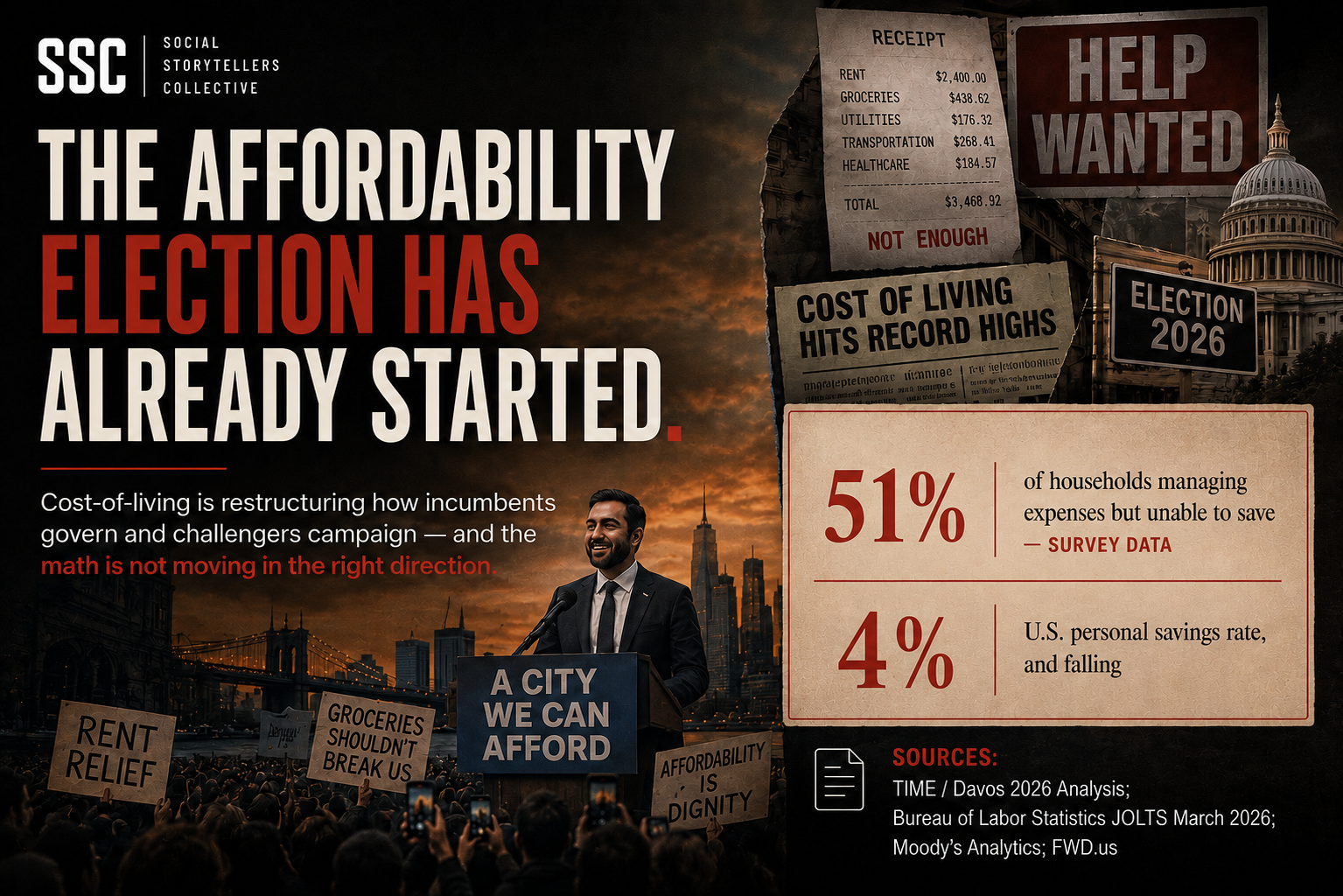
A global cost-of-living analysis tracking political fallout from affordability crises, published through TIME’s Davos 2026 coverage, identifies 2026 as the year the electoral math becomes unavoidable. The template is already visible: Zohran Mamdani won the New York City mayoral race on a platform built almost entirely around housing costs, grocery prices, and economic survival — not ideology, not identity, not institutional affiliation. The voters who backed him were not making a statement about politics. They were making a statement about their budgets. That dynamic is now replicating across the country as midterm positioning accelerates.
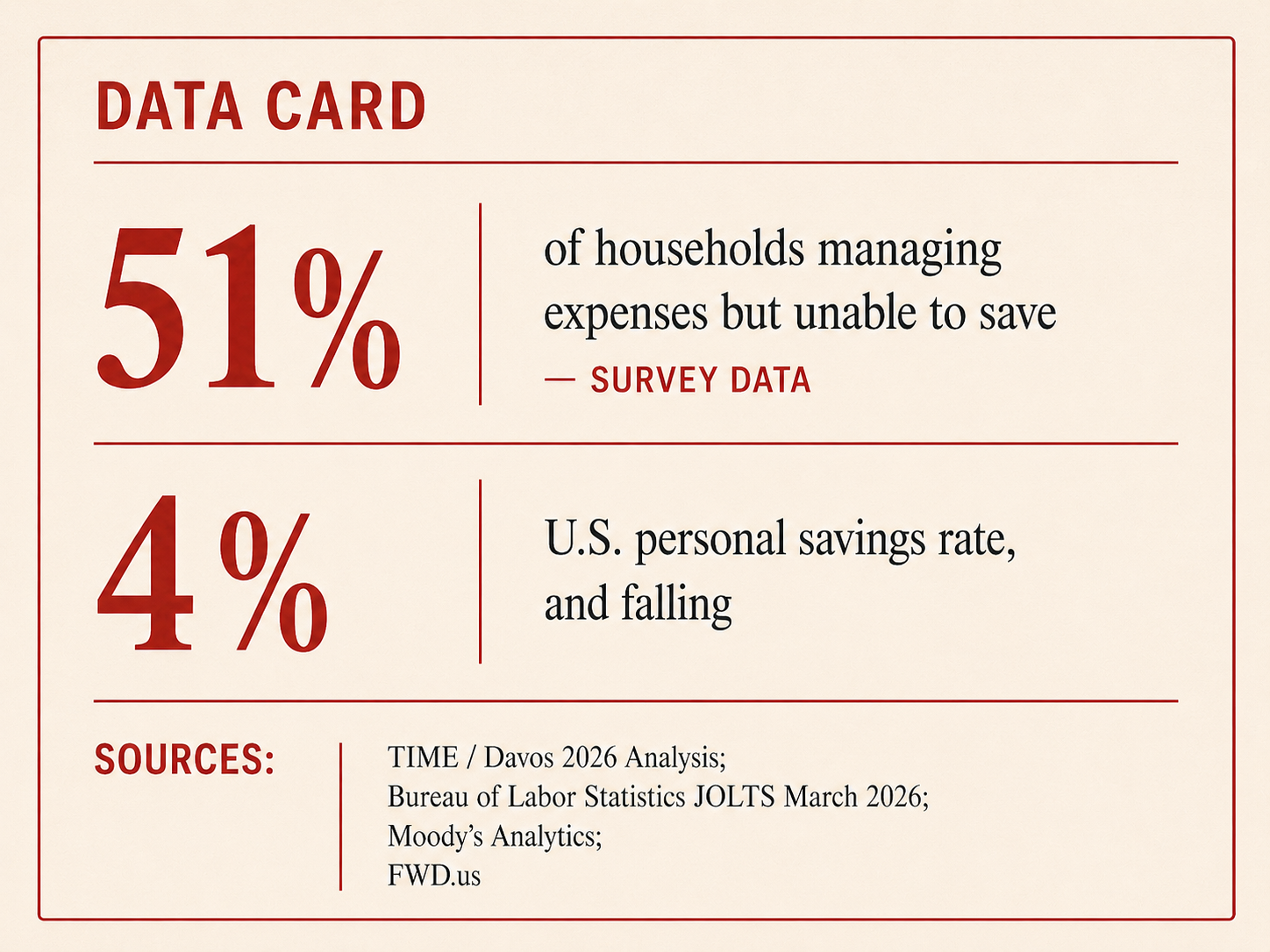
The numbers underneath the politics are not improving. The Bureau of Labor Statistics reported job openings were unchanged at 6.9 million in March 2026 — a stable headline that obscures the structural mismatch between available positions and the workers being displaced. Fifty-one percent of surveyed households say they are managing to cover expenses but cannot save. Twenty-five percent report they are financially struggling outright. The personal savings rate sits at 4% and falling. Moody’s chief economist Mark Zandi finds 22 states are already in economic contraction, with lower-income households barely surviving. In that environment, the message that lands is not about growth. It is about who sees the problem clearly enough to name it. The incumbents who cannot do that are already behind.