
A single prompt — post your degree — has become a visible stream across timelines, where Black men are sharing photos of master’s diplomas, graduation regalia, and milestone moments that typically stay private. The posts are direct and unfiltered, framed with pride, humor, or defiance. But collectively they are doing something more consequential than celebrating. They are building a public archive of achievement that interrupts a long-standing perception gap — and the interruption is working because the format is doing what the statistic never could.
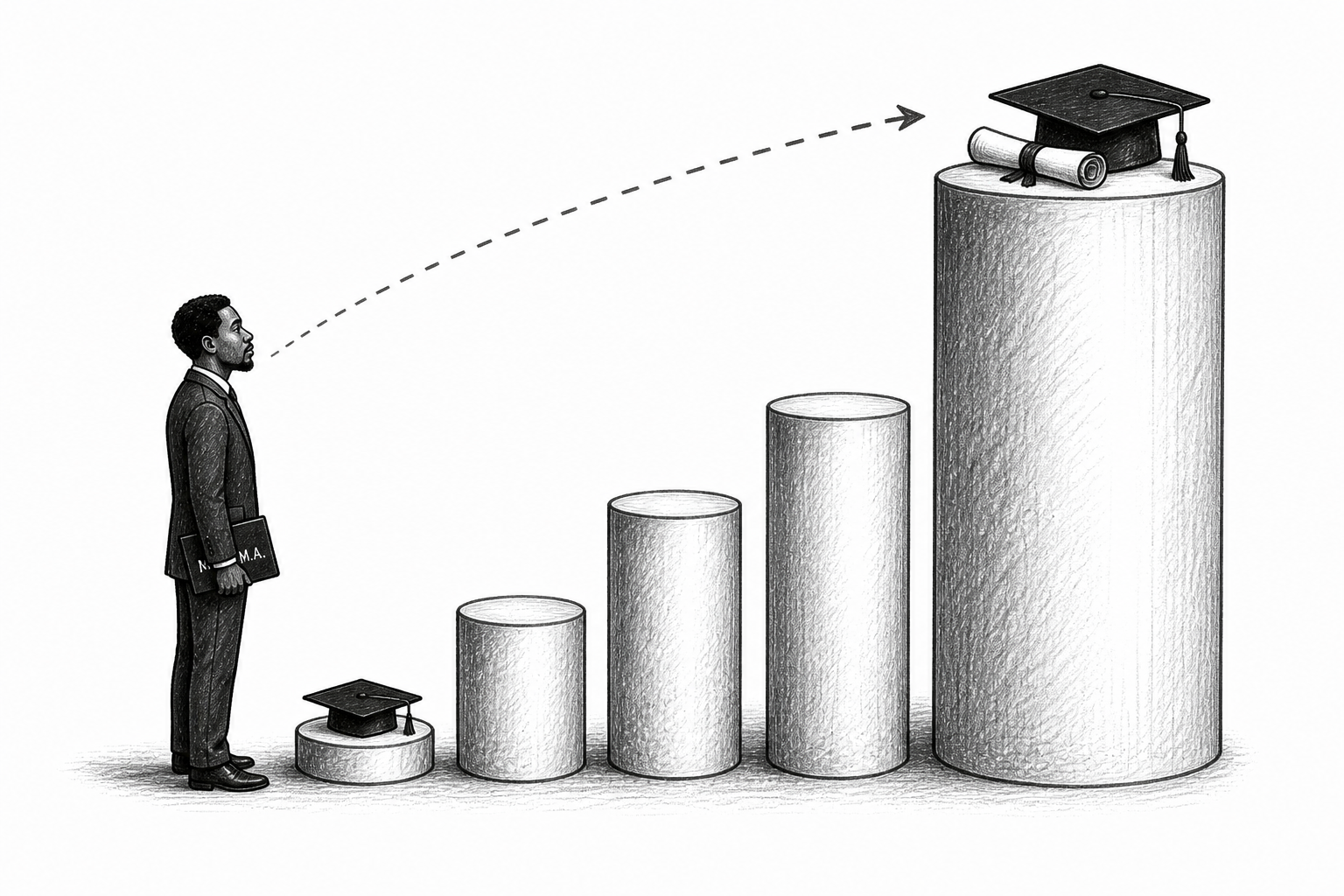
The underlying data point is not new. U.S. Census data has consistently shown that roughly 8% of Black men aged 25 and older hold a master’s degree or higher. That number has circulated in reports and academic contexts for years without materially shifting public perception. What’s different now is the translation. The number is becoming faces, names, institutions, and lived experience in real time — first-generation graduates, career pivots, personal loss, financial strain, and the added layer of navigating identity as Black and queer inside academic systems that were not built with that intersection in mind. Each post is a data point with narrative attached. The feed is what the report never was: proximate, repeatable, and impossible to scroll past without recognition landing.
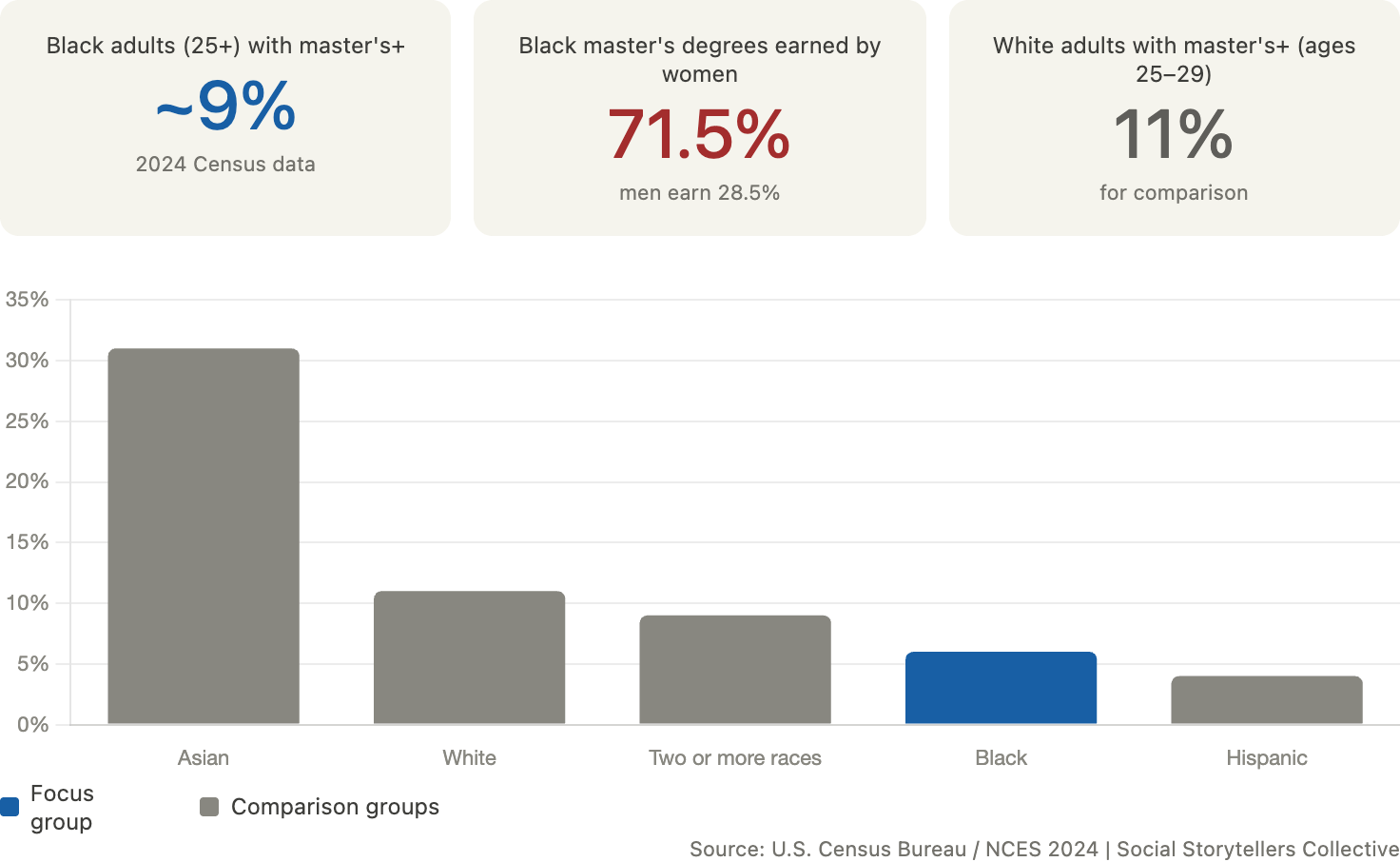
That translation — from data to visible proof — is where culture actually moves. Culture doesn’t respond to statistics alone. It responds to repetition, proximity, and the accumulation of recognition. As more posts appear, the perception of rarity begins to destabilize even if the underlying number hasn’t changed. The feed becomes a correction mechanism — allowing people to see, in aggregate, what has previously felt isolated or improbable. Visibility compounds. And with it, the sense that this achievement is not exceptional in the way it has been framed, but part of a broader pattern that has simply been under-distributed.
The original call to action didn’t ask Black men broadly to post their degrees. It explicitly centered Black queer men as part of the visibility push. That specificity is not incidental — it is the most structurally significant thing about the trend. Representation gaps are not evenly distributed, even within already marginalized groups. By naming a subset that is routinely rendered invisible in both cultural and academic spaces, the moment is redistributing attention internally while expanding the external narrative simultaneously. The goal is not just more volume. It is different visibility within that volume — which is a harder and more important thing to produce.
The response has not been uniformly celebratory, and that friction is part of the signal. As visibility increases, so does resistance — through dismissiveness, coded language, and direct pushback. That reaction is not separate from the trend. It is the system recalibrating in real time. When perception shifts quickly, it disrupts established narratives about who holds certain forms of capital and how they came to hold it. The friction that follows is a reflection of that disruption, not a negation of it. Pushback at this scale is confirmation that something is being destabilized.
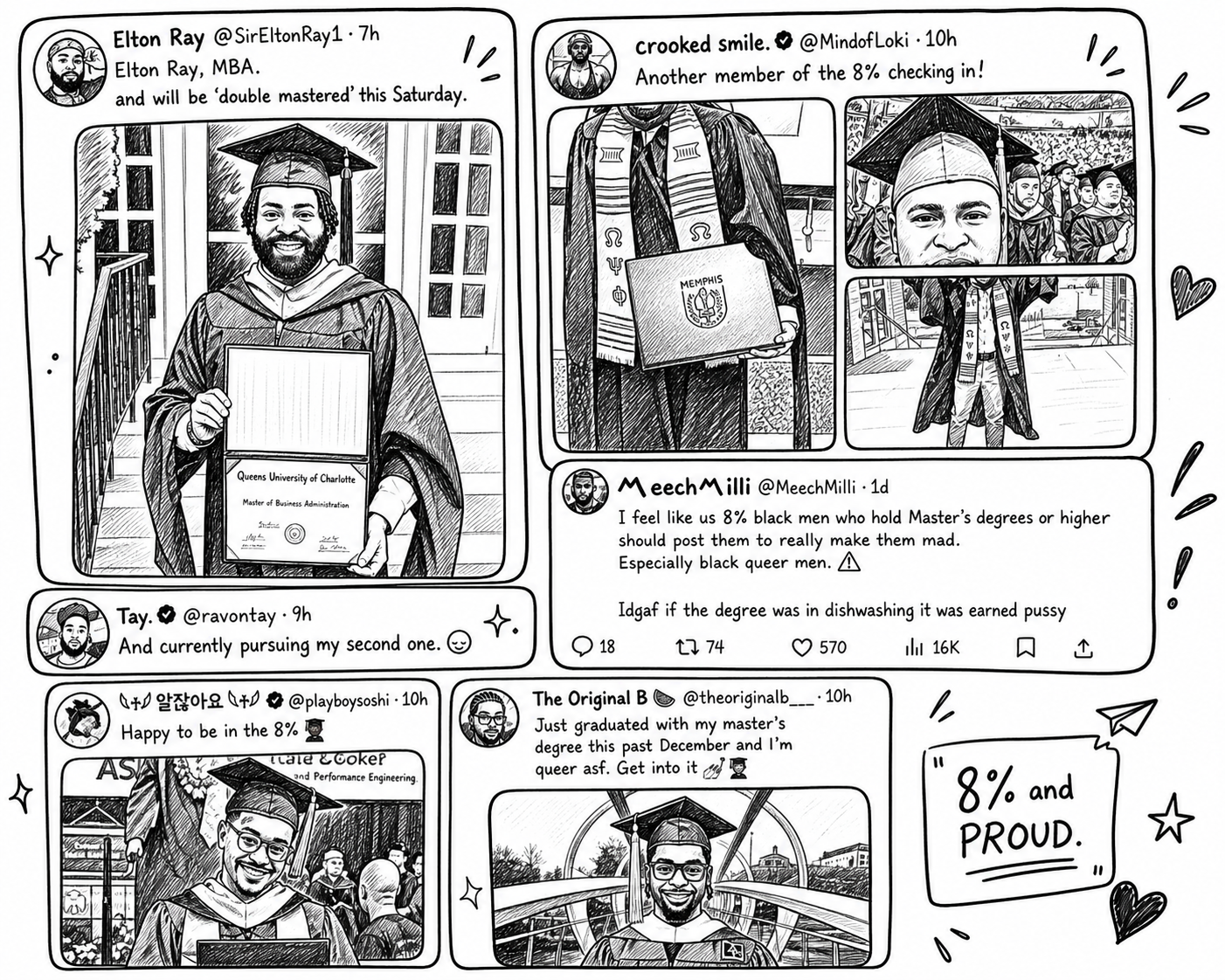
What is unfolding is not a moment of recognition. It is a demonstration of how quickly perception can be reshaped when visibility is coordinated — even informally, even without institutional backing. The barrier was never the absence of achievement. It was the absence of concentrated exposure. By turning individual milestones into a shared stream, the participants are collapsing that gap in a way that data alone has never managed. The platform becomes amplification infrastructure. The act of posting becomes narrative control.
The statistic hasn’t changed. The visibility has. And in culture, visibility is often what determines whether something feels rare — or simply unacknowledged until now.