
The United Kingdom’s 2% digital services tax has become the center of a renewed trade threat, with Donald Trump warning of potential tariffs if the policy is not repealed. The tax targets large technology companies generating revenue from UK users, including firms like Apple, Google, and Meta, and has been in place as part of broader efforts to capture value from digital economies operating across borders. What began as a tax policy is now being reframed as a trade dispute.
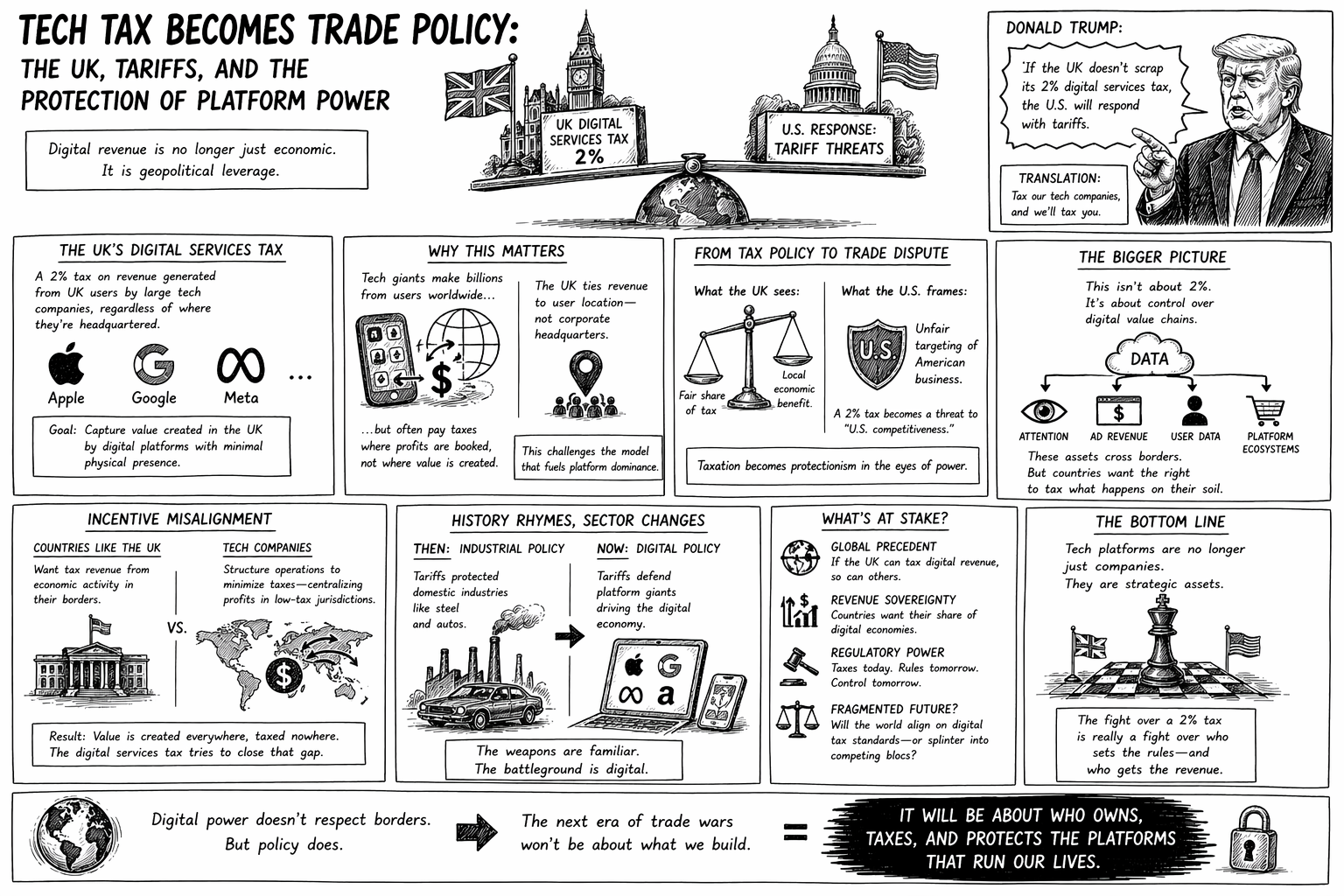
The timing reflects a larger shift in how governments are approaching digital revenue. As platform companies have scaled globally, they have often generated profits in markets where they have limited physical presence, allowing them to minimize tax obligations under traditional frameworks. The UK’s tax attempts to address that gap by tying revenue to user location rather than corporate headquarters. But that approach directly challenges the structure that has allowed U.S.-based tech companies to dominate globally while maintaining favorable tax positions.
The response from the United States signals that these companies are no longer treated as independent market actors. They are being positioned as extensions of national economic interest. A 2% tax might appear modest, but the precedent it sets is larger: if countries can tax digital activity locally, they gain leverage over how platform value is distributed. The tariff threat reframes the issue as protectionism, turning a question of taxation into one of competitive advantage.
This dynamic mirrors earlier conflicts over industrial policy, where tariffs were used to protect domestic manufacturing. The difference now is the sector. Instead of steel or automobiles, the contested resource is digital attention and data-driven revenue. Platform companies derive value from user engagement, advertising ecosystems, and data collection—assets that are not confined by geography but are increasingly being regulated as if they were. Governments are attempting to localize value that was designed to be global.
There is also an incentive misalignment embedded in the system. Countries like the UK seek to capture tax revenue from economic activity occurring within their borders, while companies structure operations to centralize profits in jurisdictions with lower tax burdens. The result is a persistent gap between where value is created and where it is taxed. Policies like the digital services tax attempt to close that gap, but they also trigger resistance from the countries where those companies are headquartered.
The escalation into tariff threats suggests that this is not a temporary dispute. It is part of a broader recalibration of how digital economies are governed. As more countries explore similar taxes or regulatory frameworks, the question becomes whether a global standard will emerge or whether digital policy will fragment along national lines. The stakes extend beyond revenue. They shape how platforms operate, where they invest, and how they distribute value across markets.
What this moment makes clear is that technology is no longer just an industry. It is infrastructure—economic, cultural, and political. The fight over a 2% tax is not about percentage points. It is about control over how digital value is recognized, taxed, and protected. And as governments increasingly treat platform companies as strategic assets, the boundary between market competition and national policy continues to blur.