The mainstream tariff story runs on a macro track — trade deficits, supply chain realignment, geopolitical leverage. What it consistently underreports is the micro-level distribution of who absorbs the cost when trade policy becomes unpredictable.
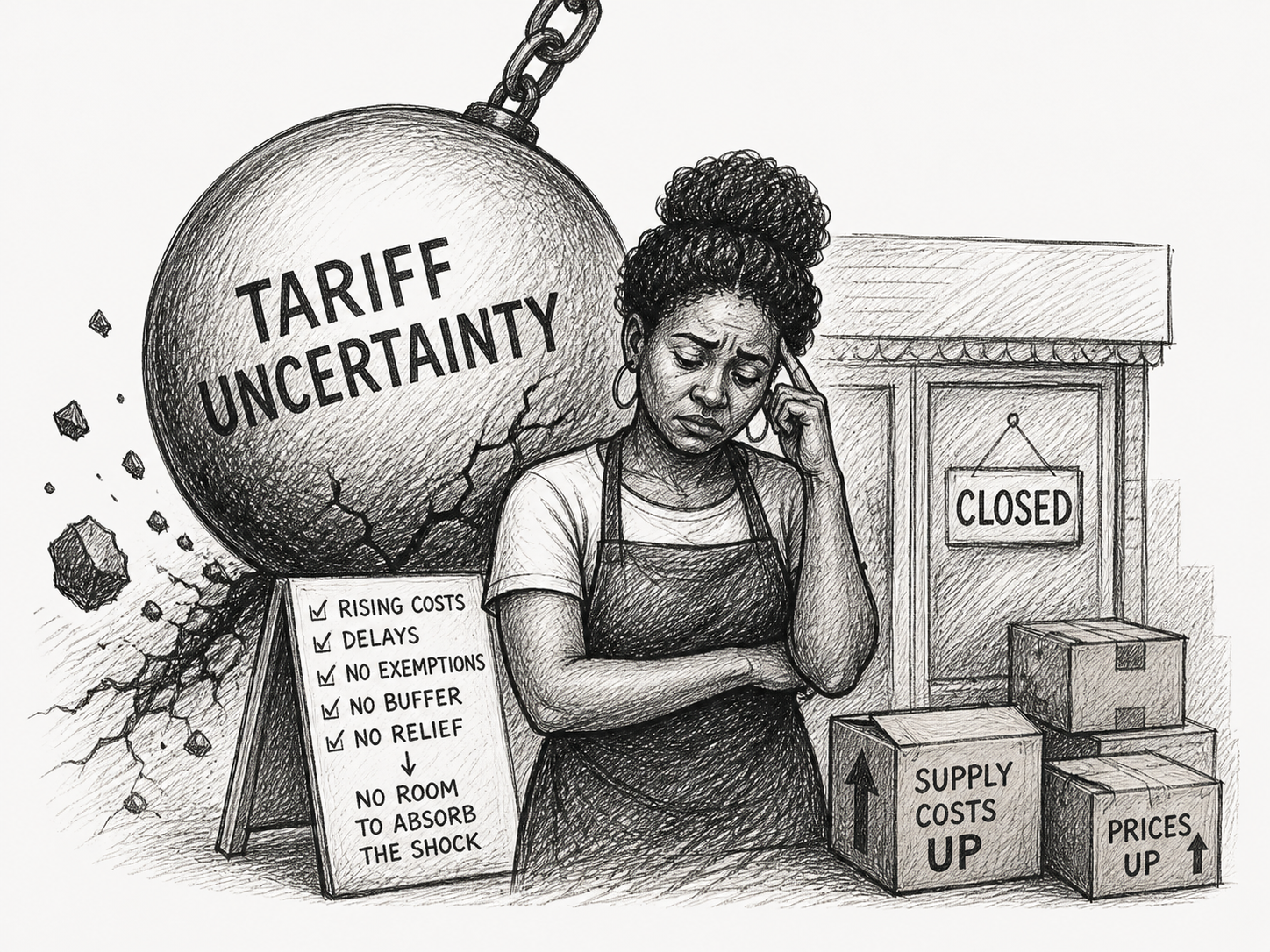
Small businesses with fewer than 20 employees have shed 62,000 jobs since January 2025. That size category includes most Black-owned firms. The reason the impact concentrates there isn’t incidental — it’s structural. Large corporations facing tariff exposure can retain legal teams to apply for exemptions, lobbyists to negotiate carve-outs, and financial reserves to absorb short-term cost increases while waiting for policy to stabilize. Small businesses, and particularly Black-owned small businesses that have historically operated with thinner capital buffers and less access to institutional credit, have none of those options. They absorb the full cost in real time with no mechanism for relief.
Supply chain managers across industries report that 65 percent have seen cost increases of at least 10 to 15 percent, with the share of firms reporting layoffs doubling in a single survey cycle from 16 to 32 percent. The uncertainty itself is a cost — businesses can’t price products, plan inventory, or make hiring decisions when tariff rates change week to week. That planning paralysis hits hardest where financial margins are thinnest.
For Black-owned firms, this compounds an existing vulnerability. Black unemployment has reached 7.5 percent — nearly double the national average — in part because Black workers are overrepresented in the small business and manufacturing sectors most directly hit by tariff policy. The businesses that employ them and the workers they employ are being squeezed from the same direction simultaneously.
The $175 billion in tariff collections now subject to potential legal refund represents a policy opportunity that hasn’t been taken. Prioritizing refunds to small businesses would begin to address the asymmetry. The administration has shown no indication it intends to do that.