
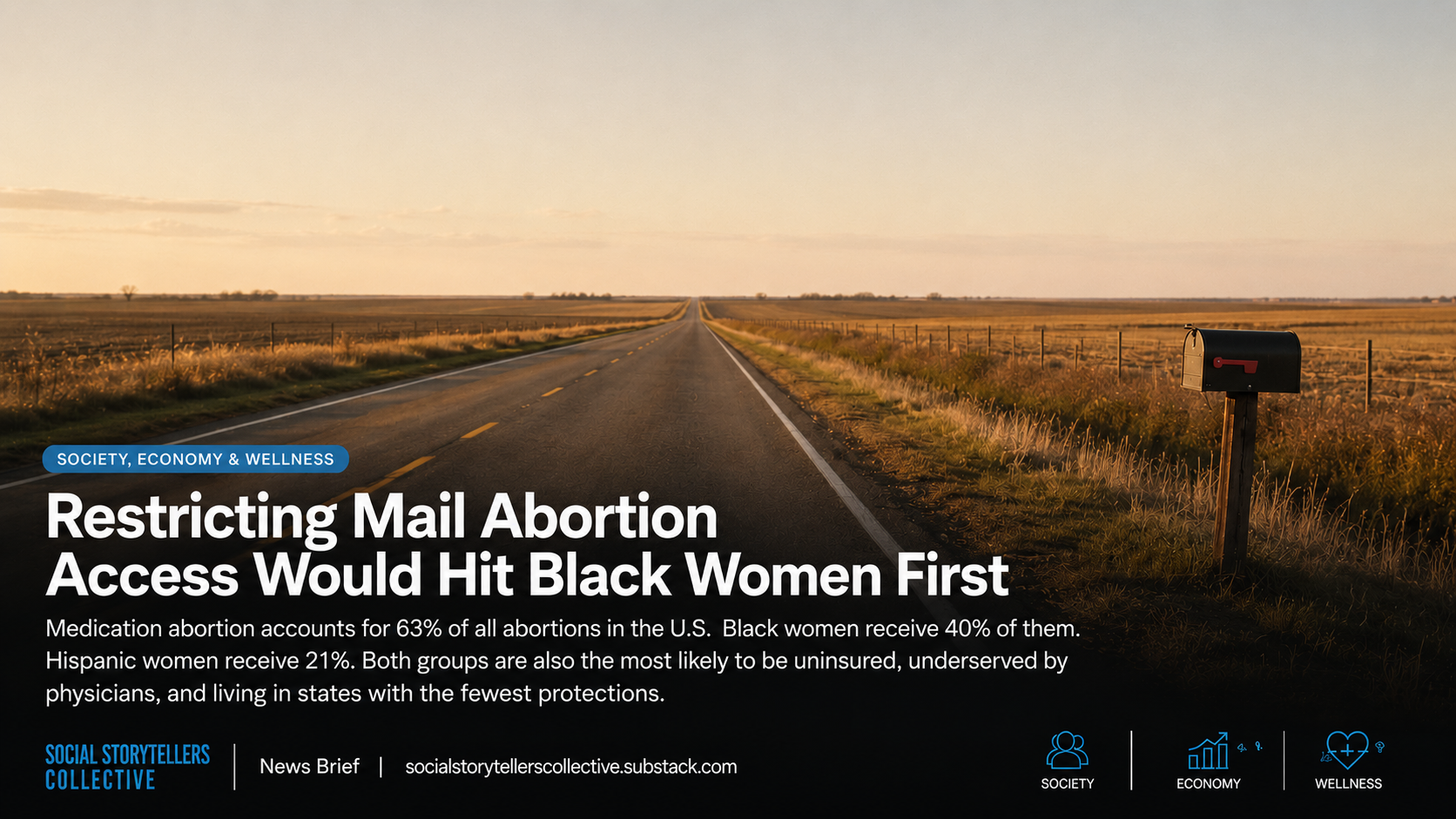
Both groups are also the most likely to be uninsured, underserved by physicians, and living in states with the fewest protections. The math is not complicated.
Medication abortions now account for 63% of all abortions in the United States, according to 2023 Guttmacher Institute data. Mifepristone — typically taken in combination with misoprostol — can be prescribed through a telehealth clinic and delivered by mail or picked up at a pharmacy. Five years ago, the Food and Drug Administrationremoved in-person dispensing requirements, making mail access the primary pathway for millions of women, particularly those in states with limited clinic infrastructure and those who cannot take time off work to travel.
Louisiana filed a lawsuit in the 5th Circuit seeking to end that access. On May 14, the Supreme Court ruled in Louisiana v. FDA — provisionally allowing telehealth mifepristone to continue, but leaving the legal question unsettled in ways that advocates say leave the door open for future restrictions. The court’s ruling is narrow. The fight is not over. And the stakes of who loses access if that fight goes the wrong way are not distributed equally.
2022 CDC abortion surveillance data shows Black women receive 40% of abortions in the United States. Hispanic women receive 21%. Together, those two groups account for 61% of all abortions — while representing a smaller share of the overall population. Those numbers exist alongside a separate set of numbers that make the mail access question a healthcare equity crisis rather than just a policy dispute.
Nationwide uninsured rates in 2024 were higher for Indigenous women at 21.6%, Latinas at 19.8%, and Black womenat 10.3%, according to data from the National Women’s Law Center. If a mail ban were upheld and women were required to see a physician in a clinic to access mifepristone, the burden would fall hardest on exactly the women least positioned to navigate that requirement — those without insurance, those in physician-shortage areas, those in the 13 states that have enacted whole or partial abortion bans where clinic infrastructure is the most depleted, and those whose jobs, childcare responsibilities, and economic circumstances make an in-person clinic visit not a logistical inconvenience but a genuine impossibility.
The geographic layer compounds the demographic one. Black women are disproportionately concentrated in Southern states — precisely the states most likely to have enacted abortion bans and most likely to have the fewest physicians per capita. Texas, Louisiana, Mississippi, Georgia, Alabama, Tennessee — the states where Black women make up the largest share of the reproductive-age population are the states where the legal protections are the weakest and the healthcare infrastructure is the thinnest. Mail access was not a convenience for these women. It was the infrastructure. Ending it does not redirect them to a clinic. It removes their access entirely.
Planned Parenthood and reproductive health organizations that currently offer medication abortions through telehealth have said clearly that a mail ban would not be offset by increased clinic capacity — the clinics do not exist at the scale that would be required, and in states with bans, they cannot legally operate regardless. The American Prospect’sreporting on the May 14 ruling makes the structural point plainly: Black women in the South disproportionately rely on telehealth precisely because the alternative — in-person care in states that have systematically defunded and banned reproductive healthcare — is not available to them.
The Sohrabji piece, published through American Community Media and distributed across ethnic media outlets including CaloNews, is doing the work that national coverage of the Supreme Court mifepristone case largely skips. The legal argument gets the headline. The demographic impact — who specifically loses access, what they lose, and why the mail pathway was their primary option in the first place — gets buried in paragraph twelve, if it appears at all. What Sohrabji makes visible is that the women at the center of this policy debate are the same women at the center of almost every healthcare access debate in this country: Black and Hispanic women who are uninsured, underserved, and living in the states with the fewest protections and the most restrictions. It is the same structural pattern visible in global HIV treatment after the aid cuts — the headline number holds while the infrastructure sustaining access quietly shifts onto the individuals least equipped to carry it.
The Supreme Court has provisionally allowed mail access to continue. The legal fight is not settled. And every round of it that moves toward restriction moves first and hardest against the women who were already carrying the most.