
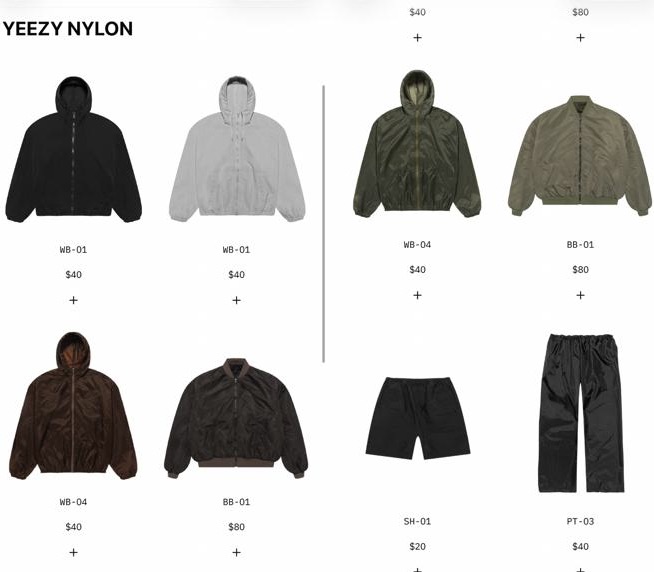
There was a time when buying Yeezy meant buying into scarcity. Limited drops, high price points, and long waits made the value of the product about more than just what you were wearing—it was about access. Ownership signaled proximity to something exclusive, something not easily obtained. That was the model, and for a long time, it worked.
This latest Yeezy nylon drop feels different. The product still looks strong and the design language remains consistent, but the pricing has shifted in a way that’s hard to ignore. It’s lower, more accessible, and—whether intentional or not—more inviting. I found myself spending $300 not because I had planned to, but because the price point made the decision easier than it would have been in previous cycles. That shift in behavior is the signal.
This isn’t just a pricing change—it’s a strategy change. Historically, Kanye West built Yeezy on exclusivity. Scarcity created demand, high prices reinforced status, and controlled drops made ownership feel like entry into a limited space. This release moves in the opposite direction. Lower prices reduce friction, wider access increases volume, and the emphasis shifts from who can get it to how many people will.
As explored in Yeezy Blue and the Discipline of Price, pricing has always been one of Yeezy’s most disciplined tools. What’s changed is not the importance of price, but its function—from controlling access to accelerating it.
That shift also sits inside a more complicated reality. I don’t align with his politics, including the antisemitic rhetoric that has rightfully drawn widespread criticism. That tension doesn’t disappear at checkout. It’s part of the decision. And yet, the purchase still happens. The clothing looks good. The price makes sense. The calculation changes.
That contradiction isn’t unique to this moment—it reflects a broader pattern in how people engage with systems they don’t fully agree with. As we explored in We Know What Elon Is Doing. We’re Still Logging On., behavior doesn’t always follow belief. The decision to stay—or in this case, to buy—isn’t always about agreement. It’s about infrastructure, identity, and the cost of opting out of something that still holds value.
There’s also a structural shift happening underneath this. Selling directly through his own platform allows for full control over pricing, distribution, and margin. There are no retail intermediaries and no dilution of ownership. That matters because it allows the brand to adjust its strategy in real time without negotiating with external partners. What we’re seeing isn’t just a creative decision—it’s a business model in motion.
Even the fine print reflects that shift. The “all sales are final” policy reframes the transaction—lower prices open the door, but they also transfer more responsibility to the buyer. The tradeoff becomes clear: increased access on the front end, reduced protection on the back end. It’s a model built for speed, efficiency, and volume, not for flexibility. That same model extends to fulfillment. After placing the order, I received a notice that shipping could take four to six weeks—another signal that the system prioritizes production flow and cost control over immediacy.
What’s emerging around that system is just as telling. Online, customers are documenting wait times stretching months, orders that stall without updates, and in some cases, products that never arrive at all. The speculation is that this resembles a dropshipping model, where production and fulfillment sit outside the brand’s direct control. There’s no clear evidence that this is how Yeezy is structured. But the perception exists for a reason. When timelines are unclear, communication is limited, and delivery becomes inconsistent, the experience starts to mirror that model regardless of what’s happening behind the scenes.
More likely, this is a scaled pre-order system operating without scaled infrastructure. Demand is captured instantly, production follows, and fulfillment lags behind volume. It allows the brand to move quickly and maintain cost discipline, but it also shifts risk onto the consumer. The result is a system that expands access while weakening reliability—where the barrier to entry is lower, but the certainty of the outcome is less defined.
The question now is what Yeezy becomes from here. Exclusivity builds mystique, while accessibility builds scale, and those two things don’t always coexist easily. If this direction holds, Yeezy may be moving away from being a signal of status and toward something more widespread—less about who gets in, and more about how far it can reach.
I will follow up in a few weeks or months if my clothing arrives to share more.
Why This Matters
Pricing isn’t just about cost—it’s about positioning. When a brand lowers its price point, it isn’t simply making products more affordable. It’s redefining who the product is for and what the relationship between brand and consumer looks like.
In this case, that relationship is shifting toward more access, less buffer, faster decisions, and tighter margins. And just as importantly, it reveals something about behavior: people don’t always disengage from systems they disagree with. Sometimes they adapt to them, navigate around them, and continue participating anyway.
And when that happens, the system holds.