
Part of Culture in Motion — examining who defines culture, how it moves, and what it reveals about the moment.
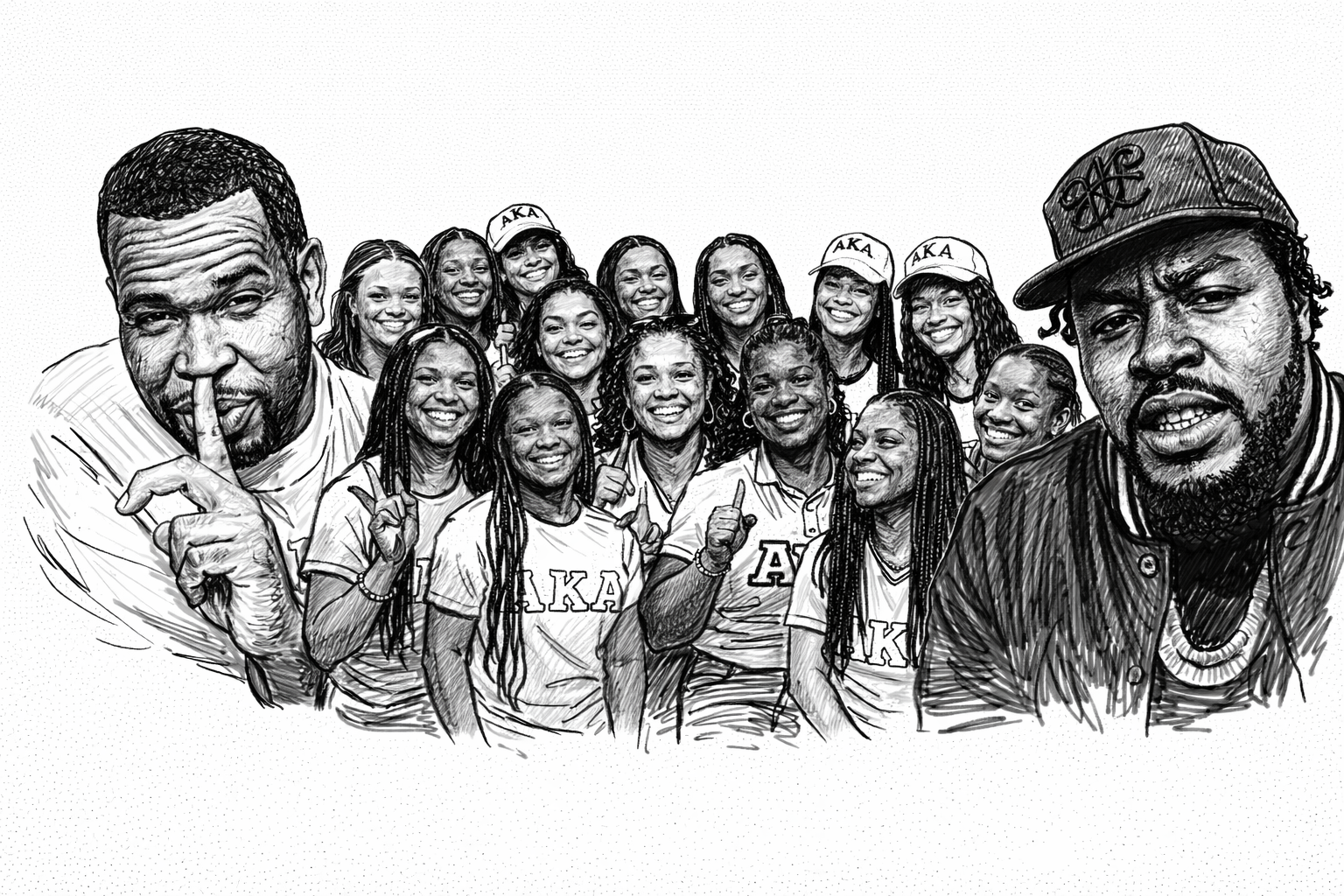
We covered this when it happened. A performance at the South Atlantic Regional Conference of Alpha Kappa Alpha Sorority, Inc. ended mid-set after attendees walked out and sorority leadership shut the show down. The artist was Trick Daddy. South Atlantic Regional Director Tiffany Moore Russell confirmed that expectations around language, attire, and song selection had been clearly outlined in the contract in advance. Those expectations were not met. The decision to end the performance was framed not as a reaction to taste, but as a response to what leadership described as disrespect for the organization and its brand.
What that incident established — and what we argued at the time — is that the failure happened upstream of the performance, in the space between the contract and the room. Contracts can outline boundaries. They cannot guarantee that an artist has internalized the difference between compliance and respect. Compliance is performing the agreed-upon set. Respect is understanding why the room you are in requires something different from the rooms you usually play. When that distinction disappears on stage, the gap becomes visible to everyone present, and the response to it becomes part of the permanent record of how the event is remembered.
That context is what makes the Uncle Luke moment worth examining carefully.
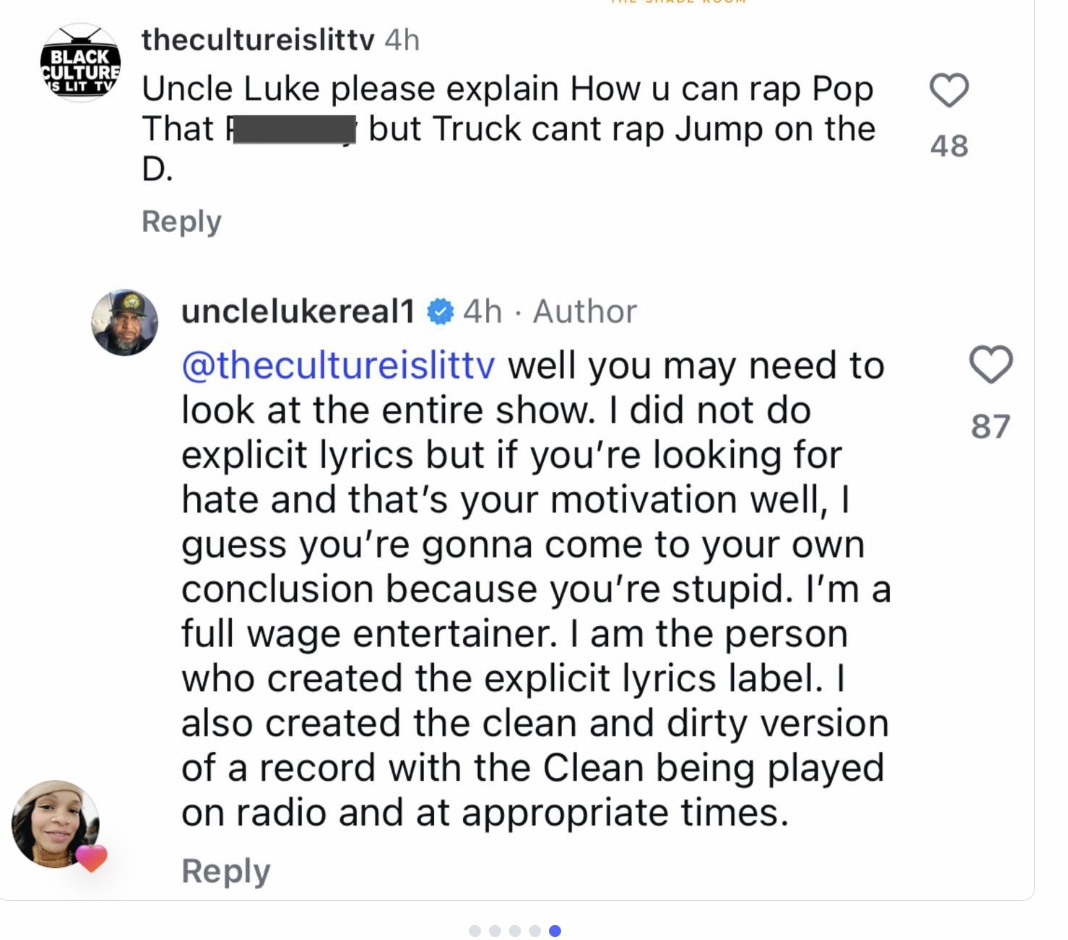
Luke recently performed at an AKA regional conference in Florida to a notably positive response. No public distancing. No backlash. No need for clarification after the fact. By available accounts, he kept the performance clean, acknowledged the room he was in, and positioned himself in alignment with the women in front of him. The contrast with the Trick Daddy situation is not subtle or coincidental. It is the point.
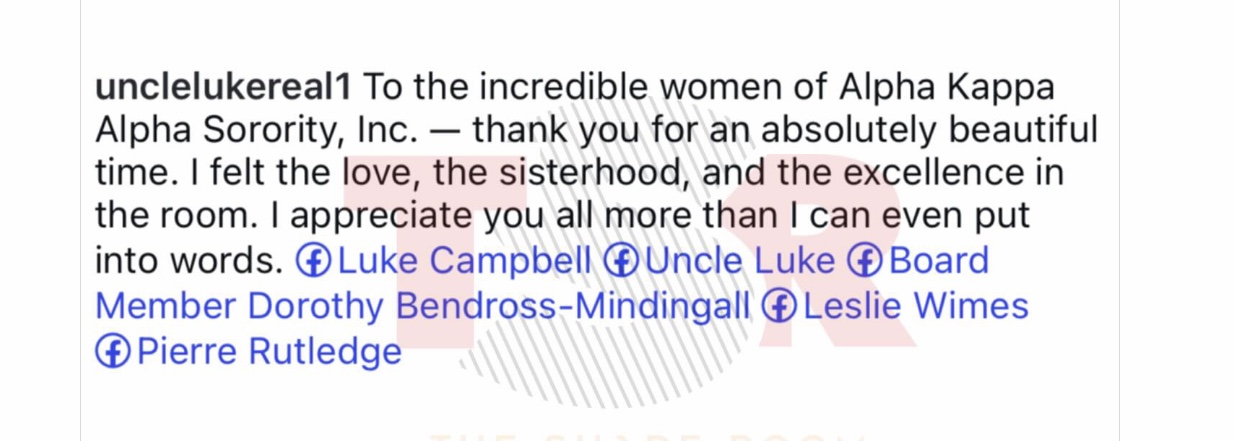
Because what is being measured in both cases is not catalog. It is not legacy or cultural credibility or the sum total of an artist’s career. It is situational awareness — the capacity to read a room, honor its terms, and make the adjustment that demonstrates respect rather than simply presence. Uncle Luke built his career on music that, by the standards of many of the women in that conference room, would not pass their internal filter on any ordinary day. 2 Live Crew was not exactly aligned with the values of a historically Black sorority founded in 1908 on principles of scholarship, service, and sisterhood. That history did not disqualify him from the room. How he showed up in it did the opposite.
This dynamic connects directly to what SSC has been tracking across multiple beats. As the predatory music industry contracting piece documented, and as the Jay-Z GQ interview analysis made clear, the entertainment industry’s relationship to Black cultural spaces has always involved a negotiation over terms — who sets them, who enforces them, and who absorbs the cost when they break down. The Ari Lennox and Jill Scott analysis raised the question of what Black artists owe the rooms they enter when industry pressure pushes them toward performance over alignment. The Uncle Luke and Trick Daddy situations are the inverse of that question: what Black institutions owe their members when a booking communicates the wrong thing — and how they enforce that standard when the communication breaks down on stage. Booking decisions are editorial decisions. They signal something about who an organization believes its members are and what they deserve to experience in a space built in their name.
This is also a story about what Black institutions are regularly asked to absorb — and what it looks like when they refuse to absorb it. Alpha Kappa Alpha Sorority, Inc. is one of the oldest and most prominent Black Greek-letter organizations in the country. Its events are not general audience gatherings. They are institutional expressions of a legacy that predates most of the entertainment industry’s current roster. A Step and Stroll competition is a ceremony, and ceremonies have standards that exist independent of what any individual performer considers acceptable elsewhere. When the Trick Daddy performance was shut down, the walkouts were not simply an audience reaction. They were a form of institutional self-defense — the organization declining to manage a public moment it did not create and did not choose.
What Uncle Luke understood, or at minimum demonstrated, is that the terms of those spaces are not negotiable from the artist’s side. Entry requires more than an invitation. It requires a visible acknowledgment that the room has its own authority and that your history, whatever it is, does not exempt you from its expectations. That acknowledgment, extended genuinely through the choices made on stage, is what separates participation from disregard.
The deeper question this moment raises is not really about either artist. It is about how Black institutions maintain coherence and protect their members across generations and cultural shifts — and how they exercise the curatorial authority that remains one of the few forms of institutional power Black women have held and protected consistently across more than a century of American life. The room does not change for the artist. The artist, if they want to be in it, changes for the room. And the organization reserves the right — always has — to decide whether the change that was made was enough.