
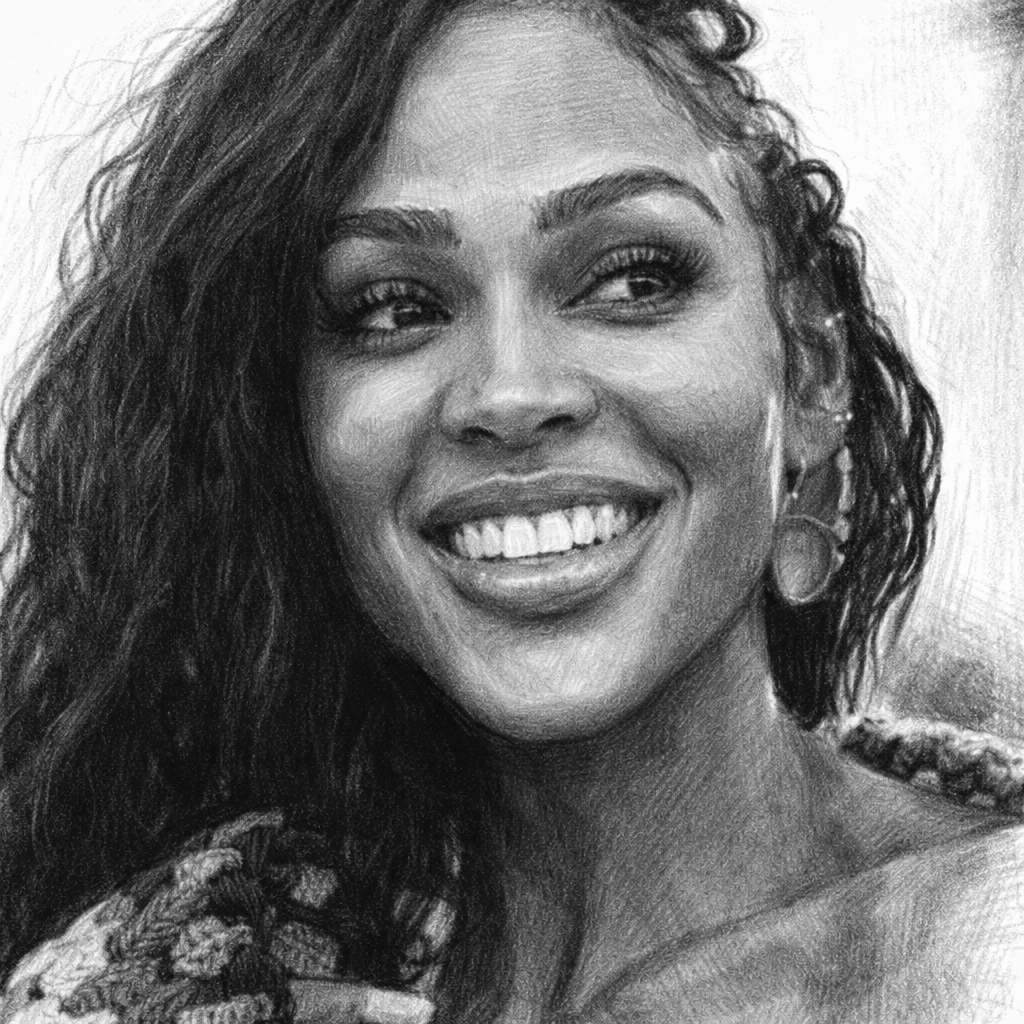
When Meagan Good addressed speculation about her skin on The Breakfast Club, she wasn’t just correcting a rumor. She was pushing back against a process — the way a visual change becomes an explanation, and the explanation becomes fact, before the person at the center of it has had a chance to say anything at all.
Good made clear that what people interpreted as skin bleaching was not a choice she made. The reaction, she said, wasn’t just frustrating. It was painful — not because of the headlines, but because of what they implied: that her appearance reflected a rejection of self. That implication carries specific weight inside Black communities, where skin tone has long been tied to identity, belonging, and perception.
She also pointed to something broader. Beyond herself, she expressed concern about what young girls would take from the conversation — what it means when appearance is quickly reframed as evidence of self-rejection. The issue wasn’t just misinterpretation. It was what that misinterpretation teaches.
What unfolded was a familiar sequence. A visual shift is noticed. The internet fills in the explanation. Once that explanation gains traction, it becomes harder to dislodge than the truth. The speed of the reaction outpaces the context needed to understand it, and in that gap, speculation hardens into narrative.
Skin lightening is not a neutral topic. It sits inside a long history shaped by colorism, colonial beauty standards, and economic systems built around appearance. Because of that history, the accusation alone carries cultural meaning — regardless of whether it’s accurate. People aren’t just reacting to what they see. They’re reacting to what it has meant, historically, for someone who looks like her to look that way.
That history is real and worth holding. But representation without precision creates its own damage. Medical conditions, lighting, styling, aging, digital editing — all of it gets collapsed into a single explanation when the cultural lens is the only one in use. And when that happens, the person at the center stops being a subject and becomes a symbol. The narrative is no longer about her. It’s about what the audience needed her to represent.
This is the tension visibility creates. In a culture where appearance is constantly observed and instantly distributed, interpretation has become a reflex. The question is no longer whether perception shapes reality — it does. The question is whether accuracy still has a role in that process, or whether the story is already written by the time the subject opens her mouth.
Meagan Good opened hers. What remains unclear is whether the correction can move as far, or as fast, as the assumption did.