
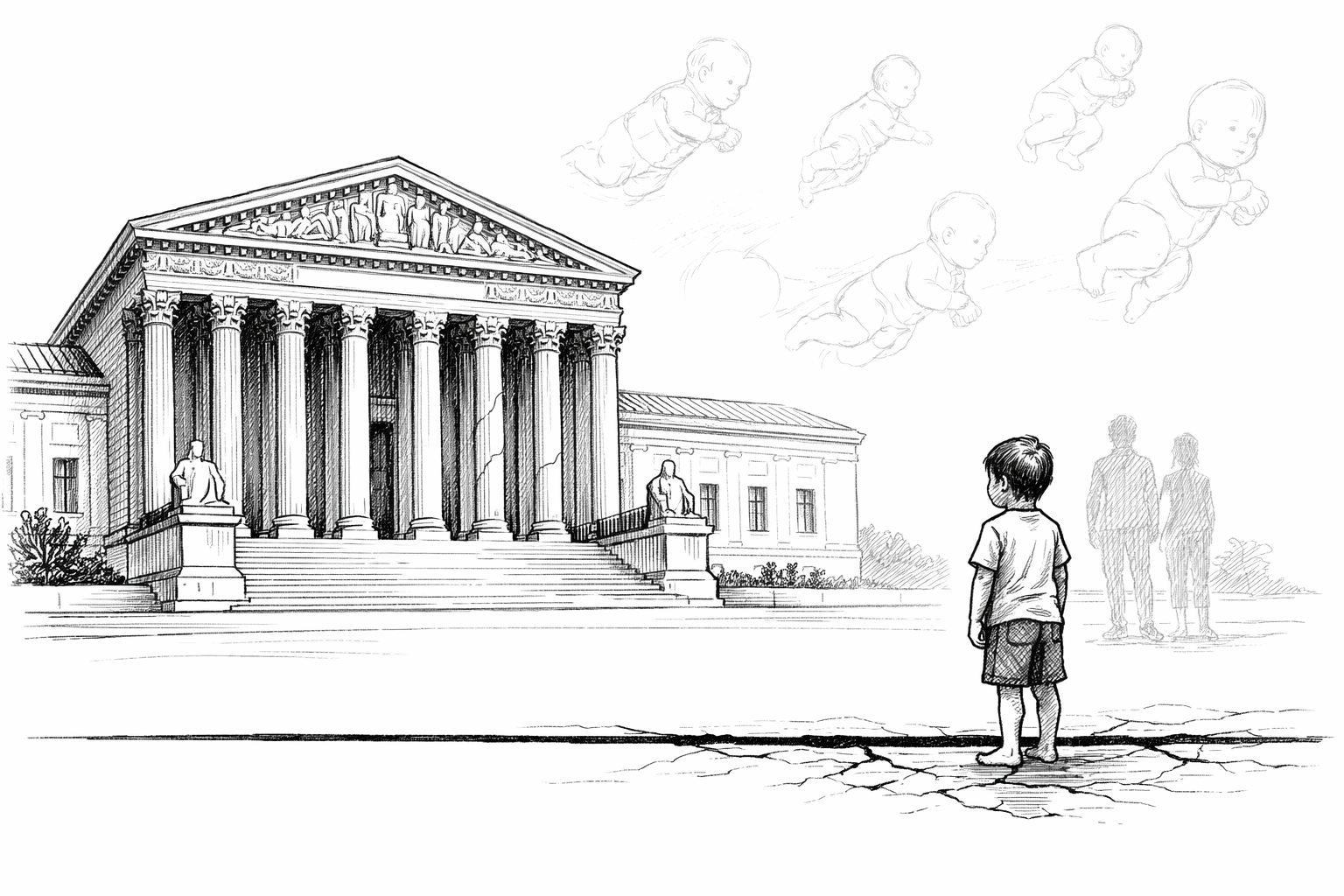
Donald Trump made a historic appearance at the U.S. Supreme Court as justices heard arguments on his administration’s effort to restrict birthright citizenship—an issue that could redefine how citizenship is understood in America.
The case centers on an executive order that seeks to deny automatic citizenship to children born in the U.S. if their parents are not citizens or legal permanent residents. Lower courts have already blocked the policy, citing conflicts with the 14th Amendment, which has long been interpreted to guarantee citizenship to nearly anyone born on U.S. soil.
Trump’s decision to attend the hearing—an unprecedented move for a sitting president—underscores the significance of the case, both legally and politically. At stake is more than a policy shift. A ruling in favor of the administration could affect hundreds of thousands of children born in the U.S. each year and challenge over a century of constitutional precedent.
This moment builds on what we explored in The Supreme Court Hears Arguments on Birthright Citizenship. The case is not simply about immigration policy—it is about definition. Who qualifies as American, and who has the authority to decide. What has long been treated as settled law is now being actively reconsidered in real time, moving citizenship from a constitutional guarantee toward something that could be more conditional.
That shift matters because citizenship has historically functioned as infrastructure. It determines access—to education, healthcare, legal protection, and economic participation. When that foundation becomes unstable, the effects extend far beyond immigration. It reshapes how belonging itself is defined.
Why This Matters
Birthright citizenship has long been treated as a fixed principle of American identity. This case reopens that foundation. The question is no longer just how citizenship is granted—it is whether it remains a right, or becomes something more selectively applied. And that distinction will determine who is recognized as part of the country moving forward.