
NEWS DESK | SOCIAL STORYTELLERS COLLECTIVE
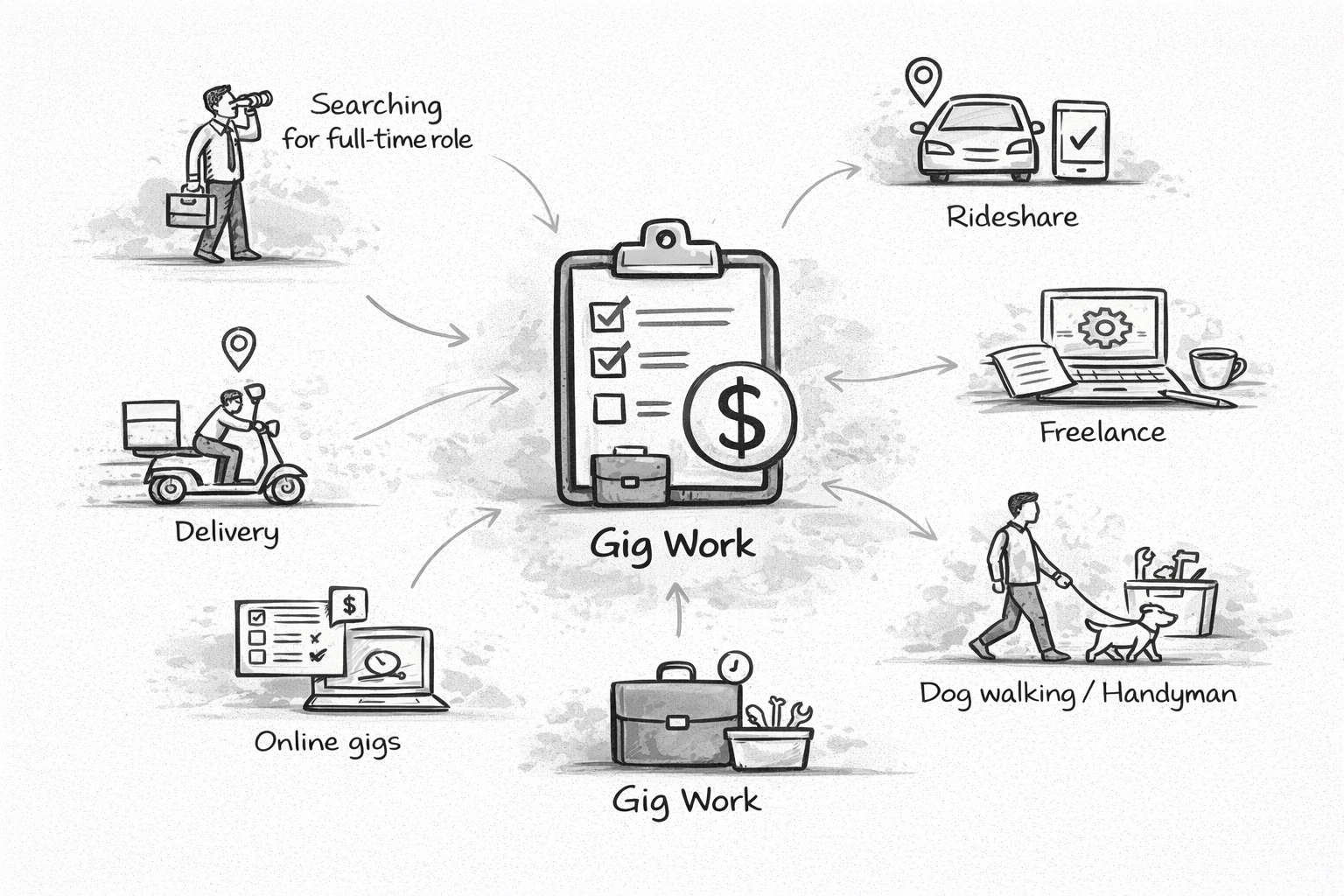
For many workers today, employment no longer moves in a straight line. Instead of transitioning seamlessly from one long-term job to another, more people are navigating the space in between — taking on short-term work, contract assignments, or freelance opportunities while searching for their next full-time role. These temporary positions, often referred to as bridge work, are becoming an increasingly common feature of the modern labor market.
Part of this shift reflects how quickly industries are evolving. Companies are hiring more cautiously, technology is reshaping certain roles, and economic uncertainty has encouraged organizations to rely more heavily on contract labor and project-based work. According to Pew Research Center, roughly 16 percent of Americans have earned money through an online gig platform — whether through driving services, freelance marketplaces, delivery apps, or digital consulting work.
While gig work is sometimes viewed as a side hustle, many professionals are using it strategically. Bridge roles can help workers maintain income, expand their networks, and gain new experience while continuing to search for more permanent opportunities. Armond, who supplements his income by delivering takeout orders during peak evening hours, says the flexibility helps him manage the uncertainty of a job search. “I feel more comfortable delivering food than driving people around on tight deadlines to the airport,” he explained. “It’s easier on my nervous system, especially during inclement weather. But I have to work a lot harder to meet my weekly goal.” In addition to food delivery, Armond picks up work dog walking and taking on small handyman jobs when opportunities arise. Between those three income streams, he says he is able to sustain himself while continuing to interview. “This closes the gap to keep me housed while I interview for more lucrative roles in my field of study.”
In many ways, the gig economy reflects a broader transformation in how people think about work itself. Rather than defining success through a single long-term job, more professionals are piecing together careers that include periods of stability, reinvention, and transition. Bridge roles may not always be part of the long-term plan — but for many workers, they have become an essential way to stay financially afloat while navigating a changing economy.
As careers become less linear, bridge work may be less a temporary solution and more a permanent feature of how people build their professional lives — one gap at a time.