
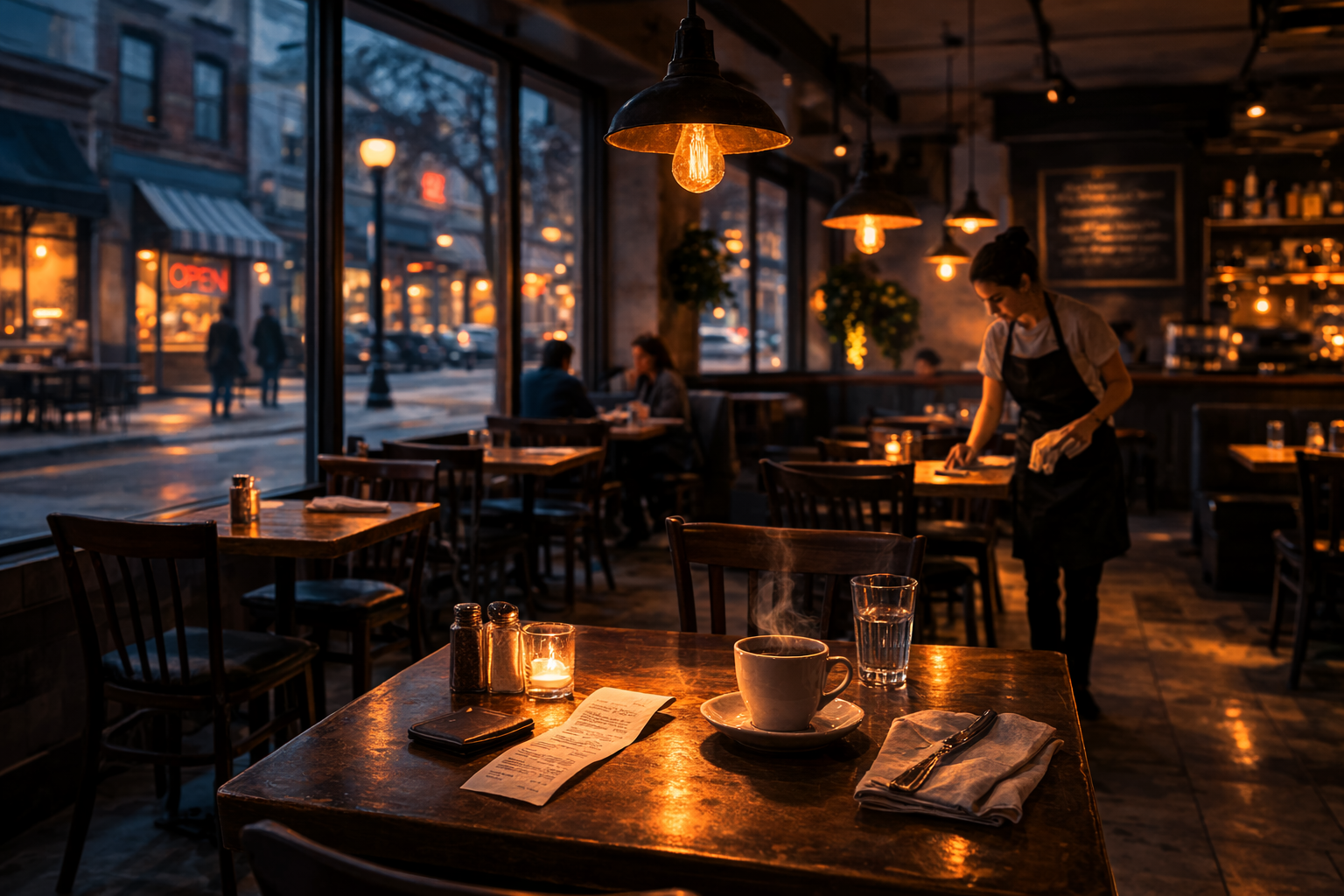
Small changes in everyday spending and behavior often signal economic anxiety long before official indicators confirm a slowdown.
Economic downturns rarely arrive with a dramatic announcement. Long before economists confirm that growth has slowed or unemployment has risen, people often sense that something has shifted. The first signals are subtle — a favorite restaurant feels quieter on a Friday night, friends who once talked about travel plans mention needing to tighten things up for a while, and conversations at work drift from career growth toward job stability. Even casual spending decisions — subscriptions, dinners out, impulse purchases — start to feel more deliberate.
These behavioral shifts often reflect something deeper than the headlines. They reveal how ordinary people interpret economic uncertainty in real time, often before the data catches up.
The current moment offers a clear illustration. The University of Michigan Consumer Sentiment Index fell to 55.5 in March 2026, its lowest reading in three months, as households reacted to the military conflict involving the U.S. and Iran. Interviews completed prior to the military action showed an improvement in sentiment, but lower readings in the nine days that followed completely erased those gains. The labor market has added to the unease — employers shed 92,000 jobs in February as the unemployment rate rose to 4.4 percent, while consumer spending held at just 0.4 percent growth in January.
The anxiety is not evenly distributed. One in four consumers report feeling worse off than they did one month ago, with rising expenses — particularly groceries, housing, and transportation — weighing most heavily on household budgets. More than 45 percent of high-income households feel better about the economy compared to a year ago, while only 22 percent of low-income households said the same. The result is a mood that varies sharply depending on where a household sits financially — cautious restraint in some corners, continued confidence in others.
That divergence shows up in behavior. Families postpone major purchases. Workers become more protective of their current roles. Discretionary categories — restaurants, entertainment, travel, and apparel — are seeing broad pullbacks as consumers seek faster ways to reduce spending, while everyday low-price and budget retailers have attracted disproportionate traffic gains. None of these decisions alone defines a recession, but together they begin to shape the mood of an economy.
Economists measure confidence through surveys and spending patterns, but households tend to recognize economic shifts through lived experience — rising grocery bills, higher gas prices, or whispers of layoffs can quickly influence how people think about their financial future. Cultural signals often appear before official indicators confirm the shift. In many ways, economic anxiety behaves like weather. You can feel the pressure in the air before the storm arrives.