
There was a time when a morning routine was just a morning routine.
You woke up, made coffee, maybe went for a walk. The sequence belonged to you — unobserved, unoptimized, unmonetized. That version of a routine still exists. But it increasingly shares the cultural space with something different: the routine as content, the life as a feed, the self as a brand.
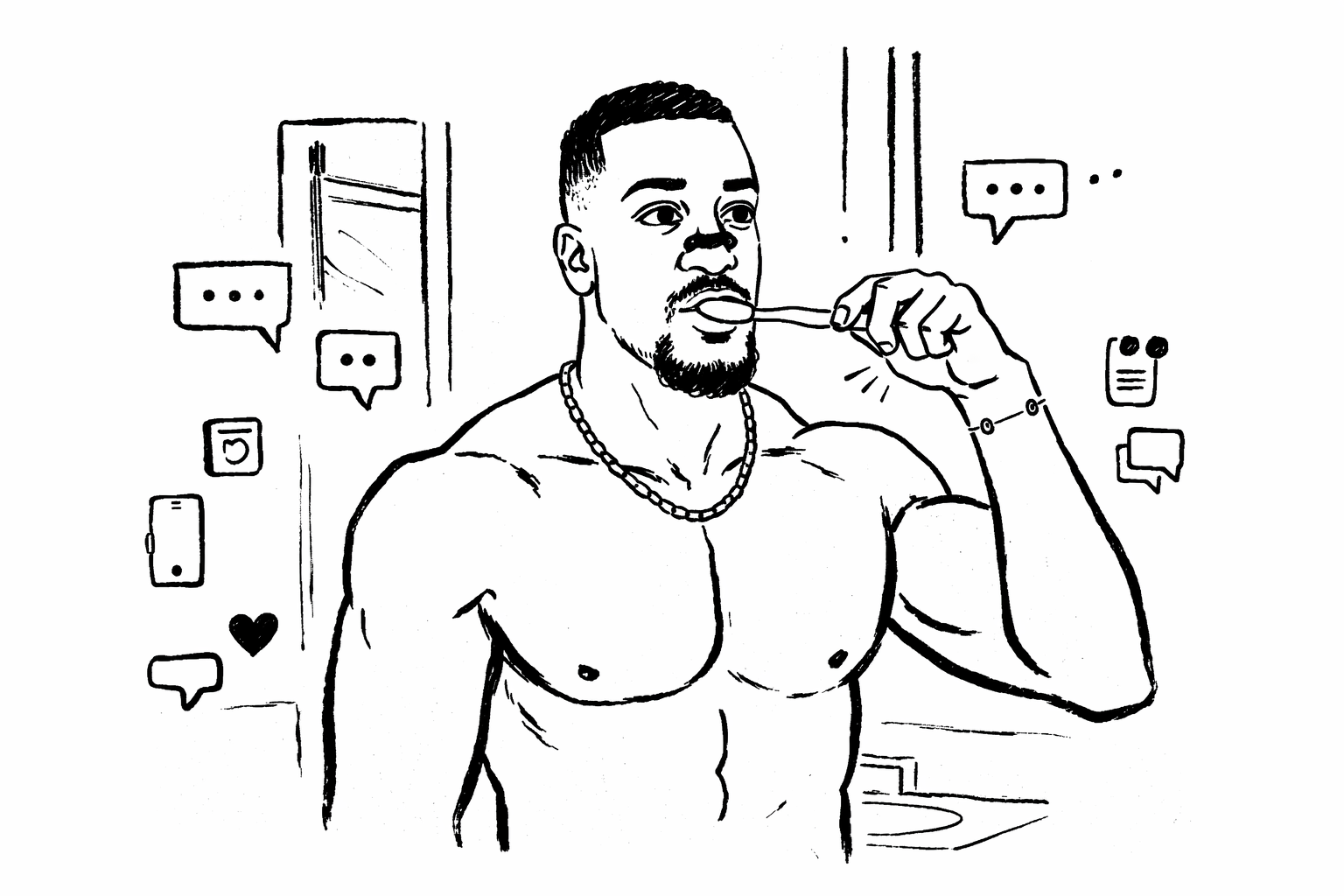
The conversation around Ashton Hall made this visible at scale. His highly curated morning routine — precision-timed, aesthetically immaculate, framed around discipline and performance — became one of the more discussed pieces of lifestyle content in recent memory. Reactions split along a familiar fault line: inspiration on one side, skepticism on the other. But the debate wasn’t really about him. It was about a question his content made impossible to ignore — at what point does a practice become a performance?
The brand effects answered part of that question. When one of his videos showed him submerging his face in a bottle of Saratoga Spring Water packed with ice, Google searches for the brand spiked over 1,000 percent. Sales moved. Social following grew. Investor interest in the parent company registered the shift. A morning ritual had, in real time, become a market event.
Platforms like TikTok have built the architecture for exactly this. “Day in the life” videos follow a recognizable grammar — wake up, optimize, execute, reflect — edited for pace, scored for mood, calibrated for share-ability. The form is compelling precisely because it feels personal. But the more a routine is shaped by what performs well, the more distance opens between what is lived and what is shown.
For creators, this is not a philosophical tension — it is an economic reality. Social Blade estimates suggest high-performing creators in this space can generate tens of thousands of dollars monthly from ad revenue alone, before accounting for brand deals, affiliate links, digital products, and subscriptions. Luxury becomes part of the signal. When audiences see creators like AllyiahsFace in a Bentley or Gina Jyneen in a Maybach, those details are not incidental. They are part of the content — proof that visibility translates into something real.
And audiences are not simply watching. Psychologists describe parasocial relationships — the sense of familiarity and trust that builds between followers and creators they have never met — as a central mechanism of lifestyle influence. A repeated routine builds credibility. A visually compelling one builds desire. A personal-feeling one builds loyalty. Together, they create a feedback loop where viewers are buying, replicating, and internalizing what they see, often without fully recognizing the economic architecture underneath it.
What has shifted is not authenticity, exactly — it is the awareness that accompanies everything now. Routines still exist. Personal growth still matters. But increasingly, both are shaped by a secondary question that did not used to be part of the morning: how does this look?
The goal is no longer just to live well. It is to be seen living well — in a way that travels across screens, earns engagement, and, for those who’ve mastered the form, pays.