
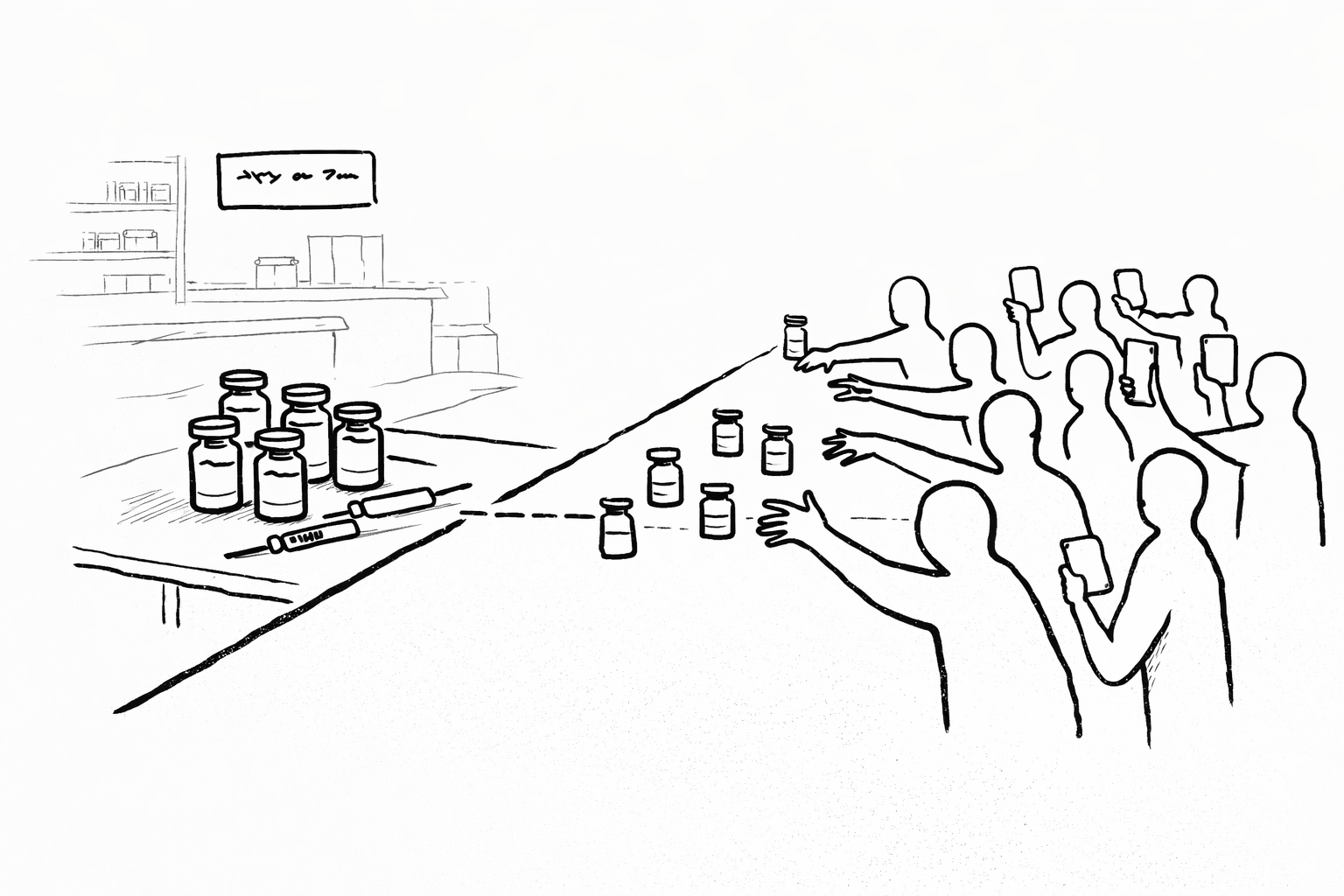
Robert F. Kennedy Jr. is preparing to do something the FDA has resisted for years: bring peptides in from the cold.
Kennedy is pushing changes that would allow compounding pharmacies to legally produce certain peptides the agency restricted in 2023 over safety concerns. The move would formalize a shadow market that has flourished anyway — one where short-chain amino acid compounds are already being used by millions of Americans for muscle recovery, weight loss, and anti-aging, sourced internationally, labeled “for research use only,” and taken without any medical oversight.
Supporters argue the policy would actually make things safer. Right now, consumers are getting these compounds regardless — from overseas suppliers, gray-market websites, and wellness influencers who operate well outside the medical system. Routing that activity through licensed U.S. pharmacies and requiring prescriptions, the argument goes, would at least put a doctor in the room.
Critics aren’t convinced. As we reported in The Wolverine Stack Isn’t a Breakthrough, BPC-157 — one of the most popular compounds under discussion — has 35 published studies behind it, all conducted in animals, and a single human trial published in an alternative medicine journal. The U.S. Anti-Doping Agency classifies it under S0, a category reserved for substances with no established safety profile in humans. Formalizing access to compounds with that evidence base doesn’t make them safer. It makes them look more legitimate.
The proposal fits squarely within Kennedy’s Make America Healthy Again agenda, which has systematically challenged the FDA’s authority and reframed federal health policy around individual access and institutional skepticism. On peptides, that means siding with a growing constituency: longevity clinics, biohackers, fitness communities, and a wellness industry that has turned experimental self-optimization into a mainstream aspiration.
The market is already large and growing fast. Expand legal access, and it could explode — and not just among early adopters who were already injecting compounds in their garages. A significant share of that demand comes from men pursuing physical optimization through channels they’d never discuss with a doctor, navigating body image and recovery pressures in silence. The broader population, primed by GLP-1 drugs to view injectable therapies as routine, is already moving in that direction.
What that means for public health is genuinely unclear. Peptides span a wide spectrum — from compounds with real clinical promise to others with almost no human data. Kennedy’s plan doesn’t distinguish neatly between them. And wellness culture rarely waits for that distinction to be made — it takes what people are already doing quietly, gives it a cleaner frame, and sells it back to them. The question isn’t whether the peptide era is coming. It’s whether this policy makes it safer, or just more official.