
Part of Culture in Motion — examining who defines culture, how it moves, and what it reveals about the moment.
The first time I visited Dubai in 2021, I picked up chocolate from the Dubai Mall expecting a moment of indulgence, nothing more. What I did not expect was how quickly that experience would reset my expectations — not dramatically, not with ceremony, but in the quiet and permanent way that a genuinely new standard tends to arrive. It did not feel like something I would simply enjoy and move on from. It felt like a recalibration I had not consented to.
From that point forward, I found myself chasing it. Not obsessively, but consistently. Looking for something that could replicate the same richness, the same layered texture, the same sense that what I was eating had been designed rather than manufactured. Once you experience it, most chocolate begins to feel incomplete. Outside of Swiss chocolate — which carries its own precision and legacy, its own cultural weight as the category’s long-standing benchmark — everything else starts to register as a step down. That is not a small thing to say about a product category that has existed for centuries and has been dominated by European tradition for most of them.
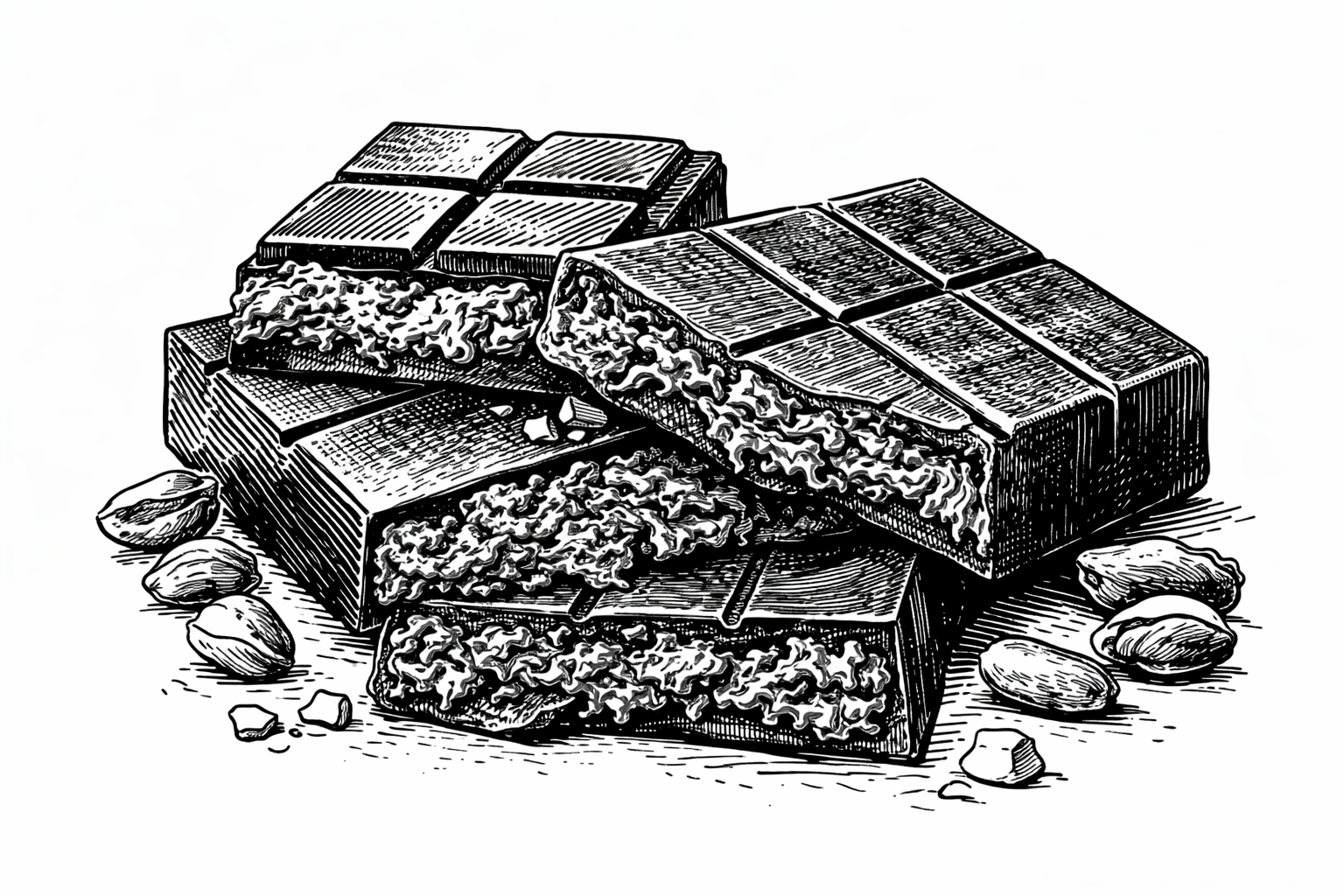
What makes Dubai chocolate distinct is not just flavor. It is construction. Pistachio cream folded into the bar. The crunch of kunafa — the shredded phyllo pastry that brings a textural dimension no Western chocolate tradition has thought to borrow. The density of the chocolate itself, which holds these elements together without overwhelming them. It delivers contrast in a way that feels intentional rather than accidental. Smooth against crisp. Sweet with a subtle savory edge. It slows you down because it gives you something to notice, and in a food culture increasingly designed for speed and convenience, that deceleration is itself a form of luxury.
Brands like Fix Dessert Chocolatier have built their identity around that philosophy — turning chocolate into something closer to a curated object than a casual purchase. The presentation is precise, the structure deliberate, the visual identity aligned with luxury before the first bite. It sits somewhere between food and design, between confection and cultural statement, which is part of why it leaves such a lasting impression and part of why it has traveled so far so quickly.
That design sensibility also explains its global spread, and it is worth understanding that spread as more than a viral moment. On platforms like TikTok, Dubai chocolate performs as well visually as it does on the palate — the break of the bar, the reveal of the filling, the texture pulling apart on camera. It is engineered for experience and documentation simultaneously, which accelerates how quickly it reaches new audiences. But virality alone does not explain why it sticks. Plenty of food trends travel fast and disappear just as quickly. What Dubai chocolate did is rarer: it gave people a reference point that stayed with them after the video was over, a sensory memory that made the next ordinary chocolate feel like a step backward.
There is something larger happening here that is worth naming directly. For most of modern food history, the authority to define what luxury tastes like has been concentrated in a handful of European traditions — Swiss precision, Belgian richness, French refinement. Dubai chocolate is not simply adding to that canon. It is demonstrating that the canon was always a cultural construction, not a culinary inevitability, and that a product rooted in Middle Eastern ingredients and aesthetics — pistachio, kunafa, a design sensibility shaped by a city that has spent two decades building itself into a global luxury destination — can not only enter that conversation but reset its terms. That is a different kind of cultural signal than a trend. It is a shift in who gets to define the category.
The inverse of that shift is visible in real time as well. As SSC examined in the Hershey’s piece, American consumers are increasingly subjecting familiar products to informal viral audits — stretching, filming, and interpreting texture as evidence of something changed or something lost. The baseline moved. The product did not. That is the same dynamic operating from the other direction: not a new standard arriving, but an old one being exposed as insufficient by the same expanding expectations that Dubai chocolate helped create.
What I realized over time is that my 2021 experience was not personal to me. It was a small version of something happening at scale — a moment where one product, rooted in a specific place and cultural tradition, quietly recalibrated what a large number of people expect from something as elemental as chocolate. When that happens across enough palates and enough platforms simultaneously, what we are watching is not a trend running its course. It is a new baseline taking shape, and baselines, once set, rarely move backward. The bar has been raised. The question now is who raises it next, and from where.