
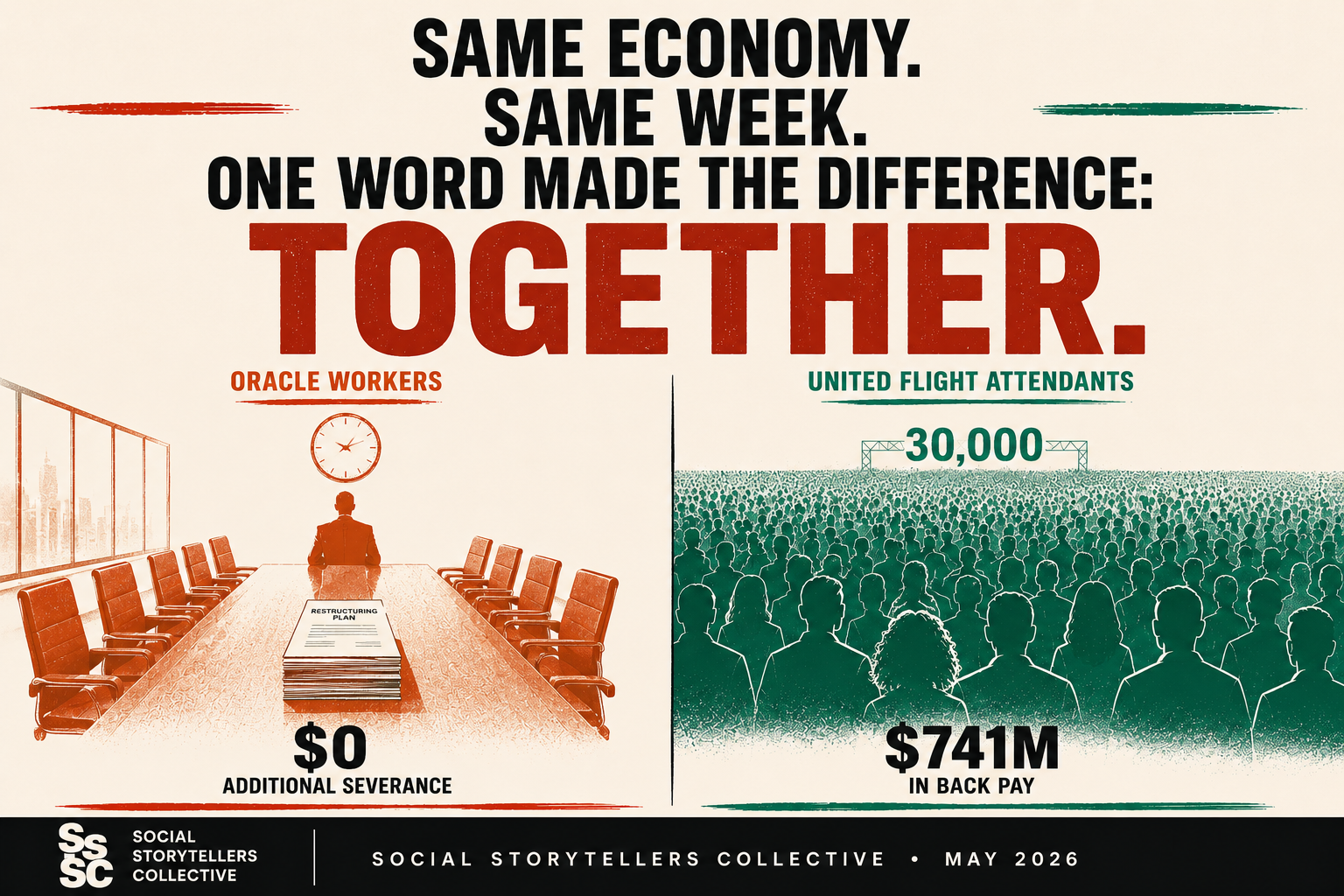
This week produced two labor stories that belong next to each other.
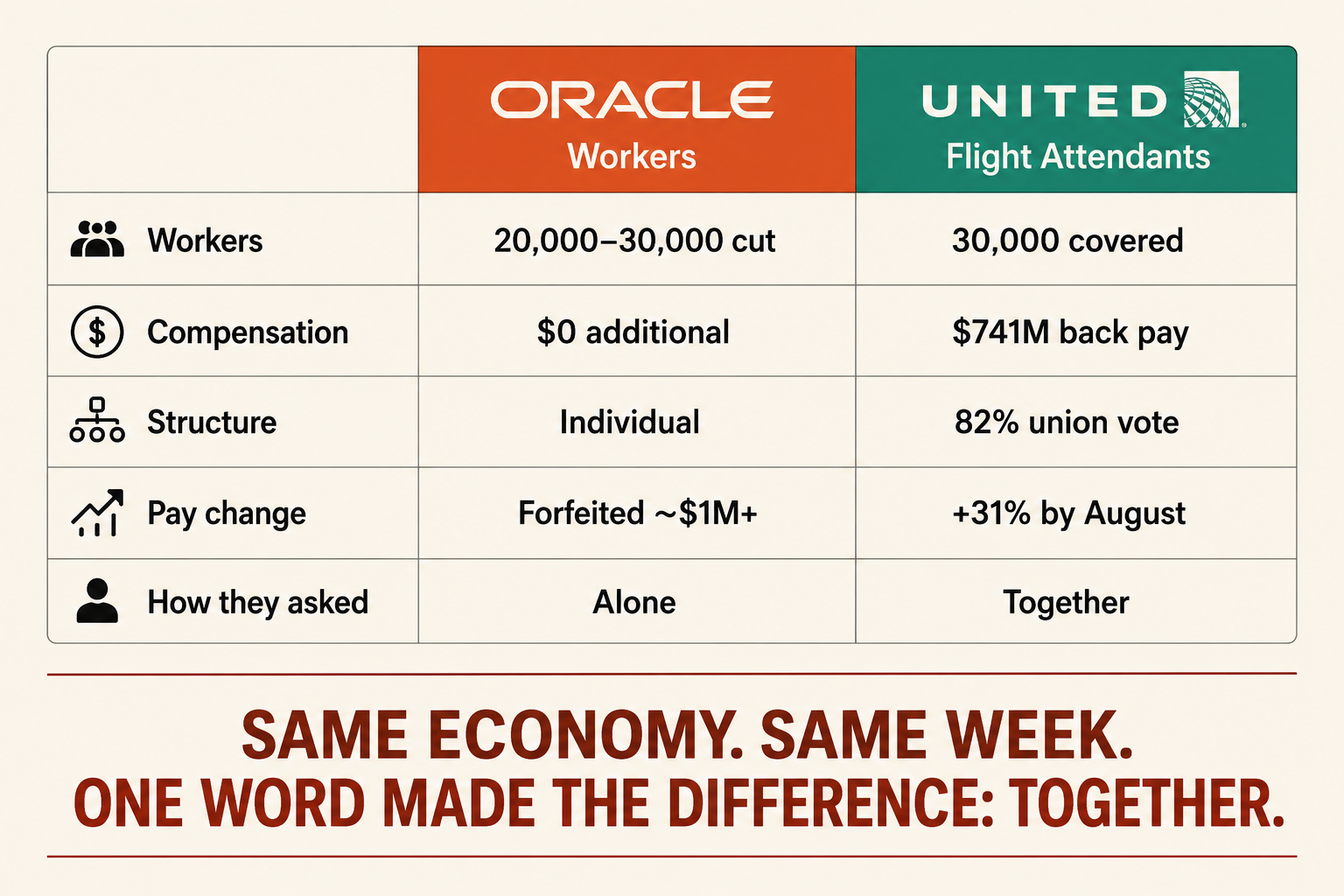
In the first, Oracle cut between 20,000 and 30,000 workers globally. Several tried to negotiate — for stronger severance, accelerated vesting, WARN Act protections. One worker forfeited approximately $1 million in stock that was months away from vesting. Oracle declined across the board. The negotiations failed not because workers asked for too much. They failed because they asked alone.
In the second, 30,000 United Airlines flight attendants ratified a new five-year contract approved by 82% of union voters. The agreement includes an average base pay increase of 31% by August — the first raise in nearly six years. $741 million in back pay. Pay for boarding time, something flight attendants have fought for for decades. And a package of quality-of-life improvements that reflect sustained, organized, collective pressure applied over years.
Same economy. Same week. Opposite outcomes.
The variable that explains the gap is not industry, not company size, not the reasonableness of the ask. It is whether the workers asking were alone or together.
What the United contract actually represents
The numbers are significant on their own terms. A 31% base pay increase over five years is real and substantial. $741 million in back pay distributed across 30,000 workers represents meaningful economic transfer. Pay for boarding time — the hours flight attendants spend working before the cabin door closes, historically uncompensated — is a structural correction that the industry has resisted for decades.
But the deeper significance is what the contract reveals about how leverage actually works in the current labor market.
United was the last major US carrier to reach a deal with unionized crewmembers since the COVID-19 pandemic. Delta, American, Southwest, Alaska — all reached agreements before United. The pressure on United was not just internal. It was competitive. A carrier that couldn’t retain experienced flight attendants in a tight labor market faced operational risk that showed up in scheduling, service quality, and ultimately in the revenue numbers that matter to shareholders. The union understood that pressure and used it.
That is what collective bargaining does that individual negotiation cannot. It converts individual vulnerability into institutional leverage. It makes the cost of not settling visible to the people with the power to settle.
The Oracle contrast
SSC reported earlier this week in Oracle Workers Tried to Negotiate After Mass Layoffs. The Company Refused. that the structural problem facing Oracle’s laid-off workers was not effort or reasonableness. It was architecture. Individual negotiation in a mass layoff is disadvantaged before it begins. The company has legal counsel, institutional experience, and standardized agreements built over years of exactly these moments. The worker has days to review documents, no coordinated counterpart, and no mechanism to convert their individual leverage into collective pressure.
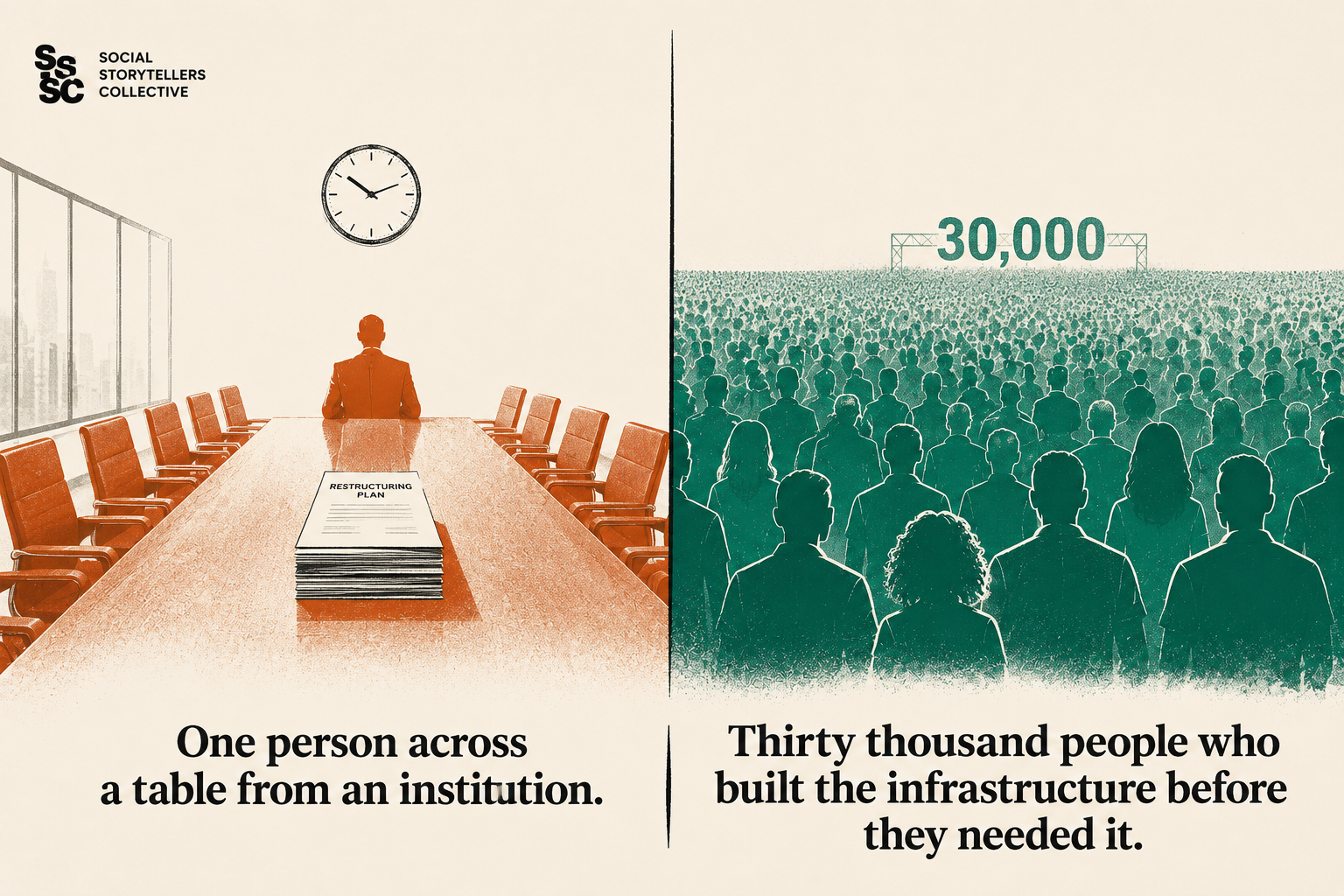
The worker who forfeited $1 million in unvested stock did not lose because their ask was unreasonable. They lost because they were one person across a table from an institution.
The United flight attendants did not win because their ask was more reasonable. They won because 30,000 people asked together — and because the union infrastructure behind them had been building leverage for years before the negotiation started.
What this week’s labor coverage has been building toward
The pattern SSC has been tracking across today’s labor market is consistent: the restructuring is real, the efficiency gains justifying it are often theoretical, and the workers absorbing the disruption are doing so with unequal tools depending on whether they have collective infrastructure behind them or not.
Cloudflare and Coinbase posted record profits and announced major layoffs in the same earnings report. Walmart is using relocation requirements as a filtering mechanism to reduce headcount without calling it a layoff. Oracle declined to negotiate with workers individually. In each case, the institution set the terms and the individual worker absorbed the consequences.
The United contract is not a counterargument to that pattern. It is a demonstration of what it takes to interrupt it. Thirty thousand people. Eighty-two percent approval. Six years of organizing pressure. A union infrastructure that understood the company’s competitive vulnerabilities and used them.
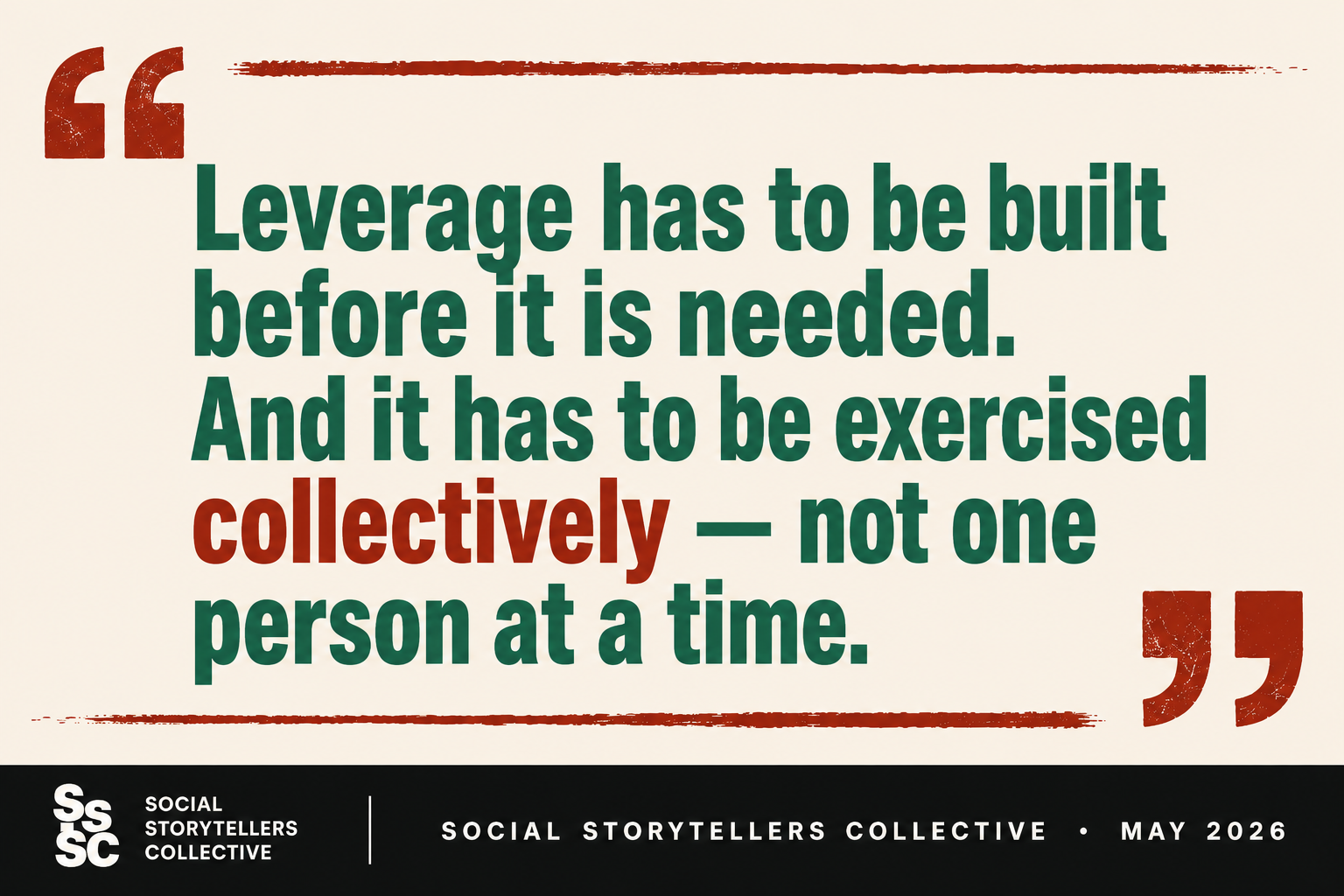
Leverage has to be built before it is needed. And it has to be exercised collectively rather than one person at a time.
The Oracle workers learned that lesson the hard way. The United flight attendants built the infrastructure that made the lesson unnecessary.