
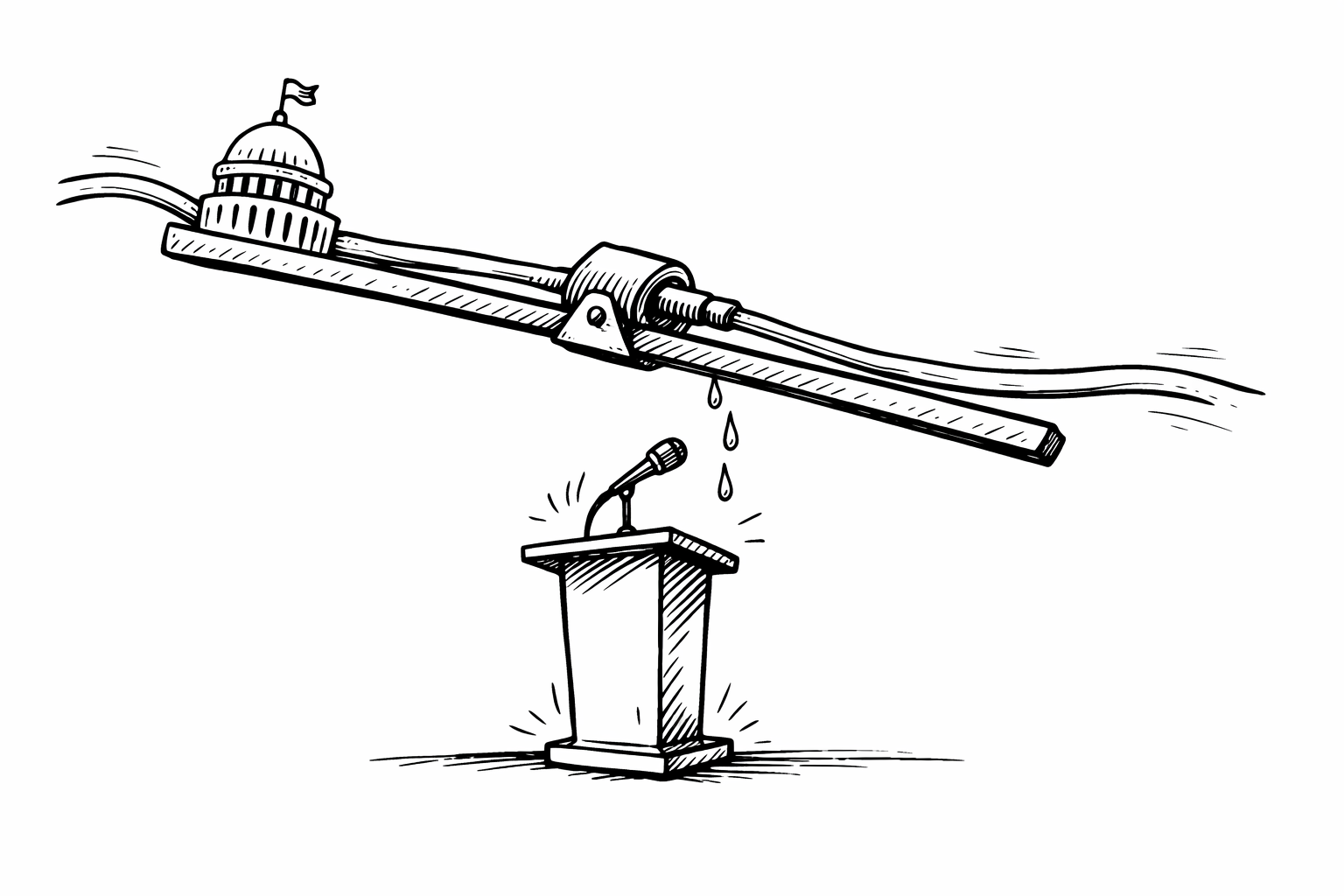
A federal judge has blocked an effort to cut funding to NPR and PBS, ruling that the move violated the First Amendment. The decision did not turn on whether public media should receive government support, but on the reasoning behind the attempt to remove it. According to the court, the action was driven by disagreement with the outlets’ perceived viewpoints, making it a case of unconstitutional retaliation rather than a neutral budget decision. That distinction reframes the story from a funding dispute to a question of how power can be used.
The ruling draws a clear boundary: the government can control spending, but it cannot use that control to punish speech. Once funding decisions are tied to viewpoint, they stop functioning as policy and start functioning as leverage. That shift carries broader implications beyond public media. Any institution that relies, even partially, on public funding—universities, nonprofits, research organizations—becomes exposed to the same logic, where support is conditional and independence is no longer assumed but negotiated.
What the court reinforces is that free speech is not only about what can be said, but whether systems can operate without indirect pressure designed to shape what is said. The government is free to disagree with speech, criticize it, and refuse to endorse it. It is not free to selectively weaken it because of its content. That line is foundational, because once funding becomes a tool for viewpoint enforcement, the distinction between governance and control begins to erode.