
Nike is cutting approximately 1,400 jobs globally in its second major round of layoffs this year as the company works to accelerate its turnaround strategy amid slowing sales and mounting pressure across the retail sector. According to CNBC, the cuts are concentrated heavily inside Nike’s technology division and come just months after the company eliminated another 775 roles earlier this year, primarily inside distribution operations tied to automation efforts. In less than twelve months, Nike has shed more than 2,100 positions — a pace that signals something beyond routine cost management.
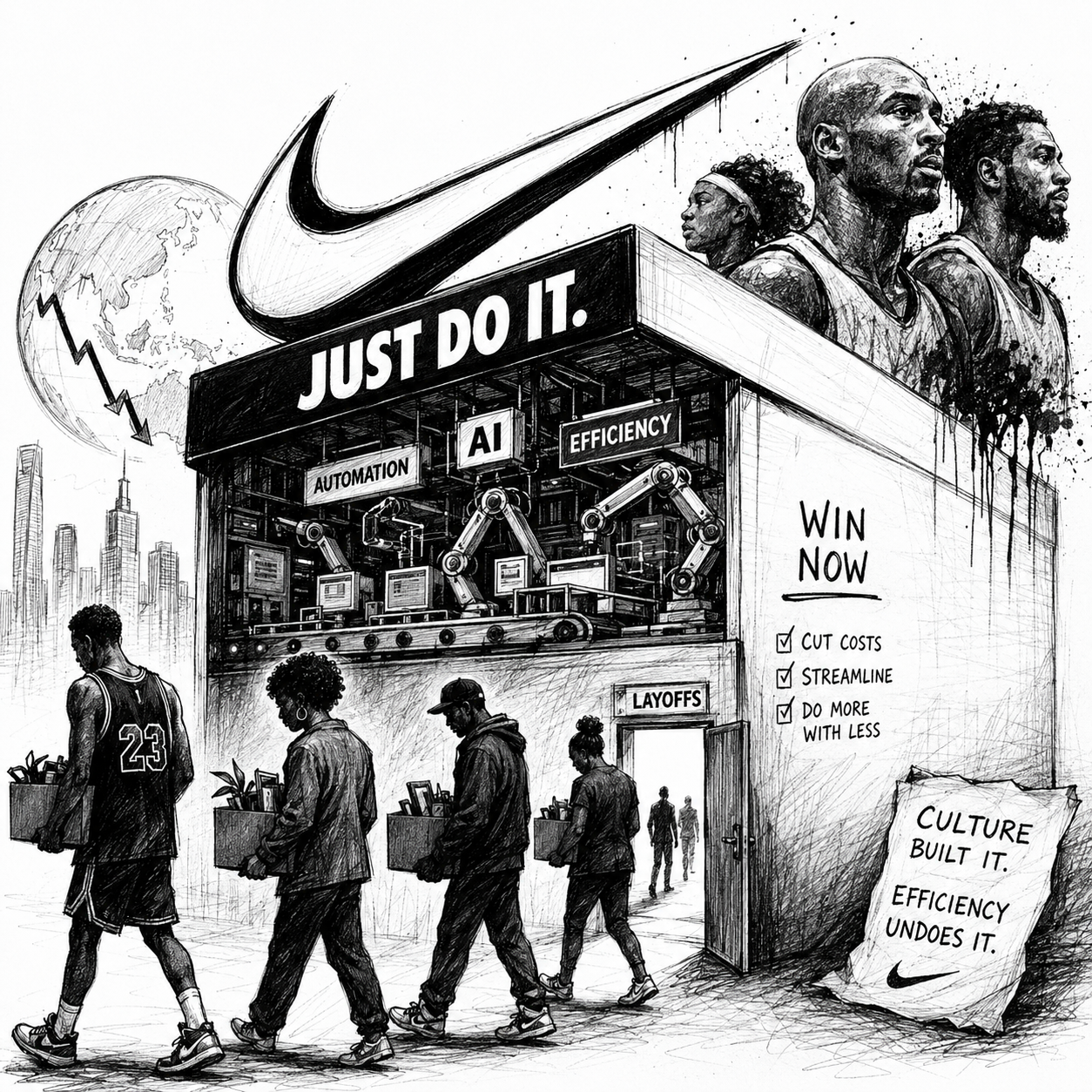
The layoffs are part of CEO Elliott Hill’s broader “Win Now” strategy to reposition the company after several difficult years marked by declining growth, inventory problems, weakening demand in China, and increased competition from emerging athletic brands. Nike executives describe the cuts as necessary to modernize operations, streamline manufacturing, and build toward long-term profitability. But the scale and frequency of the reductions point to something larger happening across corporate America: even the most culturally dominant global brands are restructuring themselves around efficiency, automation, and leaner operational models — and doing so with increasing urgency.
What stands out is where many of the cuts are landing. Technology departments were once viewed as the safest and most aggressively expanding areas inside major corporations, absorbing billions in post-pandemic investment and headcount growth. Now they are becoming targets for consolidation as companies reevaluate decisions made during that rapid digital expansion. Nike’s reductions follow a wider corporate pattern where businesses are simultaneously investing in AI infrastructure while cutting the people who once managed those operational systems manually. The department that was supposed to future-proof the company is now where the cuts are deepest.
The company also acknowledged that sales are expected to continue declining through the rest of the fiscal year, including an anticipated 20% drop in China during the current quarter. That figure matters because China was once one of Nike’s most important engines for global growth. The slowdown reflects a combination of shifting consumer spending patterns, intensified domestic competition from Chinese athletic brands, and a broader cooling of premium retail demand across international markets. Nike is not losing China gradually — it is losing ground quickly.
There is also a cultural dimension to this story that separates Nike from most other corporations announcing layoffs. Nike has historically sold aspiration as much as athletic apparel, building a brand identity around performance, upward mobility, and cultural relevance across multiple generations — a brand identity constructed in large part on the backs of Black athletes and the communities that made them iconic. That relationship has never been uncomplicated — as SSC previously reported, Nike’s own internal narrative deflected blame for its sales decline onto the Black NBA players whose cultural capital built the brand. When a company with that level of symbolic weight begins repeatedly restructuring its workforce, it does more than signal financial pressure — it reveals how unstable even the most globally recognized institutions have become in the current economic environment. The brand that told consumers to just do it is now repeatedly undoing its own workforce.
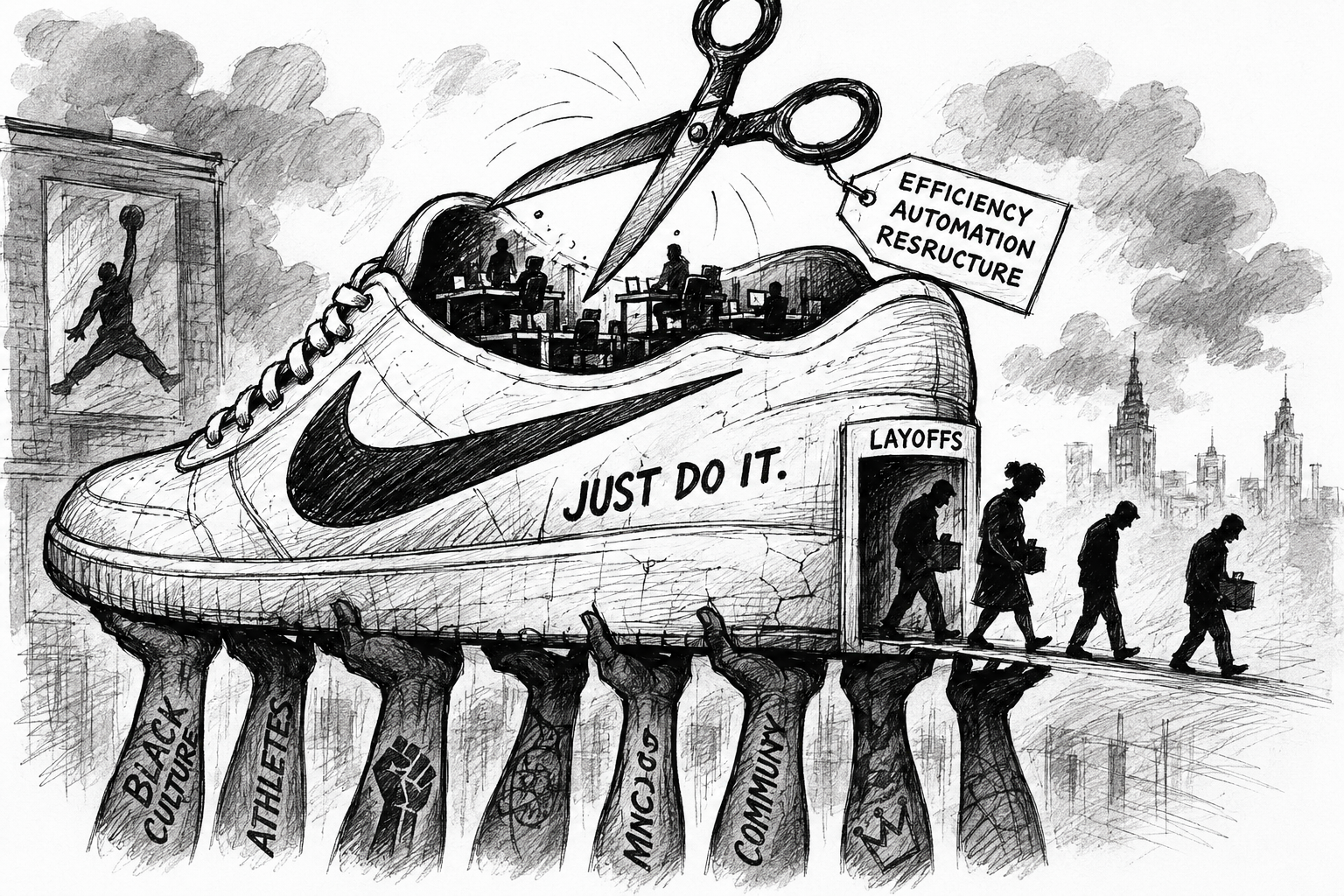
The broader pattern is becoming difficult to dismiss. Companies are no longer trimming around the edges during moments of pressure. They are redesigning themselves structurally for a future where automation absorbs logistics, AI takes on workflow functions that once required sizable teams, and growth expectations remain high even as consumer demand slows. Nike’s layoffs are not a retail story in isolation. They are another data point in the ongoing restructuring of the modern corporation — and a reminder that cultural dominance has never been a guarantee of operational stability.