
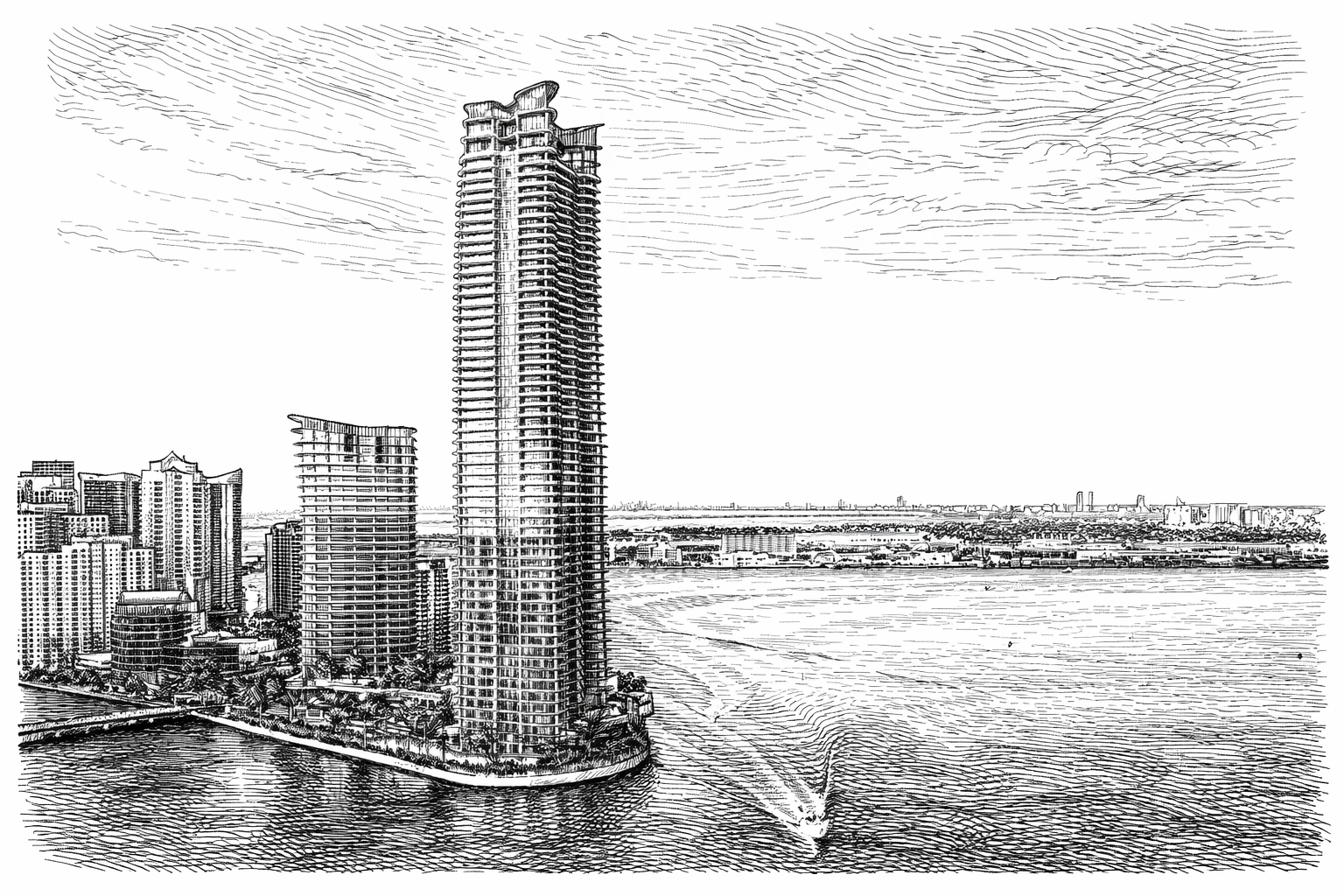
Twenty-three stories fell in twenty seconds on Sunday morning. The controlled implosion of the former Mandarin Oriental Hotel on Brickell Key was the largest demolition of its kind in Miami in more than a decade, and for the residents who felt the vibrations move through their walls, it registered as something more than spectacle. It registered as direction. The site will be redeveloped into a new ultra-luxury complex — two soaring towers anchored by a North American flagship hotel — with completion targeted for 2030. The announcement came with the language of growth and global ambition. What it did not come with was any accounting of who gets left behind as Miami rebuilds itself upward.
The numbers already tell that story. Housing prices have surged more than 100% over the past decade in Miami-Dade, effectively pricing out 94% of the county’s residents from homeownership, according to Florida International University’s Metropolitan Center. The nonprofit Miami Homes for All estimates a deficit of 90,000 affordable housing units for households earning under $75,000 annually. Nearly 50% of Miami households are now considered rent-burdened, spending more than 30% of their gross income on housing — forcing the workforce, including educators, healthcare professionals, and first responders, to look further from the urban core. Meanwhile, in the week ending April 4, Miami posted the highest rise in average daily hotel rates among the top 25 U.S. markets, climbing to $325.48 — a figure that captures exactly who the city’s hospitality economy is currently optimized for.
The Mandarin Oriental sat on Brickell Key for 26 years. In that time, the surrounding neighborhood was reshaped by a wave of wealth migration driven largely by out-of-state capital. Between 2018 and 2022, Miami-Dade County attracted nearly 16,000, according to the Citizens Budget Commission. The inflow accelerated through the pandemic years, and the real estate market followed. All-cash purchases now account for 44% of Miami closings — well above the national average of 27% — with international purchasers and domestic migrants from New York and California insulating the market from mortgage rate volatility. In practical terms, that means the market is increasingly shaped by buyers for whom affordability constraints simply do not apply.
This is the Miami that the new Brickell Key project is being built for. It is also the Miami that is making it structurally harder for the people who clean the hotels, staff the restaurants, and teach in the schools to remain. Without meaningful intervention, the region risks undermining its economic diversity and resilience as service workers and young professionals continue relocating to more affordable areas. The dust from Sunday’s implosion cleared in minutes. The structural questions it raises will take considerably longer to answer.
For SSC’s prior reporting on access and economic stratification in hospitality markets, see the Access Shift series.