
LATAM Airlines lowered its 2026 earnings forecast after rising jet fuel costs added pressure to operational costs across its international route network. The adjustment is being reported as a company-specific financial story. It is a system-level signal.
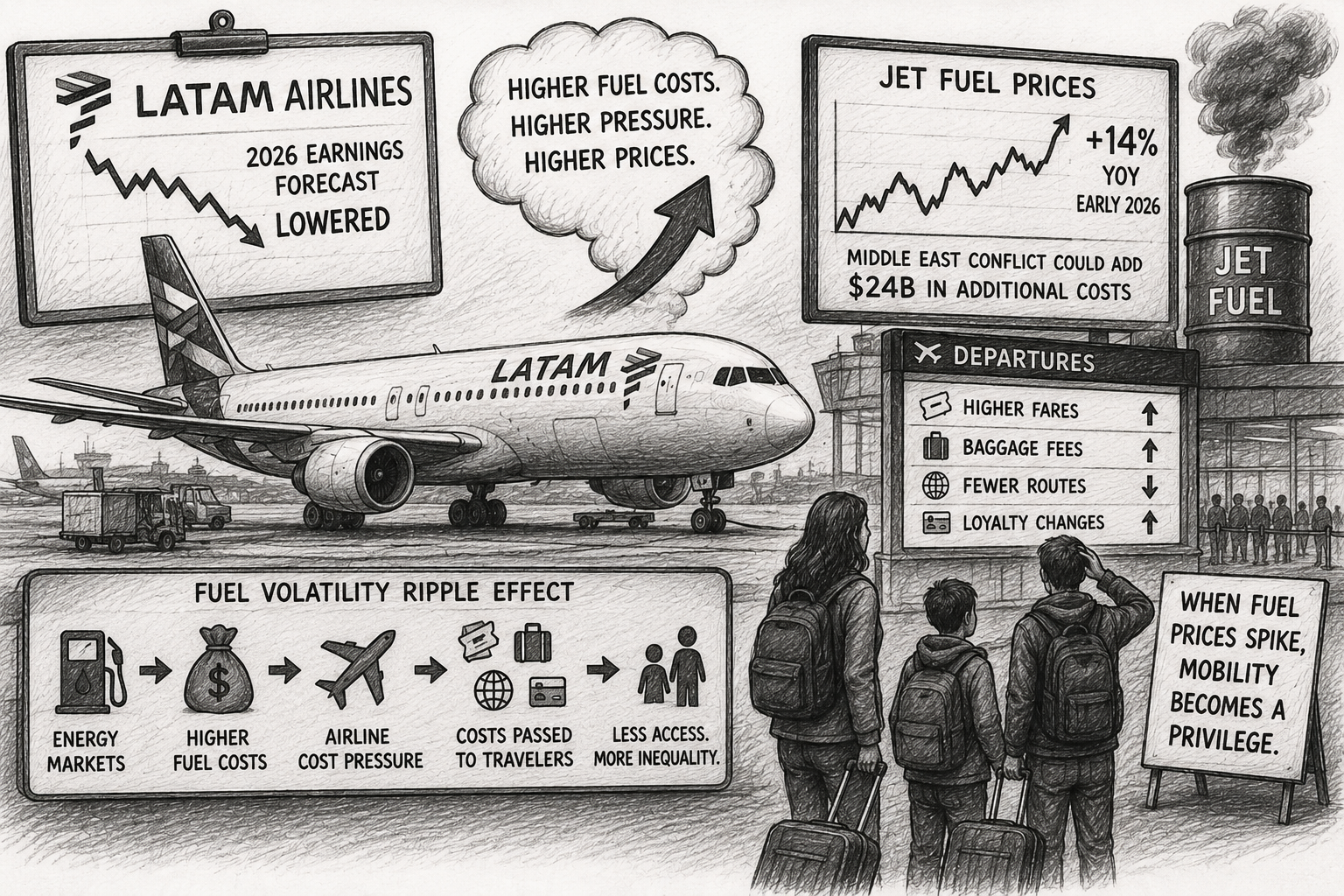
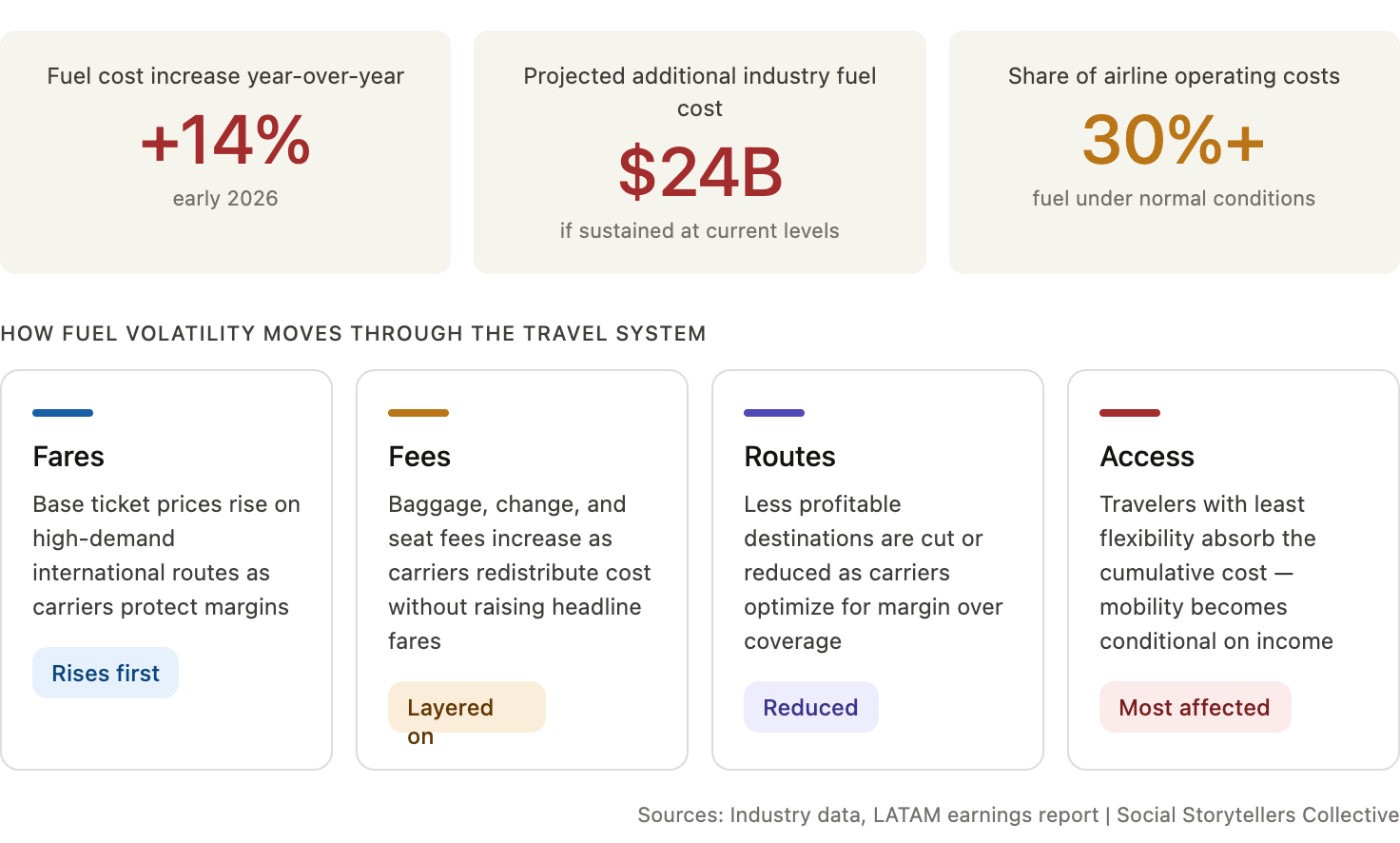
Fuel is one of the largest expenses in commercial aviation — which means oil market disruptions ripple outward quickly into ticket pricing, route planning, staffing decisions, and expansion strategies. Airlines can absorb portions of the increase in the short term, but sustained volatility gets redistributed through higher fares, reduced route flexibility, baggage fee increases, loyalty restructuring, and cuts to less profitable destinations. Travelers experience the impact gradually rather than immediately, but the pressure accumulates. As Airlines Raise Baggage Fees Nationwide as Fuel Costs Surge documented, that redistribution is already underway across every major U.S. carrier — with fuel costs rising as much as 14 percent year-over-year in early 2026 and the conflict in the Middle East threatening to add as much as $24 billion in additional industry-wide fuel expenses.
What makes the current environment particularly difficult to navigate is that the global travel rebound has coincided with broader geopolitical instability affecting energy markets. Conflict concerns surrounding major shipping and oil corridors — including the Strait of Hormuz and Red Sea shipping routes — continue influencing market psychology even when direct supply disruptions remain limited. Airlines are operating inside a climate where energy uncertainty itself functions as a structural business risk, not just a cost variable.
The pressure is especially significant for carriers serving price-sensitive international markets like Latin America, where consumers are highly responsive to fare increases. Ultra-low-cost growth models become harder to sustain when fuel volatility compresses margins, and premium travel strategies become more attractive for larger carriers seeking stability. As When Fuel Prices Spike, Mobility Becomes a Privilege showed in the Nigerian aviation context, that dynamic reshapes who can afford to move, how frequently, and which routes remain economically viable — with the access cost landing hardest on the travelers with the fewest alternatives.
The larger shift is that travel is increasingly behaving like an energy-dependent system where affordability is conditional rather than assumed. For years, cheap flights normalized mobility across income groups. Sustained fuel volatility, labor shortages, climate pressures, and infrastructure bottlenecks are making movement more expensive to maintain at scale. The result is a slow recalibration of who the global travel economy actually serves — and LATAM’s earnings revision is one of the cleaner data points showing where that recalibration is heading.